Freeze damage is the quiet killer of pressure washers. It does not announce itself, does not make a sound, and often goes unnoticed until the following spring, when you pull the machine out, fire it up, and discover a cracked pump, a burst hose, or water forced into places it should never be. The culprit is simple physics: water expands when it freezes, and a pressure washer is full of small, tight spaces where trapped water can split metal and plastic alike. Winterizing a power washer is the prevention that takes twenty minutes in the fall and saves hundreds of dollars in the spring. If you live anywhere the temperature drops below freezing, this is not optional maintenance, it is the difference between a machine that lasts and one that does not.
This guide walks through winterizing a pressure washer step by step. We will cover why it matters, when to do it, the supplies you need, methods for different machines, antifreeze, hoses and accessories, fuel and oil, storage, and spring start-up. By the end, you will be able to prepare your machine for winter with confidence and avoid the damage that catches so many owners off guard.
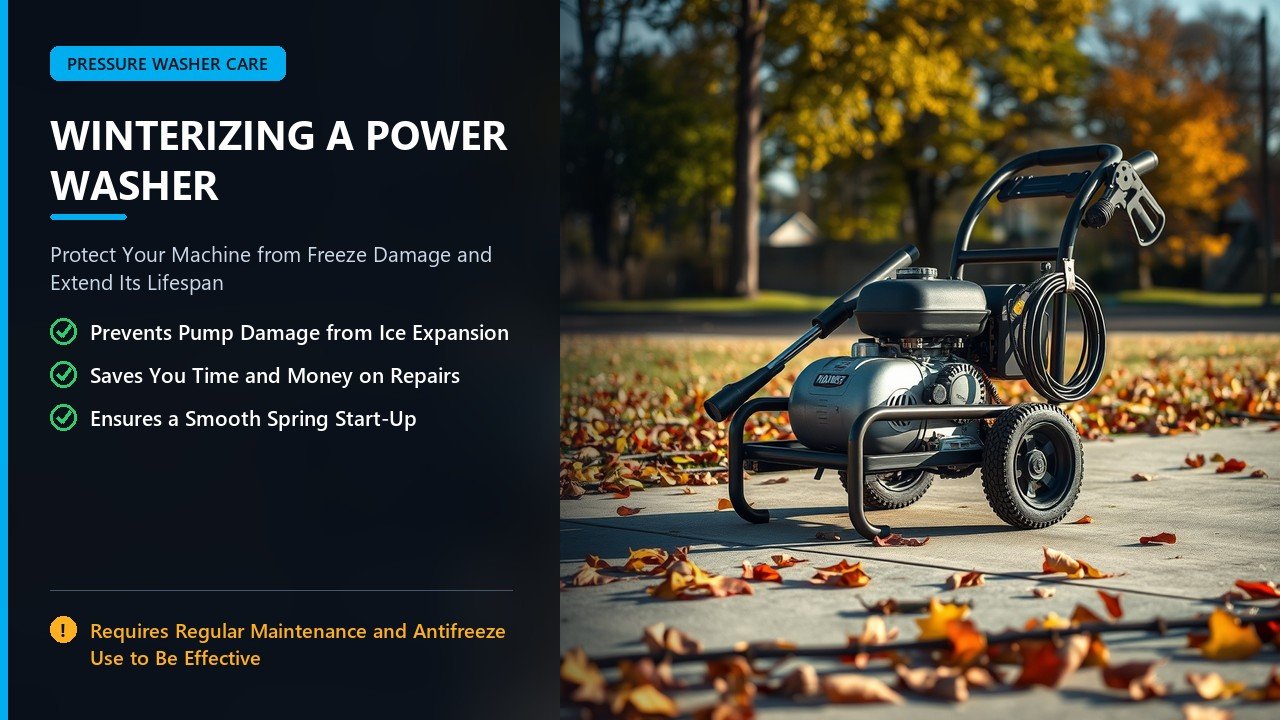
Why Winterizing Matters
Water left in the machine freezes and expands, and that expansion can wreck components.
- Pump damage: Cracked pump housings and manifolds from ice.
- Burst hoses: Water freezing inside swells and splits the hose.
- Broken fittings: Trapped water cracks metal and plastic parts.
- Gun and wand damage: Frozen water harms internal valves and seals.
- Costly repairs: Often exceeding the value of the parts saved by doing nothing.
When to Winterize
- Before the first freeze in your area.
- Whenever the machine will sit unused through cold weather.
- Even indoors if the space is unheated.
- After your last fall use, not in the middle of winter.
Supplies You Need
- Pump saver or antifreeze designed for pressure washers.
- Funnel for pouring antifreeze.
- Fuel stabilizer for the engine.
- Engine oil for a pre-storage change if due.
- Rags and a bucket for water and drips.
- Protective gloves.
Step-by-Step Winterizing
- Disconnect the water supply and relieve all pressure.
- Drain the machine by tipping it and removing drain plugs.
- Drain the hose completely, coiling it loosely.
- Drain the gun and wand, removing trapped water.
- Run the machine briefly to expel residual water if the manual advises it.
- Add pump antifreeze through the inlet per the instructions.
- Cycle the antifreeze through the pump and out the gun.
- Treat the fuel with stabilizer and run it through.
- Change the oil if due or as recommended.
- Store the machine in a dry, protected place.
Methods for Different Machines
| Machine Type | Key Winterizing Focus |
|---|---|
| Gas pressure washer | Drain water, antifreeze the pump, treat fuel, service oil |
| Electric pressure washer | Drain water, antifreeze the pump, protect cords and connections |
| Hot water machine | Drain thoroughly, protect the heater and coil from freezing |
| Mobile rig with tank | Drain tank, pump, and lines; store dry |
Using Antifreeze Properly
- Use pressure washer antifreeze or pump saver, not automotive coolant.
- Pour through the inlet and cycle it through the pump and gun.
- Follow the product instructions for quantity.
- Some antifreeze is meant to be flushed out in spring; others are not.
- Never leave standing water mixed with the antifreeze.
Hoses and Accessories
- Drain every hose completely, stretching it to release water.
- Coil loosely and store off the ground.
- Drain guns and wands.
- Remove and dry nozzles.
- Store reels with no water trapped inside.
- Keep accessories indoors if possible.
Fuel and Oil for Storage
- Add fuel stabilizer and run the engine to circulate it.
- Consider draining fuel entirely for very long storage.
- Change oil before storage if it is due, to avoid leaving contaminants.
- Check and top off oil as recommended.
- Store fuel separately in an approved container.
Storage Best Practices
- Store in a dry, protected location.
- Cover the machine to keep out dust and moisture.
- Keep it off a cold concrete floor if possible.
- Store hoses and accessories indoors.
- Keep the machine level.
Spring Start-Up
- Inspect for freeze damage and leaks.
- Flush out antifreeze if the product requires it.
- Check oil and fuel.
- Reconnect water and check for leaks.
- Run the machine and verify pressure.
- Address any issues before the season begins.
Frequently Asked Questions
Do I really need to winterize my pressure washer?
If your machine will be exposed to freezing temperatures, yes. Water left inside freezes and expands, cracking pumps, hoses, and fittings, often causing costly damage.
How do I winterize a pressure washer?
Disconnect and drain the water, drain hoses, gun, and wand, add pressure washer antifreeze through the pump, treat the fuel, change oil if due, and store the machine in a dry, protected place.
What antifreeze should I use?
Use a pump saver or antifreeze designed for pressure washers, not automotive coolant. Follow the product instructions and cycle it through the pump and gun.
Can I just drain the water and skip antifreeze?
Draining helps, but small amounts of water can remain in tight spaces. Antifreeze provides protection by filling those spaces with a non-freezing solution.
How do I start the machine in spring?
Inspect for freeze damage, flush out antifreeze if required, check oil and fuel, reconnect water, and run the machine to verify pressure before the season starts.
Final Thoughts
Winterizing a power washer is one of the most valuable twenty minutes you can spend on maintenance. Water left in the machine freezes, expands, and cracks the very parts that are most expensive to replace, especially the pump.
Drain everything, add proper antifreeze, treat the fuel, change the oil if due, and store the machine dry and protected. Do this each fall, and your pressure washer will come out of winter ready to work, with no nasty surprises waiting in the spring.