The first winter I owned a pressure washer, I did what most people do: I parked it in the garage and forgot about it. The following spring, the machine would not build pressure, and a repair shop told me the cold had cracked the pump, an expensive lesson I have never forgotten. Water left inside a pressure washer freezes, expands, and destroys the very components that make the machine work. Winterizing a pressure washer, properly removing and protecting against water and preparing the machine for cold storage, is a simple routine that prevents costly damage and ensures the machine is ready to work when the season returns. This guide explains why winterizing matters, what freeze damage does, and exactly how to winterize your pressure washer step by step.
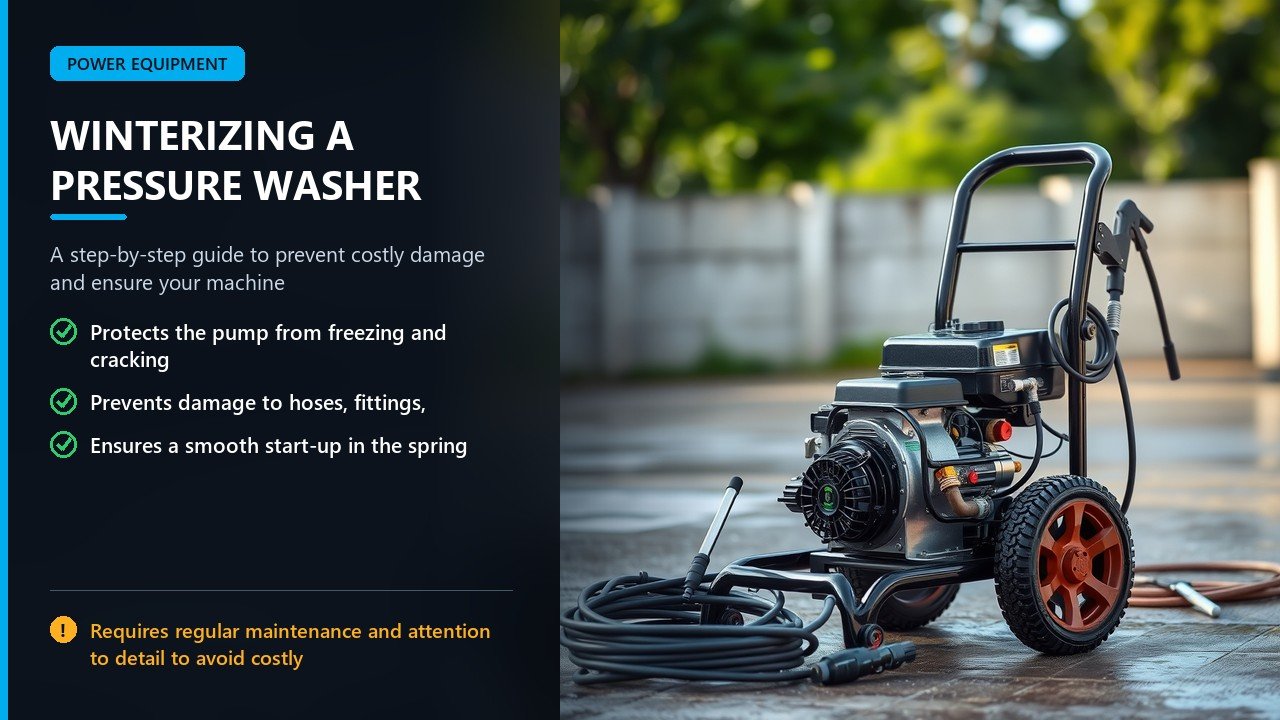
Why Winterizing Is Essential
The reason winterizing matters is simple physics: water expands when it freezes, and pressure washers are full of water in enclosed spaces.
When the temperature drops below freezing, any water trapped in the pump, hose, gun, wand, or machine components turns to ice and expands. That expansion exerts enormous force, enough to crack the pump body, split hoses, break fittings, and damage the heating coil of a hot water machine. The damage is often invisible until the machine is used again, and by then it is too late: the machine leaks, loses pressure, or fails entirely, requiring expensive repairs or replacement. Freeze damage is one of the most common and avoidable causes of pressure washer failure.
The problem is that pressure washers retain water even after use. Water sits in the pump, in the low spots of hoses, in the gun and wand, and in the heating coil. Simply draining the machine casually is not enough, because water remains in places that will freeze. Proper winterizing actively removes this water and protects the machine, and it is why the routine exists. A machine that is winterized correctly survives the cold undamaged, while one that is not may not survive at all. Given the cost of repairs and replacement, a few minutes of winterizing is one of the best investments an owner can make, and it protects the machine’s value through the off-season.
The National Weather Service issues freeze warnings that signal when winterizing is due, and any machine that will sit unused in freezing conditions needs protection.
What Freeze Damage Does
Understanding the specific damage reveals why each winterizing step matters.
Pump damage. The pump is the most vulnerable component. Water trapped in the pump’s chambers and valves freezes and expands, cracking the pump body, the manifold, or internal components. Pump parts are precision, and a cracked pump often must be replaced. This is the most common and most expensive freeze damage.
Heating coil damage. On hot water machines, water in the coil freezes and can split the coil, causing leaks and expensive damage. Coils are a major component, and protecting them is especially important.
Hose splitting. A hose full of water freezes, and the ice expansion can split the hose wall or burst the fittings, ruining the hose.
Gun, wand, and fittings. Water trapped in the gun, wand, and fittings freezes and cracks these parts or their seals, causing leaks and failures.
Water tank damage. On trailer and tank setups, water left in the tank or plumbing freezes and can crack the tank, valves, and lines.
Each of these failures comes from the same cause, trapped water, and each is prevented by removing that water and protecting the components. Because the damage occurs internally and often invisibly, the machine can appear fine until the moment it is needed, which is why prevention is far better than discovery. The expense of a cracked pump or split coil dwarfs the effort of winterizing, and once frozen, a component is often beyond repair. This is the core reason winterizing is non-negotiable for any pressure washer that faces freezing temperatures.
When to Winterize
Timing matters, and the safest approach is to winterize before the first freeze.
Winterizing should be done when the machine will no longer be used before freezing weather arrives, typically in late autumn in cold climates, or whenever the machine will sit unused through winter. Do not wait for the first freeze, because a single unexpected cold night can damage a machine that holds water. Instead, winterize proactively at the end of the season, and if the machine is used occasionally through winter, winterize after each use that might precede a freeze, or keep it protected and ready.
If you live in a climate with mild winters and no freezing, winterizing for freeze protection is unnecessary, but other storage preparation, such as fuel stabilization, still applies if the machine will sit for months. In regions with freezing, treat winterizing as a firm end-of-season task. For machines used in cold weather, such as professional cleaning operations that work through winter, protection between uses is essential, and draining the water system after each job or keeping the machine in a heated space prevents freeze damage during the season itself. Planning the timing around the climate and the machine’s use prevents the rushed, incomplete winterizing that leads to damage. When in doubt, winterize early, because an unnecessary winterizing costs nothing, while a missed one can cost the machine. Our guide to a pressure washer on trailer covers the added water systems a trailer rig requires winterizing.
Step-by-Step Winterizing
Winterizing a pressure washer follows a logical sequence, and doing all the steps ensures no water is left behind.
| Step | Action |
|---|---|
| 1 | Run the machine briefly to warm the pump and engine, then turn off the fuel and let it run dry |
| 2 | Disconnect the water supply and drain the hose, tank, and any water lines |
| 3 | Drain the pump thoroughly, tilting or using the drain plug if present |
| 4 | Protect the pump with antifreeze or by blowing air through it |
| 5 | Drain the high-pressure hose, gun, and wand completely |
| 6 | Remove and store nozzles; drain and treat the water tank on tank setups |
| 7 | Service the engine, add fuel stabilizer or drain fuel, and change oil if due |
| 8 | Store the machine in a protected, non-freezing location if possible |
Each step addresses a different place where water collects. The engine is handled separately from the water system, and the water system must be completely cleared. Following the sequence, and the machine’s manual, ensures completeness, since manufacturers provide specific winterizing procedures for their models. The following sections explain the critical steps in detail, but the manual remains the authority for your specific machine, and following it, combined with this overview, produces a thorough winterizing that protects every component.
Protecting the Pump
The pump is the priority, so its winterizing deserves care.
Drain the pump. After use, disconnect the water supply and run the machine briefly to expel water, then drain the pump fully. Some pumps have a drain plug for this purpose. Tilt the machine to help water escape, and never leave water sitting in the pump.
Antifreeze method. A common method uses antifreeze to protect the pump. Pour a small amount of potable or RV antifreeze into the water inlet, then pull the starter rope (or run the machine briefly) to draw the antifreeze through the pump until it emerges from the outlet, displacing the water. Antifreeze fills the pump’s chambers, and because it does not freeze, it protects the pump through winter. RV or potable antifreeze, the non-toxic pink type, is appropriate, since the machine handles water.
Air method. Alternatively, blow compressed air through the water system to expel all water. Connect air to the inlet and force it through until no water emerges from the outlet, clearing the pump and lines. This method uses no antifreeze but requires compressed air and thorough blowing to remove all water.
Either method protects the pump, and combining them, blowing out water then adding antifreeze, is especially thorough. The key is that no water remains where it can freeze. The pump is the component most likely to be destroyed by freezing, so this step is the most important part of winterizing, and doing it carefully, following the manual, prevents the expensive pump damage that is common among owners who neglect it. Our guide to pressure washer repair kits covers the pump repairs that winterizing avoids.
The Hose, Gun, and Wand
The spray-side components also hold water and need draining.
Disconnect the high-pressure hose, gun, and wand, and drain them completely. Coil the hose loosely and tilt it to release water from low spots, because water trapped in a coiled hose freezes and can split it. Depress the gun’s trigger to release any water and pressure, and drain the wand. Ensure no water remains in these components, since they too can freeze and crack or split. Nozzles should be removed, cleaned, and stored separately, protecting them from damage and preventing water from being trapped behind them.
Store the hose, gun, and wand in a protected location, hung or coiled without sharp bends that could kink or stress them. Because these components are relatively inexpensive compared to the pump, some owners replace a split hose rather than worry about it, but draining them takes little effort and saves the cost and inconvenience of replacement. A frozen, split hose discovered at the start of the season is a needless problem, and draining the spray components, along with the pump, completes the water-side winterizing. Together with pump protection, clearing the hose, gun, and wand ensures the entire water path is free of freeze risk, and the machine is protected end to end. Our guide to pressure washer hose connector types explains the connections that hold water and seals prone to freeze damage.
Engine, Fuel, and Storage
On gas machines, the engine and fuel need storage preparation.
Fuel. Fuel left in a machine for months degrades and can gum the carburetor, causing starting problems in spring. To prevent this, either drain the fuel completely and run the engine until it stops from fuel starvation, or add a fuel stabilizer to fresh fuel and run the machine to circulate it through the system. Both approaches protect the fuel system, and running the engine dry is a common, reliable method for storage.
Engine oil. Change the engine oil before storage if it is due, because used oil contains contaminants that can damage the engine over a long idle period. Check the oil level and top off if needed.
Air filter and spark plug. Clean or replace the air filter and inspect the spark plug, servicing them as part of storage preparation so the machine is ready to start in spring.
General engine care. Clean the machine, protect exposed metal from rust, and follow the engine manual’s storage procedure. Lubricate any moving parts as recommended. On hot water machines, service the burner and protect the fuel system as well.
Storage location. Store the machine in a dry, protected location, preferably a non-freezing one like a heated garage, which adds an extra layer of protection beyond winterizing. Even a winterized machine benefits from being kept out of the elements, and protecting it from moisture and temperature extremes extends its life. Cover it to keep dust and debris out, but allow ventilation to prevent trapped moisture. With fuel stabilized or drained, engine serviced, and the machine stored properly, it will start reliably when the season returns, ready for work after its winter rest. Our guide to a pressure washer inlet water filter covers a part to check and protect during storage.
Winterizing Hot Water and Tank Machines
Machines with heating systems or water tanks require extra winterizing steps.
Hot water pressure washers have a heating coil, which holds water and is vulnerable to freezing. Draining the coil is essential, and the machine’s manual specifies how, often involving drain valves or blowing air through. Some hot water machines also have a burner and fuel system for the burner, which need the same fuel-storage care as the engine. Protecting a hot water machine from freezing is especially important because its coil and burner are expensive, and a cracked coil is a costly failure. Our guide to a hot water pressure washer trailer covers the water and heat systems that need winterizing.
Tank and trailer setups have additional water systems: the tank, the plumbing, and any pump feeding the machine. All of these must be drained and protected, since water in a tank or line freezes and can crack the tank, split lines, and damage valves and fittings. Draining the tank completely, blowing out or treating the lines with antifreeze, and protecting any transfer pump are part of winterizing a tank setup. The machine itself is winterized like any pressure washer, and the surrounding water system is drained in addition. Because trailer rigs have more water volume and more components, winterizing them takes more attention, but the same principle applies: remove all water and protect every part that holds it. A properly winterized trailer rig survives the winter intact, while one left full of water may suffer extensive damage across its tank, lines, and machine.
Restarting in Spring
Bringing a winterized machine back into service is straightforward.
Inspect the machine for any damage, leaks, or corrosion that may have occurred over winter, and check the engine oil, air filter, and spark plug. Connect a water supply, and run the machine, flushing any antifreeze from the pump before using it for cleaning, since residual antifreeze is not harmful but should be flushed. Check for leaks at connections, which might indicate a worn o-ring or winter damage, and verify the machine builds proper pressure. Refill or replace the pump oil if needed, and inspect the hose, gun, and wand for cracks or splits from the cold.
Reinstall and check the nozzles, and give the machine a test run on a safe surface before returning to serious work. This restart routine confirms the winterizing worked and catches any issue early. If a leak or pressure problem appears, check the o-rings and seals first, since winter conditions can degrade them, and address any freeze damage that slipped through. A well-winterized machine typically starts up with no issues, which is the reward for the off-season care. Starting the season with a healthy machine, rather than a repair, is the whole point of winterizing, and the spring restart confirms that the investment paid off. Should damage be found, our guide to pressure washer o ring kits covers the inexpensive seal fixes that resolve many post-winter leaks.
Common Winterizing Mistakes
Avoiding a few errors ensures winterizing works.
Leaving water in the pump. The most damaging mistake, causing cracked pumps. Drain and protect the pump thoroughly.
Forgetting the coil on hot water machines. The coil holds water and freezes; drain it per the manual.
Not draining the hose, gun, and wand. These split or crack when water freezes inside.
Neglecting fuel. Untreated fuel gums the carburetor, causing spring starting problems. Stabilize or drain it.
Storing in an exposed location. Even a winterized machine suffers outdoors; store it protected if possible.
Rushing and skipping steps. Partially winterizing leaves water somewhere, and that is where damage occurs.
Each mistake leads to the very damage winterizing is meant to prevent, so thoroughness is key. Following the manual’s procedure and the steps in this guide, and taking the time to clear all water and prepare the engine, avoids these errors. Because freeze damage is often invisible until the machine is used, there is no second chance once a component cracks, which makes careful, complete winterizing critical. An owner who winterizes thoroughly protects the machine; one who cuts corners risks discovering the cost in spring. Treat winterizing as an essential, unhurried task, and the machine survives the winter ready to work. Our guide to pressure washer components helps identify every part that holds water and needs protection.
Winterizing an Electric Pressure Washer
Electric pressure washers need winterizing too, and their preparation differs slightly from gas machines.
An electric machine has no engine or fuel system, so the fuel and engine steps do not apply. Instead, focus entirely on the water system: drain the pump, hose, gun, and wand completely, and protect the pump with antifreeze or by blowing air through it, exactly as for a gas machine’s water side. Because electric machines are often stored indoors, they may face less freezing risk, but any machine stored in an unheated space still needs water removal. The electric motor itself is not damaged by cold, but water in the machine is, so the water-side winterizing is what matters.
Handle the electrical components with care during winterizing, keeping water away from the motor and switches, and unplug the machine before working on it. Store an electric machine in a dry location, and inspect the cord and connections for damage before the next season. Because electric machines are frequently used for light tasks and stored for long periods, and because they are sometimes kept in garages that freeze, owners often overlook winterizing them, leading to cracked pumps. The same water-freezing physics apply, so an electric pressure washer deserves the same water-side winterizing as any other. Follow the manual’s storage procedure, drain and protect the pump, and the electric machine survives the winter just as a gas machine does. Our guide to pressure washer o ring kits covers the seals to check when the machine comes back into service.
Frequently Asked Questions About Winterizing a Pressure Washer
Do I really need to winterize my pressure washer? If the machine will be exposed to freezing temperatures, yes. Water left inside freezes, expands, and cracks pumps, coils, and fittings. Winterizing prevents costly damage.
How do I protect the pump from freezing? Drain all water from the pump, then fill it with RV or potable antifreeze or blow it out with compressed air. Both methods, or a combination, protect the pump from freezing.
Can I just drain the water and skip antifreeze? Draining is not always enough, because water clings in chambers and hoses. Antifreeze or air ensures no water remains. Many manuals recommend antifreeze for thorough protection.
What kind of antifreeze should I use? Use non-toxic RV or potable (pink) antifreeze, since the machine handles water. Automotive antifreeze is toxic and should not be used.
Should I drain the fuel for winter storage? Either drain it completely and run the engine dry, or add fuel stabilizer to fresh fuel and run it through. Both prevent the gumming that causes spring starting problems.
How do I store a pressure washer in winter? Winterize it fully, then store in a dry, protected location, ideally non-freezing, covered but ventilated. Even winterized, a protected location adds protection.
Final Verdict on Winterizing a Pressure Washer
Winterizing a pressure washer is a simple routine with an outsized payoff. Water left inside a machine freezes, expands, and destroys pumps, coils, hoses, and fittings, and because the damage is often invisible until the machine is used, prevention is the only sensible approach. Removing all water from the pump, hose, gun, and wand, protecting the pump with antifreeze or air, preparing the engine and fuel for storage, and storing the machine in a protected location keeps it intact through winter.
Do the job thoroughly, following your machine’s manual and the steps in this guide, and avoid the common mistakes that leave water behind. Then, when spring comes, the machine starts up ready to work, with no leak, no cracked pump, and no repair bill. The cracked pump I suffered that first winter taught me the value of winterizing, and I have never repeated the mistake. A few minutes of care in the cold season protects years of reliable service, making winterizing one of the most worthwhile things a pressure washer owner can do.