A 100-foot pressure washer hose gives you serious reach, letting you clean large driveways, wrap around a house, or work from a single setup point without constantly repositioning the machine. But 100 feet of hose is heavy, bulky, and prone to tangling, which is exactly why a dedicated hose reel earns its place. A 100ft pressure washer hose reel keeps that long hose organized, protects it from damage, and makes winding and unwinding quick instead of a wrestling match. Choosing the right reel for a 100-foot hose involves matching capacity, mounting, and build quality to how you work. This guide explains how to choose and use a hose reel for a 100-foot pressure washer hose, covering capacity, types, installation, and care.
Why Use a Hose Reel for a 100-Foot Hose
A reel turns a cumbersome hose into an organized, protected tool.
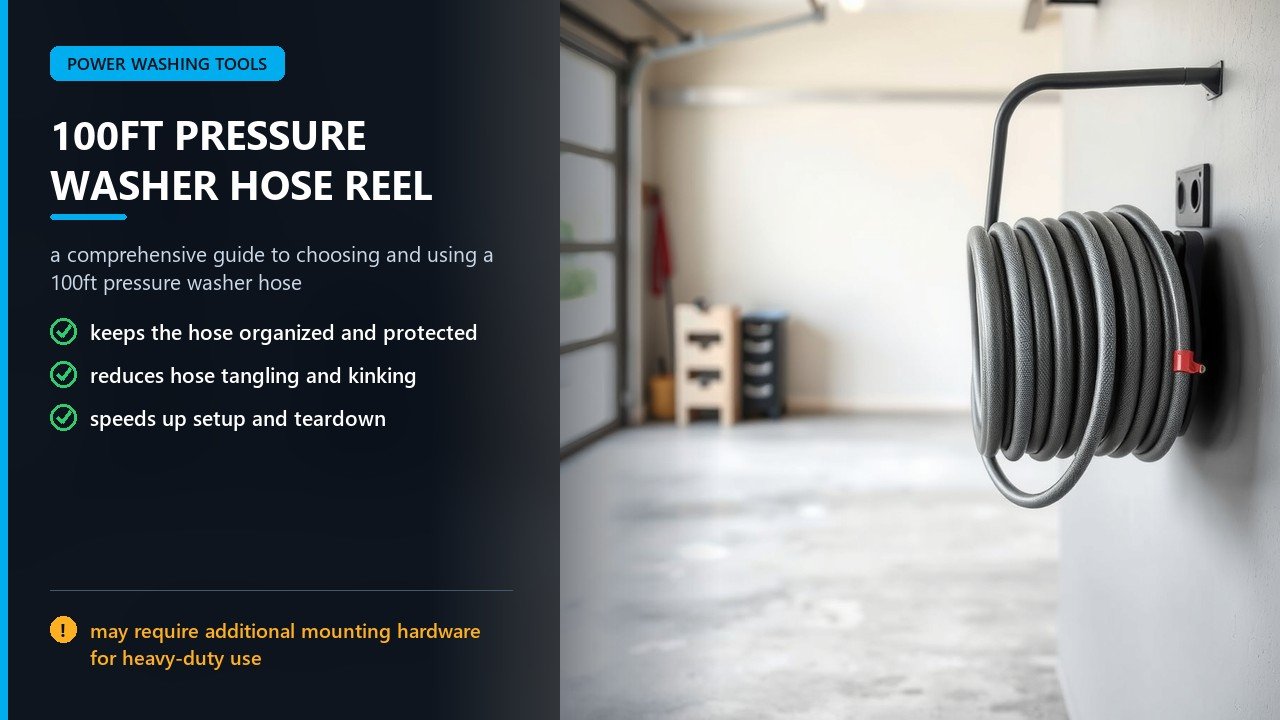
A 100-foot pressure washer hose is long, heavy, and awkward to handle, and when left coiled on the ground it tangles, kinks, and gets damaged, and it is time-consuming to deploy and store. A hose reel solves these problems by winding the hose neatly, protecting it from kinks, abrasion, and the elements, and making it fast to extend and retract. For a hose of this length, a reel is almost a necessity, transforming a frustrating chore into a quick task, and it prolongs the hose’s life by preventing the damage that careless storage causes.
Beyond convenience, a reel keeps the workspace tidy and safer, since a coiled hose on the ground is a tripping hazard and can be driven over or damaged, while a reeled hose stays out of the way. It also makes the hose easier to transport and store, and it can be mounted so the hose feeds smoothly without kinking. For anyone using a 100-foot hose regularly, especially in professional or frequent cleaning, a reel pays for itself in convenience, safety, and hose longevity.
A hose reel is the natural companion to a 100-foot hose. Because a hose this long is unwieldy and easily damaged without one, a reel delivers organization, protection, and speed, making the long hose practical to use. It also improves safety and extends the hose’s life. Recognizing the value of a reel for a long hose sets up the question of choosing the right one, which depends on your hose’s size and how you will mount and use the reel. Our guide to 100 ft pressure washer hose covers the hose that pairs with it.
Reel Capacity for a 100-Foot Hose
Capacity is the first thing to verify.
Not every reel holds 100 feet of hose, and the capacity depends on the hose’s diameter and thickness, since a 1/4-inch hose takes less space than a 3/8-inch hose, and a stiffer hose takes more room than a flexible one. So when choosing a reel, check that it is rated for at least the length and diameter of your specific hose, and ideally with a little room to spare, since a reel that is too small will not fit the hose or will strain it. Manufacturers usually list the hose length and diameter a reel accommodates, so match those to your hose.
A reel that is too small is a common disappointment, as the hose will not fit or will be difficult to wind, while a reel that is far too large is unnecessarily bulky and expensive. The sweet spot is a reel rated for your hose’s length and diameter, with a little margin. Also consider the reel’s hose capacity in terms of diameter, since a reel rated for 100 feet of 1/4-inch hose may hold less of a 3/8-inch hose, which matters if you plan to change hoses. Verifying capacity against your hose prevents the mismatch that makes a reel useless.
Capacity is where reel selection begins. Because a 100-foot hose takes significant space and the required reel capacity depends on the hose’s diameter and flexibility, checking the reel’s rating against your specific hose ensures a fit. Choosing a reel with adequate capacity, without going oversized, gives you a reel that works smoothly and lasts. With the right capacity, the reel holds the full hose neatly and winds easily, which is the foundation of a good reel setup for a long hose. Our guide to 100ft pressure washer hose covers the hose specifications that affect capacity.
Types of Hose Reels
Reels come in configurations suited to different setups.
Wall-mounted reels. These attach to a wall, post, or the side of a building or machine, keeping the hose elevated and off the ground, and they are ideal for a fixed cleaning location like a home or shop. They save space and protect the hose, and they let the hose feed out smoothly.
Cart or trolley reels. These are mounted on a cart or stand that can be moved, offering portability along with organization, and they suit users who clean in different locations and want to move the hose and reel together.
Floor or frame-mounted reels. These sit on the ground or on a frame, and they can be positioned where needed, offering flexibility in placement.
Manual versus powered reels. Manual reels are wound by hand, simple and reliable, while powered reels, whether motorized or using the machine’s pressure or a crank, wind the hose with less effort, which is helpful for a long, heavy hose. For a 100-foot hose, a powered or crank-assisted reel can save considerable effort.
The right type depends on your setup and needs. A wall-mounted reel suits a fixed location, a cart reel suits mobility, and a powered reel reduces the effort of handling a long hose. Whichever type, it must be rated for a 100-foot hose and built to withstand the pressure and the weight. Matching the reel type to how and where you clean ensures the reel serves you well, and it makes managing a long hose far easier. Our guide to pressure washer wall mounted hose reel covers the fixed option in detail.
| Reel Type | Best For |
|---|---|
| Wall-mounted | Fixed location, home or shop, saves space |
| Cart / trolley | Mobility between locations |
| Floor / frame | Flexible placement |
| Manual vs powered | Effort vs simplicity for a long hose |
These types cover most setups, and choosing among them depends on whether you stay in one place or move, and how much effort you want to spend winding a 100-foot hose. A wall-mounted reel suits a fixed location, while a cart or powered reel suits mobility and ease, and a manual reel is simple and reliable. The key is a reel rated for your hose’s length and diameter and built to handle the pressure and weight. The right type makes a long hose manageable and protects it. Our guide to power hose reel covers powered winding options.
Installing and Using the Reel
Proper installation and use protect the hose and the reel.
Mount the reel securely, since a 100-foot hose is heavy when wound and the reel must support the weight, and position it so the hose feeds out smoothly without sharp bends or kinks, which damage the hose and restrict flow. Ensure the reel’s inlet connects properly to the machine or water source and that the hose connects without stress, and follow the manufacturer’s guidance for installation. For a wall-mounted reel, attach it to a solid structure able to bear the load, and for a cart reel, ensure stability so it does not tip.
When using the reel, wind and unwind the hose evenly, avoiding sharp pulls that can kink or damage it, and do not over-wind or force the hose, which strains the reel and the hose. Keep the hose clean and inspect it for damage, and protect the reel from the elements and freezing where possible. After use, drain the hose before winding it and store the reel somewhere that protects the hose, since trapped water and exposure shorten the hose’s life. Proper use and care keep the reel and hose working well.
Installation and use determine how well the reel performs. Because a long hose is heavy and prone to kinking, mounting the reel securely and feeding the hose smoothly prevent damage and make the reel easy to use, while proper winding and storage protect both the hose and the reel. Following the guidance for the specific reel ensures correct installation and reliable operation. With proper setup and care, the reel makes the 100-foot hose convenient and durable, and it delivers the reach that made you choose the long hose in the first place. Our guide to pressure wash hose reel covers reels more broadly.
Build Quality and Materials
A reel that lasts is built for the load.
A 100-foot hose reel carries a heavy load, so build quality matters. Look for a reel with a sturdy frame, often steel or heavy-duty plastic, that can support the weight of a full hose without flexing or sagging, and a smooth swivel and winding mechanism that operates without binding. The reel’s connections and fittings should be rated for pressure washer use and compatible with your hose, and the reel should withstand water, weather, and the pressure of the job. Cheaper reels may bend, jam, or corrode, especially under the weight and stress of a long hose.
Materials affect durability, with corrosion-resistant finishes and quality components lasting longer, particularly for outdoor or professional use, and the reel’s bearing or winding system determining how smoothly it operates. A well-built reel costs more but saves frustration and replacement over time, while a flimsy one that cannot handle a 100-foot hose is a false economy. When choosing, prioritize a reel built for the weight and pressure of your hose, with smooth operation and durable materials, since the reel must endure repeated use.
Build quality determines whether the reel serves you for years or becomes a nuisance. Because a long hose is heavy and the reel is under stress each time you wind it, a sturdy, smooth-operating reel is worth the investment, while a flimsy one fails under the load. Durable materials and quality components ensure the reel withstands weather and use, protecting the hose and working reliably. Choosing a reel built for the job, rather than the cheapest option, gives you a reel that lasts and a hose that is well cared for. Our guide to pressure washer hose reel 100 ft covers reels designed for this length.
Maintaining the Reel and Hose
Simple care keeps the reel and hose in good condition.
Maintaining the reel and hose extends their life. Inspect the hose for cracks, cuts, and worn fittings, and replace it if damaged, since a failing hose can burst under pressure. Check the reel’s swivel and winding mechanism for smooth operation and lubricate or clean as needed, and ensure the connections are tight and free of leaks. Keep the reel clean and, where possible, sheltered from the elements, and prevent water from freezing inside the hose or reel, which can damage both.
After each use, drain the hose and wind it properly, avoiding kinks, and store the reel in a protected place, since trapped water, sunlight, and freezing temperatures all shorten the hose’s life. Address any leaks, stiffness, or damage promptly, since small problems grow into failures under pressure washer stress. Regular inspection and care keep the reel and hose working reliably, and they prevent the mid-job failures that disrupt cleaning and can cause injury.
Maintenance is what keeps the reel and hose dependable over time. Because pressure washer components endure stress and exposure, regular inspection, proper storage, and prompt repair prevent the deterioration that leads to failures, and they extend the life of both the reel and the hose. Simple care, from draining the hose to lubricating the reel, protects the investment and ensures readiness. With good maintenance, the reel and hose remain reliable, and the long hose delivers its reach whenever you need it, without surprises. Our guide to pressure washer repair kit covers the parts that keep components working.
Getting the Most From 100 Feet of Reach
A long hose and a good reel open up cleaning possibilities.
A 100-foot hose, managed on a reel, lets you clean large areas and reach around obstacles from a single setup, reducing the need to move the machine. To get the most from this reach, set up the machine and reel in a central location so the hose reaches the farthest points without stretching, and use the reel to feed out just the hose you need, keeping the rest wound and protected. Manage the hose so it does not run through landscaping or across areas where it could be damaged, and avoid sharp bends that restrict flow.
The long reach is especially valuable for large driveways, wrapping around a house, cleaning second-story areas with the right equipment, and professional work where repositioning the machine wastes time. Pairing the 100-foot hose with the right nozzles and accessories lets you clean efficiently from fewer setup points, and a reel keeps the hose ready. Planning the setup around the reach makes the most of the long hose, turning it into a productivity advantage rather than a chore.
The reach of a 100-foot hose, well managed, transforms how you clean. Because the long hose covers large areas and eliminates repositioning, and because a reel keeps it organized and protected, the combination lets you work efficiently from a few setups, saving time and effort. Planning the setup and managing the hose maximize this advantage, whether for residential or professional cleaning. With the reach and the reel working together, the 100-foot hose is a powerful tool, and the reel ensures it is always ready and protected. Our guide to electric pressure washer covers machines that pair well with a long hose for home use.
Frequently Asked Questions About a 100ft Pressure Washer Hose Reel
What size hose reel do I need for 100 feet? A reel rated for at least 100 feet of your hose’s diameter. Since thicker hoses take more space, check the reel’s rating against your specific hose’s length and diameter, ideally with a little margin.
Will a reel hold a 100-foot hose? Only if it is rated for that length and diameter. A reel rated for 100 feet of 1/4-inch hose may hold less of a 3/8-inch hose, so verify the rating before buying.
Is a powered reel worth it for a 100-foot hose? For a long, heavy hose, a powered or crank-assisted reel can save significant effort when winding. Manual reels are simpler and cheaper but require more effort.
How do I keep the hose from kinking on a reel? Mount the reel so the hose feeds smoothly without sharp bends, wind it evenly without forcing, and avoid sharp pulls. This prevents kinks and damage.
Can I leave the hose on the reel? Yes, but drain it before storing, protect the reel from freezing and the elements, and inspect the hose for damage, so it lasts. Storing a wet hose can promote deterioration.
Where should I mount the reel? On a solid, secure structure where the hose can feed out smoothly, such as a wall, post, or machine. For mobility, use a cart reel. Ensure the mounting supports the weight of the hose.
Final Verdict on a 100ft Pressure Washer Hose Reel
A 100ft pressure washer hose reel is the practical companion to a long hose, turning an awkward, damage-prone coil into an organized, protected, easy-to-use tool. It keeps the hose neat and safe, speeds setup and teardown, and extends the hose’s life by preventing kinks, abrasion, and storage damage.
Choose a reel rated for at least 100 feet of your hose’s diameter, without going oversized, and pick the type that suits your setup, whether a wall-mounted reel for a fixed location, a cart reel for mobility, or a powered reel to reduce effort. Mount it securely, feed the hose smoothly, and care for both the reel and the hose. With the right reel, a 100-foot hose delivers its full benefit without the frustration, and your cleaning reaches farther with less hassle, protected and ready when you need it.