A 4 GPM pressure washer with a Honda engine is a combination that professionals trust, and for good reason. High flow makes cleaning fast, and a Honda engine makes the machine reliable, easy to start, and long-lived. Together they make a pressure washer that can handle serious, repeated work rather than occasional weekend chores.
This guide explains why this pairing works, what the Honda engines bring, and what to expect from a 4 GPM machine.
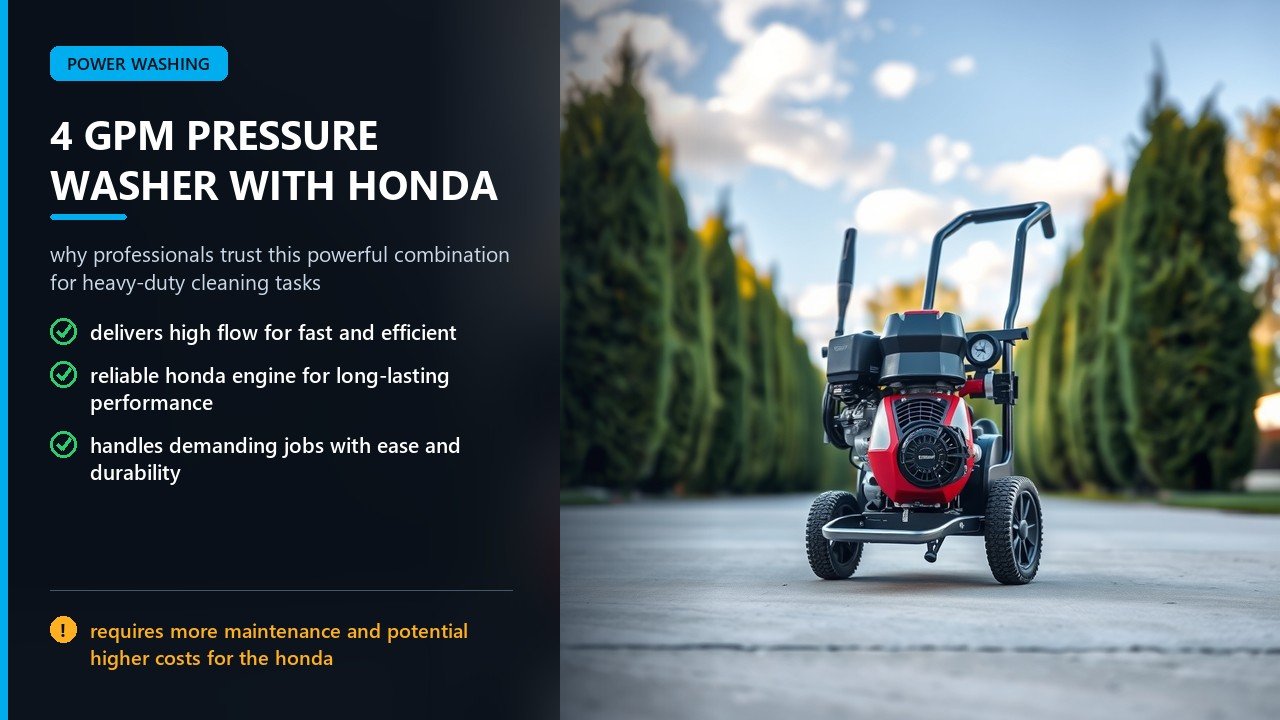
Why Flow Makes the Difference
GPM stands for gallons per minute, and it measures how much water the machine delivers. While pressure decides how hard the water hits, flow decides how fast you clean and how well you rinse. At 4 GPM, a pressure washer moves a lot of water, which covers large surfaces quickly and washes away loosened dirt instead of just pushing it around.
That is why professionals favour high-flow machines. For driveway and flatwork cleaning, fleet washing, and any large-scale task, flow is what saves time. A 4 GPM machine at around 4,000 PSI produces roughly 16,000 cleaning units, a level that makes short work of jobs that would take an age with a smaller washer.
High flow also demands more of the engine, because pushing more water at high pressure takes more power. This is where a Honda engine earns its place: it has the durability and steady output to drive a 4 GPM pump through long, demanding work, day after day, without the fuss of a lesser engine.
Honda Engines on Pressure Washers
Honda makes small engines that are widely respected for reliability, easy starting, and longevity, and its GX series is common on professional pressure washers. These are overhead-valve engines built for commercial duty, with features like low-oil shutdown, which protects the engine from running without lubrication. Some models offer electric start for convenience.
Honda engines come in sizes that pair well with a range of pumps. A 4 GPM machine typically uses a larger Honda engine, often at the upper end of the GX range, because high flow and pressure need substantial power. Matching the engine to the pump ensures the machine runs at its rated output consistently rather than straining.
The benefits of a Honda engine are practical: they start readily, run smoothly, hold up to long hours, and hold their value. For a machine that is used hard and often, that reliability is worth more than a small saving on a cheaper engine. It is a big part of why the 4 GPM Honda combination is a professional favourite.
The Pump and Drive Behind 4 GPM
A 4 GPM machine uses a serious pump, usually a triplex pump with three plungers and an oil-bathed crankcase. Triplex pumps handle high pressure and flow, run smoothly, and can be rebuilt with service kits, which suits professional use. The pump is the component most responsible for the machine’s cleaning capability and its lifespan.
The connection between the Honda engine and the pump is the drive. Direct drive is simple and compact, while belt drive runs cooler, reduces vibration, and absorbs shock loads, which suits heavy, sustained work. On high-flow professional machines, belt drive is common because it is kinder to both engine and pump over long duty.
A 4 GPM machine almost always includes a thermal relief valve and an unloader that together protect the pump when the trigger is released, preventing damaging heat and pressure buildup. These parts matter more at this power level, where the energy involved is greater and the margin for error is smaller.
What a 4 GPM Honda Machine Can Do
A 4 GPM pressure washer handles heavy, large-scale cleaning with ease. It strips grime from large concrete areas, cleans commercial driveways and parking areas, washes fleets of vehicles, and tackles industrial equipment and heavy buildup. It is the kind of machine a professional cleaning business or a serious property owner uses as a primary tool.
It also suits prolonged use. With a durable Honda engine and a triplex pump, a 4 GPM machine can run for extended periods in a working day, which lighter machines cannot. For contract cleaners and busy facilities, that continuous capability is essential.
The table below summarises what to expect from this class.
| Aspect | Typical for 4 GPM |
|---|---|
| Pressure | Around 4,000 PSI |
| Flow | 4 GPM, giving roughly 16,000 cleaning units |
| Engine | Large Honda GX, commercial duty |
| Pump | Triplex, often belt-driven |
| Best for | Professional and heavy cleaning, large areas |
This is a machine built for productive, professional cleaning rather than occasional home use.
Choosing the Right Honda Model
Not every 4 GPM machine uses the same Honda engine, and the engine should be matched to the pump it drives. Smaller GX engines suit lighter pumps, while a genuine 4 GPM machine at high pressure calls for a larger GX model with enough torque to sustain the load. A machine that is under-engined will bog down or fail to reach its rated output.
Look for features that suit professional use. Low-oil shutdown protects the engine, and electric start is convenient on a large machine. Consider fuel capacity, since a bigger tank means fewer refuelling stops on a long job, and check the engine’s service access, because easy oil and filter changes encourage the maintenance that keeps it running.
A reputable Honda engine also holds its value and is easy to service, with parts widely available. On a machine that will work hard for years, spending more on the engine is money well spent, because the engine and pump are the two components that decide whether the machine endures or disappoints. When comparing models, favour the one with the larger, better-specified engine paired to a triplex pump.
The Water Supply Problem
A 4 GPM machine needs a water supply that can deliver at least 4 GPM continuously. This is a common stumbling block: many domestic taps and garden hoses supply less than a high-flow washer demands, and a machine that is starved of water will cavitate, lose pressure, and eventually damage its pump.
The solution is to check the actual supply, not the rated one. A tap’s flow can be measured simply by timing how long it takes to fill a known container. If the supply falls short of 4 GPM, a buffer tank with a float valve and a feed pump can maintain the flow the machine needs, which is why professional setups often include a tank.
Never run a high-flow machine from a marginal supply and hope for the best. Cavitation is one of the fastest ways to destroy a pump, and the damage can be silent at first. Confirm the supply can keep up before running the machine, and use a filter to protect the pump from grit.
Matching Accessories to 4 GPM
Everything downstream of the pump must handle both the pressure and the flow. Hoses, guns, wands, and fittings must be rated for the machine’s pressure, and their bore must be large enough not to restrict 4 GPM. A hose or fitting that is too small restricts flow and creates back pressure, undermining the machine’s advantage.
Nozzles must be sized to the flow, not just the pressure, or the machine will not run at its design point. A surface cleaner rated for the flow makes large flatwork quick and even, and is a natural partner for a 4 GPM machine. High-flow machines also work best with larger quick-connect fittings and a robust hose.
The water supply, pump, hose, gun, and nozzles form a system. When every part is matched to 4 GPM, the machine delivers its full cleaning power. When one part restricts flow, the whole setup suffers. Matching is the key to getting professional results.
Maintenance and Longevity
A 4 GPM Honda machine rewards proper maintenance with a very long service life. On the Honda engine, follow the maker’s schedule for oil, air filter, and spark plug, and keep the fuel fresh, since stale fuel causes most starting problems. The engine’s low-oil protection should be respected, never overridden.
On the pump, keep the oil at the correct level and change it per the schedule, including an early change during break-in. Protect it from freezing, never run it dry, and keep the unloader and thermal relief working. Because a triplex pump is serviceable, valves, seals, and plungers can be replaced as they wear, keeping the pump alive for years.
Check the whole system regularly: hoses for damage, fittings for leaks, nozzles for wear, and the water supply for adequate flow. Store the machine properly, covering it and protecting the pump from frost. Maintained well, a 4 GPM pressure washer with a Honda engine is a professional tool that earns its keep for a decade or more.
Frequently Asked Questions
What is a 4 GPM pressure washer with a Honda engine? A high-flow gas pressure washer, usually around 4,000 PSI and 4 GPM, powered by a large Honda GX engine and a triplex pump, built for professional and heavy cleaning.
Why is a Honda engine preferred? Honda GX engines are known for easy starting, smooth running, durability, and long life, with features like low-oil shutdown. They suit the hard, sustained work a 4 GPM machine does.
How much power does 4 GPM give? At around 4,000 PSI and 4 GPM, roughly 16,000 cleaning units, which cleans large areas quickly and rinses thoroughly.
What pump does a 4 GPM machine use? Usually a triplex pump, often belt-driven for cooler running and less vibration, and rebuildable for long service.
What water supply does it need? At least 4 GPM continuously. Many domestic taps fall short, so a buffer tank and feed pump may be needed to avoid cavitation.
What accessories does it need? Hoses, guns, wands, fittings, and nozzles rated for the machine’s pressure and sized for 4 GPM, plus a surface cleaner for flatwork.
What maintenance does it need? Honda engine oil, air filter, spark plug, and fuel care, plus pump oil changes, a clean inlet filter, unloader care, and protection from freezing.
Who should buy one? Professional cleaners and serious property owners doing heavy, large-scale, or frequent cleaning. It is more machine than most home users need.
Final Thoughts
A 4 GPM pressure washer with a Honda engine is a professional-grade combination. The high flow cleans large areas quickly, and the Honda engine provides the reliable, durable power to drive it through long, demanding work. For contract cleaners and heavy users, it is a proven formula.
Remember that flow is half the story and that a 4 GPM machine needs a supply to match it, or the pump will suffer. Use a triplex pump, match accessories to the flow, maintain the engine and pump, and protect the machine from frost. Set up and cared for properly, this combination delivers serious cleaning power for years. For related reading, see our guides on 4 GPM pressure washers and a gas engine pressure washer.