Four gallons per minute is a dividing line in pressure washing. Below it, most machines are consumer tools built for occasional home use. At and above it, washers start to behave like professional equipment, moving enough water to clean large areas quickly and to keep up with the demands of daily work. A 4 GPM pressure washer is where serious productivity begins.
This guide focuses on 4 GPM pressure washers as working machines: what the flow rating delivers, how to match the pump and engine, what to look for in a professional-grade unit, and how to keep one running under heavy use.
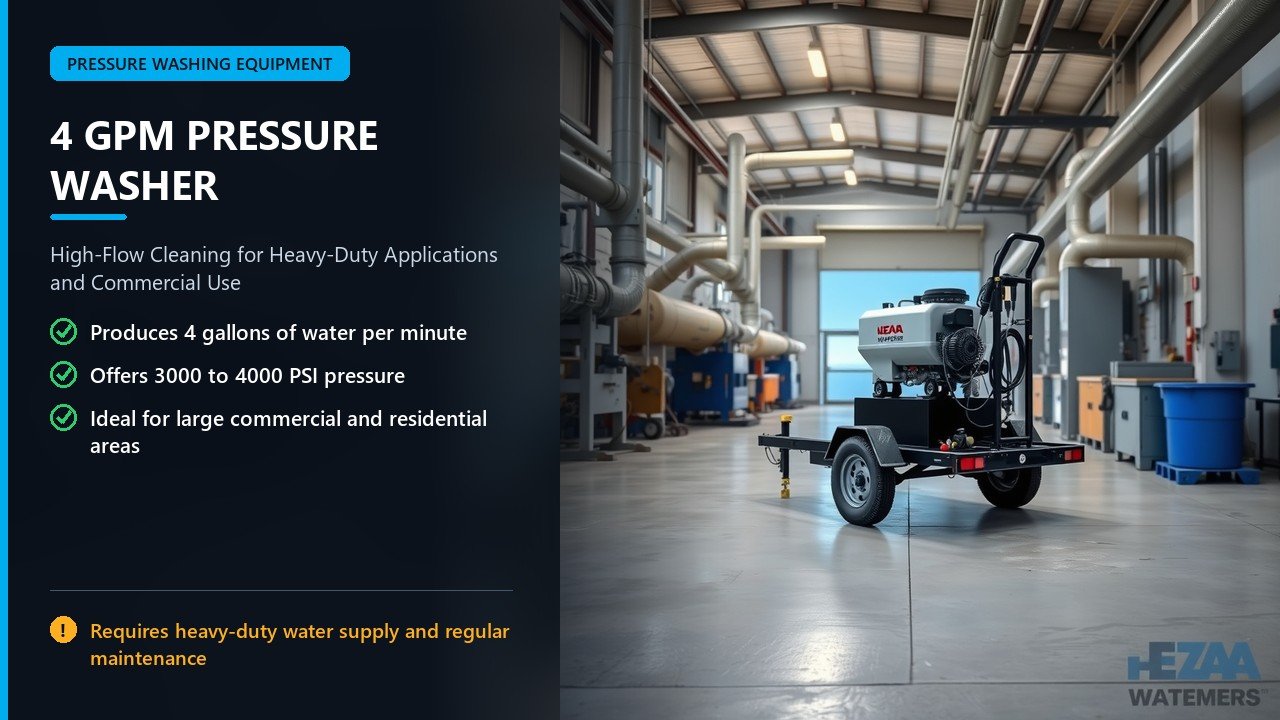
What 4 GPM Means for Production
Gallons per minute measures how much water the machine moves, and flow is what determines how fast you cover and rinse a surface. A 4 GPM washer moves roughly twice the water of a typical 2 GPM consumer machine, which roughly doubles the productivity on large jobs. More water means wider coverage, faster rinsing, and less time per square foot.
Flow is why professionals gravitate to 4 GPM and above. On a long driveway, a parking lot, or a commercial facade, the difference between 2 and 4 GPM is the difference between an all-day job and a half-day one. Time is money in contract cleaning, so flow directly affects how much work a washer can complete.
Pressure still matters, and most 4 GPM machines pair the flow with 3000 to 4000 PSI. The combination delivers both the force to strip and the volume to rinse and cover, which is why 4 GPM machines are common in commercial and heavy residential work rather than casual car washing.
Where 4 GPM Machines Are Used
Four GPM washers are common in professional settings: mobile cleaning businesses, property maintenance, fleet washing, and construction cleanup. They clean large concrete areas, building exteriors, dumpster pads, equipment, and heavy vehicles. Their flow and pressure make short work of jobs that would take a consumer machine hours.
They are also used by serious homeowners with large properties, long driveways, or frequent heavy cleaning needs. For someone who cleans a lot and values speed, a 4 GPM machine can be a worthwhile investment even without commercial work, because it dramatically shortens every job.
The flip side is that a 4 GPM washer demands more from everything around it: a robust water supply, appropriate hoses and nozzles, and a sturdy engine or motor to drive the larger pump. It is not simply a bigger consumer machine; it is a different class of tool with different requirements.
Matching Pump, Engine, and Flow
In gas 4 GPM machines, the engine must be powerful enough to drive the pump at its rated flow and pressure. Undersized engines cause the pump to run below its rating, reducing performance and straining the engine. Matching engine horsepower or displacement to the pump’s demands is essential, and reputable manufacturers pair components carefully.
The pump itself determines durability. Triplex pumps, with three plungers, are the professional standard because they are efficient, long-lasting, and rebuildable. Axial pumps are lighter and cheaper but generally not suitable for the sustained high flow and pressure of commercial work, so a 4 GPM professional machine almost always uses a triplex pump.
Direct-drive versus belt-drive is another consideration. Direct-drive pumps are compact and simple, running at engine speed. Belt-drive pumps run at a lower speed with a belt reduction, which reduces heat and wear and is common on heavy-duty and hot water machines. Belt drive costs more but lasts longer under constant use.
Water Supply: The Critical Requirement
A 4 GPM pressure washer needs a water supply that delivers more than 4 gallons per minute at the inlet. This is the single most important requirement and the one most often overlooked. If the supply cannot keep up, the pump cavitates, loses pressure, and wears out prematurely. No amount of pressure rating compensates for a starved pump.
Most residential taps deliver well above 4 GPM, but long, thin garden hoses, multiple users on the same line, or low-pressure systems can drop the flow below what the machine needs. Test your supply with a bucket and timer, and use a short, large-diameter inlet hose to minimize restriction.
When the tap cannot keep up, the solution is a buffer tank. A tank is filled from the supply, and the pressure washer draws from the tank through a short hose, so the pump always has more water than it needs. Mobile cleaning businesses commonly carry a tank and sometimes a pump to fill it, ensuring a stable supply wherever they work.
Choosing a 4 GPM Pressure Washer
Start with the combination of flow, pressure, and pump. Four GPM paired with a triplex pump is the professional standard, and you should confirm the pump brand and whether rebuild kits and replacement parts are available. A rebuildable pump is far more economical over the machine’s life than a sealed one.
Consider the engine for gas models: a reliable, well-known brand with enough power to drive the pump. Check whether the machine is belt-drive or direct-drive, and whether it is cold water or hot water. Hot water machines cost more but clean grease and oil far better, which matters for some commercial jobs.
Look at the frame, wheels, hose, and gun, since these determine how the machine holds up to daily use. A professional machine should have a sturdy frame, quality wheels for varied terrain, a long high-pressure hose, and a durable gun and wand. Also check the warranty and the availability of service, which matters for a machine you rely on for work.
Hoses, Nozzles, and Accessories
A 4 GPM machine needs a hose rated for its pressure and sized for its flow. A 3/8-inch hose is common for high-flow machines because it minimizes pressure loss. The hose should be long enough to reach your work without constant repositioning, and it should be durable, since commercial work drags hoses over rough surfaces daily.
Nozzles are sized to the machine’s flow and pressure. Using a nozzle that is too small restricts flow and over-pressurizes the pump, while one that is too large drops pressure. Nozzle charts match orifice size to GPM and PSI, and following them protects the machine and delivers the intended spray.
Accessories expand a 4 GPM machine’s productivity. A rotary surface cleaner is essential for flat concrete, and its size should match the machine’s flow so it spins correctly. A water broom sweeps large areas, an undercarriage cleaner rinses vehicle undersides, and a downstream detergent injector applies cleaners over wide areas. Matching accessories to the flow is key to making them work.
Cold Water and Hot Water
Four GPM machines come in cold water and hot water versions. Cold water machines are simpler, cheaper, and sufficient for most exterior cleaning, where pressure and detergent handle the soil. They dominate portable cleaning and are easier to maintain.
Hot water machines heat the water, which dissolves grease, oil, and certain soils far more effectively than cold water. They are the tool of choice for engine degreasing, kitchen exhaust cleaning, and heavy industrial work. The trade-offs are higher cost, greater complexity, and the need for fuel or a large power supply to heat the water.
For a mobile cleaning business, the choice depends on the jobs you take. If grease and oil are common, hot water earns its cost. If your work is mostly concrete, siding, and general exterior cleaning, a cold water 4 GPM machine is simpler and often sufficient.
Operating a 4 GPM Machine
Operating a high-flow machine demands good technique. Keep the gun open and the water flowing to avoid deadheading, which heats and damages the pump. Work in overlapping passes with the correct nozzle for the surface, and let the flow carry debris away rather than forcing it with higher pressure.
Match the surface cleaner or nozzle to the job, and keep the machine fed with water at all times. Because a 4 GPM machine moves a lot of water quickly, it is efficient but also unforgiving of a poor supply or a closed gun. Watch for pressure loss, which signals a supply or nozzle problem, and stop to fix it rather than running the pump starved.
Safety scales up with flow and pressure. Never point the wand at people, keep the spray away from electrical sources, and use eye protection. On hot water machines, be aware of the hot water and exhaust. A professional machine deserves professional caution.
Consumer vs Professional 4 GPM Machines
Not every machine that claims 4 GPM is built for daily work. The table below contrasts consumer-style and professional 4 GPM machines so you can tell which class you are looking at. The price difference usually reflects the pump, engine, drive type, and durability, not just the flow rating.
| Feature | Consumer 4 GPM | Professional 4 GPM |
|---|---|---|
| Pump | May be axial or budget triplex | Triplex, usually rebuildable |
| Drive | Direct drive | Direct or belt drive |
| Engine | Consumer-grade | Name-brand, duty-rated |
| Duty cycle | Occasional use | Continuous daily use |
| Serviceability | Limited parts support | Parts and rebuild kits available |
For occasional heavy cleaning at home, a budget 4 GPM machine may suffice. For business use, the serviceability and durability of a professional machine pay for themselves, because downtime costs money and a rebuildable pump can be repaired rather than replaced.
Maintenance for Heavy Use
A 4 GPM machine used commercially needs disciplined maintenance. Check the pump oil regularly and change it on the manufacturer’s schedule, watching for milky oil that signals water in the crankcase. Keep the inlet water clean with a filter, and inspect the pump for leaks and unusual noise, which can signal failing seals or valves.
On gas models, maintain the engine with fresh oil, clean air filters, and proper fuel handling. Belt-drive machines need the belt checked for tension and wear, and the pulleys inspected for alignment. Direct-drive machines have fewer wear items but still need the pump and shaft coupling checked.
Replace worn nozzles, O-rings, and hoses promptly, since a drip or a restricted nozzle reduces performance and strains the pump. Keep the gun and wand in good condition, and replace worn seals. A maintenance log helps track oil changes, rebuilds, and part replacements, so nothing is forgotten during a busy season.
Protecting the Investment
A 4 GPM machine is a significant investment, especially a professional one, so protecting it matters. Never run it dry or deadhead it, keep it fed with a reliable water supply, and winterize it before freezing weather. Store it securely and cover it when not in use, and keep fuel fresh or stabilized.
Use the machine within its ratings. Running a pump above its rated pressure or starving it for water are the fastest ways to destroy it. Keep the nozzles matched to the machine, and use a relief or unloader valve that works correctly so the pump is protected when the gun closes.
When a component wears, rebuild it rather than replacing the whole machine where possible. A triplex pump can be rebuilt with a seal and valve kit, and many other parts are serviceable. This approach keeps a good machine running for years and lowers the total cost of ownership.
Is a 4 GPM Machine Right for You
A 4 GPM pressure washer is the right choice if speed and productivity matter — for cleaning businesses, large properties, and frequent heavy cleaning. Its high flow shortens jobs dramatically and handles surfaces that would take a consumer machine far longer to clean.
If your cleaning is light and occasional, a smaller machine is more economical and easier to handle. The jump to 4 GPM brings higher cost, greater water demand, and heavier equipment, all of which make sense only when the additional flow delivers real value. For the right user, though, it is a transformative upgrade.
Before buying, confirm your water supply can support it, that you have a hose and nozzles sized for its flow, and that you can maintain a professional-grade machine. When those conditions are met, a 4 GPM washer delivers professional results and lasting value.
Frequently Asked Questions
Is 4 GPM good for a pressure washer? Yes. Four GPM is a high-flow rating, well suited to professional cleaning and large jobs where speed and coverage matter.
What PSI should a 4 GPM washer have? Commonly 3000 to 4000 PSI. High flow pairs with high pressure for demanding exterior and commercial cleaning.
What water supply does a 4 GPM machine need? A supply that delivers more than 4 GPM at the inlet. If your tap falls short, use a buffer tank to keep the pump fed.
Do 4 GPM washers use triplex pumps? Professional 4 GPM machines almost always use triplex pumps, because they are durable, efficient, and rebuildable.
What is the difference between 4 GPM and 2 GPM? Flow. A 4 GPM machine moves twice the water, cleaning large areas much faster, which is why professionals favor it.
Can a homeowner use a 4 GPM washer? Yes, especially on large properties. It is heavier and demands more water, but it dramatically speeds up heavy cleaning.
Do I need a buffer tank? Only if your water supply cannot keep up with the machine’s flow. A tank guarantees a stable supply wherever you work.
How do I maintain a 4 GPM washer? Keep it fed with clean water, never run it dry or deadhead it, change pump and engine oil on schedule, match nozzles to flow, and winterize it.
Final Thoughts
A 4 gpm pressure washer is a productivity machine. High flow moves enough water to clean large areas quickly and to sustain daily professional work, and when paired with a triplex pump and a capable engine, it delivers durability along with speed.
Confirm your water supply can support the flow, match the hose, nozzles, and accessories to the machine, and keep up with maintenance, especially pump service and winterizing. For contractors and owners of large properties, a 4 GPM washer is a serious tool that pays for itself in time saved and results delivered. For related reading, see our guides on the power washer 4 GPM and the gas engine pressure washer.