Five and a half gallons per minute is serious water. Machines at this flow rate are built for commercial cleaning, and they often come with an electric start that replaces the pull cord with the turn of a key or the press of a button. The combination of high flow and electric start makes a 5.5 GPM pressure washer a powerful, convenient tool for professional work.
This guide explains what a 5.5 GPM pressure washer with electric start delivers, how electric start works, the requirements these machines place on water and power, what to look for, and how to operate and maintain one.
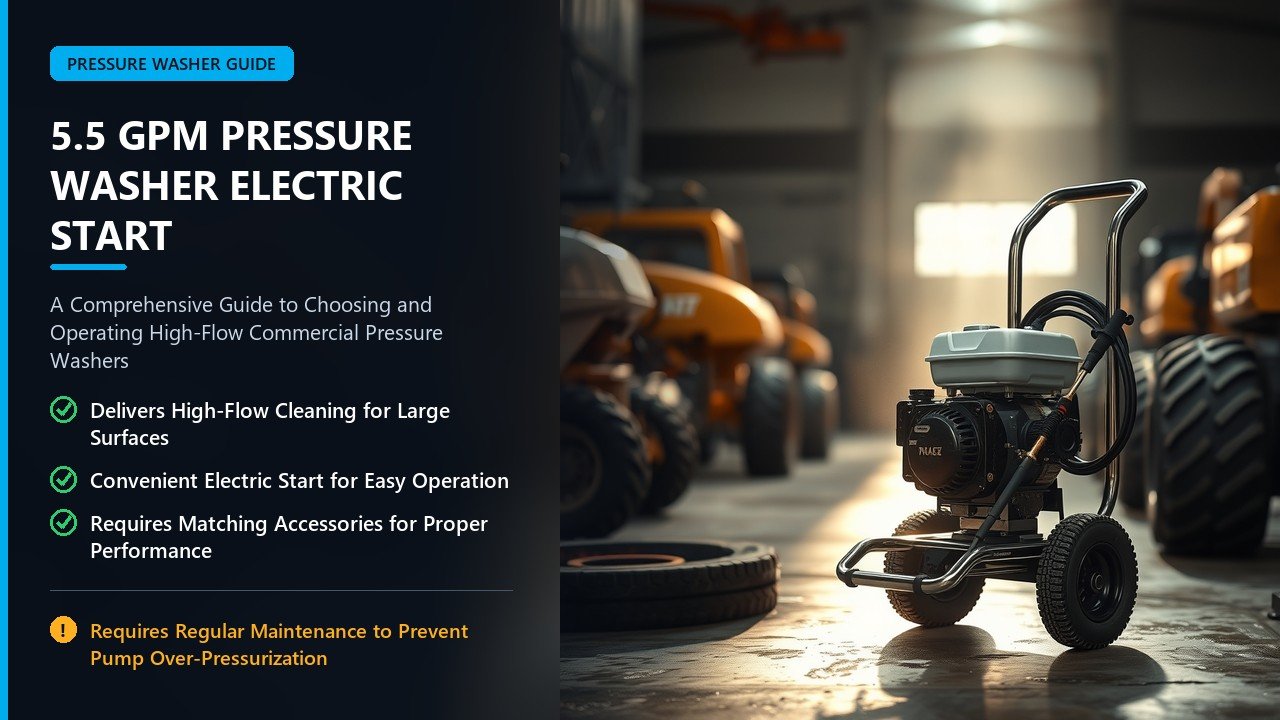
What 5.5 GPM Delivers
Flow, measured in gallons per minute, determines how fast a pressure washer cleans. At 5.5 GPM, a machine moves a large volume of water — far more than a consumer washer — which speeds up rinsing, covering, and rinsing-away of debris. Combined with high pressure, typically 3,000 to 4,000 PSI, it produces the cleaning power contractors rely on.
This flow level is aimed at large surfaces and heavy work: building exteriors, parking lots, fleet washing, construction equipment, and commercial flatwork. On such jobs, 5.5 GPM cuts cleaning time dramatically compared with lower-flow machines, which is why it is a common specification for professional pressure washers.
High flow also requires matching accessories. Nozzles, hoses, surface cleaners, and detergent injectors must be sized for 5.5 GPM to work correctly. A nozzle too small for the flow over-pressurizes the pump, while a surface cleaner sized for lower flow will not spin properly. Matching everything to the flow is essential.
How Electric Start Works
Electric start replaces the manual pull cord on a gas engine with an electric starter motor. Turning a key or pressing a button engages the starter, which cranks the engine until it fires. This removes the effort and inconsistency of pull-starting, especially welcome on larger engines that are hard to pull by hand.
The starter draws power from a battery, which is recharged by the engine’s charging system while it runs — much like a car. Some machines use a small onboard battery, and others use a larger battery that also supports lights or other accessories. Electric start also often pairs with keyed ignition and sometimes a throttle or choke control.
The advantages are convenience and reliability. Starting a big, cold engine by hand can be difficult and tiring, and it is harder still with gloves or in cold weather. Electric start makes cold starts reliable and quick, which matters when a crew needs to begin work promptly.
Adding Start Convenience to Flow
A 5.5 GPM pressure washer with electric start combines the two features that professional users value most: high productivity from flow, and easy starting from the electric system. The result is a machine that starts reliably and cleans large areas quickly, which is exactly what a commercial operation needs.
These machines are typically gas-powered, since electric motors rarely deliver 5.5 GPM at pressure, and they usually feature a heavy-duty triplex pump, a belt-drive or direct-drive configuration, and a robust frame. Some also offer hot water capability, which adds grease-cutting power for certain jobs.
Because they are working machines, they are built for durability and serviceability. Pumps are rebuildable, parts are available, and the frame and wheels are made to move over varied terrain. Electric start is one more feature that keeps the machine productive rather than fussy.
Water and Power Requirements
A 5.5 GPM machine demands a water supply that exceeds 5.5 gallons per minute at the inlet. This is a serious requirement. Many residential taps cannot sustain that flow, especially through a long, thin hose or with other household use on the same line. When the supply cannot keep up, the pump cavitates and wears out quickly.
The solution for inadequate supply is a buffer tank. A tank is filled from the tap, and the pump draws from the tank through a short, large-diameter hose, ensuring it always has more water than it needs. Mobile cleaning businesses routinely carry a tank, often with a transfer pump, so they have a stable supply wherever they work.
Electric start adds a battery requirement. The machine needs a charged battery to crank the engine, and the charging system must keep it topped up during operation. Battery care — keeping it charged, clean, and stored properly — is part of owning an electric-start machine, just as it is with any vehicle.
Choosing a 5.5 GPM Electric Start Machine
Start with the pump. A high-flow machine should use a heavy-duty triplex pump, ideally one that is rebuildable with readily available parts. Confirm the pump’s flow and pressure ratings match the machine’s advertised figures, and check whether parts and seal kits are available for service.
Consider the drive and engine. Belt-drive pumps run at reduced speed and last longer under constant use, while direct-drive pumps are simpler and more compact. The engine should be a reputable, duty-rated brand with enough power to drive the pump, and the electric start system should include a reliable charging circuit and battery.
Look at the frame, wheels, hose, gun, and accessory set. A professional machine should roll over curbs and rough ground, carry a long high-pressure hose, and include a durable gun and wand. Check the warranty and the availability of service and parts, since a machine you rely on for work must be supportable.
Cold Water or Hot Water
A 5.5 GPM electric start machine can be cold water or hot water. Cold water units are simpler, cheaper, and sufficient for most exterior cleaning, where pressure and detergent do the work. They are easier to maintain and common in portable cleaning.
Hot water units heat the water to dissolve grease and oil more effectively, which is essential for engine degreasing, kitchen exhaust cleaning, and heavy industrial work. They cost more, are more complex, and need fuel or a large power supply to heat water, but they handle soils that cold water struggles with.
The choice depends on the jobs you take. If grease and oil dominate your work, hot water earns its cost. If your work is mostly concrete, siding, and general exterior cleaning, cold water is simpler and often sufficient. Electric start is useful on both types, especially on the larger, harder-to-crank engines hot water units often use.
Operating a 5.5 GPM Machine
Operating a high-flow machine requires good technique. Keep the water flowing and the gun open to avoid deadheading, which heats and damages the pump. Work in overlapping passes with the correct nozzle for the surface, and let the flow carry debris away rather than forcing it with higher pressure.
Match accessories to the flow. A surface cleaner sized for 5.5 GPM cleans flat concrete quickly and evenly, while a water broom sweeps large areas. A downstream detergent injector applies cleaning solution over wide areas, and the right nozzles deliver the intended spray. Mismatched accessories reduce performance and can strain the pump.
With electric start, startup is simple: check the fuel and oil, verify the battery charge, set the controls, and press the button or turn the key. Confirm water is flowing before starting the engine, so the pump is never run dry. Allow the engine to warm briefly, then begin work, and shut down properly at the end of each job.
Requirements at a Glance
A 5.5 GPM electric start pressure washer is a demanding machine. The table below summarizes the key requirements and matching considerations so you can plan a setup that works.
| Aspect | Requirement |
|---|---|
| Water supply | More than 5.5 GPM at the inlet; a buffer tank if the tap falls short |
| Pump | Heavy-duty triplex, preferably rebuildable |
| Drive | Belt drive for durability; direct drive for simplicity |
| Battery | Charged battery for electric start; working charging system |
| Nozzles | Sized to 5.5 GPM so flow and pressure are correct |
| Accessories | Surface cleaners, hoses, and injectors rated for the flow |
Every item on this list exists for the same reason: a high-flow machine only performs properly when everything around it is matched to the flow. Skimp on water supply, nozzle sizing, or pump quality, and the machine underperforms or breaks down.
Maintenance for Heavy Use
High-flow machines work hard, so maintenance is not optional. Check the pump oil regularly and change it on schedule, watching for milky oil that signals water intrusion. Keep the inlet filter clean, and check for leaks at the pump, fittings, and swivel. Address small leaks before they grow.
Service the engine as a working engine: fresh oil, clean air filter, and treated or fresh fuel. Inspect the electric start system — battery, terminals, starter, and charging circuit — and keep the battery charged and the terminals clean. Check the belt on belt-drive machines and the coupling on direct-drive machines for wear.
Inspect the hose, gun, and nozzles regularly, and replace worn parts. Keep spare O-rings, nozzles, and a seal kit on hand, since downtime on a commercial machine costs money. A maintenance log helps track service intervals and keeps the machine reliable.
Battery and Starting Care
The battery is the heart of the electric start system, and it needs attention. Keep it charged, especially during storage, and use a maintainer if the machine sits for long periods. Clean and tighten the terminals, and check the battery for damage or swelling. A weak battery turns electric start into a frustrating no-start.
If the engine cranks but does not start, check the fuel, spark, and choke as you would on any engine. If it does not crank at all, the battery, starter, or wiring is the likely cause. Regular inspection prevents the surprise of a machine that will not start at the beginning of a job.
When storing the machine, disconnect or maintain the battery and store it in a cool, dry place. Extreme cold reduces battery capacity, and a discharged battery can freeze and be ruined. Proper battery care keeps electric start reliable season after season.
Winterizing a High-Flow Machine
Freezing is the biggest seasonal threat. Water left in a 5.5 GPM machine’s pump, hose, or gun can freeze, expand, and cause costly damage. Winterizing should be routine: flush detergent, drain the machine and hoses, and draw pump protector fluid or a non-toxic, pump-safe antifreeze through the pump.
Store the machine dry, covered, and above freezing, with the hose drained and nozzles stored dry. On gas machines, drain or stabilize the fuel and fog the cylinder to prevent rust and varnish. Service the pump oil as part of storage, and maintain the battery.
In spring, flush the protector fluid from the pump with clean water, check the oil, inspect the seals and fittings, verify the battery charge, and test the pressure before the first job. A careful restart after storage catches small problems before they cost a day of work.
Is a 5.5 GPM Machine Right for You
A 5.5 GPM electric start pressure washer is the right choice for commercial cleaning businesses and serious users who need high productivity and reliable starting. Its flow cleans large areas quickly, and electric start makes a hard-to-crank engine easy to run.
If your cleaning is occasional or light, a smaller, simpler machine is more economical and easier to handle. The jump to 5.5 GPM brings higher cost, greater water demand, heavier equipment, and more maintenance, all of which make sense only when the extra flow and convenience deliver real value.
For the right user, though, the combination is transformative: a machine that starts with a button and cleans with the force of a commercial unit. Confirm your water supply can support the flow, match accessories to it, and maintain the machine and battery carefully, and it will deliver professional results and lasting value.
Frequently Asked Questions
What is a 5.5 GPM pressure washer used for? Commercial and heavy-duty cleaning: building exteriors, parking lots, fleets, construction equipment, and large flatwork, where high flow cleans quickly.
What does electric start mean? A starter motor, powered by a battery, cranks the engine at the turn of a key or press of a button instead of a manual pull cord.
How much water does a 5.5 GPM machine need? More than 5.5 gallons per minute at the inlet. If your tap cannot supply it, use a buffer tank to keep the pump fed.
Do 5.5 GPM washers have triplex pumps? Professional models usually do. A heavy-duty triplex pump is the standard for sustained high flow and pressure, and it is rebuildable.
Is electric start reliable? Yes, when the battery and charging system are maintained. Keep the battery charged and the terminals clean, and it starts easily even when cold.
Cold water or hot water? Cold water suits most exterior cleaning; hot water dissolves grease and oil better for certain commercial jobs. The choice depends on your work.
What nozzles and accessories do I need? Nozzles, hoses, surface cleaners, and injectors sized for 5.5 GPM, so the machine’s flow and pressure reach the surface correctly.
How do I maintain one? Service the pump oil and engine, clean the inlet filter, maintain the battery and starter, check belts and fittings, and winterize before freezing.
Final Thoughts
A 5.5 gpm pressure washer electric start machine pairs the productivity of high flow with the convenience of push-button starting. For commercial cleaning and serious users, it starts reliably and cleans large areas fast, which is exactly what a working operation needs.
Confirm your water supply exceeds 5.5 GPM or add a buffer tank, match every accessory to the flow, and keep the pump, engine, and battery well maintained. Chosen and cared for properly, a machine like this delivers professional results and lasting value. For related reading, see our guides on 4 GPM pressure washers and the gas engine pressure washer.