For heavy-duty cleaning where electric machines fall short, a gas pressure washer is the answer. Combine that with 4,000 PSI and you have one of the most capable portable cleaning tools available — powerful enough for commercial driveways, fleet washing, and the toughest residential jobs. A gas 4,000 PSI pressure washer trades the convenience of electricity for raw power and total portability.
This guide explains what to expect from a 4,000 PSI gas machine, how the engine and pump work together, who should buy one, how to start and run it, what maintenance keeps it reliable, and how to choose the right model.
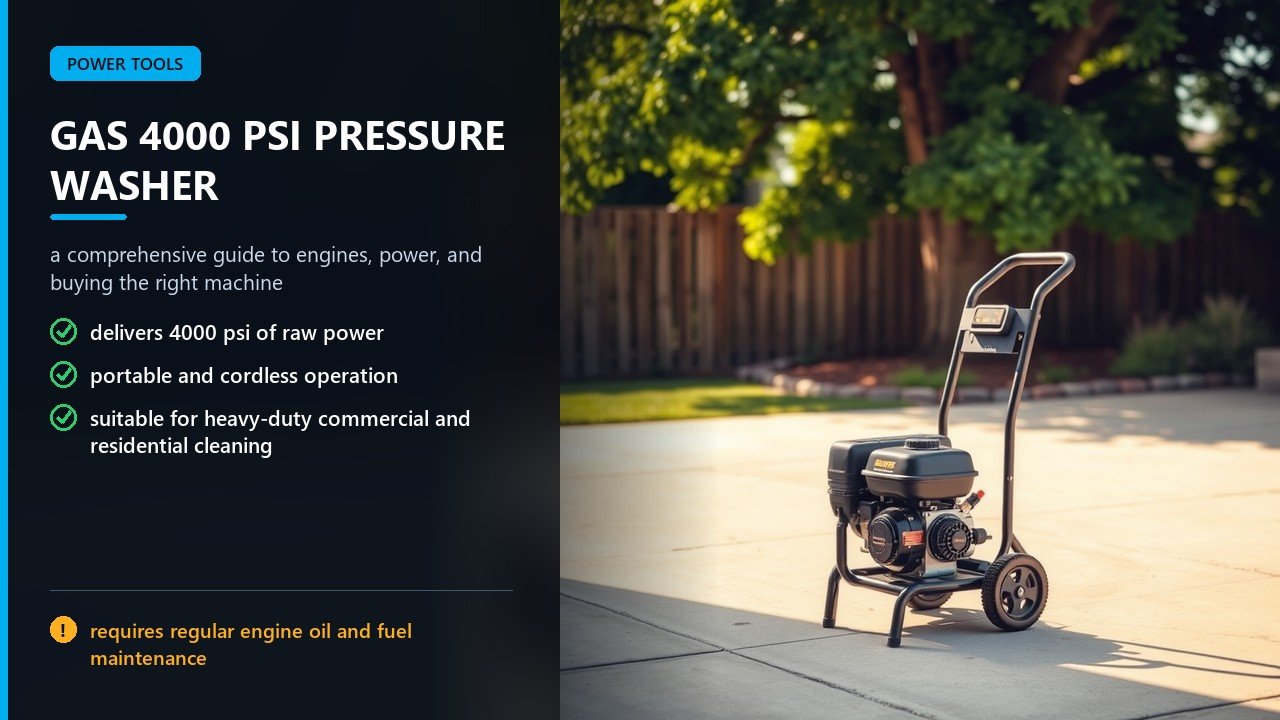
Why Go Gas at 4,000 PSI?
Electric pressure washers rarely reach 4,000 PSI because the power required exceeds what a standard outlet can supply. Gas engines deliver the horsepower needed to drive a high-pressure pump without cords or outlets.
| Factor | Gas 4,000 PSI | Electric |
|---|---|---|
| Max pressure | 4,000 PSI readily | Usually 1,500–2,000 PSI |
| Portability | Anywhere, no outlet | Limited by cord and power |
| Maintenance | Engine oil, fuel, spark plug | Minimal |
| Noise and exhaust | Louder; produces fumes | Quieter; clean to run |
| Best for | Heavy and off-grid work | Light, indoor, home tasks |
Quick Note: Gas means power and freedom, but it also means engine maintenance and fumes. Electric is simpler, but it cannot match 4,000 PSI performance.
How the Engine and Pump Work Together
A gas pressure washer pairs an engine with a pump. The engine spins the pump, which pressurizes water. Both must be sized correctly for the rating to be real.
- Engine power must be enough to sustain 4,000 PSI and the machine’s flow rate.
- Pump type — a triplex plunger pump is durable and rebuildable; axial pumps are cheaper but shorter-lived.
- Direct drive vs belt drive — belt drive runs cooler and lasts longer; direct drive is simpler and cheaper.
Short Note: A genuine 4,000 PSI machine needs a substantial engine and a robust pump. Be wary of listings that claim 4,000 PSI from a small engine and a budget pump — the real working pressure is likely lower.
Specifications That Matter
| Specification | What to Look For |
|---|---|
| Working pressure | Around 4,000 PSI, not just peak claims |
| Flow rate (GPM) | Higher flow cleans faster and rinses better |
| Engine | Recognized brand, adequate horsepower |
| Pump | Triplex, ceramic plungers, rebuildable |
| Drive | Belt drive for longevity (pro), direct for simplicity |
| Frame and wheels | Steel frame, pneumatic tires |
Cleaning units (PSI × GPM) give the clearest picture of productivity. A balanced machine beats one that is impressive in only one number.
Who Should Buy a Gas 4,000 PSI Machine
- Cleaning contractors who need speed and power on every job.
- Commercial property managers maintaining large paved areas.
- Fleet and truck-washing operations that rinse many vehicles.
- Farm and ranch owners cleaning equipment and structures off-grid.
- Serious homeowners with long driveways and heavy grime.
For light, occasional home cleaning near an outlet, electric is often the better fit. Gas shines when power and portability are essential.
Starting and Operating the Machine
| Step | Action |
|---|---|
| 1. Check fluids | Engine oil and pump oil at correct levels |
| 2. Connect water | Supply hose on, water turned on fully |
| 3. Bleed air | Squeeze the trigger until steady water flows |
| 4. Set choke and fuel | Engage choke; ensure fuel valve is open |
| 5. Start the engine | Use the recoil or electric start |
| 6. Release the choke | Once running smoothly |
| 7. Begin cleaning | Adjust nozzle and technique as needed |
Short Note: Never start the engine with the water supply off. Running a pump dry for even a short time causes cavitation and rapid damage.
Engine Considerations
| Aspect | What to Know |
|---|---|
| Fuel | Use fresh gasoline; add stabilizer for storage |
| Oil | Check every use; change per schedule |
| Air filter | Clean or replace; critical in dusty conditions |
| Spark plug | Inspect and replace seasonally |
| Break-in | Follow the manual — often an early oil change |
| Altitude | High altitude may require jetting changes and reduces power |
Gas engines reward basic care. Fresh fuel, clean oil, and a maintained air filter prevent most starting and running problems.
Water Supply Requirements
A 4,000 PSI gas machine needs more than pressure — it needs flow at the inlet.
- Feed more than the machine’s GPM so the pump never starves.
- Use a short, wide inlet hose (5/8-inch or larger).
- Test your source with the five-gallon bucket method.
- Add a buffer tank and feed pump for weak or remote sources.
- Keep the inlet filter clean.
Inadequate supply is the number-one cause of poor performance and pump damage on high-pressure gas machines.
Technique for Best Results
- Choose the right nozzle. Start with 25° or 40°; use 15° for tough stains and 0° only sparingly.
- Keep the wand moving to avoid streaks and etching.
- Maintain distance. Closer means more impact and more risk.
- Use a surface cleaner for driveways and large flatwork.
- Pre-soak and dwell detergent on heavy soil.
- Work top-down and overlap passes.
- Test delicate surfaces in a hidden area first.
At 4,000 PSI, restraint is a skill. The power is there when you need it, but most surfaces clean best with a wider nozzle and steady movement.
Maintenance Schedule
| Task | Interval | Purpose |
|---|---|---|
| Check engine oil | Every use | Prevent engine damage |
| Change engine oil | After break-in, then per manual | Reliability |
| Check pump oil | Per manual | Protect the pump |
| Clean air filter | Regularly, more often in dust | Maintain engine power |
| Inspect spark plug | Seasonally | Reliable starts |
| Inspect hose and fittings | Before use | Prevent dangerous bursts |
| Winterize | Before freezing | Prevent freeze damage |
A maintained gas machine starts easily, runs strong, and lasts for years. Neglect leads to hard starts, lost pressure, and expensive repairs.
Storage and Winterization
- Drain all water from the pump, hose, and wand.
- Use pump antifreeze or run the pump briefly to expel water.
- Add fuel stabilizer or drain the fuel system for long storage.
- Change the oil before storing for the season.
- Remove the spark plug or fog the cylinder for extended storage (per manual).
- Store dry, sheltered, and above freezing.
Freezing water and stale fuel are the two most common causes of off-season problems. Handle both and the machine will start right up next season.
Common Mistakes to Avoid
- Running the pump without water. Immediate damage risk.
- Starving the machine of flow. Reduces performance and wears the pump.
- Using old or untreated fuel. Causes hard starting and carburetor issues.
- Skipping oil changes. Shortens engine life dramatically.
- Running the engine indoors. Carbon monoxide is deadly.
- Leaving water in over winter. Freezing cracks pumps and lines.
- Using the 0° nozzle on the wrong surface. Causes permanent damage.
Choosing the Right Model
When comparing gas 4,000 PSI machines, look past the headline numbers to the components that decide durability and performance.
| Priority | What to Prefer |
|---|---|
| 1. Pump | Triplex, ceramic plungers, rebuild kits available |
| 2. Engine | Recognized brand with adequate horsepower |
| 3. Drive system | Belt drive for heavy use; direct for lighter duty |
| 4. Frame and wheels | Welded steel, pneumatic tires |
| 5. Hose and fittings | 3/8-inch high-pressure rated |
| 6. Warranty and support | Strong coverage and available parts |
Short Note: A machine with the same 4,000 PSI rating can vary enormously in quality. The pump and engine tell you how long it will last and how reliably it will perform.
Comparing Gas to Other Options
| Option | Pros | Cons |
|---|---|---|
| Electric 2,000 PSI | Quiet, clean, low maintenance | Limited power and range |
| Gas 3,000 PSI | Portable, good power | Engine maintenance |
| Gas 4,000 PSI | Maximum portable power | Cost, noise, fumes, water demand |
| Industrial 5,000+ PSI | Extreme capability | Very expensive; overkill for most |
For most heavy-duty users, 4,000 PSI gas is the sweet spot — powerful enough for professional work without the cost and complexity of industrial equipment.
Accessories That Maximize a Gas Machine
- Rotary surface cleaner. The best upgrade for driveways and lots.
- Turbo nozzle. Aggressive cleaning for concrete and heavy grime.
- 3/8-inch hose. Preserves flow on high-output machines.
- Foam cannon. Applies detergent for fleet and vehicle washing.
- Extension wand. Reaches siding and roofs.
- Buffer tank and feed pump. Guarantees supply on remote jobs.
Accessories matched to pressure and flow unlock the machine’s full productivity. Undersized attachments throttle even a powerful 4,000 PSI machine.
Break-In and First Use
- Read the manual. Break-in procedures vary by engine and pump.
- Change the engine oil after the initial break-in period.
- Check the pump oil and note the recommended type.
- Inspect all connections for leaks before the first job.
- Run with water flowing and bleed air from the system.
- Record the serial and model numbers for warranty and parts.
A proper break-in sets the machine up for a long, trouble-free life. Following the manufacturer’s first-use instructions is the easiest way to protect your investment.
Safety With a Gas Pressure Washer
- Never run the engine indoors or in enclosed spaces. Carbon monoxide is invisible and deadly.
- Let the engine cool before refueling. Prevent fire.
- Store fuel safely in approved containers away from heat.
- Never point the wand at people or pets.
- Wear eye protection, hearing protection, and sturdy footwear.
- Use both hands and firm footing — 4,000 PSI produces strong recoil.
- Inspect hoses and fittings before each use.
- Manage runoff and follow local disposal rules.
Guidance from the Occupational Safety and Health Administration (OSHA) and the Centers for Disease Control and Prevention (CDC) on carbon monoxide and powered equipment is essential reading for gas machine owners.
Cost and Value
| Class | Typical Price | Best For |
|---|---|---|
| Prosumer gas 4,000 PSI | $700–$1,300 | Serious home and light contract work |
| Professional gas 4,000 PSI | $1,300–$2,500 | Daily commercial use |
| Belt-drive industrial | $2,500+ | Heavy continuous duty |
Value is measured in reliability and productivity. For frequent or professional work, a durable machine with a triplex pump pays for itself; a cheap unit that fails early does not.
Real-World Scenarios
Scenario 1: A cleaning contractor. A belt-drive 4,000 PSI gas machine with a surface cleaner cleans driveways and commercial lots all day without wearing out, delivering billable results fast.
Scenario 2: A farm owner. Portable gas power cleans tractors, barns, and fences far from any outlet — an advantage electric cannot match.
Scenario 3: A homeowner with a long driveway. A prosumer gas machine with a rotary surface cleaner turns a weekend chore into an afternoon job.
Frequently Asked Questions
Can an electric machine reach 4,000 PSI? Rarely. High-pressure models exist but are industrial and expensive; gas is the practical route to 4,000 PSI.
How much water does a gas 4,000 PSI machine need? More than its rated GPM. Feed an ample supply and never run the pump dry.
Belt drive or direct drive? Belt drive runs cooler and lasts longer for professional use; direct drive is simpler and cheaper for occasional work.
What maintenance does it require? Engine oil, pump oil, air filter, spark plug, fuel care, and winterization.
Is 4,000 PSI too much for home use? For small jobs, yes. For large driveways and heavy grime, it is appropriate.
Final Thoughts
A gas 4,000 PSI pressure washer is the most powerful portable cleaning tool most buyers will ever need. It combines serious pressure with real flow, runs anywhere without an outlet, and handles jobs from commercial driveways to fleet washing and tough residential grime.
Buy for a quality engine and a triplex pump, ensure a strong water supply, and keep up with engine maintenance and winterization. For related reading, see our guides on the 4000 PSI power washer and gas engine pressure washer.