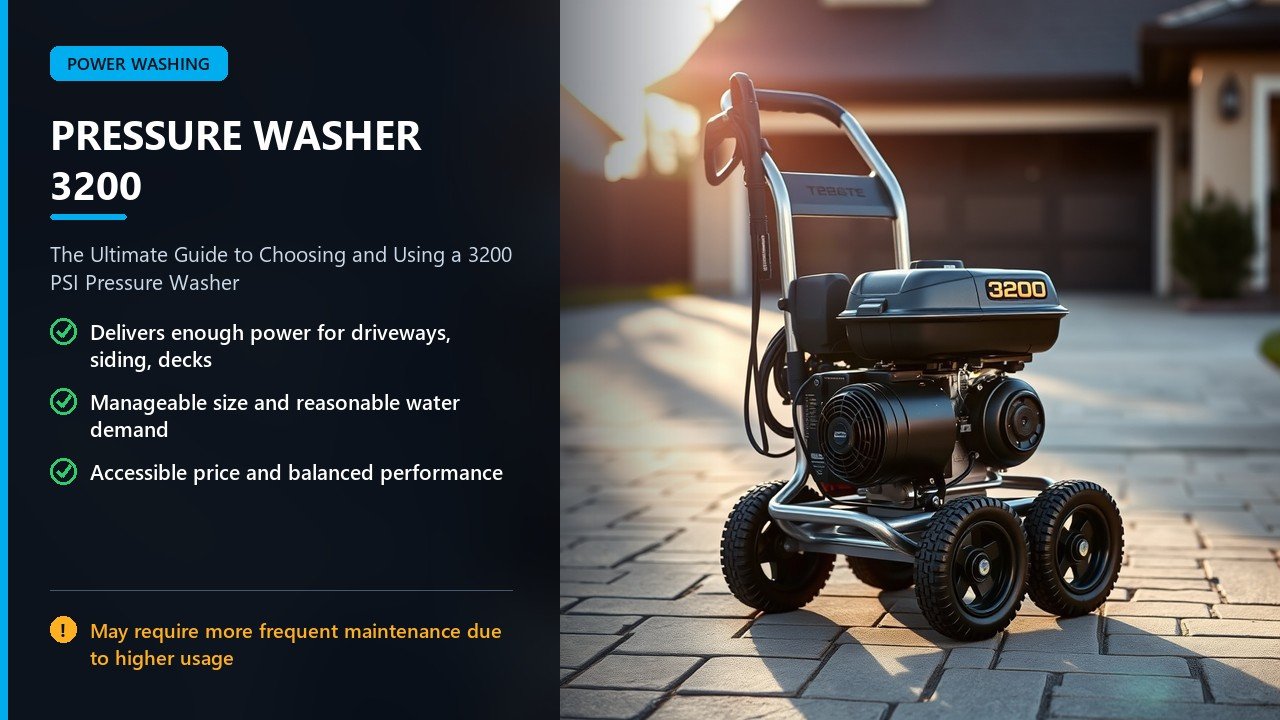
Between the entry-level machines and the heavy commercial units lies a practical middle ground that fits thousands of households perfectly. A pressure washer 3200 — that is, a machine rated around 3,200 PSI — delivers enough power for nearly every residential cleaning task without the size, cost, and thirst of a full commercial unit.
This guide explains why 3,200 PSI is such a popular rating, what to expect from machines in this class, how to choose between gas and electric, who benefits most, and how to keep the machine performing for years.
Why 3,200 PSI Is a Sweet Spot
Pressure washers cluster around a few common ratings, and 3,200 PSI has become a favorite because it balances capability with practicality.
- Enough power for driveways, siding, decks, and vehicles.
- Manageable size compared with 4,000 PSI machines.
- Reasonable water demand that most homes can supply.
- Accessible price relative to professional rigs.
Quick Note: Rather than chasing the highest PSI, many buyers are better served by a balanced machine where pressure and flow work together. Cleaning units (PSI × GPM) reveal the real story.
What a 3,200 PSI Machine Can Do
| Task | Suitability |
|---|---|
| Driveways and sidewalks | Excellent with a surface cleaner |
| Siding and fences | Excellent with a wide nozzle |
| Decks and patios | Good with care on wood |
| Vehicles | Excellent for wash and rinse |
| Outdoor furniture and grills | Excellent |
Quick Note: A 3,200 PSI machine handles the vast majority of home jobs. Only very large flatwork and heavy commercial work truly benefit from more pressure.
Gas or Electric at 3,200 PSI?
| Factor | Gas 3,200 PSI | Electric 3,200 PSI |
|---|---|---|
| Power source | Gasoline; no outlet needed | Corded; needs power |
| Portability | Anywhere | Limited by cord |
| Noise and fumes | Higher; not for indoor use | Quieter; cleaner |
| Maintenance | Engine oil, fuel, filter, plug | Minimal |
| Flow rate | Usually higher | Usually lower |
Short Note: At 3,200 PSI, gas remains the more common and more capable choice, especially for flow. Electric 3,200 PSI units exist but are heavier and need a strong power supply.
The Specifications That Matter
| Specification | What to Look For |
|---|---|
| Working pressure | Around 3,200 PSI, not just peak claims |
| Flow rate (GPM) | Higher flow cleans and rinses faster |
| Pump type | Triplex, rebuildable, ceramic plungers |
| Engine | Recognized brand with adequate power |
| Hose | Adequate diameter and rating |
| Frame and wheels | Steel frame, pneumatic tires |
The pump and engine decide durability, while pressure and flow decide performance. Balance all four when comparing machines.
Who Should Buy a 3,200 PSI Machine
- Homeowners with typical properties wanting strong, versatile power.
- Weekend detailers cleaning vehicles and equipment.
- DIY users tackling driveways, siding, and decks.
- Small property managers with routine cleaning needs.
- Anyone upgrading from a low-pressure electric machine.
If your cleaning is light and occasional, a smaller electric machine may suffice. A 3,200 PSI unit makes sense when you want genuine capability and portability.
What It Can Clean
| Surface | Suitability |
|---|---|
| Concrete driveways and walks | Excellent with a surface cleaner |
| Siding and fences | Excellent with a wide nozzle |
| Decks and wood | Good with care (wide nozzle, more distance) |
| Vehicles | Excellent for pre-soak and rinse |
| Furniture and equipment | Excellent |
The 3,200 PSI class handles everyday residential cleaning and light commercial work with ease.
Getting It Running (Gas Models)
| Step | Action |
|---|---|
| 1. Check fluids | Engine oil and pump oil at correct levels |
| 2. Connect water | Garden hose fully on, water turned on |
| 3. Bleed air | Squeeze the trigger until water flows steadily |
| 4. Set controls | Fuel valve on, choke as needed |
| 5. Start the engine | Recoil or electric start per model |
| 6. Begin cleaning | Select an appropriate nozzle |
Never run the pump without water flowing. Dry running is the fastest way to destroy a high-pressure pump.
Water Supply Requirements
- Feed more than the rated GPM so the pump never starves.
- Use a short, wide inlet hose — 5/8-inch or larger.
- Test your source with the five-gallon bucket method.
- Add a buffer tank for weak or remote supplies.
- Keep the inlet filter clean.
A 3,200 PSI machine with modest flow needs is easier to feed than a 4 GPM commercial unit, but it still requires a reliable supply.
Performance Expectations
- Driveways and patios — stripping grime, stains, and mildew.
- Siding and fencing — restoring appearance quickly.
- Vehicles — fast pre-soak and rinse.
- Decks and outdoor furniture — cleaning with careful technique.
Expect noticeably faster results than an entry-level electric machine, with the freedom to work anywhere without an outlet.
Technique for Best Results
- Match the nozzle to the surface. 25° or 40° for most work; 15° for tough stains; 0° sparingly.
- Keep the wand moving to avoid streaks and etching.
- Hold the right distance. Closer means more impact and more risk.
- Use a surface cleaner for flatwork — faster and more even.
- Let detergent dwell before rinsing.
- Work top-down so dirt washes away.
- Test in a hidden spot on delicate surfaces first.
Even at a moderate 3,200 PSI, careless technique can damage wood and paint. A wider nozzle and greater distance are your best protections.
Maintenance Schedule
| Task | Interval | Purpose |
|---|---|---|
| Check engine oil | Every use | Prevent engine damage |
| Change engine oil | After break-in, then per manual | Reliability and life |
| Check pump oil | Per manual | Protect the pump |
| Clean air filter | Regularly, more often in dust | Maintain power |
| Inspect spark plug | Seasonally | Reliable starts |
| Check hose and fittings | Before use | Prevent dangerous bursts |
| Winterize | Before freezing | Prevent freeze damage |
Gas machines reward routine care. Fresh fuel, clean oil, and a maintained air filter prevent nearly all starting and running problems.
Storage and Winterization
- Drain all water from the pump, hose, wand, and gun.
- Use pump antifreeze or run the pump briefly to expel water.
- Add fuel stabilizer or drain the fuel system for long storage.
- Change the oil before seasonal storage.
- Store dry and above freezing.
Freezing water and stale fuel are the two leading causes of off-season failures. Handle both and the machine fires up next season.
Common Mistakes to Avoid
- Dry running the pump. Immediate damage risk.
- Starving the machine of flow. Reduces performance and wears the pump.
- Using old fuel. Causes hard starting and carburetor trouble.
- Skipping oil changes. Shortens engine life sharply.
- Running indoors. Carbon monoxide is deadly.
- Leaving water in over winter. Freezing cracks components.
- Using the 0° nozzle on the wrong surface. Permanent damage.
3,200 PSI vs Other Ratings
Placing 3,200 PSI in context helps you decide whether it is the right tier for your needs.
| Rating | Strengths | Trade-offs |
|---|---|---|
| 2,000 PSI electric | Quiet, clean, simple, low cost | Limited power and range |
| 2,700 PSI gas | Portable, good entry power | Less capability on tough jobs |
| 3,200 PSI | Balanced power, flow, portability | Engine maintenance required |
| 4,000 PSI gas | Top-tier portable power | Heavier, higher price, more water demand |
Short Note: For most households, 3,200 PSI is the point of diminishing returns — more power than entry-level, without the bulk and thirst of a commercial machine.
Cleaning Units in Practice
Multiply pressure by flow to compare machines honestly:
- 3,200 PSI × 2.5 GPM = 8,000 units — a solid, balanced machine.
- 3,200 PSI × 3.0 GPM = 9,600 units — noticeably more productive.
- 2,000 PSI × 1.5 GPM = 3,000 units — a light-duty electric unit.
The difference in flow between two 3,200 PSI machines can matter as much as the pressure itself. When possible, favor the higher GPM.
Accessories That Maximize a 3,200 PSI Machine
| Accessory | Why It Helps |
|---|---|
| Surface cleaner | Fast, even flatwork with no streaks |
| Turbo nozzle | Aggressive cleaning for concrete |
| Foam cannon | Even detergent application for vehicles |
| Extension wand | Reaches siding and higher surfaces |
| 3/8-inch hose | Preserves flow at the nozzle |
Short Note: Match every accessory to the machine’s pressure and flow. Undersized hoses and nozzles throttle performance even on a capable 3,200 PSI unit.
Getting the Most From Your Water Supply
| Source | Typically Adequate? |
|---|---|
| Standard garden hose | Often yes for ~2.5 GPM machines |
| Large, short hose | Yes |
| Buffer tank + feed pump | Yes, anywhere |
A 3,200 PSI machine with modest flow is easier to satisfy than a high-flow commercial rig, but it still needs a dependable source. Test yours before relying on it.
First-Use and Break-In Tips
- Read the manual. Break-in procedures vary by engine and pump.
- Change the engine oil after the initial break-in period.
- Check pump oil and note the recommended type.
- Inspect all connections for leaks before the first job.
- Bleed air from the system with water flowing.
- Record model and serial numbers for warranty and parts.
A careful break-in protects the engine and pump and sets the machine up for a long, trouble-free life.
Safety With a 3,200 PSI Machine
- Never run a gas engine indoors. Carbon monoxide is invisible and lethal.
- Let the engine cool before refueling. Prevent fire and burns.
- Never point the wand at people or pets.
- Never touch a pressurized leak. Water can penetrate skin.
- Wear eye, hearing, and skin protection.
- Control recoil with both hands and firm footing.
- Inspect hoses and fittings before each use.
- Manage runoff and follow local disposal rules.
Guidance from the Occupational Safety and Health Administration (OSHA) and the Centers for Disease Control and Prevention (CDC) on powered equipment and carbon monoxide is essential for any gas machine owner.
Cost and Value
| Class | Typical Price | Best For |
|---|---|---|
| Electric 3,200 PSI | $200–$400 | Home use near power |
| Gas 3,200 PSI | $400–$800 | Versatile home and light commercial |
| Belt-drive / prosumer | $800–$1,400 | Frequent use and durability |
In this class, value means reliable power and durable components. A machine with a good pump and engine pays for itself; a cheap unit that fails early does not.
Real-World Scenarios
Scenario 1: A suburban homeowner. A 3,200 PSI gas machine cleans a stained driveway, siding, and a car over a weekend — a versatile match for typical property size.
Scenario 2: A hobbyist detailer. Fast, powerful rinsing speeds every wash and delivers results a hose and bucket cannot match.
Scenario 3: A small business owner. The machine cleans storefront concrete and equipment without the cost and bulk of a full commercial rig.
Frequently Asked Questions
Is 3,200 PSI enough for driveways? Yes, especially with a surface cleaner. It handles concrete, siding, and vehicles well.
Gas or electric at 3,200 PSI? Gas offers more flow and freedom; electric is quieter and simpler but heavier at this rating.
What maintenance does it need? Engine oil, pump oil, air filter, spark plug, fuel care, and winterization (for gas models).
What water supply does it require? More than its rated GPM; a short, wide garden hose is usually adequate.
Is a surface cleaner worth adding? Yes — for flatwork it is the single best accessory for speed and evenness.
Final Thoughts
A pressure washer 3200 hits a practical sweet spot: strong enough for nearly every residential task, yet manageable in size, cost, and water demand. For many buyers, it is the most sensible choice in the entire lineup.
Buy for a quality pump and engine, keep up with maintenance, feed it properly, and winterize it carefully — and it will serve reliably for years. For related reading, see our guides on the 3200 PSI pressure washers and gas engine pressure washer.