It is a question almost every pressure washer owner asks at some point: can you just squirt some dish soap into your power washer and use it to wash your car, your siding, or your driveway? Dish soap is cheap, everywhere, and cuts grease, so it seems like an obvious choice. The short answer is that you can use dish soap in a power washer in some setups, but it is not the best choice and can cause problems if you are not careful. The details matter, because where and how the soap enters the machine, and what soap you use, determine whether it helps or harms. This guide explains whether you can use dish soap in a power washer, the risks, the safe ways to do it, and what to use instead.
The Short Answer
Dish soap can work in a power washer, with important conditions.
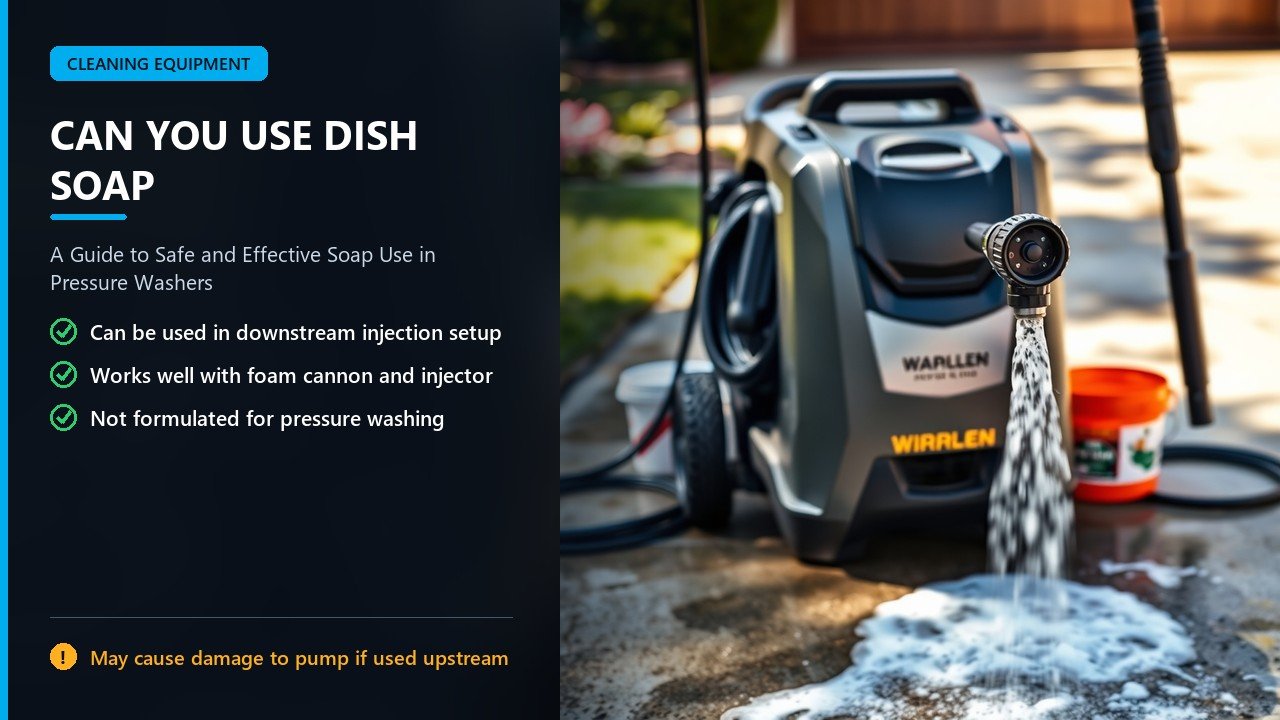
The main condition is where the soap enters the system. Pressure washers introduce soap in one of two ways. The first is downstream injection, where a chemical injector draws soap into the water stream after the pump, on the low-pressure side, so the soap never passes through the pump. The second is an upstream or direct method, where soap is added to the water before the pump, sending it through the pump. Dish soap is acceptable in the first case, downstream, but problematic in the second, upstream, where it can damage the pump.
If your power washer has a downstream chemical injector, or you use a foam cannon that mixes soap after the pump, you can use dish soap in moderation, and it will produce suds and help lift dirt. If your machine relies on a soap tank that feeds the inlet or you would otherwise add soap before the pump, avoid dish soap, since it can harm the pump and cause other issues. So the honest answer is qualified: yes, in the right setup, and no, in the wrong one.
This distinction is the key to the whole question. Many people assume you can pour any soap into any pressure washer, but the machine’s design and the soap’s characteristics make some combinations harmful. Understanding where soap belongs in your machine’s flow determines whether dish soap is a harmless shortcut or a costly mistake. So before using dish soap, identify how your machine introduces soap, since that governs the safe and unsafe possibilities. Our guide to pressure washer components covers the injectors and pumps involved.
Why Dish Soap Differs From Pressure Washer Soap
Dish soap and dedicated pressure washer soap are formulated for very different jobs.
Dish soap is made for washing dishes by hand, and it is designed to be very sudsy and to cut grease on surfaces in a sink. It is not formulated for use in a pressure washer, and it has characteristics that are undesirable in that context. It can be extremely foamy, producing far more suds than needed, and it can leave a residue if it is not thoroughly rinsed. It may also contain additives, moisturizers, and fragrances meant for skin and dishes, not for spraying on a driveway or siding.
Pressure washer soaps, by contrast, are formulated for the machine and the tasks, with controlled suds, appropriate cleaners, and often specific properties like clinging to vertical surfaces, being safe for particular materials, or rinsing cleanly. They come in variants for vehicles, decks, concrete, and more, each tuned to its job. Car wash soaps, for example, are designed to be gentle on paint and rinse cleanly, while concrete cleaners are stronger and suited to masonry. This specialization is why dedicated soaps generally outperform dish soap.
The difference in formulation explains why dish soap is a compromise. It may clean, but it can foam excessively, leave residue, and fail to perform like a soap designed for the task. For occasional, light use in a downstream setup, this may be acceptable, but for regular or demanding cleaning, a proper pressure washer soap delivers better results and fewer problems. Understanding the difference helps you decide when dish soap is a tolerable shortcut and when it is worth using the right product. Our guide to wax pressure washer covers products formulated for pressure washer use.
The Danger of Sending Dish Soap Through the Pump
The biggest risk with dish soap is where it enters the machine.
If dish soap is drawn into the water before the pump, it passes through the pump, and this can cause damage. Soap reduces the water’s lubricity and can affect the pump’s seals and internal components, and some soaps can degrade seals or cause other harm over time. Sending any chemical through a pump that is not designed for it risks shortening the pump’s life, and a pump is one of the costliest parts of a pressure washer. This is why manufacturers warn against putting soap in the water inlet or in upstream setups unless the machine is specifically designed for it.
Downstream injection avoids this entirely by introducing soap after the pump, on the low-pressure side, so the pump only ever sees clean water. If your machine has a downstream injector, dish soap drawn through it never touches the pump, and this is the safe route. If your machine’s soap system feeds the inlet or you would otherwise add soap upstream, do not use dish soap there. Check your machine’s design and manual before adding any soap.
This risk is the reason the answer to the question depends so heavily on your setup. Where the soap goes is more important than which soap it is when it comes to protecting the pump, and sending dish soap through a pump is a common and avoidable mistake. Protecting the pump by keeping soap downstream is essential, and once you understand the flow, the safe approach is clear. If you are unsure how your machine introduces soap, consult the manual or a qualified source before adding dish soap. Our guide to a pressure washer repair kit is a reminder of how much pump and component repairs cost when things go wrong.
Using Dish Soap Safely
If you choose to use dish soap, a few practices keep it safe and effective.
Use it only through a downstream injector or a foam cannon, never through the pump or the water inlet. Use it sparingly, since dish soap is concentrated and very sudsy, and a little goes a long way; too much produces excessive foam that is hard to rinse and may leave residue. Dilute it according to your injector or foam cannon’s guidance, and start with less than you think you need. Apply it at low pressure, let it dwell briefly to lift dirt, then rinse thoroughly at higher pressure, ensuring all soap is removed.
Rinse the soap system and lines after use, and avoid letting soap sit in the machine. Be mindful of what you are cleaning: dish soap is generally safe for most surfaces in dilute form, but test on an inconspicuous area, and avoid harsh use on delicate finishes. For vehicle washing, a dedicated car wash soap is gentler on paint and rinses cleaner, so consider whether dish soap is really the best choice even when it is technically safe. When in doubt, use a product made for the task.
Used carefully in the right setup, dish soap is a workable, if imperfect, option. The keys are keeping it downstream, using it sparingly, diluting it, rinsing thoroughly, and testing first. These practices minimize the residue and excess foam while getting the cleaning benefit, and they protect the machine. But because dish soap is a compromise, using it should be a stopgap or a light-duty choice rather than a habit, and for regular cleaning, the right soap is worth the modest cost. Our guide to power washing nozzle tips covers applying soap and rinsing with the correct nozzle.
What to Use Instead of Dish Soap
Dedicated products generally work better and are safer for the machine.
Car wash soap. Formulated to be gentle on paint, rinse cleanly, and produce controlled suds, car wash soap is the right choice for washing vehicles and is far better than dish soap for that task.
Pressure washer detergent. Made for use in pressure washers, often through a downstream injector or foam cannon, these detergents are formulated with appropriate suds and cleaning power for surfaces like siding, decks, and concrete.
Surface-specific cleaners. For concrete, wood, roofs, and other materials, specialized cleaners address the specific soils and surfaces, performing better than a general-purpose soap.
Foam cannon soap. Designed for foam cannons, these soaps create thick, clinging foam for pre-soaking, formulated for the application.
| Option | Best Use | Notes |
|---|---|---|
| Dish soap | Occasional light cleaning, downstream only | Very sudsy, may leave residue, not formulated for the task |
| Car wash soap | Washing vehicles | Gentle on paint, rinses clean |
| Pressure washer detergent | Siding, decks, general surfaces | Controlled suds, task-formulated |
| Foam cannon soap | Pre-soaking with thick foam | Designed for foam cannons |
These products are formulated for their jobs, so they clean better, rinse more cleanly, and are safer for the machine than dish soap. The cost difference is small, and the results are better, which is why dedicated soaps are the recommended choice for regular pressure washing. Dish soap remains a convenient stopgap when nothing else is on hand and the setup is safe, but it is not the best tool for the job. Choosing the right product for the task is a small decision with a meaningful effect on results and machine life. Our guide to pressure wash chemicals covers the range of cleaning products for pressure washers.
Common Questions and Mistakes
A few points prevent the most common errors.
A frequent mistake is pouring soap into the water inlet or a tank that feeds the pump, which can damage the pump; always keep soap downstream. Another is using far too much dish soap, creating a foam disaster that is hard to rinse and may leave residue or streaks, so use a small amount and dilute it. Some owners also expect dish soap to match a dedicated cleaner on tough soils, then are disappointed, when the right product would have done better. And some forget to rinse thoroughly, leaving soap residue that attracts dirt or affects finishes, especially on vehicles.
Other considerations include compatibility with your machine’s injector and the surfaces you are cleaning. An injector draws a set ratio of soap, so the soap must be diluted appropriately, and some surfaces, like certain finishes or materials, may react to soap or need a specific cleaner. Testing on a small area, reading the machine’s manual, and following the soap’s instructions all prevent problems. When in doubt, choose a product made for pressure washers and the specific task.
Avoiding these mistakes makes any soap use safer and more effective. Because dish soap is a compromise, using it well means respecting its limits: downstream only, sparingly, diluted, rinsed, and tested. For serious or regular cleaning, the correct soap removes the guesswork and delivers better results, so the best practice is to keep dedicated products for your pressure washing and reserve dish soap for the rare, safe, light-duty occasion. With these points in mind, you can use soap on your pressure washer confidently and correctly. Our guide to a best pressure washer wand covers the tools that apply and rinse soap.
How Pressure Washers Introduce Soap
Understanding the two soap systems is the foundation of safe soap use.
Downstream injection. Most consumer pressure washers introduce soap through a downstream chemical injector, a device that uses the venturi effect to draw soap into the water stream after the pump, on the low-pressure side. Because it works only at low pressure, you typically switch to a soap nozzle or low-pressure setting to apply soap, then back to a high-pressure nozzle to rinse, and the injector stops drawing soap. Crucially, the soap never passes through the pump, so the pump sees only clean water. This is the safe place for soap, including dish soap, to enter the system.
Foam cannons. A foam cannon connects to the wand and uses the water flow to create thick foam, mixing soap into the stream after the pump, again keeping soap away from the pump. Foam cannons are popular for pre-soaking vehicles and surfaces with a clinging layer of soap that lifts dirt before rinsing. Like downstream injectors, they introduce soap after the pump, so they are a safe route for soap, provided the soap is suitable.
Upstream or inlet soap systems. Some machines, and some homemade setups, add soap to the water before the pump, sending it through the pump. This is where soap can cause damage, and it is the setup to avoid with dish soap. Unless the machine is specifically designed to handle soap through the pump, keep soap out of the inlet.
Identifying which system your machine uses tells you whether and how you can use dish soap. If it is downstream injection or a foam cannon, dish soap is workable with care; if it is an inlet system, do not use dish soap. Checking the manual and the machine’s plumbing makes this clear, and it is the single most important factor in answering whether you can use dish soap. With this understanding, the safe path is evident, and you can avoid the common and costly error of sending soap through the pump. Our guide to 8gpm pressure washer covers machines often equipped for chemical injection.
Dish Soap and Different Cleaning Tasks
How well dish soap works depends on what you are cleaning.
For washing a car, dish soap can strip wax, since it is a grease-cutting detergent, so while it cleans, it may remove the protective wax layer and leave paint less protected. A dedicated car wash soap is designed to clean without stripping wax and to rinse without spotting, which is why it is the better choice for vehicles. If you do use dish soap on a car, expect to re-wax afterward and rinse thoroughly to avoid residue and spots.
For siding, decks, and concrete, dish soap can help lift light dirt and grease, but it lacks the strength and formulation of dedicated cleaners for tough soils, mold, mildew, and stains. On a driveway with heavy grime, dish soap will disappoint where a concrete cleaner and the machine’s pressure do the real work. Dish soap is best for light, greasy, or general dirt, not for the challenging soils that specialized products address.
For delicate surfaces and finishes, dish soap in dilute form is generally gentle, but testing first is wise, and some finishes may react or show residue. Across tasks, the pattern is the same: dish soap is a mild, general cleaner that works for light jobs but falls short on demanding ones and may cause side effects like wax stripping or residue. Matching the soap to the task, and preferring dedicated products for serious work, ensures better results. Our guide to pressure washing clothes shows how soap and pressure interact with fabrics, where the wrong soap can matter.
Tips for Better Results With Any Soap
Good technique improves soap results regardless of the product.
Apply soap at low pressure so it clings and works rather than being blasted off, using a soap or low-pressure nozzle, and let it dwell briefly, following the product’s guidance, so it can lift dirt before you rinse. Work in sections, from the bottom up when applying soap to avoid streaking, and rinse from the top down at higher pressure. Keep the surface wet to prevent soap from drying, which can leave residue or streaks. Rinse thoroughly, ensuring all soap is removed, and for vehicles, dry promptly to avoid water spots.
Dilute soap correctly for your injector or foam cannon, which draw at set ratios, and avoid over-concentrating, which wastes soap and can leave residue. Pre-rinse to remove loose dirt, use a brush or mitt for agitation where needed, and consider a two-step approach, soap then rinse, repeated for stubborn areas. These practices make any soap, including dish soap, work better and reduce problems like residue and streaks.
Technique and soap choice together determine results, and getting both right turns a pressure washer into an effective cleaner. Because soap is only part of the process, applying, dwelling, agitating, and rinsing correctly matter as much as the product. With good technique and the right soap for the task, results improve, and the machine performs to its potential. Whether you use dish soap as a stopgap or a dedicated product as the standard, these practices ensure the soap does its job without leaving problems behind. Our guide to a pressure washer inlet water filter is another small addition that improves results by keeping the water clean.
Frequently Asked Questions About Dish Soap in a Power Washer
Can you use dish soap in a power washer? Yes, in moderation, if it is drawn in through a downstream injector or foam cannon after the pump. Never send it through the pump or add it to the water inlet.
Will dish soap damage a pressure washer pump? It can if it passes through the pump, as it may affect seals and lubrication. Keeping soap downstream, after the pump, avoids this risk.
How much dish soap should I use in a pressure washer? Very little, since it is concentrated and very sudsy. Dilute it per your injector or foam cannon’s guidance and start with less than you think you need.
Does dish soap work as well as pressure washer soap? Generally no. Dedicated soaps are formulated with controlled suds and appropriate cleaners, rinse more cleanly, and perform better for the task.
Can I put dish soap in the soap tank of my pressure washer? Only if the machine draws soap downstream of the pump. If the tank feeds the water inlet or the pump, do not use dish soap there, as it can damage the pump.
Is dish soap safe for washing a car with a pressure washer? It can be used with care, but a dedicated car wash soap is gentler on paint and rinses cleaner, making it the better choice for vehicles.
Final Verdict on Dish Soap in a Power Washer
You can use dish soap in a power washer, but only in the right setup and with care. Drawn in downstream through an injector or foam cannon, it never touches the pump and can help lift dirt, making it a convenient stopgap. Sent through the pump or poured into the water inlet, it risks damage and is a mistake to avoid. Used sparingly and rinsed thoroughly, dish soap is tolerable for light tasks, but it is not formulated for pressure washing and can foam excessively and leave residue.
For regular or demanding cleaning, dedicated pressure washer soaps and car wash soaps work better, rinse more cleanly, and are safer for the machine, at little extra cost. Use dish soap only in a downstream setup, in small diluted amounts, and only when a proper soap is not available, and keep dedicated products for the rest. With this approach, you can get the cleaning benefit without the risks, and your pressure washer and your results will both be better off.