Every spring, Marcus pulled his gas pressure washer out of the shed, filled it with fuel, and yanked the starter cord until his arm ached. When it finally caught, it ran rough, surged, and sprayed a weak, uneven pattern that made cleaning the driveway an ordeal instead of a job. He assumed the machine was simply getting old. The truth was simpler: he had never tuned it up. A pressure washer is a machine with oil to change, a spark plug to gap, a filter to clean, and screens to clear, and ignoring all of that for years is exactly how a perfectly good unit starts acting tired.
A proper tune-up is not complicated, and it does not require a mechanic. Most of the work is checking and replacing a handful of affordable parts on a schedule, and the payoff is a machine that starts easily, holds pressure, and lasts for years instead of seasons. This guide walks through the whole process, from the engine to the pump to the nozzle.
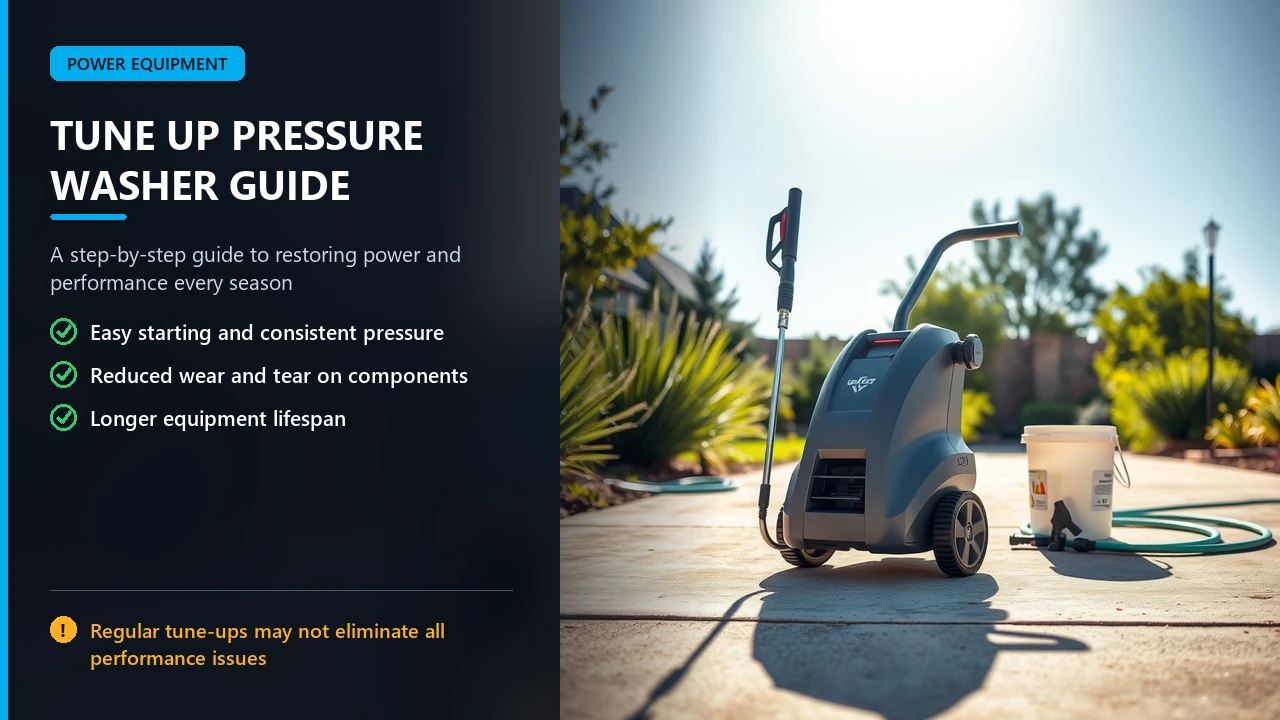
Signs Your Pressure Washer Needs a Tune-Up
Machines rarely fail all at once. They give you warnings first, and a tune-up is the answer to most of them. Watch for these signals.
Hard starting or no start. A fouled or worn spark plug, a dirty air filter, or stale fuel will make starting a battle. This is the most common complaint that a tune-up solves.
Rough running or surging. If the engine surges, sputters, or surges while you clean, the engine is not getting a clean, consistent fuel and air mix. A clogged filter, dirty carburetor, or old fuel is usually to blame.
Weak or pulsing spray. A weak stream often has nothing to do with the engine. Clogged nozzles, a dirty inlet screen, worn O-rings, or air in the line all reduce pressure and make the spray surge.
Loss of pressure over time. A worn or partially clogged nozzle, a failing unloader valve, or a restricted water supply will quietly rob pressure. A tune-up inspects each of these.
Hard starting after storage. Fuel left in the tank over the winter gums up the carburetor. This is the single most common reason a machine that ran fine in the fall refuses to start in the spring.
What a Tune-Up Actually Covers
A tune-up sounds like one thing, but it is really a set of checks across the whole machine. The engine, the pump, and the water side each have their own parts and intervals. Knowing the difference helps you avoid the common mistake of tuning only the engine while ignoring the pump and spray system.
Gas pressure washers have the most to service because they combine an engine with a pump. Electric pressure washers have no engine, so the checklist shrinks dramatically. Both, however, benefit from attention to nozzles, O-rings, and water screens, which are the parts that most often cause weak spray complaints.
| System | Parts to Check | Main Symptom of Neglect |
|---|---|---|
| Engine | Engine oil, air filter, spark plug, fuel | Hard starting, rough running, stalling |
| Pump | Pump oil, seals, unloader valve | Pressure loss, leaking, pump damage |
| Water supply | Inlet screen, detergent strainer, hoses | Starved pump, weak or pulsing spray |
| Spray end | Nozzles, O-rings, gun, wand | Uneven spray, leaks, low pressure |
The Engine Tune-Up
The engine is where most tune-ups begin, and for good reason. It is also the part most people feel comfortable working on, since the tasks are similar to any small engine.
Engine oil. Check the oil level before each use, and change the oil after the first several hours of break-in and then at the interval your manual recommends, which is typically every season or around fifty hours of running. In heavy use or high temperatures, change it more often. Warm the engine briefly before draining so the oil flows freely and carries out more contaminants. Use the oil grade your manual specifies, and never overfill.
Air filter. A dirty air filter chokes the engine, wastes fuel, and makes starting harder. Clean or replace it according to your manual, more often if you work in dusty conditions. Foam elements can often be washed and re-oiled, while paper elements should be replaced when dirty. Never run the machine without a filter.
Spark plug. Remove the plug and inspect it. If the porcelain is cracked or the electrodes are badly pitted, replace it. If it looks healthy, clean it and check the gap with a wire feeler gauge. A gap around 0.028 to 0.031 inches is typical for many small engines, but confirm the exact figure in your manual. Tighten it snugly without overtightening, since you are threading into aluminum.
Fuel system. Old fuel is the enemy of easy starting. Drain and replace stale fuel, add a fuel stabilizer for storage, and clean the sediment cup or fuel filter if your machine has one. If the machine has sat for a long time with fuel in it, the carburetor may need cleaning or rebuilding.
The Pump Service
The pump is the heart of the pressure washer and the part most often ignored during routine maintenance. Some pumps are sealed, but many gas machines have a pump crankcase with its own oil supply that needs attention.
Check the pump oil on a level surface and top it off if low. Change pump oil after the initial break-in period and then at the interval your manual recommends, often every few months or a set number of hours. The most revealing check is the oil’s appearance. If the pump oil looks white, milky, or foamy, water has found its way into the crankcase. Milky oil signals that water is getting past a seal, and it should be changed and the seals investigated before the pump is damaged.
Use only the pump oil your manufacturer specifies. Pump oil is formulated for the high pressures and temperatures inside the crankcase, and using the wrong lubricant can shorten pump life. Beyond the oil, visually inspect for leaks around the pump and check the unloader valve, which regulates pressure. A sticking or failed unloader valve causes pressure to surge, drop, or spike, and it is a frequent culprit behind inconsistent spray.
The Water Side: Screens, Nozzles, and O-Rings
Once the engine and pump are healthy, turn your attention to the water path. This is where a surprising number of performance problems actually live, and the fixes are cheap and quick.
Inlet screen. The screen at the water inlet protects the pump from grit and debris. A clogged screen starves the pump and drops pressure. Remove it, rinse it clean, and check it whenever pressure seems low. Debris that gets past a torn screen can damage the pump, so replace a damaged screen rather than reusing it.
Detergent strainer and tube. If your machine draws soap, the detergent filter and tube can clog or tear. Clean or replace them, and make sure the tube fits tightly on its fitting so it does not suck air instead of detergent.
Nozzles. Clogged nozzles are the number one cause of weak, uneven, or sputtering spray. A tiny bit of mineral or grit can distort the spray pattern dramatically. Clean nozzles with the small wire tool that often ships with the machine, or replace them when worn. Swapping in a fresh set of tips is one of the fastest ways to restore full cleaning power, and our guide on a pressure washer replacement nozzle that stops weak spray covers how to choose the right ones.
O-rings. Every quick-connect joint and threaded connection relies on a small O-ring to seal. These rings dry out, crack, and flatten with age, and they are the most common source of mysterious drips and pressure loss. Keep a small bag of spares and replace them freely, since they cost almost nothing. Our breakdown of pressure washer hose O-rings explains why these tiny parts do such a big job.
Nozzle selection. After a tune-up, make sure you are running the correct tip for the job. A nozzle that is too narrow restricts flow and can feel like low pressure, while the right tip restores a sharp, consistent pattern. If you want to double-check which color and size to use, our high pressure cleaner nozzle guide and the full walkthrough of pressure washer components from pump to nozzle help you match tips to your machine.
A Tune-Up Schedule to Follow
The easiest way to stay ahead of problems is to follow a simple schedule. Intervals vary by model, so always defer to your own manual, but this table reflects the intervals used by major pressure washer and small engine makers and gives you a practical rhythm.
| Interval | Task | Notes |
|---|---|---|
| Each use | Check engine oil, fuel, inlet screen, hoses | Catches problems before they grow |
| First 20 to 50 hours | Change engine oil and pump oil | The most important break-in service |
| Every season | Clean or replace air filter, clean and gap spark plug | Restores easy starting |
| Every season | Change engine oil, check pump oil, replace O-rings | Protects engine and pump internals |
| Every year or storage | Stabilize or drain fuel, winterize the pump, inspect nozzle set | Prevents gummed carbs and frozen pump damage |
Following this rhythm keeps a gas pressure washer running the way it did when it was new. The bulk of the work takes less than an hour once a year, plus a few minutes of checking before each use.
If you want to cross-check these intervals against manufacturer guidance, both Briggs & Stratton’s preventative pressure washer maintenance page and the professional Hotsy 24-point inspection checklist lay out the same core tasks in more detail. Both make clear that the small, boring maintenance steps are what prevent the expensive failures.
Tools and Parts to Keep On Hand
You do not need a full workshop to tune a pressure washer, but a small kit of parts and tools makes the job fast whenever it comes up.
Keep the correct engine oil and pump oil for your machine, a fresh spark plug of the right type, a spare air filter, a set of replacement O-rings, and one or two spare nozzles. Add a wire feeler gauge for the spark plug gap, a nozzle cleaning tool, a funnel, and a drain pan. A fuel stabilizer earns its keep too, because it prevents the gummed-carburetor problem that ruins more springs than any other single cause.
Storing all of this together takes the friction out of maintenance. When the parts are already on the shelf, a tune-up becomes a quick afternoon task instead of a trip to the store and a reason to put it off another year.
Tuning Up an Electric Pressure Washer
Electric pressure washers have far less to service because there is no engine, no fuel, and no spark plug. Owners who are used to gas maintenance sometimes overthink it. The realistic electric tune-up is genuinely simple.
Focus on the water path: clean the inlet screen, inspect and replace O-rings, clean or replace clogged nozzles, and check the gun, wand, and high-pressure hose for leaks or kinks. Wipe down the unit, make sure the power cord and plug are in good condition, and store it somewhere dry and above freezing so nothing cracks over winter. That is essentially the whole job, and it keeps an electric machine spraying strongly for years.
Winterizing as Part of the Tune-Up
For most people, the most valuable tune-up happens at the end of the season, right before storage. Winter is when neglected machines suffer the most damage.
Drain the fuel or add stabilizer and run the engine briefly so treated fuel circulates through the carburetor. Change the oil if it is due so clean oil sits in the engine rather than contaminants. Flush the water out of the pump and coil, and protect the pump with an appropriate antifreeze for your climate so any trapped water cannot freeze and crack the housing. Store the machine in a dry place, coil the hoses without sharp bends, and put the nozzle set somewhere it will not get lost or crushed.
A machine winterized properly starts the next spring as if it was never put away. That single habit, more than any other, is what separates a pressure washer that lasts a decade from one that gets replaced every few years.
When to Call a Professional
Most tune-up work is well within reach for anyone comfortable with basic tools. Two situations are worth handing to a professional.
If the machine will not start even after fresh fuel, a clean filter, and a new spark plug, the carburetor may need rebuilding, and that calls for experience. If the pump has lost pressure, is leaking badly, or shows metal in its oil, internal pump repairs involve precise parts and tolerances that are easy to get wrong. A repair shop can diagnose whether the unloader valve, the seals, or the pump itself is at fault, and rebuilding a pump is far cheaper than replacing it when the internals are still healthy.
For everything else, a patient afternoon with the manual and a few parts covers the vast majority of tune-up needs and saves real money over the life of the machine.
The Five-Minute Pre-Use Check
Not every maintenance task belongs on a once-a-year schedule. A handful of quick checks before each use catch small problems while they are still small, and they take only a few minutes.
Start with the fluids: glance at the engine oil and pump oil levels and the fuel level. Confirm the water supply is fully open and the inlet hose is not kinked. Look over the high-pressure hose, gun, and wand for obvious damage or leaks, and make sure the nozzle on the gun is the one you intend to use. Squeeze the trigger with the machine off to confirm pressure has released before you start. Then start the engine and watch for an even spray before you begin cleaning.
That short routine catches the vast majority of issues that would otherwise turn into a mid-job surprise. A kinked inlet hose, a loose nozzle, or a slow oil leak caught before you start costs minutes to fix. The same problems discovered halfway through a job cost you the afternoon.
Troubleshooting After a Tune-Up
Sometimes a machine still misbehaves even after fresh oil and a new plug. Working through symptoms in order saves time and avoids replacing parts that were never the problem.
| Symptom | Most Likely Cause | First Thing to Check |
|---|---|---|
| Won’t start | Stale fuel, flooded engine, bad plug | Fuel quality, plug condition, spark |
| Runs rough or surges | Dirty air filter, clogged carburetor | Air filter and fuel flow |
| Weak spray | Clogged nozzle, dirty inlet screen | Nozzle and inlet screen |
| Pulsing spray | Air in the line, worn O-rings | Hose connections and O-rings |
| Pressure drops while running | Sticking unloader valve, starved supply | Water supply and unloader valve |
Notice how often the answer is on the water side rather than the engine. When a machine starts and runs but cleans poorly, the culprit is usually a nozzle, an O-ring, a screen, or the water supply itself. Checking those first is almost always faster than digging into the engine. A reliable pattern emerges: engines cause starting and running problems, while the water side causes spray and pressure problems.
Common Tune-Up Mistakes to Avoid
A few easy-to-make errors turn a good tune-up into wasted effort or new damage.
Running the pump without water. Never run a pressure washer without an open water supply. Even a few seconds of dry running can destroy the pump, and no tune-up can undo that. Always turn the water on and prime the pump before starting.
Using the wrong oil. Engine oil and pump oil are not interchangeable, and using the wrong grade in either does real harm. Follow the manual and use the specified fluids for each.
Overtightening the spark plug or fittings. You are threading into soft metal in both cases. Snug is enough; overtightening strips threads and creates leaks or damage that is expensive to fix.
Ignoring the O-rings. People replace a whole hose when a five-cent O-ring was the real problem. Check the smallest parts first, because they cause the most leaks and cost the least to fix. If a connection keeps dripping, our guide on pressure washer hose connector types to stop leaks for good walks through the usual suspects.
Storing a wet machine. Water left in the pump or coil over a freeze can crack the housing and end the machine’s life. Always winterize before the first freeze, every single season.
Neglecting fuel storage. Leaving untreated fuel in the tank and carburetor over the winter gums up the internals and is the top cause of spring starting failures. Stabilize the fuel or drain it completely.
How Long a Tune-Up Takes
One reason people postpone maintenance is the assumption that it is a big project. In reality, a seasonal tune-up on a gas pressure washer takes about an hour if you have the parts on hand, and much of that time is waiting for oil to drain.
The pre-use checks take a few minutes. Engine oil, air filter, and spark plug service take perhaps twenty minutes. Pump oil and the water-side checks add another twenty. Winterizing at season’s end adds another short session. Set aside one afternoon a year and the whole schedule falls into place, leaving the rest of the season free for actually using the machine.
Frequently Asked Questions
How often should I tune up a pressure washer? Do a quick check before each use, then a full tune-up once a season, with a thorough service at the end of the season before storage. Most manufacturers also call for break-in oil changes after the first several hours.
What does a pressure washer tune-up include? Engine oil change, air filter service, spark plug cleaning or replacement, fuel system check, pump oil check, inlet screen and detergent strainer cleaning, and inspection of nozzles, O-rings, gun, and hoses.
Why is my pressure washer losing pressure? Common causes include clogged nozzles, a dirty inlet screen, worn O-rings, a failing unloader valve, air in the line, or an incorrect nozzle. A tune-up checks each of these in order.
How often should pump oil be changed? Change pump oil after the initial break-in period and then at your manual’s interval, often every few months or a set number of hours. If the oil looks milky or white, change it immediately and check for a leaking seal.
Can I tune up an electric pressure washer myself? Yes, and it is much simpler. Clean the inlet screen, replace O-rings, clean or replace nozzles, and check the hose and cords. There is no engine oil, fuel, or spark plug to service.
What gap should the spark plug be set to? Many small engines use a gap around 0.028 to 0.031 inches, but confirm the exact value in your owner’s manual, since specifications vary by engine.
Final Thoughts
A tune up pressure washer routine is the least glamorous part of owning one, and the most important. The machine that starts on the first pull, holds steady pressure, and sprays a clean pattern is almost always the one that gets seasonal attention rather than the one that cost the most money. Oil, a clean filter, a healthy spark plug, clear screens, fresh O-rings, and a protected pump cover nearly everything that goes wrong.
Pick one weekend a year, gather a handful of inexpensive parts, and work through the checklist. Your pressure washer will reward that effort with easy starts, strong pressure, and a long, reliable life, which is exactly what you wanted when you bought it in the first place.