When I first took a pressure washer apart to understand why it had lost pressure, I expected to find one broken part and a simple fix. Instead, I discovered a machine made of a dozen interacting components, each with a job, and I realized I had been treating the whole thing as a single black box. That day changed how I maintain every pressure washer I own, because once you understand the components, you can diagnose problems, maintain the right parts, and buy machines with confidence. This guide walks through every major pressure washer component, what it does, how the parts work together, which ones fail first, and what to look for when buying. Think of it as a map of the machine, one that makes everything else about pressure washing make sense.
How a Pressure Washer Works
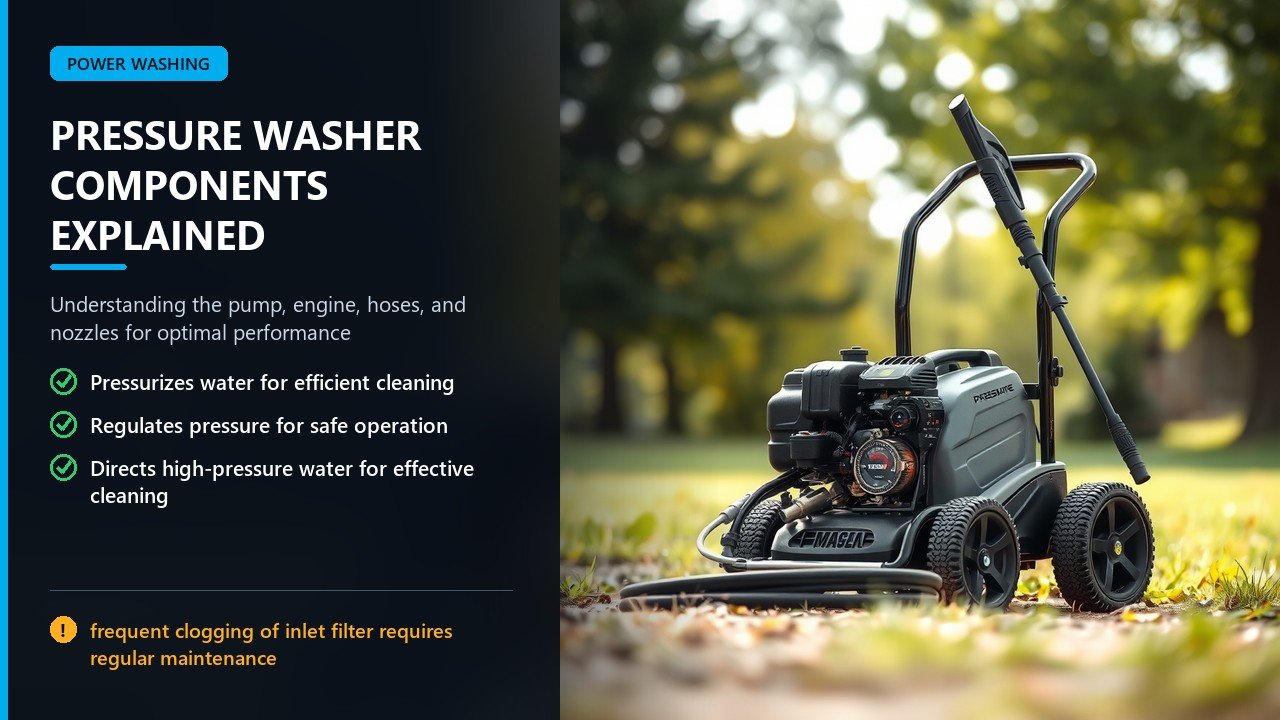
Before examining each component, it helps to see the whole flow. Water enters the machine from a supply and passes through an inlet filter, which removes debris. The pump draws that water and pressurizes it. The engine or motor drives the pump. The pressurized water passes through an unloader valve, which regulates pressure and allows bypass when the gun is closed. It then travels through the high-pressure hose to the gun, through the wand, and out the nozzle, where it becomes the cleaning jet. For hot water machines, it also passes through a burner and heat exchanger that heat the water along the way.
Each component performs a specific function in this chain, and each must be matched and maintained for the machine to perform. A pressure washer is only as strong as its weakest component, which is why understanding the parts is so valuable. When something goes wrong, you can trace the problem to a specific component rather than guessing.
The Pump
The pump is the heart of the pressure washer. It draws water from the supply, pressurizes it, and pushes it through the system. The pump’s design and quality largely determine the machine’s durability and performance.
Axial cam pumps. Common on consumer machines. They use a wobbling plate to move pistons, are simple and inexpensive, and suit occasional use. They are less durable and harder to repair than triplex pumps, and they are often paired with lower-pressure machines.
Triplex plunger pumps. The standard for professional and durable machines. Three plungers provide smooth, efficient operation and long life, and they are rebuildable, with replaceable valves and seals. If you want a machine to last, a triplex pump is the foundation.
The pump needs a steady water supply and clean water. Running it dry or starved causes cavitation, which damages it quickly. Keeping the inlet filter clean and supplying adequate water are the two most important things you can do to protect a pump. Pump oil, on pumps that use an oil bath, must be changed on schedule with the correct specification. For more detail on maintaining the pump, our guide to what type of oil goes in a pressure washer pump covers the right oil and why it matters.
The Engine or Motor
The engine or motor drives the pump, converting fuel or electricity into the mechanical power that pressurizes the water. This component determines starting reliability, power, and service life.
Gas engines. The most common power source for portable pressure washers. They offer power and mobility, letting the machine run anywhere without a cord. They need fuel, oil, and regular engine maintenance, and they produce exhaust, which requires outdoor use. Honda, Kohler, and Briggs and Stratton are common engine brands, each with its own reputation and parts availability.
Electric motors. Found on electric pressure washers. They are quiet, produce no exhaust, and need less maintenance, but they are quieter in power and tethered to a power source. They suit home use and indoor or well-powered locations.
Diesel engines. Used on heavy commercial equipment for their durability and torque. They power large machines and are often paired with high-flow pumps.
The engine must be matched to the pump so the machine runs efficiently rather than straining. A strong engine on a weak pump wastes capability, and a weak engine on a demanding pump bogs down. As with the pump, maintenance keeps the engine reliable: fresh oil, clean air filters, good spark plugs, and fresh fuel with stabilizer for storage.
The Unloader Valve
The unloader is a small but critical component that regulates pressure and protects the pump. When the gun is open, water flows normally. When you release the trigger, the unloader diverts the water into a bypass rather than letting pressure build against the closed gun, which would damage the pump. It also helps maintain consistent pressure during operation.
An unloader that is misadjusted or failing causes symptoms like inconsistent pressure, pressure that is too high or too low, or water that bypasses continuously, reducing cleaning power. The unloader must be sized for the machine’s flow, especially on high-flow machines, where an undersized unloader restricts performance. Understanding the unloader explains why releasing the trigger is important and why a machine can lose pressure if the valve fails. It is one of those components you never notice until it causes a problem.
| Component | Function | Failure Symptom |
|---|---|---|
| Pump | Pressurizes water | Loss of pressure, leaks, noise |
| Engine/motor | Drives the pump | Will not start, loss of power |
| Unloader | Regulates pressure and bypass | Inconsistent or lost pressure |
| Inlet filter | Removes debris | Restricted flow, starved pump |
| Injector | Adds cleaning chemical | Will not draw solution |
| Hose | Carries water to the gun | Leaks, kinks, burst |
| Gun and wand | Control and direct spray | Leaks, stiff trigger, damage |
| Nozzle | Shapes the spray | Weak or uneven spray |
The Inlet Filter
The inlet filter sits between the water supply and the pump, removing debris before it reaches the pump. Sand, grit, rust, and organic matter damage the pump’s valves and seals if they enter, so the filter is a cheap but vital component. Many machines include a basic inlet screen, and adding a finer inline filter improves protection further.
A clogged filter restricts flow and starves the pump, causing cavitation and damage, so the filter must be kept clean. It is one of the most neglected components and one of the most important, because the damage it prevents is expensive. Our article on a pressure washer inlet water filter explains types, sizing, and maintenance. If there is one component that returns far more value than it costs, it is the inlet filter.
The Chemical Injector
The injector draws cleaning solution into the water stream, letting the machine apply detergent or, in soft washing, a cleaning solution. Downstream injectors add the chemical after the pump, protecting the pump from harsh chemicals, while upstream injectors add it before the pump for more precise mixing but expose the pump to the chemical. Injectors are common on machines used for vehicle washing, soft washing, and any application needing detergent.
An injector that will not draw solution is usually mismatched to the machine’s flow, clogged, or used with an incompatible chemical. Understanding the injector explains how a pressure washer applies soap without a separate sprayer, and it is central to soft washing setups. The injector’s size must match the machine’s flow and pressure for proper dilution.
The High-Pressure Hose
The hose carries pressurized water from the machine to the gun, and it must withstand the machine’s pressure without leaking or bursting. Hoses vary in material, inside diameter, length, and pressure rating, and these factors affect performance. A larger inside diameter reduces friction loss, preserving pressure over distance, especially on long hoses. Material affects flexibility, kink resistance, and durability, with rubber being the most durable and PVC the most economical.
The hose connects through fittings at both ends, and these connections are common leak points. The hose also determines reach and handling, and long hoses call for reels to manage them. A kinked or worn hose restricts flow or fails, so hoses need inspection and proper storage. Our guides to a 100 ft pressure washer hose and to pressure washer hose reels cover hose selection and management. The hose is simple but essential, and it is where many performance and leak problems originate.
The Gun and Wand
The gun is the control in the operator’s hand. It houses the trigger, which starts and stops the water flow, and the connection points for the wand and hose. The gun must be comfortable, durable, and capable of withstanding the pressure and the reaction force of the spray. Some guns include features like a safety lock or a swivel to reduce hose tangling.
The wand extends from the gun and holds the nozzle. Wands come in various lengths and may be fixed or adjustable, and extension wands add reach for high or distant areas. The wand directs the spray precisely and is often where nozzles and accessories attach. Our guide to a pressure washing wand extension covers how extensions increase reach and safety. The gun and wand together give the operator control over where and how the water is applied, and their quality affects comfort and precision.
The Nozzle
The nozzle is where the water exits, and it shapes the spray pattern that does the cleaning. Different nozzles produce different angles and types of spray, from a wide fan for rinsing to a narrow stream for blasting, and specialty nozzles like turbo or rotating nozzles add cleaning power. The nozzle is small and inexpensive but has an outsized effect on results, because the same machine cleans very differently depending on the nozzle used.
Nozzles wear over time, especially when used with abrasive water, and a worn nozzle sprays unevenly and loses effectiveness. A clogged nozzle restricts flow and reduces pressure. Choosing the right nozzle for the task and replacing worn ones keeps the machine performing. The nozzle is the final component in the chain, and it is where all the machine’s power becomes the spray you direct at the surface. For a closer look at a popular option, our article on a jet washer turbo nozzle explains how rotating nozzles boost cleaning.
The Burner and Heat Exchanger
On hot water and steam machines, the burner and heat exchanger add heat to the water. The burner, typically diesel or propane fired, heats a coil or heat exchanger through which the water flows, raising its temperature for grease and sanitation cleaning. These components add significant capability, enabling the premium commercial cleaning that cold water cannot do, but they also add cost, maintenance, and the need for fuel.
The heat exchanger coil is vulnerable to scale from hard water, which reduces heat transfer and eventually causes damage, so descaling is essential. The burner needs periodic service, including its nozzle, electrodes, and air settings, to burn cleanly. Our guides to a diesel hot water pressure washer and to a steam cleaner pressure washer cover these components in depth. The burner and heat exchanger transform a pressure washer into a hot water machine, at the cost of added complexity and care.
The Frame and Wheels
The frame holds everything together and supports the machine, while the wheels make it mobile. A rigid frame resists the vibration of the engine and pump, reducing wear on mounts, fasteners, and plumbing, and a flimsy frame lets everything shake, accelerating failure. The frame also provides mounting points for accessories and, on larger machines, a place for tanks and reels.
The wheels and handles determine how easily the machine moves, which matters for larger units. A sturdy frame with good mobility makes a machine pleasant to use and durable, while a cheap frame undermines even good components. The frame is easy to overlook, but it contributes to the machine’s longevity and usability, and it is a sign of overall build quality.
Which Components Fail First
Knowing the common failure points helps you maintain and diagnose.
Nozzles and o-rings wear and fail often, but they are cheap and easy to replace. The inlet filter clogs and starves the pump if neglected. Hoses and connections leak or fail under stress. The unloader can fail or need adjustment. The pump, though durable when maintained, is the most expensive component and is damaged by dry running and debris. The engine needs routine service and suffers from stale fuel. On hot water machines, the coil scales and the burner needs service. Understanding this hierarchy of failure helps you focus maintenance where it matters and diagnose problems by their symptoms, rather than replacing expensive components when a cheap one is at fault.
How the Components Work Together
The components do not operate in isolation; they form an interdependent system, and a weakness anywhere limits the whole machine. The engine’s power must match the pump’s demand, or the machine strains or fails to reach its rating. The pump’s flow must exceed the nozzle’s demand, or the machine cannot maintain pressure. The unloader must be sized for the flow, or it restricts performance. The hose must be large enough to carry the flow without excessive friction loss. The nozzle must match the flow and pressure to produce the intended spray.
This is why a machine can have a great pump and still underperform: a restriction anywhere in the chain, a small hose, a wrong nozzle, a clogged filter, drags down the entire system. It is also why diagnosing a pressure washer means thinking about the whole path, not just one part. When a machine loses pressure, the cause might be the pump, but it might equally be a clogged inlet filter, a worn unloader, a kinked hose, or a worn nozzle. Understanding the system helps you find the real culprit instead of replacing expensive components that were never the problem.
The practical benefit is informed ownership. When you know how the parts interact, you can evaluate a machine’s specs correctly, maintain the right components, and upgrade the parts that matter. You stop seeing the pressure washer as a mysterious box and start seeing it as a system you can understand and manage.
Which Components Matter Most When Buying
When shopping for a pressure washer, focus on the components that determine durability and performance, because these are expensive or difficult to replace.
Pump type. A triplex plunger pump is the mark of a durable machine, while an axial cam pump suits only occasional use. For a machine you want to last, prioritize the pump.
Engine brand and quality. A reputable engine means reliable starting, parts availability, and long service life. This is a major factor in the machine’s overall durability and resale value.
Frame and build. A rigid frame resists vibration and lasts, while a flimsy frame undermines good components. Check the frame’s strength and the fit and finish of the machine.
Component quality throughout. Quality hoses, connectors, guns, and nozzles make the machine pleasant and reliable to use, while cheap components fail and frustrate. These are replaceable, but good ones indicate an overall quality build.
Matching. Ensure the engine, pump, and nozzle are matched to the machine’s stated pressure and flow, so it performs as rated. A machine with mismatched components underperforms regardless of individual part quality.
By contrast, some components are consumables or accessories rather than core quality indicators. Nozzles, o-rings, filters, and hoses wear out and are replaced, so their quality matters for performance but not as a sign of the machine’s durability. Focus your buying decision on the pump, engine, and frame, the three components that most determine how long and how well the machine serves you. Everything else can be maintained, upgraded, or replaced over time.
Maintenance by Component
A component-by-component maintenance approach keeps the whole machine reliable.
Pump. Change the oil on schedule with the correct specification, supply clean water, and never run it dry. Watch for leaks and unusual noise.
Engine. Change the oil, clean or replace the air filter, replace the spark plug on schedule, and use fresh fuel with stabilizer for storage.
Unloader. Keep it functioning correctly, and address inconsistent pressure promptly. An unloader that sticks or fails needs repair or replacement.
Inlet filter. Inspect and clean it regularly, more often with dirty water. Replace worn or damaged elements.
Injector. Flush it after chemical use and clean or replace it when it stops drawing solution.
Hose and connectors. Inspect for leaks, kinks, and wear, replace worn o-rings, and store properly to prevent damage.
Gun and wand. Check for leaks and stiffness, and replace worn parts.
Nozzle. Clean frequently and replace when worn, since a worn nozzle cleans poorly and wastes water.
Burner and coil. On hot water machines, service the burner and descale the coil on schedule, because scale and combustion problems reduce heat and cause damage.
Then winterize the whole machine together, draining water from every component, because trapped water freezes and cracks pumps, coils, and fittings. Following this component-by-component routine keeps each part in condition, and because the machine is a system, keeping every part healthy is what keeps the machine reliable.
Component Failure Diagnostic Guide
When something goes wrong, this diagnostic approach points you to the likely component.
Machine will not build pressure. Check the inlet filter, water supply, unloader, nozzle, and hose for restrictions before suspecting the pump. A clogged filter or worn unloader is a common cause.
Machine will not start. Engine problem: check fuel, spark, air, and the fuel valve. For electric machines, check power, switch, and cord.
Pressure surges or fluctuates. Often the unloader or a water supply issue causing intermittent starvation. Check the supply, filter, and unloader.
Water leaks at the gun or hose. Connector or o-ring problem. Inspect and replace the seal.
Weak or uneven spray. A worn or clogged nozzle. Clean or replace it.
No chemical draw. Injector problem: mismatched, clogged, or incompatible with the chemical.
No heat on a hot water machine. Burner fuel, filter, nozzle, or coil scale. Check the fuel system and descale the coil.
Working through the relevant components in order of likelihood and ease saves time and money, because the cheapest and most common failure points are often the cause. Only after ruling out filters, o-rings, nozzles, unloaders, and supply issues should you suspect the pump, the most expensive component. This diagnostic mindset, built on understanding the components, is what makes pressure washer troubleshooting manageable rather than mysterious.
Pressure Washer Components: Frequently Asked Questions
What are the main components of a pressure washer? The pump, engine or motor, unloader valve, inlet filter, chemical injector, high-pressure hose, gun, wand, nozzle, and, on hot water machines, the burner and heat exchanger, all mounted on a frame.
Which component is most important? The pump is the heart of the machine and largely determines durability and performance. A good pump paired with a strong engine and a rigid frame makes a durable machine.
What component fails most often? Nozzles and o-rings wear most frequently but are cheap to replace. Neglected inlet filters and worn hoses also cause common problems. The pump is the most expensive component to fail.
What does the unloader valve do? It regulates pressure and diverts water into bypass when the gun is closed, protecting the pump from pressure buildup and maintaining consistent pressure during operation.
Do I need an inlet filter? Yes, unless your water is unusually clean. It protects the pump from debris and is one of the most valuable and inexpensive components you can add.
How do I make a pressure washer last? Supply clean, adequate water, change pump oil and engine oil on schedule, keep the inlet filter clean, use the correct nozzles, store and winterize properly, and never run the pump dry.
Final Verdict on Pressure Washer Components
Understanding pressure washer components transforms how you own and use a machine. The pump, engine, unloader, filter, injector, hose, gun, wand, nozzle, burner, and frame each play a role, and each must be matched and maintained for the machine to perform. Once you see the pressure washer as a system of parts rather than a black box, you can diagnose problems, maintain the right components, and buy machines with confidence, choosing quality where it matters most, in the pump, the engine, and the frame.
The practical takeaways are simple. Protect the pump with clean, adequate water and scheduled oil changes. Keep the inlet filter clean and the nozzles in good condition. Maintain the engine as you would any engine, and keep connectors sealed with good o-rings. On hot water machines, descale the coil and service the burner. Store and winterize the whole machine properly. Do that, and the components work together for years of reliable service. A pressure washer is only as strong as its weakest part, and knowing the parts is the first step to keeping every one of them strong.