The garage has run out of the fancy pressure washer soap, and standing next to the machine is the bottle of dish soap from the kitchen sink. The temptation is real, and the internet answer is muddled, some say it works great, others say it destroys the machine, and both are right in their own way. Can you use dish soap in a pressure washer? The honest answer is that mild dish soap works in a pinch for many jobs, but it comes with caveats about foaming, injectors, surfaces, and ratios that turn a simple question into a genuinely useful skill.
The story of dish soap is one of chemistry versus convenience. Dish soap is built to strip grease from plates with the help of hot water and agitation, which sounds perfect for a pressure washer until the foaming, the only function its makers optimized, collides with a machine that is anything but gentle with foam. Understanding what dish soap does, where it fits, and where it fails turns a garage improvisation into a predictable result, and this guide sorts the whole matter out.
The Short Answer and the Caveats
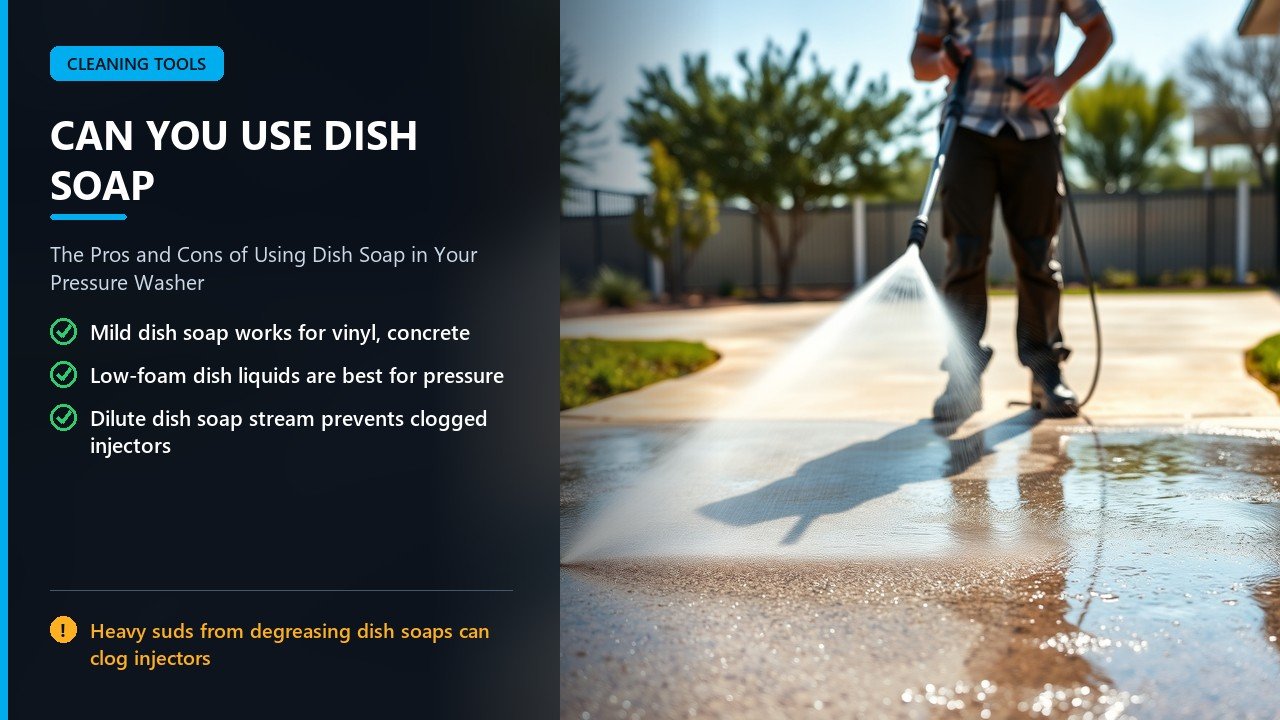
The short answer is yes in moderation, with the right soap and the right setup, dish soap can clean a surprising amount of outside work. A mild, low-foam dish liquid, the kind with fewer suds builders, works on vinyl, concrete, tires, and grime when drawn through a pressure washer’s soap injector in a diluted stream. The long answer follows the exceptions: heavy suds from fancy degreasing dish soaps, the suds that clog an injector’s metering jet and coat a whole job in white foam, are exactly what not to feed a machine built around fine nozzles.
The machine-side risk is the one most owners worry about, so it deserves the honest framing. Dish soap will not dissolve the pump or corrode the seals on contact, and a single dilute tank of it is not a death sentence, but the foaming can starve the pump of prime and leave a film of suds through the entire system that stinks and resurfaces for days. The professional fix is the same for any soap, run clean water through the injector and wand after a chemical job, and the machine returns to normal on the next trigger pull.
The surface-side risk is the one owners rarely consider. Dish soap is degreasing and fairly alkaline, which is fine on vinyl and concrete but harsh on wax, sealant, and clear coat, so a freshly detailed car or a newly sealed deck does not want a sink-soap bath. The same foam that lifts grease off a grill lifts the wax off a panel, and the owner who treats every surface like a dinner plate discovers the difference between a cleaner and a strip wash the hard way.
Why Foam Is the Real Problem
Foam is the axis the whole question turns on. Dish soap is engineered to foam, a feature at the sink and a flaw in a pressure washer, where suds fill the low-pressure side of the injector, coat the wand’s venturi, and billow in a white cloud that buries the surface being cleaned. A modest room suds up into a mountain through a nozzle, and the machine’s fine mixing jets amplify the suds builder rather than tame it, so the suds brew into a foam blob that blocks the pickup and starves the chemical feed.
The accent isn’t just cosmetic. When the injector’s tiny jet clogs with suds, the machine draws little or no chemistry, the soapy foam sits on the surface instead of cleaning it, and the operator ends up re-washing, re-rinsing, and chasing a foam storm across the yard. The low-suds dish soaps, labeled “less foam” or “low suds”, sidestep most of the drama, and diluting the soap further, or premixing it into a bucket, keeps the suds calm enough for a pressure washer’s throat to swallow.
Switching the machine to clean water after any soap job flushes the residue. Let the wash stream run for thirty seconds through the injector and the wand, and the lingering suds rinse away, leaving the pump and the hoses ready for the next job clean and prime. The same routine protects against any soap, spiced or otherwise, and it converts a one-time improvisation into a safe, repeatable practice for the whole washer fleet.
How to Use Dish Soap Correctly
When dish soap is the choice, the method matters more than the brand. Use the mildest, most dilute version you have, roughly a few tablespoons in a five-gallon bucket of water, and let the injector draw that weak mix rather than pouring concentrate anywhere near the machine. The foaming drops with the dilution, the cleaning stays effective for light grime on the approved surfaces, and the amount in the system stays well inside the range the machine tolerates.
The surfaces discipline the use. Dish soap shines on porch vinyl, patio furniture, rubber mats, tires, fishing gear, and light grime on siding and concrete, each cleaned with the soap setting and rinsed with the wide fan. It is the wrong tool for engine degreasing at scale, heavy wax-protected paint, unsealed wood that absorbs the detergents, and any job needing a species-specific cleaner, where the machine’s own soap or a proper blaster product belongs instead. The soap selection guide on this site maps the products to the jobs.
The application order keeps the result tidy. Pre-wet the surface, apply the dilute soap on the low-pressure setting and let it dwell, then rinse with a clean wide fan before the suds dry, and the dish soap leaves the surface clean and the machine healthy. Nothing about the use is exotic, but every step, dilute, dwell, rinse, flush, is what separates a neat job from the foam festival that made the internet warn against the practice in the first place.
What the Machine’s Manual and the Bottle Say
The two labels together answer the question better than any forum. The pressure washer’s manual addresses soap in its detergent section, usually stating that only detergents designed for pressure washers (low-foam, injector-safe) should be drawn through the machine, and that otherwise, universal suds are a risk to the injector and the prime. Following the manual’s stated rule quietly brackets the entire debate: dish soap is outside the approved feed, and the approved blends are made for exactly the foaming the sink soap brings.
The bottle tells its own side. Most quality dish soaps print “hand wash” and a picture of plates, and some print a degreasing legend that sounds like advertising for garage use, but the fine print also lists the foaming and the fragrance, neither of which a pressure washer wants, and neither of which a rinsing home wants lingering on the driveway. Reading the two labels together, machine manual and soap bottle, is the discipline that would have prevented every foam catastrophe the forums recount.
The practical owner who reads both notices the gap is small. Dilute the mild dish soap, feed it through the injector, rinse and flush, and the gap closes entirely; the manual’s rule holds for full-strength soak use, and the bottle’s strengths are met by the dilute method. It is less “can you” and more “how”, and the how makes the can safe.
Dish Soap Versus Dedicated Pressure Washer Soap
Dedicated pressure washer soaps exist precisely because the sink soap and the machine pull in opposite directions. The professional blends are low-foam by design, so they feed the injector freely and rinse cleanly at the wide fan; they carry surfactants tuned for siding, concrete, and house washing; and they cost pennies per job when diluted. Dish soap wins on price and convenience on the shelf, but the dedicated soap wins on foam control, rinse speed, and the lack of the stale sink smell on an afternoon of work.
The chemistry explains the gap. Pressure washer soaps use non-foaming surfactants and pH tailored to the surfaces, while dish soap optimizes grease removal by foaming and alkalinity, which is great on plates and wrong on paint, sealants, and grout. The machine does not care what is in the bottle, and the surfaces do, which is the whole reason a small shelf of purpose-made blaster soaps exists alongside the kitchen sink liquid.
The budget-minded owner can split the difference in both directions. Keep a bottle of low-suds dish soap for light duty and emergencies, and buy one dedicated pressure washer soap for the big house wash and the driveway, and pick the right one per job. The dedicated bottle pays for itself in fewer re-washes and cleaner rinses, while the dish bottle earns its place as the standby that never quite got the machine in trouble.
What Else You Should Not Put in the Machine
The dish soap question opens the broader one of what belongs in a pressure washer at all, and the answer is a fence around the injector. Bleach, household cleaners with preservatives, engine degreasers at full strength, and any “soap for everything” surprise are each a story of damage or disappointment, because they foam, corrode, or coat the internals in ways the machine never survived. Dedicated blends, and only the ones matched to the job, ride the injector; everything else stops at the bucket.
Water-side draws are the other fence. Sand, pond scum, and silt from a questionable source kill the pump regardless of soap, which is why the tank, the strainer, and the inlet screen are inspected before any chemical thought is given. The suction side guide makes the water-path rules plain, and the same discipline that protects the pump from grit protects the injector from foam.
The final rule is rinsing after every chemical feed. Soap of any kind, dish, dedicated, or something unlabeled, leaves a residue that re-emerges at the next job, and the thirty-second clean-water flush after each chemical pass is the machine’s insurance. The machine that gets flushed after every soap session runs longer, rinses cleaner, and quietly holds the lesson that the question was never just “can I”, but “can I and still keep the tool right”.
Dish Soap Surface by Surface
Matching the soap to the surface decides whether dish soap cleans or disappoints. Vinyl siding, plastic patio furniture, and rubber surfaces respond well to a dilute dish wash, since the degreaser lifts the light grime and the wide rinse finishes the job. Concrete takes the soap well for oil-spot loosening when partnered with a brush, and tires, mats, and laminate counters are the soap’s natural home, each cleaned on the low pressure setting and rinsed clean.
| Surface | Dish Soap Verdict | Best Practice |
| Vinyl siding | Good for light grime | Dilute, apply, dwell, rinse downward. |
| Concrete and pavers | Good with a scrub | Pre-treat oil spots, rinse wide. |
| Cars and clear coat | Use sparingly | Low suds only, rinse quickly, expect wax loss. |
| Wood decks | Not ideal | Dish soap can strip sealant and gray the grain. |
| Tires and rubber | Excellent | Soap, dwell, and a good rinse. |
| Grills and outdoor gear | Good | Degreases well; rinse thoroughly. |
Cars sit at the boundary of the soap’s honesty. A dilute rinse of a lightly dirty car is fine and cheap, but the same detergent that lifts plate grease strips wax and can haze clear coat with repeated exposure, so the detailers keep the dedicated car soap for the panels and the dish liquid for the tires, wheel wells, and the rubber around the car. The mobile detailing guide covers the wash chemistry in full.
Wood is the soap’s hardest no. A dishwasher-safe deck survives a dilute pass but ages grey and roughened by the alkaline detergent and the rinse’s force, and the wood’s own sealant erodes with every suds bath. Save the dish soap for plastic, rubber, vinyl, and masonry, and let a dedicated deck soap and the right rinse handle the wood, which is the discipline that keeps every surface on the property healthy.
Common Dish Soap Mistakes and How to Fix Them
The mistakes are consistent enough to diagnose at a glance. The first is pouring full-strength dish soap into the tank or down the pickup, which foams the entire system and starves the pump of prime; the fix is always the dilute pre-mix in a bucket, fed through the injector, so the machine draws a weak stream instead of a mountain. The second is applying soap and walking away, letting it dry on the surface, which streaks and stains, and the fix is the simple dwell-then-rinse rhythm.
Third, using the degreasing “all-purpose” dish soap everywhere, including paint and clear coat, which strips the wax and dulls the finish; keep the heavy degreaser for the kitchen and use the mild liquid outside. Fourth is skipping the clean-water flush after a soap job, which leaves residue and a stale smell to surface at the next wash; thirty seconds of clean rinse through the injector fixes it permanently. Fifth is using the soap on a hot, sunny day, in which the suds dry faster than they dwell; the fix is shade, water, and timing.
The larger fix is knowing when dish soap is the wrong tool altogether. For wax-coated boats, unsealed decks, painted metal, and any surface with a protective finish, the dedicated pressure washer detergent is the right spend, because it is buffered for the substrate and rinses without stripping. The disciplined owner keeps the dish bottle for the light duty where it wins and buys the specialty blends for the jobs they were built for, and the machine and the surfaces both stay right.
A Step-by-Step Dish Soap Wash
Turning theory into practice takes a tidy sequence any owner can follow. Fill a five-gallon bucket with clean water, add a few tablespoons of mild low-foam dish soap, and mix gently without frothing, and set the machine’s injector to draw from that bucket through the soap pickup. Pre-wet the target surface with the wide clean fan, switch to the soap setting, and apply the dilute wash from the bottom up so the suds never run over dried streaks, letting it dwell for three to five minutes on the light grime.
Rinse is the payoff. Switch the injector to clean water, sweep the same path with a wide fan working downward, and keep the distance gentle so the water carries the loosened film away without blasting it deeper into joints or laps. Check the surface as you go, re-wetting any spot that dries too fast, and finish by flushing the whole system, thirty seconds of clean water through the injector and the wand that clears the suds and the smell for the next job.
Cleanup completes the ritual. Rinse the bucket and the pickup, dry the wand and the fittings, and let the machine cool and rest with its water drained for storage. The whole sequence takes the same time as a dedicated soap wash, and it proves the honest point of this entire guide: dish soap in a pressure washer is not a dare, it is a method, and the method is what keeps the machine healthy, the surfaces right, and the improvisation a working tool rather than a cautionary tale.
Other Kitchen Cleaners and What to Avoid
The dish soap question naturally invites the neighbors on the shelf, and the honest sorting keeps the machine out of trouble. Laundry detergent foams viciously and carries brighteners that stain outdoor surfaces, so it stays out of the washer entirely. All-purpose spray cleaners and bathroom bleaches bring acids, solvents, or chlorine that corrode seals and strip finishes, and they belong nowhere near the injector; the dedicated pressure washer blends and a handful of mild, low-foam dish liquids are the only categories that earn a place beside the machine.
Window cleaner, drain cleaner, and oven spray each fail for the same reason from a different angle, excessive foaming, corrosive chemistry, or concentrated solvent, and none of them is formulated for the fine passages and seals of the pump. The grease-cutting, foaming degrees that make them great at their own jobs are precisely the properties the pressure washer rejects, so the rule of thumb is simple, if it suds like a bubble bath or etches like a wall, it does not ride the injector. The homemade soap options on the site give the safe blends most owners can mix at home.
The disciplined kit keeps only the manual-approved and the mild dilute options: one low-foam dish soap for light duty, one dedicated house wash soap for the big cleaning, and a simple concrete or degreaser blend for the flatwork. Everything else lives in the house. That small, honest inventory removes the daily debate and keeps the machine, the injector, and the next job safe, which is the real prize behind answering “can you use dish soap in a pressure washer” with a yes, and a yes with a method.
Frequently Asked Questions
Is dish soap safe for a pressure washer? In dilute, low-foam amounts through the injector, yes; full-strength, high-foam dish soap can clog the injector, starve the feed, and leave suds throughout the system. Run water through the injector and wand after use to flush it out.
What dish soap works best? A mild, low-foam liquid with no extra degreaser and minimal fragrance works best. The fewer suds builders, the less foam the pressure washer’s fine jets amplify, and the easier the rinse.
Will dish soap damage the pump? Not on contact. The pump is built for water and detergent, and a dilute feed is fine; the real risks are foaming that starves the prime and a lingering residue, both solved by diluting and flushing clean water after.
Can I use dish soap on a car? In a pinch on a light rinse, yes, but dish soap strips wax and can dull clear coat with repeated use. Use a dedicated car wash soap, or at least the most dilute low-foam dish soap you have, and avoid the heavy degreasing varieties.
How much dish soap should I use? A little goes a long way; a few tablespoons per five-gallon bucket of water through the injector is plenty for light grime. Any more and the foam takes over the rinse, which is the whole problem the dilution avoids.
Final Thoughts on Dish Soap in a Pressure Washer
Can you use dish soap in a pressure washer? Yes, with conditions that make the answer useful, dilute it, keep it mild and low-foam, feed it through the injector, choose the surfaces where it belongs, and flush the machine clean after. The pressure washer does not hate dish soap, it hates foam and residue, and both are managed by the same simple habits that any good operator applies to every chemical, dilute, dwell, rinse, flush.
Reserve the dedicated pressure washer soaps for the big jobs where they pay for themselves, and keep a bottle of mild dish soap as the standby for light duty and the day the fancy stuff runs out. Read the manual and the label together, keep the machine’s chemistry away from the machine’s fragile spots, and the question stops being a dare and becomes a practiced, predictable part of the toolbox, one that cleans well and never once threatens the machine that does the real work.