A few winters ago I helped a friend shop for a used diesel pressure washer. He ran a small mobile detailing and fleet-cleaning operation, and his cold-water gas machine simply could not cut the grease on delivery trucks and restaurant loading docks. We found a diesel-fired hot water unit listed a few hours away for what looked like a steal. When we got there, the burner fired up, the pump turned, and the seller smiled. Then we pulled the dipstick on the pump, found milky oil, checked the coil, and saw heavy soot and rust, and my friend walked away. Three weeks later he bought a different machine, paid a bit more, and spent the next two years running it daily without drama. That experience taught me exactly what matters when you are hunting for a diesel pressure washer for sale, and it is the reason this guide exists.
Shopping for a diesel hot water pressure washer is a different game than buying a homeowner electric unit. The machines are bigger, more complex, more expensive, and often bought used from commercial sellers, auctions, or classifieds. The wrong purchase can cost you thousands in repairs or leave you with a machine that cannot do the job you bought it for. The right one can pay for itself, because hot water and diesel power are what separate a machine that cleans grease from one that just moves it around.
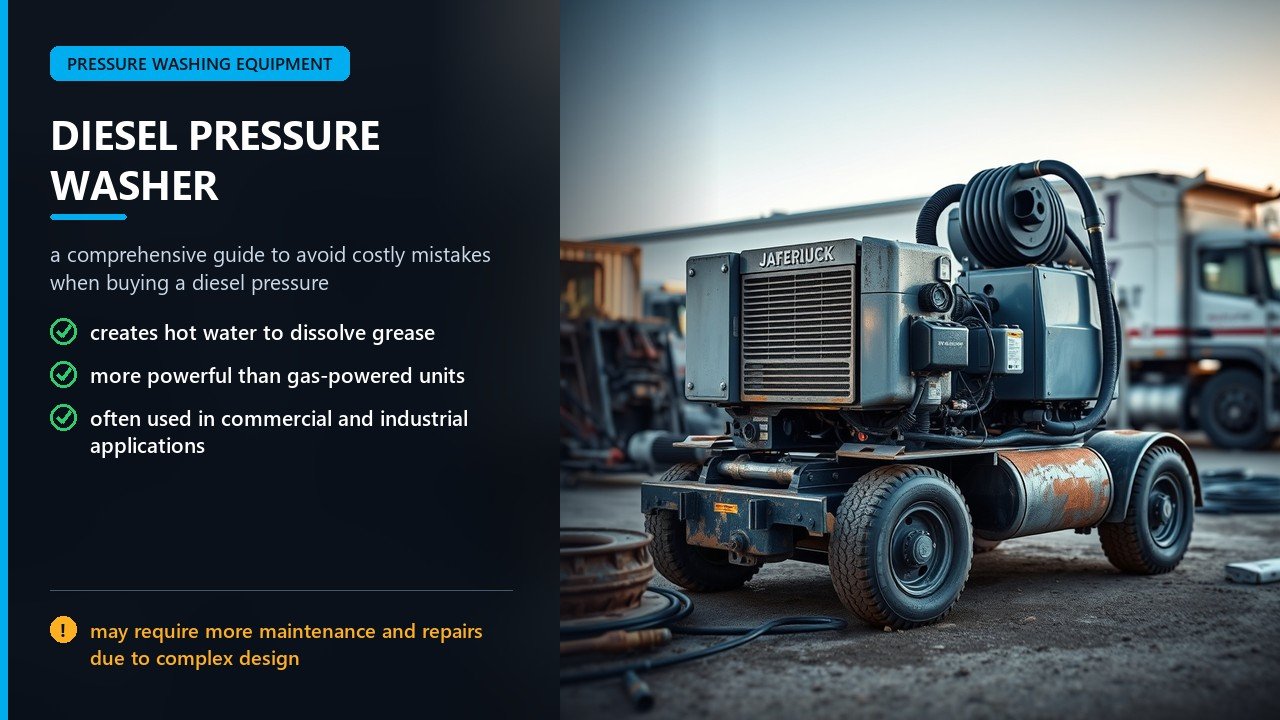
What Is a Diesel Pressure Washer
Diesel pressure washers come in a few configurations, and understanding them helps you shop intelligently.
The most common setup is a gas-engine pressure washer with an oil-fired burner that runs on diesel to heat the water. The engine drives the pump, the burner heats the water as it flows to the gun, and you get hot water cleaning without the massive electrical draw of an electric heater. Diesel is the preferred burner fuel because it is energy dense, widely available, and reasonably safe to store compared with some alternatives.
Some machines have diesel engines as well, driving the pump with diesel power. These are typically larger, more industrial machines, often found on trailers. They make sense for the most demanding commercial use.
There are also propane-heated hot water machines, and electric-heated units, but diesel remains the workhorse fuel for professional hot water cleaning because it delivers the most heat for the money and runs on fuel that is easy to find on a job site.
What all diesel hot water pressure washers share is the ability to produce hot water on demand. That heat is the entire point. Hot water dissolves grease, oil, and food residue dramatically faster than cold water, which is why every serious commercial cleaning operation uses it.
Why Hot Water and Diesel Power Matter So Much
If you have only used cold-water machines, the difference can feel exaggerated until you see it in person. Grease on a truck engine or a restaurant dumpster pad does not just sit on the surface. It bonds, thickens, and clings. Cold water can blast some of it away, but it often smears the rest into a stubborn film. Hot water softens that bond, and the grease practically rinses off. The practical result is that jobs which took hours with cold water take a fraction of the time with hot water, which means more jobs per day and faster payback.
If your work is in food service, automotive, fleet, or industrial settings, hot water is not optional. For a homeowner cleaning a patio, it absolutely is optional and probably unnecessary. Knowing which category you are in determines whether a diesel machine is a smart investment or an overkill purchase.
For a deeper look at why heat changes the game, our article on how diesel pressure washer hot water melts away grease and oil explains the science and the practical payoff.
New vs Used: Where the Real Value Lives
Diesel hot water machines are expensive new, and many serious buyers look at the used market to save money. The used market can be excellent, but it rewards careful inspection. Here is how to think about it.
New machines come with warranty, fresh components, and a known service history, but the price is high and depreciation is steep. Used machines can offer enormous value, sometimes half the price of new for a machine with plenty of life left, but a poorly maintained unit can be a money pit. The deciding factor is condition, not age alone. A well-maintained ten-year-old machine can outlast an abused three-year-old one. If you buy used, budget for immediate service and be ready to walk away when the signs are bad.
If you are comparing categories, note that some sellers offer a skid mounted pressure washer for sale as well, which is a different mounting format but may suit your transport needs better. And if you plan to move the machine between jobs, a mobile pressure washer trailer setup may be the smarter package than a standalone machine.
The Critical Inspection Checklist for a Used Diesel Machine
This is the heart of buying a diesel pressure washer for sale. Walk through these checks systematically, and do not let a friendly seller rush you.
The engine. Start it cold if possible, because cold starts reveal problems warm starts hide. Listen for knocking, check for smoke, and confirm it reaches and holds operating temperature. Ask about service records, hours, and regular maintenance. If the machine has a diesel engine, check for fuel leaks, injector issues, and excessive blow-by.
The burner and fuel system. Fire the burner and confirm it produces hot water within a reasonable time. Check the fuel tank for contamination, water, and rust. Diesel stored for long periods can grow microbes and accumulate water, which damages fuel systems. Inspect the fuel filter, lines, and nozzle for leaks and deposits. Heavy soot around the burner indicates poor combustion and deferred maintenance.
The coil. The heating coil is a major component and a common failure point. Rust, scale, and cracks in the coil mean expensive replacement and can also mean exhaust gases entering the water, which is a serious safety issue. Ask when the coil was last descaled, and look for signs of overheating or scale buildup.
The pump. Check the pump oil. Milky or low oil means water intrusion or neglect, and both shorten pump life. Run the machine and check for leaks at the pump, unloader, and fittings. Confirm the pressure builds properly and that the unloader regulates as it should. A triplex plunger pump is the gold standard here, and it should be rebuildable.
The unloader and safety systems. Test the total stop system and any pressure relief devices. On a hot water machine, safety systems matter even more because of the temperature and pressure involved.
The frame, tank, and hose reel. Rusted frames, cracked tanks, and seized reels reveal how the machine was stored. A machine that lived indoors and was winterized will look very different from one left outside.
| Component | What to Check | Red Flag |
|---|---|---|
| Engine | Cold start, smoke, noise, hours, records | Knocking, heavy smoke, no service history |
| Burner | Fires and heats water, clean combustion | Heavy soot, slow or no heat, fuel leaks |
| Coil | No rust, scale, or cracks | Exhaust smell in water, visible corrosion |
| Pump | Clean oil, builds pressure, no leaks | Milky oil, weak pressure, external leaks |
| Fuel system | Clean tank, fresh filter, no contamination | Water or sludge in fuel, clogged lines |
| Frame and reel | Solid metal, working reel, no cracks | Heavy rust, seized reel, cracked welds |
Diesel vs Propane vs Electric Heat: Which Fuel Wins
Diesel is the most common choice for professional hot water cleaning, but it is not the only option. Understanding the tradeoffs helps you buy the right machine rather than the only machine you found.
Diesel. Energy dense, widely available, relatively safe to store, and efficient at producing heat. The downsides are fuel storage requirements, occasional burner maintenance, and emissions considerations in some jurisdictions.
Propane. Burns clean and heats fast, and a propane heated pressure washer avoids diesel fuel handling. Propane is convenient but more expensive per unit of heat in many areas, and tank logistics matter. It is a good fit for operations without diesel storage or where clean emissions are a priority.
Electric heat. Clean and simple, but drawing enough power to heat water at high flow requires significant electrical capacity, which ties the machine to a powerful supply. This makes electric heat best for fixed installations, not mobile work.
| Heat Source | Best For | Main Drawback |
|---|---|---|
| Diesel burner | Mobile commercial cleaning | Fuel storage and burner maintenance |
| Propane burner | Clean-burning, no diesel handling | Higher fuel cost, tank logistics |
| Electric heater | Fixed indoor installations | Very high power demand |
For most mobile operations, diesel remains the practical winner. If you operate in an emissions-sensitive area or lack diesel storage, propane deserves a serious look. And if you are fully fixed in a shop with ample power, electric heat can work, though it limits mobility entirely.
Sizing a Diesel Pressure Washer to Your Work
Bigger is not automatically better. Match the machine to your jobs or you will overspend on fuel and equipment you never fully use.
Look at three numbers: PSI, GPM, and burner output (BTU). PSI is the force, GPM is the flow, and BTU determines how fast and how hot the machine can heat the water at a given flow. A machine with high flow but a weak burner produces lukewarm water at full flow, which defeats the purpose. The burner must be sized to heat the water at the flow you actually use.
For fleet and heavy equipment cleaning, you generally want higher flow, because covering large dirty surfaces fast is the priority, and the burner must keep up. For detail work and lighter commercial cleaning, moderate pressure and flow with a strong burner is ideal. For industrial and heavy grease, you want both high flow and a powerful burner.
Consider your job list before you buy. Writing down your five most common jobs and the PSI, GPM, and temperature each one needs will steer you toward the right machine far better than any general recommendation.
Mounting: Trailer, Skid, or Portable
How the machine is mounted affects your whole operation.
Trailer mounted. The most flexible option for mobile work. A trailer carries the machine, water tank, fuel, hose reels, and accessories, and it can be towed to any job. This is the setup most professional cleaning businesses use, because it is self-contained and fast to deploy. If you buy a machine intended for a trailer, confirm the trailer itself is in good shape, because a good machine on a bad trailer is a rolling headache.
Skid mounted. A skid or pallet-mounted machine is designed to be dropped onto a truck bed or trailer deck and strapped down. It is compact, rugged, and often used where the machine moves between vehicles or platforms. Skid mounting is a great choice if you already own a truck or trailer and just need the equipment.
Portable cart. Some smaller diesel machines sit on carts. These are more maneuverable on site but typically smaller and less capable than trailer units. They can still be excellent for detail-focused commercial work.
Whichever you choose, plan the water and fuel supply. A machine that runs hot water at high flow burns through water and diesel, so tank capacity matters. Running out mid-job is both embarrassing and costly.
Running Costs and Maintenance Budget
A diesel pressure washer for sale at a low price is not the same as a low total cost of ownership. Budget for fuel, maintenance, and consumables.
Diesel burner fuel and engine fuel (if it is a diesel engine) are ongoing costs that scale with use. Expect to spend more per hour than a cold-water machine, but clean faster, which usually nets out in your favor on commercial work. Maintenance includes pump oil changes, burner nozzle replacement, fuel filter changes, coil descaling, and general engine service. Neglecting the burner and coil is the fastest route to poor heat and expensive repairs.
A realistic maintenance plan for a machine used daily includes checking pump oil often, servicing the burner regularly, descaling the coil based on your water hardness, and flushing the fuel system if the machine will sit unused. Budget both time and money for these tasks, or the machine will degrade quickly.
Common Mistakes When Buying a Diesel Pressure Washer
Buying on price alone. The cheapest used machine in the listing is often the one that needs the most work. Compare condition and value, not just the number.
Not seeing it heat water. A machine that builds pressure but will not heat is not a hot water machine. Test the burner.
Ignoring the coil. A bad coil is expensive and sometimes dangerous. Inspect and ask questions.
Underestimating water and fuel needs. A hot water machine drinks both. Size your tanks and supply accordingly.
Skipping the pump oil check. Milky or low oil signals neglect. It is a red flag for the whole machine.
Forgetting emissions and local rules. Some areas regulate diesel burner emissions and wash-water runoff. Portable diesel engines and burners fall under rules like the U.S. Environmental Protection Agency emissions regulations for vehicles and engines, and many municipalities control where wash water may drain. Check your local requirements before you commit, because compliance can affect where and how you can operate.
Underestimating carbon monoxide risk. Both the engine and the burner on a diesel machine produce carbon monoxide, an invisible, odorless gas that kills. Never run one indoors, in an enclosed bay, or in a partially closed space without proper ventilation. The CDC carbon monoxide guidance is a sobering reminder of how quickly CO can build to dangerous levels. For shop use, electric heat and full ventilation are safer choices than a fuel-fired burner.
No service plan. Buying the machine is the easy part. Knowing who will service the burner and pump is what keeps it running for years.
Where to Shop and How to Avoid Scams
Diesel machines show up in equipment dealers, auctions, commercial liquidation sales, and classifieds. Each has tradeoffs. Dealers offer the most support and the least risk, at the highest price. Auctions can be great value but usually sell as-is with no testing. Classifieds can hide the best deals and the biggest traps, so inspection is everything.
When buying remotely, ask for a video of the machine running, heating water, and building pressure at the wand. Ask for photos of the pump oil, the coil, the burner, and the hour meter. Ask for the model and serial number and research the parts availability before you commit. A machine with hard-to-find parts is a burden regardless of its condition. And always use a payment method that gives you recourse if the machine arrives substantially not as described.
Understanding Burner BTU and Achievable Water Temperature
Two machines can both claim to be “hot water,” yet one produces scalding-hot water at full flow and the other lukewarm water the moment you open the trigger. The difference is burner sizing relative to flow, and it is worth understanding before you buy.
Burner output is measured in BTUs per hour. The more BTU a burner produces, the more it can raise water temperature at a given flow rate. As flow increases, the same burner has to spread its heat across more water, so the temperature rise falls. This is why a machine with a strong burner and moderate flow can produce hotter water than a machine with a huge flow rate and a modest burner. The advertised maximum temperature is usually measured at low flow and is not the temperature you will see at full throttle.
When you evaluate a diesel machine, ask the seller what flow rate the machine achieves and how hot the water gets at that flow. A machine that heats to 200 degrees at 2 GPM may only reach 120 degrees at 5 GPM. For grease work you want genuinely hot water at working flow, so match the burner to the flow you intend to use, not to a peak number on a spec sheet.
Quick Note: On a diesel hot water machine, the burner must be sized to heat the water at your actual working flow. If you double the flow and keep the burner the same, the water gets much cooler. Bigger burners cost more but deliver the heat that makes the machine worth owning.
Setting Up Your First Hot Water Rig
If you are moving from a cold-water machine to a diesel hot water unit, the surrounding setup changes too. Plan for these elements so your first jobs go smoothly.
Water supply. Hot water machines are thirsty. A buffer tank with a float valve lets the pump draw steadily while the tank refills from a customer’s spigot, which protects the pump from starving and keeps pressure consistent. Size the tank so you can work without constantly watching the level.
Fuel storage. You need a safe place for diesel, with proper containers, spill protection, and ventilation. Store fuel away from ignition sources and follow local rules for quantities and containers.
Hose and reel. Hot water and high pressure demand hoses rated for both. A quality reel keeps a long, stiff hose manageable and protects it from damage. Never use a hose that is only rated for cold water on a hot water machine.
Ventilation and siting. Because of carbon monoxide, position the machine so exhaust cannot enter a building or accumulate in a workspace. Outdoors or in a well-ventilated area only.
Wash-water handling. Commercial washing produces contaminated runoff. Plan containment, filtration, or disposal that complies with local environmental rules, especially around storm drains.
How to Negotiate and Close the Deal
When you find a diesel pressure washer for sale that passes inspection, negotiation is fair game, but keep it grounded in facts. Point to specific issues you found, such as a worn pump seal, a soot-loaded burner, or a coil that needs descaling, and use those to justify a lower offer. Ask what accessories and spare parts are included, because reels, guns, nozzles, and hoses add real value. Confirm the machine’s service history and whether the seller has records.
Avoid the urge to fall in love with a machine. There is always another listing. If a seller is firm at a price above what the condition justifies, walk. The best deals in this market go to the buyer who is patient and does not overpay out of excitement. Set a maximum price before you look, subtract the cost of any immediate repairs the machine needs, and do not cross that line.
Finally, get everything in writing. A simple bill of sale that lists the make, model, serial number, price, and terms protects both parties. If the machine was represented in a particular condition, note it. Clear paperwork now prevents disputes later, especially when you eventually sell the machine yourself.
Diesel Pressure Washer for Sale: Frequently Asked Questions
Is a diesel pressure washer worth it? For commercial work involving grease, oil, and heavy soil, absolutely. Hot water cleans far faster and better than cold. For residential cleaning, a diesel machine is usually overkill and a cold-water or electric unit is more sensible.
What should I pay for a used diesel pressure washer? Prices vary widely with size, condition, and brand. A well-maintained used machine can cost roughly half of new. Judge by condition and included equipment, not by the lowest sticker price.
Can I use off-road or heating oil in the burner? Many burners can run on diesel or kerosene, but check the manufacturer’s specification. Using the wrong fuel can damage the burner and void warranties.
How often does the coil need descaling? It depends on your water hardness and use. Hard water and frequent hot use require more frequent descaling. Follow the manufacturer’s guidance and inspect regularly.
Do I need a water tank with a diesel pressure washer? For mobile work, yes. Hot water machines use water quickly, and a buffer tank keeps the pump fed regardless of the customer’s supply. It also protects the pump from running dry.
What is the biggest red flag when buying used? A seller who will not let you watch the machine heat water and build pressure. If you cannot verify it works, assume it does not.
Final Verdict on Buying a Diesel Pressure Washer
Hunting for a diesel pressure washer for sale is exciting because the right machine can transform what your business can clean. But the search rewards patience and discipline. Focus on condition over age, verify the burner and coil, check the pump oil, confirm the fuel system is clean, and never buy a machine you have not seen run and heat water. Factor in fuel, water, and maintenance costs so the sticker price does not mislead you.
If you do the homework, a used diesel hot water machine can deliver years of productive service at a fraction of new cost, and it will out-clean any cold-water unit on greasy commercial work. If a seller pressures you, hides the machine, or refuses a demonstration, that is your answer. Walk away and keep looking. There is always another diesel pressure washer for sale, and the good ones are worth the wait.