Gutter cleaning with a pressure washer is one of the quickest ways to clear leaves, moss, and grime from a home’s gutters, and it can be done largely from the ground with the right attachments. Rather than climbing a ladder in dangerous weather, you can use a pressure washer fitted with a gutter-cleaning tool to flush the gutters and downpipes from below.
This guide covers the equipment you need, the step-by-step method, and the safety points that keep the job quick and safe.
Why Use a Pressure Washer for Gutters
Gutters fill with leaves, twigs, moss, and dirt over time, and blocked gutters cause water to overflow, damaging fascia, walls, and foundations. Clearing them matters, but the traditional method, working along the roofline with a ladder and by hand, is slow and risky. A pressure washer changes that by letting you reach the gutters from the ground.
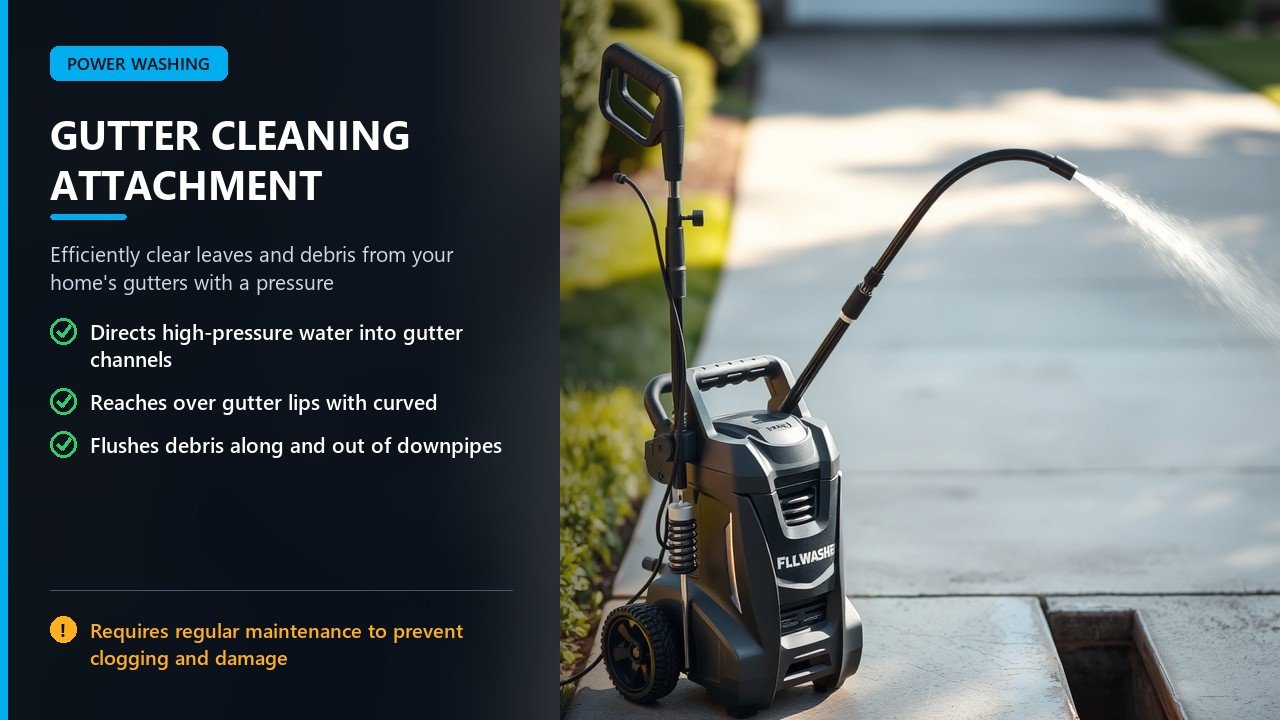
The key is a gutter-cleaning attachment: a curved or hooked wand that fits on the end of a telescoping pole and lets you direct a jet into the gutter channel from below. The curve reaches over the gutter lip, and the jet flushes debris along and out of the downpipe. With a long enough pole, most single- and two-storey homes can be done without leaving the ground.
The pressure washer provides the flow and force; the attachment provides the reach and the curve. Used with a gentle setting, this combination clears gutters quickly, and the same setup can flush a blocked downpipe. It is an efficient, practical way to keep gutters flowing.
Equipment You Need
The core items are a pressure washer, a gutter-cleaning attachment, and a telescoping wand or pole to give you the necessary reach. The gutter attachment has a curved end with a nozzle that directs water into the channel, and it usually connects to the machine’s gun or wand by quick-connect. Some attachments also include a rear-facing jet to help clear away from you.
Choose a suitable nozzle for the attachment. Gutter work needs flow more than extreme pressure, since the debris is bulky rather than heavily bonded, and too much pressure, or a narrow nozzle used at close range, can damage the gutter or fascia. A conservative setting and a nozzle that spreads the jet gently are the safe choice, and a steady flow does the flushing.
For height, a telescoping pole extends your reach so the attachment reaches the gutter. Telescoping pressure-washer wands with proper fittings, or gutter kits sold for the purpose, make this easier and safer than improvising. Ensure every part, the attachment, pole, and connections, is rated for your machine’s pressure, and use proper quick-connect fittings so nothing leaks or flies apart.
Why Gutters Block
Gutters block because they collect everything that falls on a roof: leaves, twigs, pine needles, seeds, and the moss and grit that come with them. Rain washes this debris toward the downpipes, where it collects and forms a dam. Once blocked, the gutter overflows, sending water down the walls and around the foundations instead of safely into the drainage system.
Blocked gutters cause real damage over time. Overflowing water rots fascia and soffits, stains render and brickwork, erodes planting beds, and can find its way into a basement or under the floors. In winter, standing water in a blocked gutter can freeze and expand, splitting seams and pulling the gutter away from the roofline. Keeping gutters clear is far cheaper than repairing the damage they cause when blocked.
How often they need clearing depends on the surroundings. A home under trees will fill quickly, especially in autumn, and may need cleaning several times a year, while a more open setting may need it only once or twice. Checking gutters after heavy leaf fall and following storms is the simple way to stay ahead of blockages.
Gutter Guards and Long-Term Care
Gutter guards are screens or covers fitted over the gutter channel to keep the bulk of debris out while letting water through. They reduce how often gutters need clearing, which is a big help on a tree-lined property, though they do not eliminate maintenance: fine debris still accumulates and the guards themselves need occasional clearing. They are a sensible addition for a home with heavy leaf fall.
Beyond cleaning, check the gutters and their fixings periodically. Look for sagging, loose brackets, failing seams, or sections pulling away from the fascia, and address damage before it worsens. Keeping the downpipes clear completes the picture, since a clear gutter feeding a blocked downpipe will still overflow.
Used together, periodic cleaning, sensible gutter guards, and attention to damage keep a drainage system working, protecting the walls and foundations that depend on it.
Step-by-Step Method
Start safely. Set up on firm, level ground, keep the pole and hose clear of obstacles, and make sure no one is below the area you are working. Connect the pressure washer to a suitable water supply and set a gentle pressure. Plan your route along the gutter so you work in one direction, usually from one end toward a downpipe.
Position the attachment and start at one end of the gutter. With the curved end over the gutter lip, use the jet to push debris along the channel toward the downpipe, working steadily and watching the water and debris flow. Keep the nozzle moving and avoid holding it in one spot, which can damage the gutter. Let the flow carry the debris rather than blasting at it point-blank.
Flush the downpipes. Once a run of gutter is clear, direct water into the downpipe outlet to check it is flowing freely and to clear any blockage. If a downpipe is stubbornly blocked, work at it gently from the top, and from the bottom where possible, rather than forcing high pressure into a sealed blockage. Repeat along the gutter until the whole run flows clean.
Pressure and Safety
Use less pressure than you might expect. Gutters are often thin metal or plastic and are easily bent, split, or torn loose by too much force, and high pressure can also force water behind the fascia and into the structure. Keep the nozzle a sensible distance away, use a gentle setting, and let flow and patience do the work rather than force.
Stay away from electrical fittings. Gutters can carry or run near cables and fittings, and spraying near them is dangerous. Keep the jet clear of wiring, lights, aerials, and any electrical components, and if in doubt, stop and leave that section alone. Water and electricity are a serious combination.
Respect the limits of working from the ground. While the attachment keeps you off a ladder, very tall or steep roofs may be beyond safe reach, and some jobs genuinely need a professional. Wet ground, overhead lines, and unstable footing all demand care. The point of the attachment is to make the job safer, so never negate that by overreaching or rushing.
Tips for a Better Clean
Work with the weather, not against it. Avoid blustery days when spray and debris blow back on you, and avoid cleaning gutters when they are full of dry leaves that could blow into the downpipe and jam it. Gentle, steady work in calm conditions gives the best result and is far safer.
Soften stubborn debris. Dry moss and compacted dirt can resist a gentle jet, so a pre-soak or a little patience helps. Letting the water soften and loosen the debris before flushing it along is often faster than blasting at it, and it is kinder to the gutter. For heavy growth, deal with the worst of it in stages.
Finish by checking the result. After flushing, watch water run to the downpipes and confirm everything flows freely, then check for any sections you missed or any overflow. A quick inspection from the ground tells you whether the job is done, and catching a problem early saves a repeat visit.
When to Call a Professional
Some gutter jobs are best left to a professional. If your home is very tall, the roof is steep or the gutters are hard to reach safely even with a pole, or if the gutters are damaged, loose, or in a poor state, a gutter-cleaning service with proper access equipment is the sensible choice. Gutter guards and fascia repairs also usually call for a specialist.
Where gutters are lower and accessible, the pressure washer and attachment approach is safe and effective, and it is a job most owners can handle with care. The deciding factors are height, access, the condition of the gutters, and your confidence on the ground. The table below sums up the approach and the limits.
| Point | Detail |
|---|---|
| Main tools | Pressure washer, gutter attachment, telescoping pole |
| Pressure | Gentle; flow matters more than force |
| Method | Flush toward the downpipe, then clear the downpipe |
| Avoid | Electrical fittings; overreaching; too much pressure |
| Call a pro | Very tall, steep, or damaged gutters |
Follow these and gutter cleaning becomes a safe, ground-level job.
Frequently Asked Questions
Can I clean gutters with a pressure washer? Yes. With a gutter-cleaning attachment and a telescoping pole, you can flush gutters and downpipes from the ground without climbing a ladder.
What attachment do I need? A gutter-cleaning attachment with a curved end that fits a telescoping pole, plus a telescoping wand for reach. Match every part to your machine’s pressure and fittings.
How much pressure should I use? A gentle setting. Gutters are easily damaged, so use flow rather than force and keep the nozzle at a sensible distance.
Will it clear blocked downpipes? Often, yes. Flush water into the downpipe and work at blockages gently from the top and bottom rather than forcing high pressure into a sealed blockage.
Can it damage my gutters? It can if you use too much pressure or hold the nozzle in one spot. Use a gentle setting, keep moving, and let the flow carry the debris.
Is it dangerous to spray near wiring? Yes. Keep the jet clear of cables, lights, aerials, and any electrical fittings, and stop if a section is unsafe to reach.
Do I still need a ladder? With a long enough pole, most single- and two-storey homes can be done from the ground. Very tall or steep roofs may need a professional with access equipment.
When should I call a professional? For very tall or steep roofs, hard-to-reach gutters, damaged or loose gutters, or gutter guard and fascia work.
Final Thoughts
Gutter cleaning with a pressure washer turns a risky, ladder-based chore into a job that can be done from the ground. With a gutter attachment, a telescoping pole, and a gentle setting, you can flush gutters and downpipes quickly, using flow rather than force to move leaves, moss, and grime along and out.
Keep the pressure low, stay clear of electrical fittings, respect the limits of your reach, and call a professional for tall, steep, or damaged gutters. Done this way, the job is fast, effective, and far safer than working along the roofline. For related reading, see our guides on a power washer for gutter cleaning and a high pressure hose for a pressure washer.