Nothing ruins a Saturday wash faster than a connection that refuses to seal. Ben found this out the hard way when he swapped in a new spray gun and got a steady drip down the front of his pants every time he pulled the trigger. The nozzle was fine. The hose was fine. The problem was one mismatch: his hose end was a 3/8-inch NPT male, his gun inlet was an M22 female, and they were never going to fit. A ten-dollar adapter would have saved an hour of frustration. That is the quiet power of choosing the right hose fittings for pressure washer setups: match them correctly once and everything simply works.
Hose fittings for pressure washer systems are the connectors that join hoses, pumps, guns, wands, nozzles, and accessories. They carry water at thousands of PSI, so they must match in type, thread, and pressure rating. This guide explains the common fitting families, how to identify what you have, how to build leak-free connections, and the mistakes that cause drips, lost pressure, and stripped threads.
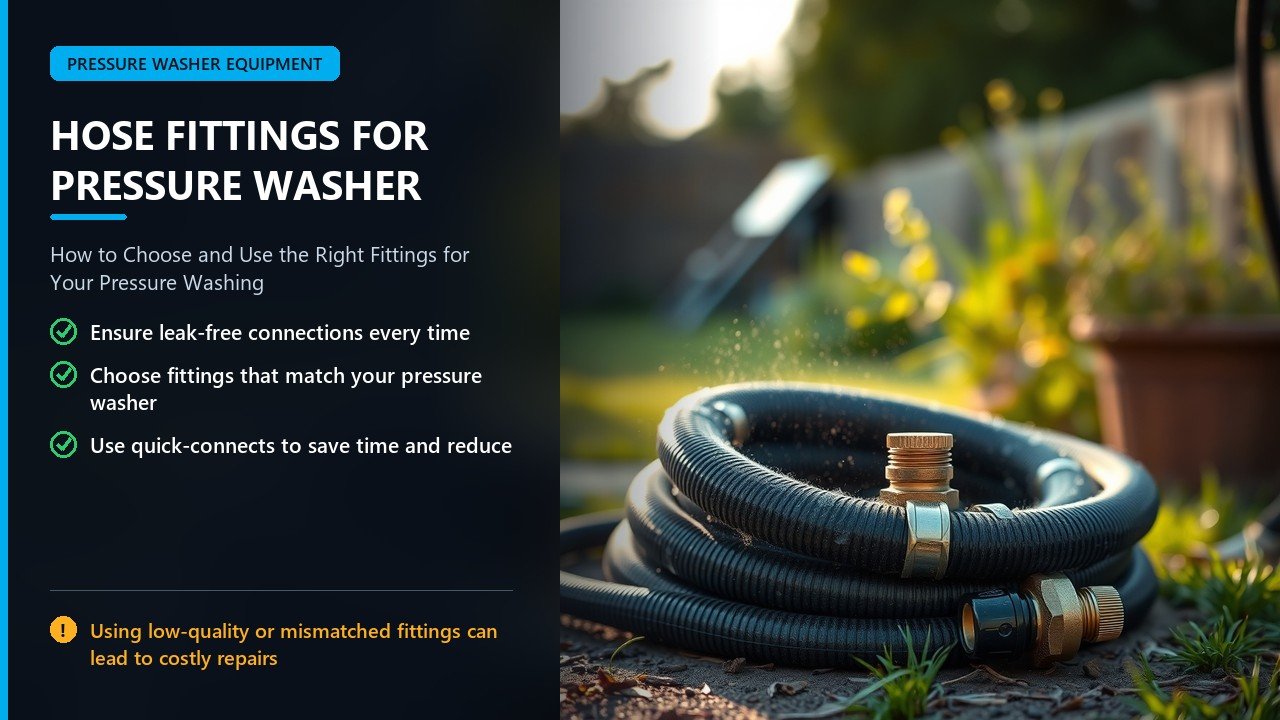
Why Fittings Matter More Than They Seem
Fittings are a pressure boundary. Every joint is a potential leak, and every leak costs pressure and water. A weak connection can blow off under load and become a projectile, which is why rated fittings are a safety issue, not just a convenience one. On the suction side, a loose fitting lets air into the pump and causes surging and cavitation. On the pressure side, a leak sprays and wastes flow that should be cleaning the surface.
Getting the fittings right also makes your whole rig modular. With the correct adapters and quick-connects, you can move from a wand to a surface cleaner, add a foam cannon, or switch hoses in seconds.
The Main Types of Pressure Washer Fittings
Most pressure washer connections fall into a handful of families. Learning to recognize them is the key to buying the right part the first time.
Threaded Fittings
Threaded connections screw together and rely on the thread shape plus a sealant or O-ring to hold pressure. The two you will meet most are NPT and M22.
NPT (National Pipe Taper). A tapered American standard. The threads tighten and wedge to seal, usually with thread sealant. Common sizes are 1/4″, 3/8″, and 1/2″. Never use Teflon tape on the wrong part of a straight-thread fitting.
M22. A metric straight thread very common on consumer pressure washers, especially the connection between hose, gun, and machine. M22 comes in two variants, M22-14 and M22-15, that look identical but do not always interchange. Check carefully.
BSP / Metric. Some imported machines use British or metric threads that will not seal with NPT. Mixing these is a classic source of endless drips.
Quick-Connect Fittings
Quick-connects, often 1/4-inch, let you snap attachments on and off without tools. A male plug slides into a female socket and locks with ball bearings. They save enormous time but must be rated for your pressure and kept clean and lubricated. Stainless steel versions resist corrosion far better than brass over time.
Adapters, Couplers, and Bushings
These change thread size, gender, or fitting type. A male-to-male adapter joins two females; a female-to-female coupler joins two males; a bushing steps down from a larger thread to a smaller one. A good adapter kit turns mismatched equipment into a working system.
| Fitting | Seals By | Typical Use | Sealant? |
|---|---|---|---|
| NPT tapered | Thread wedge | Pumps, older guns, hard plumbing | Yes |
| M22 straight | O-ring face | Consumer hose/gun/ machine | No |
| Quick-connect | O-ring + lock | Attachments, nozzles, wands | No |
| BSP / metric | Washer or O-ring | Some imported machines | Depends |
Quick Note: Tapered NPT threads seal by deformation and need sealant. Straight threads like M22 and most quick-connects seal with a rubber O-ring or bonded washer and should not have tape or paste, which can damage the seal. Learn the difference once and leaks drop sharply.
How to Identify the Fitting You Have
Before buying anything, identify three things: the thread type, the size, and the gender.
Gender. Male fittings have external threads; female fittings have internal threads. This is the first thing to confirm.
Type. Compare your fitting to a known NPT taper, an M22 straight thread, or a quick-connect. Tapered threads widen toward the base; straight threads do not.
Size. Measure the thread outside diameter with calipers and compare to a chart. Note that pipe sizes do not equal actual measured diameter — a 1/4-inch NPT thread measures larger than a quarter inch across.
If you are unsure, buy a small adapter assortment that includes the common combinations. It is cheaper than multiple guess-and-return cycles, and it teaches you your machine’s scheme quickly.
Building a Leak-Free Connection
1. Confirm compatibility. Never force a mismatched thread. Cross-threading destroys the fitting and creates a permanent leak.
2. Clean and inspect. Remove old tape, grit, and damaged O-rings. A dirty seal will weep even when tight.
3. Apply sealant correctly. Only on tapered NPT threads, wrap tape clockwise (with the threads) two or three turns, or use a liquid sealant sparingly. Leave the first thread bare so debris does not enter the flow.
4. Hand-tighten, then snug. Turn by hand until snug, then a fraction more with a wrench. Do not gorilla-tighten; you will crack brass or strip threads.
5. Pressure-test. Run water with the gun open and check every joint. Fix weeping immediately rather than hoping it seals itself.
Fittings Across the Whole Machine
It helps to think of the pressure washer as a chain of connections. The inlet fitting connects your water supply to the pump. The pump outlet feeds the hose, often through an M22 or quick-connect. The hose ends join the gun, and the gun tip accepts nozzles. Each junction has its own preferred fitting type, which is why a small adapter kit is so useful. To match hose ends correctly, see our pressure hose guide, and for the nozzle end, review our threaded nozzle guide.
For a full walkthrough of building a tight, organized setup, our article on power washing fittings is a helpful companion to this one.
Thread Sizes and How to Measure Them
Thread sizing trips up more people than any other part of the job, because the nominal size rarely matches what a ruler shows. A fitting called a 3/8-inch NPT does not measure 3/8 of an inch across its threads; that number refers to the pipe’s nominal interior, not the thread diameter. The practical fix is to measure and compare against a known chart rather than guessing from the name.
For quick-connect fittings, the standard pressure washer size is 1/4-inch. This refers to the plug’s nominal body, not the water passage. A 1/4-inch quick-connect plug and socket from different brands usually interchange, which is one reason the system is so popular. Larger 3/8-inch quick-connects exist for high-flow machines and must not be mixed with 1/4-inch parts, as they will not lock or seal.
For threaded fittings, measure the outside diameter of the male thread with calipers and match it to the standard for NPT or M22. If a fitting threads on a little and then binds, you almost certainly have the wrong standard, not a defective part. Stop before you force it and consult a chart.
| Fitting Family | Common Sizes | Typical Pressure | Notes |
|---|---|---|---|
| Brass NPT | 1/4″, 3/8″, 1/2″ | Up to ~3,000 PSI | Good for most home rigs |
| Stainless NPT | 1/4″, 3/8″, 1/2″ | 5,000+ PSI | Best for high PSI and bleach |
| M22 | M22-14, M22-15 | Varies by build | O-ring seal, no tape |
| Quick-connect | 1/4″, 3/8″ | Up to 5,000 PSI (steel) | Keep O-rings fresh |
Choosing Materials: Brass, Steel, and Stainless
Material decides how long a fitting survives and where it is safe to use it. Brass is the workhorse of home pressure washing. It machines cleanly, seals well, and resists corrosion in fresh water, though it can pit and crack under very high pressure or in harsh chemicals. Stainless steel costs more but handles high PSI, bleach, and repeated wet-dry cycles without rusting or seizing onto its mate. Ordinary steel is best reserved for structural parts, not water contact, because it corrodes quickly. Zinc and pot metal are common on cheap fittings and are the first to crack, strip, or fail after a season or two.
For soft washing with sodium hypochlorite, stainless is not optional — it is the difference between a rig that lasts years and one that weeps within weeks. For everything else on a home machine running fresh water, quality brass is a fine, economical choice.
Quick-Connects: The Biggest Time Saver
If you only upgrade one thing, upgrade to quick-connects on your gun, wands, and nozzles. Pressing a sleeve and snapping on a surface cleaner or a new tip turns a task into a second. The trade-off is another O-ring to maintain and a joint that must be rated and kept clean. Buy stainless plugs and sockets where possible, keep them free of grit, and lubricate the O-rings lightly with silicone grease. When a quick-connect starts to drip, replace the O-ring rather than replacing the whole part.
Common Mistakes to Avoid
Mixing NPT and BSP. They look similar but will not seal. This is the single most common cause of stubborn drips.
Putting tape on M22 or quick-connect fittings. Sealant on an O-ring joint interferes with the seal rather than helping it.
Over-tightening. Brass and pot metal crack easily. Firm is enough.
Reusing worn O-rings. Rubber flattens and hardens. Keep a bag of spares in every size you use.
Ignoring pressure ratings. A cheap fitting rated for 2,000 PSI on a 4,000 PSI machine is a failure waiting to happen.
Maintenance Tips
Inspect O-rings before each season and replace any that are cracked, flattened, or missing. Keep quick-connects clean; grit wears the ball bearings and causes leaks. Rinse fittings after detergent or bleach exposure and dry them before storage. Store spare O-rings, a roll of thread tape, and a couple of adapters in a small bag with your machine so a mid-job leak never ends the day.
Frequently Asked Questions
Are pressure washer hose fittings universal? No. Thread types and sizes vary by brand and market. That is why adapters exist and why measuring before buying matters.
What is the most common pressure washer fitting? On consumer machines, M22 for hose and gun connections, and 1/4-inch quick-connect for nozzles and attachments.
Can I stop a leak with Teflon tape alone? Only on tapered NPT threads. On straight-thread O-ring fittings, tape usually makes the leak worse.
Do I need stainless steel fittings? For soft washing and bleach, yes. For fresh water, quality brass is fine and more affordable.
Why does my quick-connect leak after a while? Almost always a worn or dirty O-ring. Replace the O-ring and clean any grit from the plug and socket before replacing the part itself.
Can I use plumbing fittings from a hardware store? Sometimes. Standard NPT fittings work if the material and pressure rating suit your machine, but avoid soft pot-metal parts and always respect the pressure limit.
What is the difference between an adapter and a coupler? An adapter changes thread size or type; a coupler joins two fittings of the same size, often connecting two hoses or bridging genders.
Final Thoughts
The right hose fittings for pressure washer equipment are the difference between a rig that drips and fights you and one that just works. Identify your thread type and size, respect the difference between tapered and straight threads, seal each joint the correct way, and keep spare O-rings on hand.
It is a small investment of time and a few dollars in adapters, but it pays back every single time you pull the trigger and get clean, full-pressure water with no surprises. When you are ready to expand, a well-fitted reel in our hose reel guide is the natural next step.