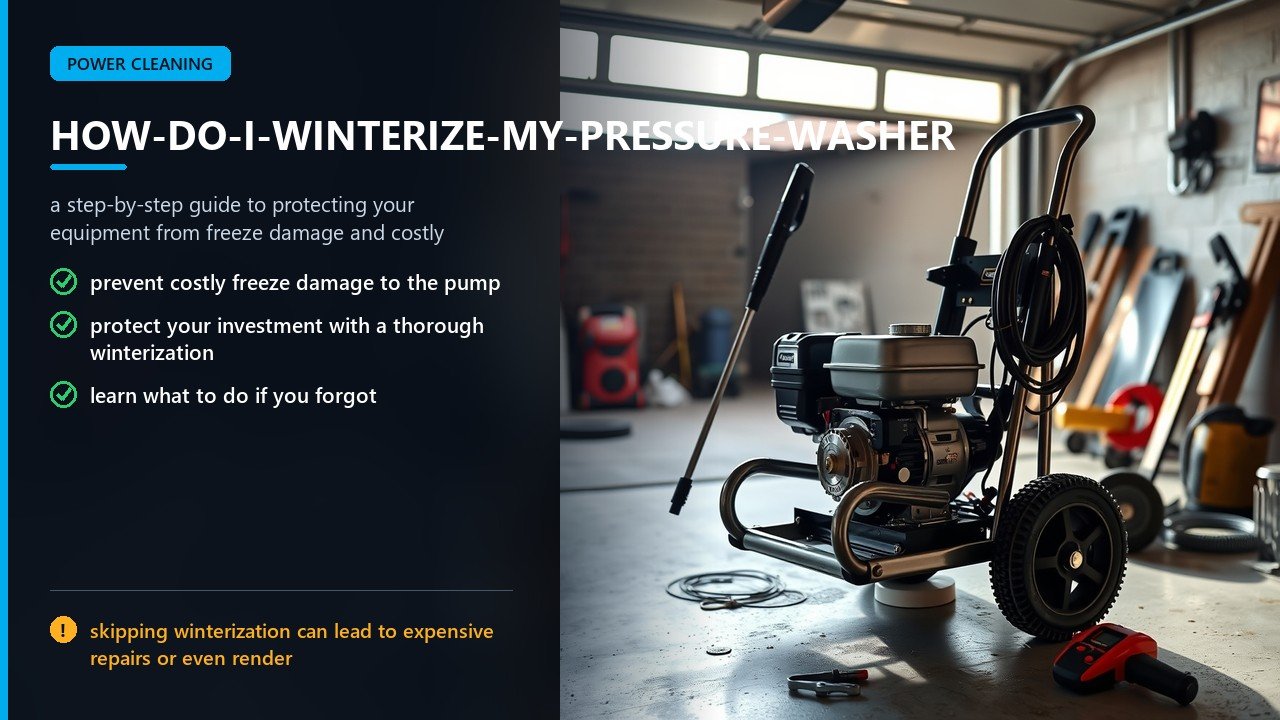
How Do I Winterize My Pressure Washer So Freezing Never Kills the Pump
The first hard freeze of the year caught Ray off guard. He had used his pressure washer on a Saturday to wash his truck and put it back in the unheated garage, exactly as he had every other fall. The following Wednesday, temperatures dropped to 24 degrees overnight. In the spring, the machine started fine but sprayed barely more than a garden hose. The pump was cracked. What would have been a twenty-minute maintenance task and five dollars of pump protector turned into a four-hundred-dollar repair. Ray learned what thousands of owners learn every year: water expands when it freezes, and a pressure washer is full of tight little places where trapped water can split metal and plastic apart.
If you are asking yourself, “How do I winterize my pressure washer,” you are already ahead of most owners. The process is not complicated, but it does need to be thorough. Miss one step and a pocket of water can sit in a valve or a hose and freeze into a wedge that destroys expensive components. This guide covers why winterizing matters, the differences between gas and electric machines, a complete step-by-step process, the products that actually protect your pump, the mistakes that lead to cracked pumps, and what to do if you forgot and the freeze already happened.
Why Winterizing Matters More Than You Think
Water is one of the few everyday substances that expands when it freezes, and it expands with surprising force. In a pressure washer, water hides in the pump’s pistons and valves, in the unloader, in the high-pressure hose, in the spray gun, in the wand, and in the nozzle. When that water freezes, it pushes outward against whatever contains it, and the smallest, most precise parts fail first.
The damage is rarely visible from the outside. A pump can look perfectly fine and still be ruined internally, with a hairline crack in the manifold or a deformed valve. That is why the repair bills catch people by surprise. Manufacturers agree on the core message: water left in the pump will freeze, expand, and can permanently damage the machine, which is why both Briggs & Stratton and STIHL publish dedicated winterization procedures.
The Real Cost of Skipping It
Winterization takes about an hour and costs a few dollars in pump protector or antifreeze. A cracked pump, split manifold, or burst hose can cost several hundred dollars to repair, sometimes more for commercial machines. It is the cheapest insurance in pressure washing, and it is entirely in your control.
Freeze Damage Is Fast
You do not need a deep freeze week to do damage. A single overnight dip below freezing is enough to crack a pump full of water. This is why “I will do it this weekend” is a dangerous plan once the forecast turns. Winterize before the first freeze, not after it.
When to Winterize
Timing depends on your climate, but the rule is simple: winterize when overnight temperatures are forecast to approach or drop below freezing and you do not expect to use the machine again soon. In most of the United States, that means late October through November. If you use your washer occasionally in winter, you still need to protect it between uses, since a cold garage offers no guarantee.
Experts often suggest starting your winter routine as soon as daily temperatures fall consistently below about 50 degrees Fahrenheit, especially if the machine lives in an unheated space. Waiting for a hard freeze is how most damage happens.
Gas or Electric: What Changes
The water-side protection is nearly identical for both machine types. The big difference is the engine and fuel system, which only exist on gas models.
- Gas pressure washers: protect the pump from freezing and protect the engine’s fuel system from stale, ethanol-blended gasoline. You also change oil and stabilize or drain fuel.
- Electric pressure washers: no engine or fuel, so you focus entirely on draining water and protecting the pump, hoses, and gun. Electric units are lighter and simpler to store indoors.
Special Cases: Hot Water and Commercial Machines
If you own a hot water machine, the heating coil, burner, and fuel system need attention too, because water trapped in a coil can freeze and split it. Commercial rigs with tanks, reels, and soft wash systems have more plumbing that holds water, so a full-drain approach matters even more. Our guide on the step-by-step cold-weather checklist covers those extra systems.
The Complete Winterization Process
Work through these steps in order. The sequence matters, because you want to purge chemicals first, then water, then introduce protection.
Step 1: Purging Detergent and Chemicals
Start by flushing out any soap or chemical left in the system. Chemical residue can dry, gum up, or corrode pump internals over winter. Put the chemical or soap suction tube into a bucket of clean water and run the machine on its low-pressure or soap setting for a minute or two until the discharge runs clear. Never store a pump with detergent sitting inside it.
Step 2: Releasing Pressure Safely
Shut off the engine or unplug the unit. Shut off the water supply. Then point the gun in a safe direction and squeeze the trigger until no more water comes out, releasing the trapped pressure. Engage the trigger lock so the gun cannot be fired accidentally during handling.
Step 3: Disconnecting Everything
Disconnect the garden hose from the pump, the high-pressure hose from the pump and gun, and the wand from the gun. Separating every component lets each one drain individually instead of trapping water at a joint. Drain the garden hose completely and coil it loosely.
Step 4: Draining the Pump
This is the critical step. There are a few accepted ways to empty the pump, and you can combine them:
- Manual drain plug: Many pumps have a drain plug at the lowest point. Remove it and let water run out completely, then wipe dry and reinstall.
- Short dry-run: With the engine off, pull the recoil starter several times (gas) or briefly bump the switch (electric) to push residual water out. Do not run the machine dry for more than a few seconds, because the pump relies on water for lubrication and cooling.
- Compressed air: If your manual allows it, a few seconds of low-pressure air through the inlet pushes water out efficiently. Never use high pressure or blast air through the pump against the manufacturer’s advice.
Step 5: Protecting the Pump With Pump Saver or Antifreeze
Draining alone still leaves a thin film of water that can freeze and dry out seals. That is why the final step is introducing a pump protector or a proper winterizing fluid. Attach a short length of garden hose to the pump inlet, insert the pump saver, and run the machine briefly until the solution pushes through the pump and out the discharge. This lubricates pistons and seals, displaces water, and lowers the freezing point so any remaining moisture cannot expand destructively.
Step 6: Winterizing the Engine (Gas Models)
Gas engines have their own winter risks, driven mostly by ethanol-blended fuel, which can deteriorate in as little as a month and cause rust, corrosion, and varnish that clog carburetors. You have two good options:
- Stabilize and run: Add a quality fuel stabilizer to fresh fuel, then run the engine for two to three minutes so the treated fuel reaches the carburetor. Store with a full tank to reduce condensation.
- Drain completely: Drain the fuel tank and run the engine until it stops from fuel starvation, leaving the carburetor empty.
Whichever you choose, change the engine oil before storage if it is due, because used oil contains moisture and contaminants. See our guide on changing pump oil and the engine oil article for the exact steps.
Step 7: Hoses, Gun, Wand, and Nozzles
Drain the high-pressure hose thoroughly. Lift one end and walk the water toward the other, then coil it loosely and store it indoors if possible, out of sunlight and off concrete. Squeeze the gun trigger and shake out any water. Remove, clean, and dry the nozzles, then store them in a bag. A little water left in a hose can freeze and delaminate the inner tube, creating a weak spot that fails later.
Step 8: Storage Location
The ideal storage spot is dry, above freezing, and well ventilated. Electric machines can go in a basement or heated garage. Gas machines should be stored in a dry, ventilated location away from any flame source, such as a furnace or water heater, because of fuel vapors. If you must store outdoors or in an unheated shed, complete every protection step and consider wrapping the machine against condensation.
Winterization Checklist at a Glance
| Task | Gas Machine | Electric Machine | Why It Matters |
|---|---|---|---|
| Purge detergent/chemicals | Yes | Yes | Prevents residue corrosion and gumming |
| Release pressure, disconnect | Yes | Yes | Prevents trapped water and accidental spray |
| Drain pump | Yes | Yes | Removes the water that freezes and splits parts |
| Add pump saver/antifreeze | Yes | Yes | Lubricates seals and lowers freeze point |
| Stabilize or drain fuel | Yes | N/A | Prevents stale gas and ethanol damage |
| Change engine oil | If due | N/A | Removes moisture and contaminants |
| Drain hoses, gun, wand | Yes | Yes | Prevents frozen and split tubing |
| Clean nozzles and store | Yes | Yes | Keeps spray patterns and flow ready |
| Store above freezing | Preferred | Preferred | Extra insurance against deep cold |
Pump Saver vs Antifreeze: What to Use
These two products are often confused, and using the wrong one causes problems.
Pump Saver / Pump Conditioner
A pump saver is purpose-built for pressure washers. It lubricates pistons and seals, displaces water, and protects against freezing and corrosion during storage. It is the safest general choice for the pump itself and is what most manufacturers recommend. If you want a deeper explanation of how these products differ, see our article on pump saver versus RV antifreeze.
RV / Marine Antifreeze (Propylene Glycol)
RV antifreeze is designed to winterize plumbing without toxicity, so it is safe around people and animals. It works well for flushing larger systems, coils, and long plumbing runs on commercial rigs. Use only the propylene glycol type, never automotive antifreeze. For a comprehensive look at protecting the pump, our guide on the pump saver for owners avoiding costly repairs walks through the details.
| Product | Best For | Watch Out For |
|---|---|---|
| Pump saver / conditioner | Residential and prosumer pump protection, short storage | Use the amount the label specifies; do not substitute engine products |
| RV/marine propylene glycol antifreeze | Commercial rigs, coils, long plumbing runs, deep cold | Never use toxic automotive ethylene glycol antifreeze |
| Compressed air (with care) | Pushing bulk water out before adding protection | Only at low pressure and only if the manual allows it |
Winterizing Hot Water, Commercial, and Used Machines
The basic process covers most homeowners, but a few machines need extra attention.
Hot Water Pressure Washers
A hot water machine adds a heating coil and a burner to the equation, and the coil is a long, narrow passage that traps water easily. If that water freezes, it can split the coil, which is one of the most expensive parts to replace. Winterizing a hot water unit means draining and protecting the coil and water heater section in addition to the pump. Flushing a propylene glycol antifreeze through the coil is common practice on commercial rigs. Our guide on storing a pressure washer so it survives the freeze covers heated systems in more depth.
Mobile Rigs With Tanks, Reels, and Soft Wash Systems
If your washer lives on a trailer with a buffer tank, hose reels, and chemical injectors, there is far more plumbing that can hold water. Low spots in the plumbing trap water even when you think the system is drained. Walk the entire line, open every low point, and flush protection through until it appears at the far end. Soft wash systems need their own flush of the chemical lines, proportioners, and pumps. Do not let sodium hypochlorite or other chemicals sit in the lines all winter.
Used Machines of Unknown History
If you bought a used pressure washer and are unsure how it was stored, treat it as a machine that may already have freeze damage. Inspect for cracks and corrosion, check that the pump turns freely, and test pressure before you rely on it. Catching a small problem early is far cheaper than discovering it mid-season.
The Math: Winterizing vs Freeze Repair
The economics are not close. Winterization is a rounding error compared with a repair, and the table below makes the point plainly. Exact prices vary by machine, but the ratio holds across the board.
| Item | Typical Cost | Notes |
|---|---|---|
| Pump protector / pump saver | A few dollars | Enough for one machine, one season |
| Fuel stabilizer | Low | One bottle treats many tanks |
| Your time | About an hour | Once per year, twice with spring recommission |
| Cracked pump replacement | Hundreds of dollars | Common after a single frozen night |
| Split heating coil (hot water) | Hundreds to more | Expensive part plus labor |
| Ruined carburetor from stale gas | Moderate | Often avoidable with fuel stabilizer |
Put simply, an hour of work protects hundreds of dollars of equipment. There is no other maintenance task in this hobby with a better payoff.
Common Winterization Mistakes
These are the errors that lead to cracked pumps and dead engines every spring.
- Waiting for the first freeze. Damage can happen in a single cold night. Winterize early.
- Forgetting the hose and gun. People protect the pump and leave water in the hose, which then splits.
- Using automotive antifreeze. Toxic and potentially seal-damaging. Avoid it entirely.
- Skipping fuel treatment. Stale, ethanol-blended gas wrecks carburetors over the off-season.
- Storing gas inside a living space. Fuel vapors are a fire and health hazard. Electric units can go indoors; gas units need ventilated storage.
- Running the pump dry too long. A few seconds is fine; longer runs damage seals and pistons.
- Storing outdoors uncovered. Condensation and temperature swings invite corrosion and surprises.
- Ignoring the hot water coil. Heaters and coils trap water that freezes and splits expensive tubing.
What If You Forgot and It Already Froze?
If the machine sat through a freeze, do not assume the worst, but do not ignore it either. Before using it again, inspect carefully.
- Look for visible cracks in the pump housing, manifold, hoses, gun, and fittings.
- Check for corrosion around the pump and connections.
- Test the spray. Weak, erratic, or pulsating pressure can signal internal pump damage.
- Listen. New noises, knocking, or surging often point to damaged valves or seals.
- Smell and check fuel. If the gas is stale, drain and refill with treated fresh fuel.
If something is damaged, address it early. A small repair now prevents a failed pump on a job or a ruined spring season. Our guide on signs your pump needs service helps you tell the difference between a minor issue and a rebuild. Many owners also discover that the freeze exposed a pre-existing weak seal, so a careful inspection is worthwhile regardless.
Spring Recommissioning: The Flip Side
Winterizing is half the cycle. When the season turns, take a few minutes to bring the machine back correctly.
- Reconnect everything and check for leaks before running at full pressure.
- Run fresh water through the pump to flush out the pump saver or antifreeze.
- Check and top off pump oil and engine oil as needed.
- Install fresh fuel if you drained or stabilized the tank.
- Inspect O-rings, quick connects, and nozzles; replace worn parts.
- Run a test spray to confirm steady pressure and a clean pattern.
Emergency Winterization When the Freeze Is Tonight
Sometimes life gets in the way and the forecast turns fast. If a freeze is coming in a few hours and you cannot do the full routine, do this shortened version. It covers the two most likely failure points: the pump and the gun/hose.
- Shut off the engine or unplug the unit, and turn off the water.
- Squeeze the trigger until no water comes out, then lock the trigger.
- Disconnect all hoses and the gun, and drain them by raising one end and walking the water out.
- Remove the pump drain plug and let it drain fully, then reinstall it.
- If you have any pump saver or RV antifreeze, pour some into the pump inlet and pull the starter a few times to circulate it.
- Move the machine inside, even if only into a garage corner, and wrap the pump area with a blanket if the space is not heated.
This is not a substitute for the full process, but it dramatically lowers the odds of catastrophic damage. Then do the complete winterization when you have time, ideally the same week.
Timing by Region
When to winterize depends on where you live, but the principle never changes: earlier is always safer than later.
- Northern states and Canada: winterize by early to mid fall; hard freezes arrive first here.
- Mid-Atlantic and central states: late fall is typical, but watch the forecast for early cold snaps.
- Southern states: winterizing is easy to forget, yet unexpected overnight freezes still crack pumps. Protect the machine whenever a freeze is forecast, even if only briefly.
Wherever you live, the machine’s storage location matters as much as the calendar. An unheated shed is not a safe place once temperatures drop, no matter how mild your region usually is.
Frequently Asked Questions
Do I really need to winterize an electric pressure washer?
Yes. Electric machines have no engine to protect, but their pumps and hoses hold water just like gas units. Water freezing in an electric pump cracks it the same way. Drain and protect the pump regardless of power source.
Can I just drain the water and skip the pump saver?
You can get lucky, but it is risky. Draining removes most water, yet a film remains that can freeze and dry out seals. A pump saver is inexpensive insurance that also lubricates the pump for a smoother spring start.
Is RV antifreeze safe for my pressure washer pump?
Propylene glycol RV antifreeze is generally safe for pressure washer plumbing when used as directed, and it is non-toxic. Automotive ethylene glycol is not safe. For the pump itself, a purpose-made pump saver is usually the best choice.
How long can I store a pressure washer without using it?
You can store it all winter if it is properly winterized. If stored for two months or more, always perform full water-side and fuel-side protection.
What temperature can damage a pressure washer?
Any time water inside freezes, which can happen at or slightly below 32 degrees Fahrenheit, damage is possible. Do not wait for a deep freeze; protect the machine at the first frost.
Should I store a gas pressure washer in the basement?
No. Gasoline vapors are flammable and unhealthy. Store gas units in a dry, ventilated space away from flames. Electric units, having no fuel, can be stored indoors.
The Bottom Line
Learning how to winterize your pressure washer is one of the best returns on time you will ever get. The whole job, purging chemicals, releasing pressure, draining water, protecting the pump, treating the fuel, draining the hoses, and storing smart, takes about an hour and costs a few dollars. Skip it, and a single cold night can quietly destroy the pump you depend on. Do it, and your machine wakes up in spring ready to work exactly as it did last season. Ray’s four-hundred-dollar lesson does not have to be yours. Set the reminder, buy the pump saver, and put your pressure washer to bed properly.