Every October, the same thing happened in Greg’s yard. The maples dropped a carpet of leaves across half an acre, and the grass kept growing underneath it. He would spend two full weekends raking, bagging, and hauling, only for the wind to undo an afternoon of work. Then a neighbor loaned him an Ohio Steel lawn sweeper he had bought at a local farm store. Greg hitched it to his riding mower, drove in neat rows, and watched the 26-cubic-foot hopper swallow the leaves like a vacuum on wheels. The job that used to take two weekends took two hours. He bought his own sweeper that same week.
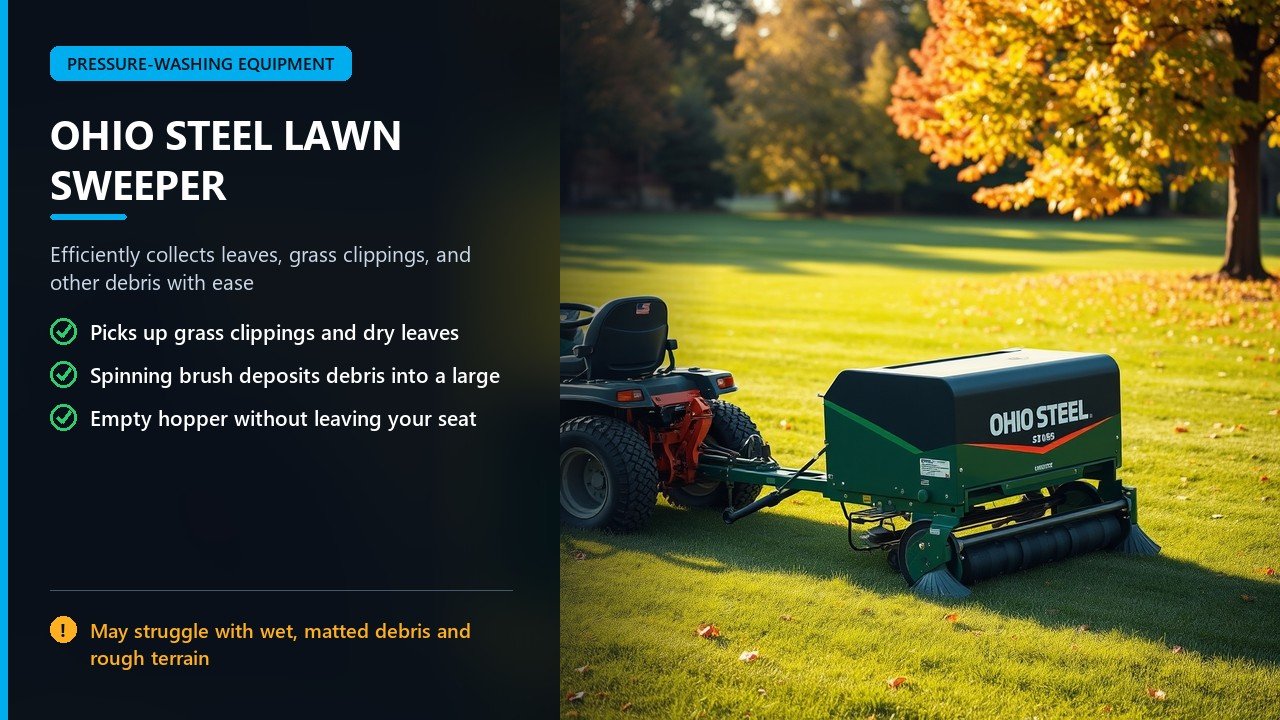
Towed behind a riding mower or garden tractor, an Ohio Steel lawn sweeper is one of the most practical attachments a homeowner with a large lawn can own. It picks up grass clippings, leaves, pine needles, and small debris with a spinning brush and deposits them in a big collection hopper you empty without leaving your seat. This guide explains how these sweepers work, which Ohio Steel models exist, what they do well, where they fall short, and how to set up, run, and maintain one so it lasts for years.
What Is a Lawn Sweeper and Why Ohio Steel
A lawn sweeper is a tow-behind attachment with one or more rotating brushes that sweep material off the surface of the lawn and throw it backward into a collection hopper or bag. The wheels drive the brush through a gear ratio, so as the sweeper rolls, the brush spins. You tow it behind a riding mower, garden tractor, or ATV, and when the hopper fills, you pull a rope from the driver’s seat to dump the contents.
Ohio Steel Industries is one of the best-known names in this category in the United States. The company builds a range of tow-behind sweepers known for large hopper capacities and a patented spiraled brush design that sweeps more efficiently than straight-bristle brushes while putting less stress on the drive gears. That spiral brush is a genuine differentiator: it grabs clippings and leaves more aggressively and, because of the spiral pattern, spreads the load across the gear system instead of hammering it in one spot. The result is more pickup per pass and longer gear life.
Ohio Steel sweepers are sold through major retailers and farm stores and are supported with an online parts catalog, manuals, and replacement components. That ready availability of parts is a big reason they hold up over years of seasonal use. If you break a wheel, a bristle section, or a hopper bag, you can usually order the exact part rather than replacing the whole machine.
The Ohio Steel Lawn Sweeper Lineup
Ohio Steel makes several sweeper sizes. The two you will encounter most are the 42-inch and the 50-inch models, with hopper capacities of 22 and 26 cubic feet. Larger hoppers mean fewer dump stops, which matters on big yards.
| Model | Sweeping Width | Hopper Capacity | Key Features | Best For |
|---|---|---|---|---|
| 42SWP22 (42-inch, 22 cu ft) | 42 inches | 22 cubic feet | Spiral brushes, multi-position hitch, dump rope | Medium yards, standard tractors |
| 50SWP26 (50-inch, 26 cu ft) | 50 inches | 26 cubic feet | Wide 9-inch chute, 4.5:1 brush ratio, collapsible hopper | Large yards, heavy leaf seasons |
| 5026V2 (50-inch, 26 cu ft) | 50 inches | 26 cubic feet | Reversible hitch, offset drawbar, numbered height settings | Large yards, varied tractor hitches |
The 50-inch, 26-cubic-foot models are the most popular for serious fall cleanup because the wider path and bigger hopper combine to cover ground fast. The 42-inch model suits smaller properties and tractors where maneuverability matters more than raw capacity. All share the same core design: a spinning spiral brush, a chute that feeds the hopper, and a rope-operated dump.
How an Ohio Steel Lawn Sweeper Works
The design is simple and rugged, which is part of its appeal.
The spiral brush
The heart of the sweeper is a cylindrical brush with bristles arranged in a spiral. As the wheels turn, a gear and pinion assembly spins the brush at a ratio that throws debris up and back. Ohio Steel uses a 4.5-to-1 brush-to-wheel ratio on larger models, meaning the brush spins quickly enough to lift clippings and leaves without needing high towing speed. The spiral arrangement keeps multiple bristle rows engaged at once, which smooths the load on the gears and improves pickup.
The chute
A wide chute guides material from the brush into the hopper. Ohio Steel’s 50-inch models use a 9-inch chute, which is wider than typical, to reduce clogging, especially with damp grass clippings that tend to clump together.
The hopper or bag
The hopper is the collection container, supported by a frame and a vertical support tube. When full, you pull a rope attached to the hopper and it tips to dump the contents. On the 50SWP26, the collapsible hopper can be removed completely for compact storage, and the hopper bag itself is replaceable.
The hitch and height adjustment
The hitch connects the sweeper to your tractor. Ohio Steel uses multi-position or reversible hitches so the sweeper sits level regardless of your tractor’s hitch height, avoiding the need for easily lost spacer rings. A height adjustment lever sets how deeply the brush contacts the grass, a critical setting for performance and brush life.
What an Ohio Steel Sweeper Picks Up Well
These sweepers excel within a specific range of debris and conditions.
- Grass clippings. Fresh clippings scatter and clump, and a sweeper clears them from the lawn surface quickly, which helps prevent thatch buildup and keeps the yard tidy after mowing.
- Dry leaves. Fall leaves are where the sweeper earns its keep, especially across large open lawns. Wide models with big hoppers make short work of a heavy leaf drop.
- Pine needles and small twigs. A spinning brush collects light, loose yard debris that raking leaves behind.
- Acorns and small nuts. Larger brush models can scoop a surprising amount of small hard debris off the surface.
Where sweepers struggle is with wet, matted leaves, heavy mud, and very tall or thick material. If leaves have been rained on and packed down, a blower or a bagging mower may be the better first step. Many homeowners use a sweeper after mowing, or use both a blower to gather debris into rows and a sweeper to collect it.
Lawn Sweeper Versus Leaf Blower Versus Bagging Mower
Each tool handles yard cleanup differently. Here is how they compare so you can decide what your property needs.
| Tool | Strength | Weakness | Best Use |
|---|---|---|---|
| Towed lawn sweeper | Fast collection over large lawns; big hopper; low effort | Struggles in wet, matted debris and rough ground | Dry leaves and clippings on open, level lawns |
| Leaf blower | Excellent for gathering, moving, and clearing in tight spots | Does not collect or remove debris; operator effort | Edges, beds, driveways, moving leaves into piles |
| Bagging mower | Mows and collects in one pass | Fills fast; clippings and leaves only; slower on heavy leaf drop | Routine mowing with light debris |
The smartest approach for many properties is a combination: mow with a bagger for routine clippings, blow debris from beds and edges onto the lawn, then make a pass with the sweeper to collect it all. Our guide to a dirt blower and our article on a weed blower machine cover the blower side of a yard cleanup kit.
Setting Up and Operating Your Ohio Steel Sweeper
Proper setup makes the difference between efficient cleanup and frustration. Follow these steps.
Assembly and hitch setup
- Assemble the sweeper per the manual. Most Ohio Steel models assemble in about 30 minutes with a single tool.
- Attach the hitch to your tractor with the supplied hitch pin, choosing the position that keeps the sweeper’s hitch tubes roughly level with the ground.
- Attach the dump rope to the tractor or your seat area so it cannot contact the wheels or brush.
Brush height adjustment
- Start with the brush set so it extends about half an inch below the grass tips.
- For heavy or wet material, start with a higher setting and lower it with each pass.
- Recheck height as you go; number settings make this easy on newer models.
Sweeping technique
- Remove large debris and sticks first so they do not jam the brush.
- Avoid sweeping if the lawn is wet or muddy; wet material clogs and mats.
- Drive at a slow, steady pace, in straight overlapping lines, and avoid sharp turns.
- Periodically check that wheels and brushes turn freely and nothing is wrapped around the brush shaft.
- When the hopper fills, pull the dump rope to empty it, then resume.
Common Problems and Practical Fixes
Real owners report a handful of recurring issues. Knowing them helps you avoid or fix them.
- Drawbar too short for reversing. Some users find the stock drawbar makes backing up awkward. A longer drawbar or a short extension can improve backing and maneuverability.
- Height adjustment lever damage. On some models, the height lever sits on the outer edge and can snag on fence posts. Keep clearance when driving near fences, and inspect the lever if the setting stops holding.
- Hopper support tube working loose. The vertical tube that holds the hopper open can loosen over time. Inspect the hardware and secure it; some owners reinforce it with a simple bolt or dowel fix.
- Clogging chute. Wet or clumped material clogs even a wide chute. Sweep when dry and start with a higher brush setting for heavy debris.
- Brush wear. Brushes set too low wear quickly. Keep the recommended half-inch depth and raise the brush for storage so it does not rest on the ground.
Most of these are minor and solvable with basic tools and the Ohio Steel parts catalog. The takeaway is to inspect the sweeper before each season, tighten fasteners, and treat the height setting with respect.
Maintenance and Storage
A little care at the end of each season keeps a sweeper working for years.
- Empty and clean the hopper. Never store the sweeper with debris in the hopper. Decomposing material can heat up, and manuals warn about spontaneous combustion of stored contents.
- Clean the brush and housing. Remove wrapped material, grass, and twine from the brush and axle.
- Lubricate and inspect. Check bearings, gears, and the pinion assemblies. Look for worn or missing fasteners and replace as needed.
- Store brushes off the ground. Brushes resting on a hard floor can deform over time. Store the sweeper so the brush does not contact the ground.
- Collapse for compact storage. Newer models fold the hopper and detach parts for tight storage.
- Replace worn parts early. A new bristle section or hopper bag is inexpensive compared with poor performance from worn parts.
Why Collecting Clippings and Leaves Matters for Lawn Health
A lawn sweeper is not just about tidiness. Managing clippings and leaves has real agronomic benefits that show up in a healthier, greener lawn.
When a thick layer of grass clippings or leaves sits on the lawn, it blocks sunlight and air from reaching the grass below, smothers growth, and can promote disease. Over time, matted organic matter contributes to thatch, a spongy layer of dead material between the grass and the soil that keeps water and nutrients from penetrating. Removing excess debris after mowing or during fall helps the lawn breathe, reduces thatch, and lowers the risk of fungus and mold. It also looks better and keeps pests from taking up residence in piles of damp vegetation.
Leaves left over winter are especially damaging to grass that is still trying to photosynthesize. A heavy, wet leaf layer can kill patches of lawn outright, leaving brown spots in spring that need overseeding to repair. Sweeping leaves up in autumn, rather than waiting for them to mat down, prevents most of that damage. And the material you collect is not waste: grass clippings and leaves make excellent compost or mulch, returning nutrients to garden beds and reducing the volume of material that goes to a landfill. If you compost, simply dump the hopper into a compost pile after each run.
A Seasonal Cleanup Routine With a Lawn Sweeper
Getting the most from a sweeper is about timing and technique across the seasons.
Spring and summer: clippings management
During the growing season, sweep after mowing to collect clippings, especially if you let the grass grow taller between cuts. This keeps the surface clean, reduces clumping, and prevents clippings from smothering new growth. It is also the time to sweep up after dethatching or aerating, when loose material sits on the surface.
Fall: the heavy leaf season
Autumn is when a sweeper pays for itself. Sweep frequently rather than waiting for the entire leaf drop, because a thin fresh layer sweeps far more cleanly than a thick mat. On windy days, work into the wind where possible so leaves do not blow back onto cleaned areas. Use a blower to gather leaves from under shrubs, along fences, and in beds onto the open lawn, then sweep the lawn to collect them all at once.
Winter and early spring: light debris
A sweeper can also clear small twigs, seed pods, and light debris before the first mowing of spring, giving the lawn a clean start. Never sweep when the ground is frozen, muddy, or wet, as this damages both the brush and the turf.
Lawn Sweeper Safety Rules
A towed attachment with moving brushes and gears deserves the same respect as any powered equipment. Follow these safety practices on every job.
- Read and understand the operator manual before use, and follow your tractor’s safety rules alongside the sweeper’s.
- Never let children or untrained people operate the tractor or attachment.
- Reduce tractor speed to the slowest setting when towing or on slopes, and do not exceed the manual’s speed limit, typically about 6 mph.
- Operate up and down slopes, never across the face of a slope.
- Never carry passengers on the tractor or the sweeper.
- Avoid sudden turns and maneuvers, and use caution when backing up.
- Do not tow the sweeper on public roadways.
- Do not fasten the dump rope to your body or clothing, and never hold it while moving.
- Keep the sweeper away from fire or smoldering debris.
- Check the sweeper for loose, worn, or damaged parts before each use and repair before operating.
Buying Tips Before You Choose a Sweeper
When you go to buy an Ohio Steel lawn sweeper, a few questions sharpen the decision.
- How big is your lawn? A larger 50-inch model with a 26-cubic-foot hopper covers ground faster and needs fewer dump stops, which suits big properties. A 42-inch model is easier to maneuver on smaller or cluttered lawns.
- What debris do you battle? Dry leaves and clippings suit any model. If you also collect pine needles and small twigs, the wider chute and tighter brush of the larger models help.
- What is your terrain like? Sweepers work best on level, smooth ground. Very bumpy or sloped lawns reduce their effectiveness.
- What does your tractor hitch look like? A model with a multi-position or reversible hitch makes setup easier and keeps the sweeper level.
- Can you get parts? Ohio Steel’s parts catalog and manuals mean you can maintain the sweeper long term, which is a real advantage over no-name imports.
- Do you need it to store small? Collapsible hopper models fold up for tighter storage, which matters if shed space is limited.
Weigh these against your budget and your property. A sweeper is a long-term tool, and buying the right size and capacity the first time prevents the frustration of an undersized unit on a big lawn.
Who Should Buy an Ohio Steel Lawn Sweeper
An Ohio Steel sweeper makes the most sense for a specific kind of property owner.
- Large, level lawns. The sweeper covers ground fast and its big hopper means fewer stops, so bigger yards benefit most.
- Heavy leaf seasons. If fall means a thick leaf drop, a sweeper is one of the fastest ways to collect it without raking.
- Owners who mow with a riding mower or garden tractor. If you already tow implements, adding a sweeper is a natural fit.
- People who want to reduce clippings and thatch. Collecting clippings after mowing keeps the lawn cleaner and reduces buildup.
It is less useful for very small yards, steep or very bumpy terrain, and properties where debris is always wet and matted. In those cases, a blower, a bagging mower, or a combination approach does more. If you are building a full yard maintenance toolset, our article on using a weed eater for trimming and edging rounds out the routine beyond sweeping.
How Much Do Ohio Steel Lawn Sweepers Cost
Ohio Steel sweepers are priced as homeowner and prosumer attachments, generally in the low hundreds of dollars depending on size and retailer promotions. The 42-inch model typically costs less than the 50-inch models, reflecting the smaller hopper and narrower path. Compared with the cost of a season of raking or paying someone to clear leaves, a sweeper often pays for itself in a single fall, and it holds value season after season because replacement parts are readily available. Watch for off-season sales at farm stores and home centers, when tow-behind attachments are often discounted. Budget a little extra for a spare hopper bag or brush section so you are never sidelined by a worn part during peak leaf season.
Frequently Asked Questions
What is an Ohio Steel lawn sweeper used for? It is a tow-behind attachment that collects grass clippings, leaves, pine needles, and light debris from the lawn into a hopper, towed by a riding mower or garden tractor.
How much does an Ohio Steel lawn sweeper hold? Common models hold 22 or 26 cubic feet. The 42-inch model uses a 22-cubic-foot hopper, while the 50-inch models use a 26-cubic-foot hopper.
Will it pick up wet leaves? Not well. Wet, matted leaves clog the chute and do not sweep cleanly. Sweep when material is dry, and gather wet debris with a blower first if needed.
How deep should the brushes be set? About half an inch into the grass for normal conditions. For heavy or wet debris, start higher and lower with each pass. Brushes set too low wear quickly and strain the gears.
Can I use it on a hill? Operate up and down slopes, never across the face of a slope, and reduce tractor speed. Follow the manual’s guidance for your specific model.
How do I empty the hopper? Pull the dump rope from the driver’s seat. The hopper tips to release the contents, so you can empty it without dismounting.
Does it work with any tractor? Ohio Steel sweepers use multi-position or reversible hitches to fit most tractor hitch heights. Check the hitch setup for a level tow.
How do I store it? Empty and clean the hopper, keep the brush off the ground, and collapse or detach parts for compact storage. Never store debris in the hopper.
Final Thoughts on the Ohio Steel Lawn Sweeper
For anyone with a large lawn and a riding mower, an Ohio Steel lawn sweeper turns a miserable seasonal chore into a quick drive around the yard. The patented spiral brush, wide sweeping path, and generous hopper make short work of clippings and dry leaves, and the parts availability keeps them running season after season. Where it shines, it shines brightly: dry leaves and clippings on open, level ground.
Buy it for the right reasons, set the brush height correctly, keep the dump rope secured, empty and clean it after every use, and store the brush off the ground. Do that, and you will get the same result Greg did the first afternoon he used one: a clean lawn in hours instead of weekends, and a tool that quietly earns its place in the shed.
Sources and Further Reading
- Ohio Steel Industries, 50SWP26 50-inch 26 cu ft lawn sweeper product information and manual: ohiosteel.com
- Ohio Steel Industries, 42SWP22 lawn sweeper operator manual (safety and setup guidance): ohiosteel.com
- U.S. Consumer Product Safety Commission (CPSC), outdoor power equipment safety: cpsc.gov
- U.S. Environmental Protection Agency (EPA), composting and yard materials guidance: epa.gov