Petrol pressure washers bring power and freedom that most electric machines cannot match. Driven by a petrol engine rather than a mains motor, they run anywhere, deliver high pressure and flow, and suit heavy or remote work where there is no easy power supply. For large, tough cleaning jobs, a petrol washer is often the only sensible choice.
This guide covers what petrol pressure washers are, how they compare with electric machines, and how to choose and look after one.
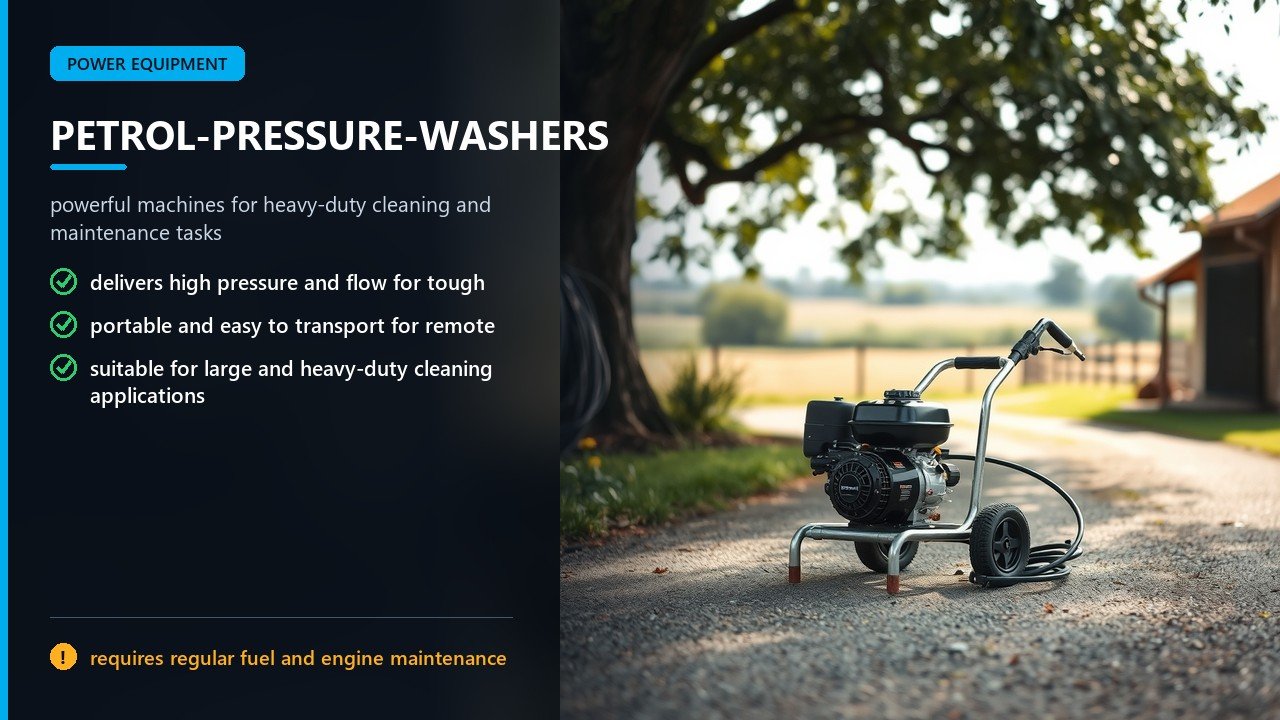
What Petrol Pressure Washers Offer
A petrol pressure washer uses a small petrol engine to drive the pump, instead of an electric motor. That single difference gives it two big advantages: power and portability. Petrol engines produce more power than a typical domestic electric supply allows, so the machines reach higher pressure and flow, and they run with no cable and no socket, so you can take them wherever the work is.
These machines are designed for demanding jobs. They clean large driveways and patios, strip dirt from vehicles and machinery, wash down farms, building sites, and remote properties, and handle extended use that would overwork a domestic electric unit. Where a job is big, dirty, or far from power, a petrol washer earns its place.
The trade-off is that a petrol machine is heavier, louder, and produces exhaust fumes, so it must be used outdoors or in well-ventilated spaces. It also needs fuel and engine maintenance, unlike a plug-in electric washer. These are the costs of the extra power and freedom it provides.
Petrol vs Electric
Electric pressure washers are quiet, light, and fume-free, made for light to medium cleaning around the home where a socket is available. Petrol machines are bigger and heavier but far more powerful and completely portable, suited to heavy and remote work. The right choice depends on the size of your jobs and whether you have power where you work.
For occasional cleaning of a car, patio, or garden furniture near a socket, an electric machine is simpler and cheaper. For regular heavy cleaning, large areas, or work away from power, a petrol washer is worth its extra weight, cost, and upkeep. Many serious users own both, using electric for light tasks and petrol for the heavy ones.
Engine size drives a petrol washer’s capability. Small engines suit lighter machines, while larger engines power high-pressure, high-flow units for professional work. A larger engine paired with a triplex pump gives the durability and output that demanding jobs need, and the difference between a small and a large petrol machine is far greater than most people expect.
What to Look For
When choosing a petrol pressure washer, start with its pressure and flow, weighing flow heavily, because cleaning speed depends on it. Check the engine size and make, since a reliable engine is central to the machine, and look at the pump: a triplex pump lasts longer and can be serviced, while cheaper axial-pump machines are more disposable.
Examine the drive arrangement. Belt-driven machines run cooler and more smoothly than direct-drive units and are common on heavy professional models. Then look at the frame, wheels, and handle, because a petrol machine is heavy and must be easy to move. Good build quality and sensible service access matter more on these machines than on light electric units.
Finally, consider the accessories and watering supply. A petrol washer usually needs a supply that can keep up with its flow, often at least matching the machine’s GPM, and may need a suction or buffer arrangement when no pressurised supply is available. Hoses, guns, and nozzles must be rated for the machine’s pressure.
Pumps and Drives on Petrol Machines
Because a petrol engine can drive a serious pump, these machines often use a triplex pump with three plungers and an oil-bathed crankcase. A triplex pump handles high pressure and flow, runs smoothly, and can be rebuilt, which is why it suits the heavy work petrol washers do. Cheaper petrol machines may use an axial-cam pump, but these do not have the same life or serviceability.
The drive between engine and pump matters too. Direct drive is simple and compact, while belt drive runs cooler, cuts vibration, and absorbs shock loads, which suits long, heavy duty. Many professional petrol washers are belt-driven for these reasons, and the belt setup is one of the things that separates a machine built for years of work from one built to a price.
A petrol machine also carries protective parts that must be present. An unloader relieves pressure when the trigger is released, and a thermal relief valve prevents the pump overheating during idle. On a high-output machine these parts are essential, because the energy involved is greater and the damage from a stuck valve can be quick and costly.
Cleaning Capacity and Uses
Petrol machines cover a wide range of capacity, from compact homeowner units to large professional washers. Cleaning capacity comes from both pressure and flow, so a machine with high pressure but low flow cleans more slowly than one with balanced high figures. When comparing petrol washers, look at the cleaning units, the product of pressure and flow, as a fair guide to real-world speed.
Typical uses include cleaning long driveways and paths, washing vehicles and farm machinery, preparing surfaces for painting, and clearing mud and grime from buildings and yards. The larger professional machines also handle commercial fleet washing and construction-site cleaning, jobs that need sustained high output and a durable pump.
Because petrol washers are powerful, they need sensible use. Keep the nozzle moving, choose the right nozzle for the surface, and keep a safe distance, since high pressure can etch concrete, strip paint, or damage wood. The machine’s capability is an advantage only when it is controlled.
Running and Maintenance
A petrol washer needs the same care as any small-engine machine. Use fresh petrol, follow the maker’s schedule for engine oil, air filter, and spark plug, and respect any low-oil protection. Old or stale fuel is the most common cause of starting trouble, so treat or drain the fuel before long storage.
The pump also needs attention. Check and change its oil as scheduled, keep the inlet filter clean, and protect the machine from frost, since freezing water can crack the pump. Never run the machine without water, and keep the unloader and any thermal relief valve working to protect the pump during idle.
The table below summarises the petrol versus electric decision.
| Factor | Petrol vs Electric |
|---|---|
| Power | Petrol much higher pressure and flow |
| Portability | Petrol runs anywhere; electric needs a socket or cable |
| Noise and fumes | Petrol louder with exhaust; electric quiet and clean |
| Maintenance | Petrol needs fuel and engine care; electric far simpler |
| Best for | Petrol for heavy and remote work; electric for light home jobs |
Used with this in mind, a petrol machine is a serious tool rather than a convenience appliance.
Safety Around a Petrol Washer
Petrol pressure washers carry the safety concerns of both engines and high pressure water. Always run them outdoors or in a well-ventilated area, because the exhaust contains carbon monoxide, which is odourless and dangerous in enclosed spaces. Never use one in a garage, shed, or any enclosed area, even with a door open.
Handle fuel safely. Refuel only when the engine is off and cool, outdoors, and away from any ignition source, and store petrol in an approved container. Spilled fuel on a hot engine is a serious fire risk. Let the engine cool before refuelling, and never smoke or use a naked flame nearby.
On the water side, treat the high pressure jet with respect. Never point it at people or animals, keep hands clear of the nozzle, and wear eye protection. At the pressures a petrol machine produces, the jet can cut skin and cause serious injury, and it can also damage surfaces if held too close. Control and care are essential.
Making a Good Choice
A petrol pressure washer is a major tool, so buy for the work you actually do. If your jobs are large, tough, frequent, or away from power, a petrol machine with a reliable engine and a triplex pump is a wise investment. If your cleaning is light and occasional, an electric washer will cost less and be easier to live with.
Weigh the running costs too. A petrol machine needs fuel, engine oil, filters, and plugs, plus pump oil, so it costs more to run and own than an electric unit. For heavy use that is a fair price for the power and freedom, but for light use it is overkill.
When you buy, favour recognised engine brands and reputable pumps, check the build and the accessories, and confirm that parts and support are available. Buy from a seller who can back the machine, because even a good petrol washer needs service over its life. Chosen and maintained well, a petrol pressure washer delivers the power and independence that make heavy outdoor cleaning far easier.
Frequently Asked Questions
What is a petrol pressure washer? A pressure washer driven by a small petrol engine instead of an electric motor. It delivers higher pressure and flow and runs anywhere, without a cable or socket.
Are petrol pressure washers better than electric? They are more powerful and fully portable, but heavier, louder, and need fuel and engine care. Electric suits light home jobs; petrol suits heavy and remote work.
What size petrol washer do I need? Match the machine to the job. Small engines suit lighter work, while larger engines with triplex pumps power high-pressure, high-flow machines for professional use.
Can I use a petrol washer indoors? No. The engine produces carbon monoxide, so it must run outdoors or in a well-ventilated space. Never use it in a garage or enclosed area.
What fuel do they use? Ordinary unleaded petrol, straight, with no oil mixed in. Some two-stroke machines do need a mix, but most petrol pressure washers use four-stroke engines and straight fuel.
What maintenance do they need? Engine oil, air filter, spark plug, and fresh fuel care, plus pump oil changes, a clean inlet filter, and protection from frost. Never run it without water.
Do they need a pressurised water supply? Usually they need a supply that can match their flow. Some can draw from a tank or source with the right setup, but always protect the pump from running dry.
Are they worth the cost? For heavy, large, or remote cleaning, yes. For light occasional jobs, an electric washer is cheaper and simpler.
Final Thoughts
Petrol pressure washers trade convenience for power and freedom. They clean large, tough jobs that electric machines cannot handle, and they go anywhere there is no power, at the cost of weight, noise, fumes, and engine upkeep.
Choose one when your work is heavy, frequent, or remote, and match the engine and pump to the job. Use fresh fuel and follow the engine schedule, care for the pump, protect it from frost, and always run it in the open. Treated properly, a petrol pressure washer is a powerful, independent cleaning tool that handles the biggest outdoor tasks with ease. For related reading, see our guides on a gas engine pressure washer and power washer gas types.