Power washer fuel is easy to overlook until it causes a problem. A gas pressure washer will not run properly on stale or wrong fuel, and the fuel sitting in it over winter is one of the most common reasons a machine will not start in spring. Fuelling is simple, but doing it right keeps a gas washer running season after reliable season.
This guide explains what fuel a gas pressure washer takes, how to handle and store it, and how to avoid the fuel problems that cause most starting and running faults.
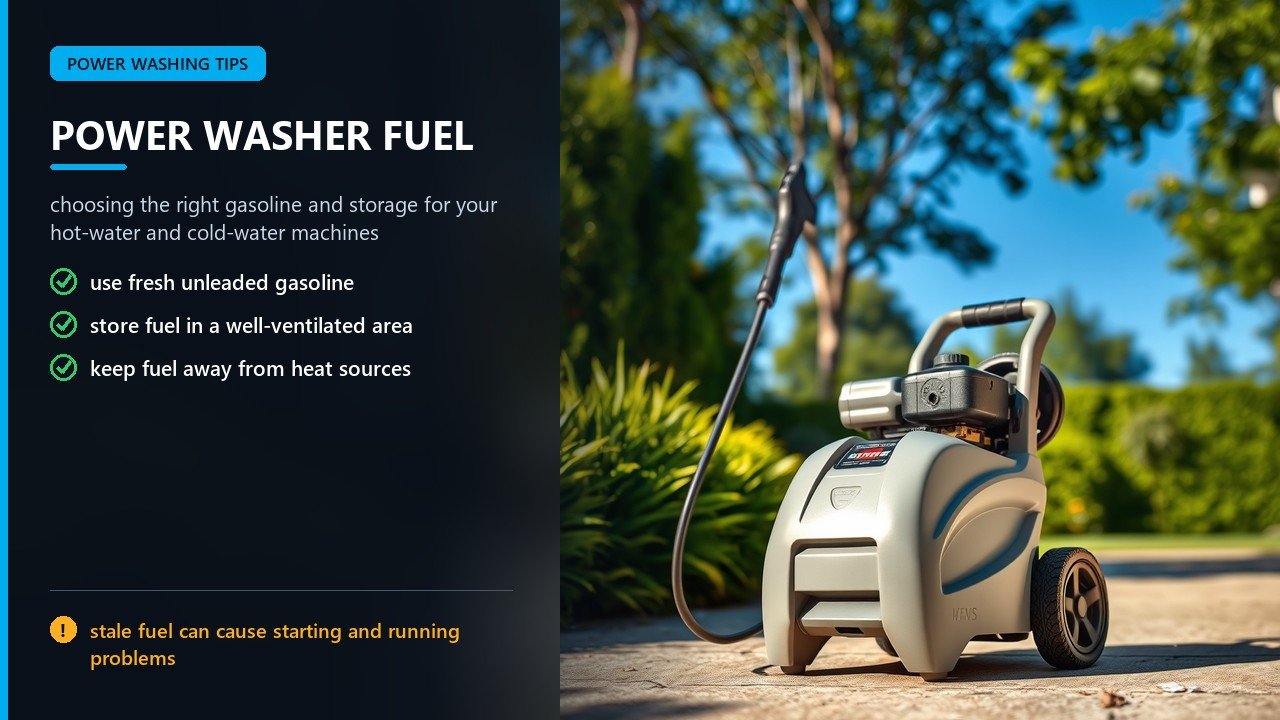
What Fuel a Power Washer Uses
It depends on the machine. Gas pressure washers are driven by small four-stroke engines, and those engines run on ordinary unleaded gasoline, exactly like a lawn mower or a small generator. The engine has a separate oil sump, so the gasoline is not mixed with oil the way a two-stroke engine’s fuel is.
Separately, some pressure washers heat the water with a diesel-fired burner. These hot-water machines have an engine that may run on gasoline, plus a burner that runs on diesel, kerosene, or fuel oil. So on a hot-water machine there can be two fuels: gasoline for the engine and diesel for the burner. It is important not to confuse the two.
For the common cold-water gas washer, the answer is simple: fresh unleaded gasoline in the engine’s fuel tank. There is no oil in the fuel, no special mix, and no additive required for normal use — just the right fuel, kept fresh and clean.
Choosing the Right Gasoline
Use fresh, regular unleaded gasoline from a reputable station. The octane rating does not need to be high; ordinary pump gasoline is fine. What matters far more than octane is freshness and ethanol content, because stale fuel and fuel with too much ethanol cause most small-engine problems.
Ethanol is the practical concern. Most pump gasoline contains ethanol, often around ten percent, which is acceptable for most modern engines if it is used promptly. The problem is that ethanol absorbs water from the air and, over time, the fuel degrades, forming gums and corroding small engine parts. Fuel that sits for months is the enemy, not the octane number.
If your machine runs often, standard pump gasoline is fine. If it sits for long periods — a seasonal pressure washer, for example — favour fresh fuel from a busy station, consider ethanol-free fuel where available, and always treat stored fuel to keep it stable. The fuel itself is simple; managing its age is the skill.
Fuel for a Hot-Water Burner
On a hot-water pressure washer, the burner that heats the water uses a different fuel from the engine. This burner typically runs on diesel, kerosene, or fuel oil, drawn from its own tank and ignited in a combustion chamber that heats a coil of water pipe. The water never touches the flame; it is heated through the metal coil.
Diesel is the usual choice, and #2 diesel is common, with #1 diesel or kerosene used in very cold conditions because they resist gelling. A diesel heater also needs clean, water-free fuel, so a fuel filter and a water separator protect the burner from contamination. This is a separate system from the gasoline engine, and mixing the two up is a costly mistake.
If your machine is a cold-water washer, none of this applies — there is no burner and no diesel. Only the engine’s gasoline tank is used. Knowing whether your washer heats water tells you whether you need a second fuel at all.
Fuel Storage and Ethanol
How you store fuel matters as much as which fuel you buy. Store gasoline in a proper, sealed container, away from heat and ignition sources, and use it within a reasonable time, ideally within a month or two. Fresh fuel runs better and protects the engine; old fuel causes hard starting, rough running, and clogged carburetors.
Ethanol makes storage harder because it attracts water. In a partially filled container, humid air and temperature swings encourage condensation, and the ethanol-water mix can separate. Left long enough, this leaves a corrosive layer and degraded fuel. Using a fuel stabilizer slows this process and helps stored fuel stay usable for longer.
The best defense is to buy only what you will use soon and to rotate your stock. For a machine used seasonally, this means treating the fuel and planning to run it out or drain it before storage, rather than leaving old gasoline in the tank for months.
Fuel Problems and Symptoms
Bad fuel shows up in predictable ways. Hard starting, especially after storage, is the classic sign of stale or separated fuel. Rough running, surging, stalling, and a machine that will not stay running point to a clogged carburetor or fuel filter, often from gum left by old fuel. A strong stale smell and dark, cloudy fuel confirm the diagnosis.
When fuel has degraded, fresh fuel and, often, a carburetor clean are needed. Prevention is far easier than the cure: use fresh fuel, treat what you store, and never let old fuel sit in the machine. A simple fuel filter and a clean tank also protect the carburetor from the particles that form in aging fuel.
The table below summarises the two fuels on a hot-water machine.
| Fuel | Used by |
|---|---|
| Unleaded gasoline | The gas engine on any gas washer |
| Diesel / kerosene | The burner on hot-water machines only |
Keep them separate, keep both clean, and a gas washer and its burner will run reliably.
Do You Need Fuel Additives
For a machine that is used regularly and refuelled with fresh gasoline, no additive is needed. Additives become useful mainly for storage and for seasonal machines, where the goal is to keep fuel stable while it sits. A fuel stabilizer is the common choice, slowing the breakdown and water absorption that make stored gasoline go bad.
Beyond stabilizer, some users add products aimed at ethanol or at cleaning the fuel system. These can help in specific situations, but the fundamentals matter more: fresh fuel, sealed storage, and not leaving old gasoline in the machine. An additive slows a problem that good fuel habits largely prevent.
If you do use a stabilizer, add it when the fuel is fresh, not after it has already aged, and run the engine afterward so treated fuel reaches the carburetor. That way the whole fuel system is protected during storage rather than just the tank.
Preparing for Storage
Long-term storage is where fuel does its damage, so it deserves a plan. The simplest approach for a seasonally used machine is to run it until the fuel is nearly gone, then either drain the remaining fuel or run the engine until it stops from fuel exhaustion. An empty carburetor cannot gum up, and empty fuel cannot separate.
If you prefer to store fuel in the machine, fill the tank nearly full to reduce the air space where condensation forms, add a fuel stabilizer, and run the engine briefly so treated fuel reaches the carburetor. Either method works, but doing nothing — leaving untreated fuel to sit for months — is the choice that leads to springtime problems.
Store the machine itself in a dry place, and combine fuel care with the other storage steps: check and change the oil, protect the pump from freezing, and cover the machine. Fuel is one part of winterizing, and getting it right saves a frustrating start to the next season.
Safety With Fuel
Fuel is flammable, so handle it with basic care. Always refuel with the engine off and cool, because gasoline vapours near a hot engine or exhaust can ignite. Do it outdoors or in a well-ventilated spot, never near a flame, pilot light, or spark. Wipe up spills and let any splashes evaporate before starting, and keep fuel away from the hot exhaust during use.
Store fuel only in approved containers, sealed and labeled, out of the reach of children and away from the house and any ignition source. Do not smoke near fuel, and never use gasoline as a cleaner. These are simple rules, but they are the difference between routine refueling and a serious accident.
Dispose of old or contaminated fuel properly, through a recycling or hazardous-waste facility rather than down a drain or into the ground. A little care at the pump and in storage keeps fuel an asset rather than a hazard.
Getting the Most From Your Fuel
Putting it all together, good fuel practice is short and simple. Buy fresh unleaded gasoline, use it reasonably soon, treat what you store, and keep the tank and filter clean. On a hot-water machine, keep the diesel for the burner separate from the gasoline for the engine and keep both free of water.
Before storage, plan for the fuel: run it out or treat it, and never leave old gasoline to sit. When starting a machine that has been stored, if it will not run, suspect the fuel first — stale fuel and a gummed carburetor are the most common culprits, and fresh fuel plus a clean carburetor usually solve them.
Treat fuel with respect and it stays simple. Fresh gasoline in the engine, diesel in the burner, both clean and correctly stored, keep a gas power washer starting easily and running well season after season.
Frequently Asked Questions
What fuel does a gas pressure washer use? Fresh regular unleaded gasoline in the engine. The engine has a separate oil sump, so unlike a two-stroke engine, no oil is mixed with the fuel.
Does a pressure washer need mixed fuel? No, the common four-stroke gas engine does not. Only engines designed to run on a fuel-oil mix require mixing, and pressure washers are normally four-stroke.
What fuel does a hot-water washer’s burner use? Diesel, kerosene, or fuel oil, in a separate tank. This is different from the gasoline the engine uses, and the two must not be confused.
Does ethanol hurt a pressure washer? Small amounts are usually fine if the fuel is fresh. The problem is aging: ethanol attracts water and degrades over time, causing gummy fuel and corrosion. Use fresh fuel and treat what you store.
What octane should I use? Regular unleaded is fine. Freshness and ethanol content matter far more than the octane number.
How long can fuel sit in the machine? Ideally no more than a month or two. For seasonal machines, run the fuel out or add stabilizer before storage rather than leaving it for months.
My washer will not start after storage. Why? Most often stale or separated fuel and a gummed carburetor. Use fresh fuel, clean or replace the filter, and clean the carburetor if needed.
Is it safe to refuel a hot machine? No. Turn the engine off and let it cool, refuel outdoors away from ignition sources, and clean up spills before restarting.
Final Thoughts
Fuel for a power washer is simpler than it looks once you know the rules. A gas engine runs on fresh unleaded gasoline with no oil mix; a hot-water machine’s burner runs separately on diesel or kerosene. The real skill is managing fuel freshness, since stale fuel and ethanol cause most hard-starting and running problems.
Buy fresh fuel, use it soon, treat what you store, and never leave old gasoline sitting in the machine over the off-season. Follow basic fuel safety, keep the two fuels separate on a hot-water washer, and store everything clean and sealed. Do that, and fuel becomes one less thing to worry about. For related reading, see our guides on a gas engine pressure washer and a diesel power washer.