There is a reason painters, window cleaners, and roof cleaners all reach for the same basic tool when a job is up high: the extension pole. It is a simple idea, a handle that grows, and it transforms a cleaning job from one requiring a ladder into one done safely from the ground. For pressure washing, the extension pole takes a specific form, a rigid or telescoping tube that carries the spray wand up to the surface, and it is one of the most useful accessories an owner can add. But the extension pole for a pressure washer is not the light aluminum pole from the painting aisle; it is a pressure-rated tool built to survive water at thousands of PSI and the forces that come with it. Choosing the right pole, understanding what it can and cannot reach, and using it within safe limits is how a homeowner cleans second-story siding and gutters without ever leaving the ground.
A pressure wash extension pole is an extended handle, rigid or telescoping, that connects between the spray gun and the nozzle to raise the spray point to a height the operator cannot reach from a normal stance. It is closely related to the extension wand, and the terms are often used interchangeably, but the pole concept emphasizes reach and leverage over the close-quarters work a short wand handles. This guide covers what an extension pole is, how it differs from a wand and a hose extension, the materials and construction that matter, the length limits and pressure effects that come with extra reach, the safety rules for high-reach water cleaning, the jobs an extension pole is best for, and how to pick one that lasts.
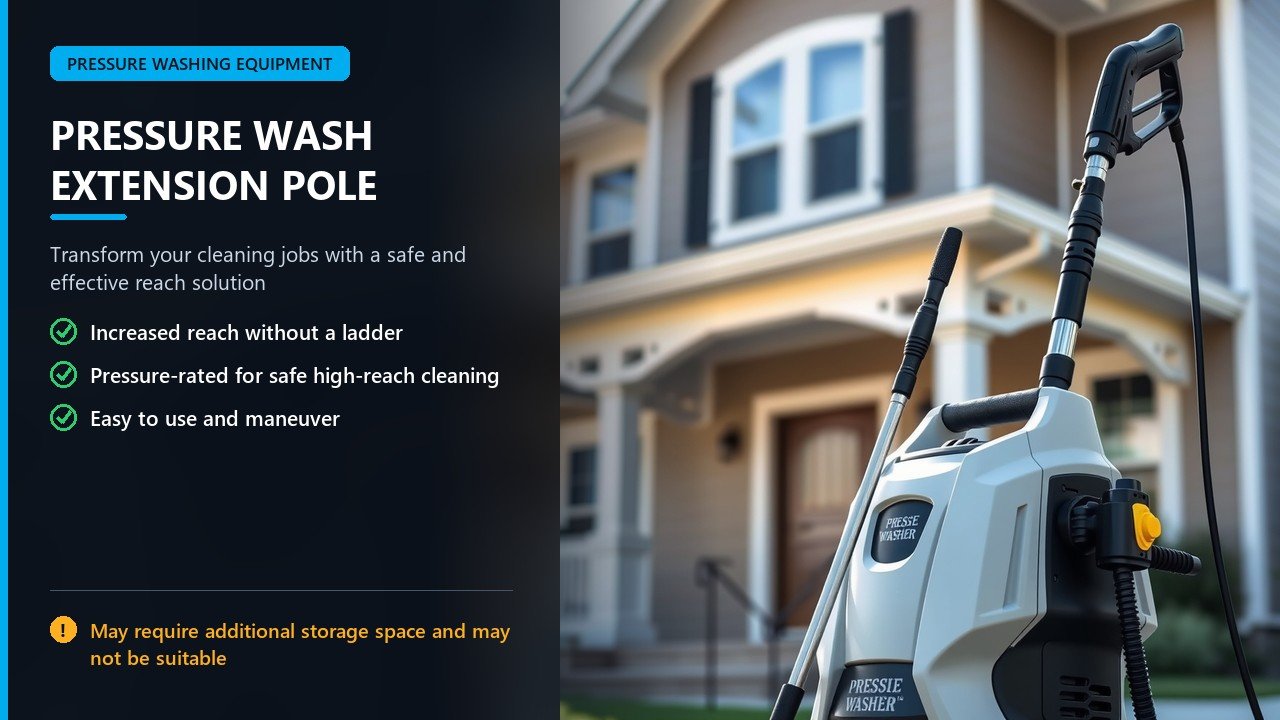
What an Extension Pole Is
The extension pole is the simple intersection of reach and control, and understanding its design makes the limits clear.
A pressure-rated handle, not a painting pole. The critical difference between a pressure washer extension pole and a common household pole is the connection and the strength. A pressure washer pole must connect to pressure-rated fittings and carry a pressurized line or a rigid spray tube to the tip, and it must hold up to the machine’s pressure and the reaction force of the spray. An ordinary painting pole cannot do any of that.
Rigid or telescoping. Poles come as fixed-length rigid tubes for a single working height and as telescoping poles that extend over a range. Rigid poles are stronger and simpler; telescoping poles are more versatile and store smaller, with the trade that their locks and joints must be quality. A typical extension pole is telescoping, with two to four sections.
How it connects. Most pressure washer poles connect at the gun or in place of a wand, using standard fittings, and the tip accepts standard nozzles, often quick-connect. The pole may carry the high-pressure hose internally or use a rigid tube, and either way the connection must seal at pressure. Our guide to hose fittings identifies the connectors.
What it is not. An extension pole is not a substitute for a safe working position, and it is not a magic tool that reaches forever. It is a handle that adds a few feet of reach within the machine’s and the operator’s limits. Treating it as a way to clean a three-story building from the ground invites disappointment and danger.
Extension Pole, Wand, or Hose
The three extension categories often blur, and sorting them clarifies which tool a given job needs.
An extension pole is a wand by another name. In pressure washing, the pole and the wand overlap heavily, both being extended handles that carry the spray. The pole tends to be the longer, telescoping reach tool, often used for high or distant surfaces; a wand may be shorter and used for closer work. In practice, a telescoping pole is a long telescoping wand. Our guide to the telescoping wand covers the same tool’s capabilities.
A hose extension is a different animal. Extending the hose adds distance between the machine and the operator but does not raise the spray point. A pole raises the spray point but keeps the operator near the machine. Combining them covers a surface that is both high and far, at the cost of stacked pressure losses. Our guide to extending reach sorts out the combinations.
The pole for height, the hose for distance. The simple rule holds. If the surface is up, extend the handle; if the surface is out, extend the line. A pole cannot make a far surface closer, and a hose cannot make a high surface reachable.
Why the pole usually wins for home exteriors. Most residential reach problems are vertical, gutters, second-story siding, soffits, and fascia, and all are directly above the operator. For those, the extension pole is the correct and safest tool, and the hose extension is a solution to a problem that does not exist on that job.
Materials and Construction
An extension pole for pressure washing lives in a harsh environment, water, pressure, and force, so its construction decides how long it serves.
Aluminum. Light and strong, aluminum is the common choice for pole sections, keeping the tool manageable at full extension. Its downside is a cold, hard feel and the fact that bare aluminum conducts electricity, which matters only if you work near power lines with a conductive water stream, a scenario to avoid entirely. Anodized aluminum resists corrosion reasonably well.
Fiberglass. Non-conductive and corrosion-proof, fiberglass is preferred where electrical safety near overhead lines is a concern, though the water stream itself can still conduct, so the material reduces but does not eliminate the hazard. Fiberglass is typically heavier than aluminum and flexes differently, which changes the feel at length. For high overhead work, it is the safer material.
Stainless and reinforced plastics. Some poles use stainless sections or reinforced composite materials for corrosion resistance and rigidity. The priority in every material is stiffness to length, because a soft pole that whips at full extension is unusable no matter how light it is.
Locks and collars. On a telescoping pole, the twist locks or collars that hold each section are the failure points. A quality lock grips firmly without slipping under load and without marring the tube, while a cheap lock collapses the moment the pole bears weight. The locks are where the price difference between a good pole and a bad one shows up first.
Grip and balance. A comfortable grip with a good balance point makes a long pole controllable, while a poorly balanced pole tires the operator quickly and drifts off target. A grip that accepts a ball valve for flow control is a real convenience on a long pole, letting the operator start and stop without reaching for the gun. Our guide to wand attachments covers the control options.
Reach, Pressure, and Control Trade-Offs
An extension pole changes the physics of the tool in the operator’s hands, and the changes are predictable.
Reach versus pressure feel. A rigid pole does not reduce the machine’s pressure the way a long hose does, because it does not add hose friction. What it changes is the spray point’s distance from the surface: reaching up and over means the nozzle is farther from the target, which spreads the spray and softens the impact unless the operator adjusts. The machine did not weaken; the geometry did.
Leverage and kickback. A pole is a lever. Extra length multiplies the force felt at the grip, so trigger pull, kickback, and side-load all magnify. A light touch and two hands become essential. A wrist that could control a short wand gets wrenched by a long pole held wrong, which is why a pole demands a planted stance and a deliberate grip.
Stream fanning at height. When the nozzle is farther from the surface, the fan of spray widens before it lands, spreading the energy that would have concentrated at close range. Cleaning a high surface with a pole is often a rinse or a pre-soften rather than a deep scrub, and expecting otherwise sets up frustration. Adjust the nozzle and expect the softer, wider contact.
The angle problem. From below, the spray hits a wall or gutter at an upward angle, which pushes debris up and can drive water behind siding and under shingles. Aiming down and outward where possible, and using the pole to reach the top of a surface rather than to blast up into it, protects the surface and the operator.
Where the pole should stop. As length grows, control, balance, and accuracy all fall. There is a practical ceiling to how long a pole remains a controlled tool, and beyond it the pole becomes a hazard that sprays indiscriminately. Our guide to how far a wand should reach sets that realistic limit, and a pole is subject to the same ceiling.
| Reach Need | Best Tool | Main Cost |
|---|---|---|
| Anything above the operator | Extension pole | Control and safety |
| Surface far from machine | Longer hose | Pressure and flow |
| Both high and far | Pole plus hose | Stacked losses |
| Close, detailed work | Short wand | None |
Best Jobs for an Extension Pole
The extension pole shines on a specific set of residential and light commercial tasks.
Gutters and downspouts. The classic use. An extension pole with the right nozzle reaches the exterior gutter line and the faces of downspouts from the ground, clearing the exterior without a ladder. It rinses the outside of the gutter and the fascia, which is often all the exterior needs.
Second-story siding and soffits. The upper wall and the underside of the eaves are exactly what a pole is for, letting the operator rinse and pre-treat the high siding while keeping both feet on the ground. On a two-story home, this is the difference between a safe job and a ladder job. Our guide to cleaning exterior siding pairs with the pole for the full method.
Fascia, trim, and gutter faces. The horizontal bands of trim and fascia collect grime and mildew and sit just high enough to be awkward. A pole reaches them comfortably, and it lets the operator work along the whole line without repositioning a ladder.
Roof edges and overhangs. For soft washing and rinsing roof edges and overhangs, a pole keeps the operator off the roof entirely. Our guide to soft washing explains why roofs rarely want high pressure, making the pole’s job there mostly rinse and chemical application.
Commercial flatwork with a surface cleaner extension. Some pros use pole extensions with surface cleaners and specialized heads for large flat areas, though this is a step up in tooling. The principle, extension as a reach tool, holds.
What a pole is not for. Cleaning inside gutters, reaching into tight troughs, and deep-cleaning small high details are not pole jobs; they need a person up close with the right tool and proper fall protection. A pole extends the reach of water; it does not extend the eyes and hands. Our article on gutter cleaning is honest about the limits.
Safety With an Extension Pole
A long pole carrying pressurized water demands safety habits that a short wand does not.
Beware overhead power lines. A water stream from a pressure washer can conduct electricity, and a long pole brings the stream closer to overhead lines. Never aim a pressure washer stream at or near power lines, and keep the pole and stream well clear. This is the single most important rule for high-reach pressure washing, and it is why fiberglass poles are preferred for such work.
Avoid the ladder temptation. The point of a pole is to stay on the ground. If the pole cannot reach, the answer is not to climb the ladder with a pressure washer, which is a leading path to falls. Use a proper method or skip the spot. The OSHA falls guidance is unambiguous about ladder risk.
Keep a firm, planted stance. A long pole transfers force to the operator, so stand with feet apart, knees soft, and both hands on the pole, and do not lean out over edges. Factoring in the pole’s leverage, a modest trigger pull can shove an operator off balance if the stance is careless.
Protect eyes and skin. Spray from a pole can be unpredictable, especially at height where wind and angle change the pattern. Wear eye protection and appropriate clothing, and keep the stream away from people, pets, and electrical fixtures. Our guide to safety gear covers the basics.
Control the flow from the grip. On a long pole, reaching back to the gun to start and stop is awkward and destabilizing, so a ball valve or grip control at the pole is a genuine safety feature. Start and stop the flow without shifting your grip or stance.
Choosing an Extension Pole
A few checks separate a pole that lasts from one that frustrates.
Match the length to the highest surface. Choose a pole that reaches your tallest realistic job from the ground, not the tallest you can imagine. Extra length beyond the job adds weight and flex for reach you will rarely use, so size to the actual gutters and siding you own. Our guide to wand reach helps the sizing.
Confirm the pressure rating. The pole and every joint must be rated for your machine’s working pressure with margin. A pole rated for a small electric washer is not safe on a 4,000 PSI gas machine, and a joint that lets go under pressure is a dangerous failure. Verify the rating before buying.
Match the fittings. The pole must connect to your gun, wand, or hose with the right fittings and accept your nozzles, ideally quick-connect for convenience. Bring your machine’s specs or take a connection photo when shopping, and confirm the match. Our fitting guide covers the standards.
Test the locks and flex. If you can handle a candidate pole before buying, twist the locks to feel their grip and flex the sections to judge rigidity. A lock that slips and a tube that whips are deal-breakers, and they are easier to spot in person than on a spec sheet. Where you cannot try before buying, favor reputable brands with good reviews on the locks specifically.
Prefer fiberglass for overhead electrical risk. If your highest work brings the stream near overhead lines, choose a fiberglass pole for its non-conductive body and still keep the stream clear of the lines. The material reduce, but never eliminates, the hazard, so the distance rule stands regardless. Our safety gear guide covers the wider precautions.
Consider the control accessories. A pole with a comfortable grip, a ball valve option, and swivel nozzles is far more usable than a bare tube. These small features determine how long you can work without tiring and how accurately you can aim, so weight them in the choice. Our wand guide’s attachment section covers the options.
Storage and Care of an Extension Pole
A pole that lives in the back of a truck or a damp garage will not last long, and a few simple habits keep it working.
Rinse and dry after use. Water left in the joints of a telescoping pole leads to corrosion and binding, especially on aluminum and steel collars. Wipe the sections dry and let the pole air out before storing, and avoid leaving it wet for days. Corrosion in the locks is what eventually seizes an otherwise good pole.
Store collapsed and clean. Store the pole collapsed so the sections are protected and the locks are not under load, and keep it off a damp concrete floor. A wall mount or hook keeps the pole straight and dry, which preserves the sections that would otherwise bow or corrode.
Inspect the locks and seals. Before a high-reach job, check every collar lock for grip and every fitting for dry seals. A lock that has begun to slip under load is a warning sign, and a dry o-ring at the connection is a leak waiting to spray. Our guide to replacing a weeping seal covers the small fix.
Lubricate sparingly. A light, appropriate lubricant on the locking mechanism and moving joints helps them operate smoothly, but too much attracts grit that grinds the sections. Clean first, then a trace of lubricant, and keep the tubes themselves free of sticky residue.
Protect the tip and nozzle. The nozzle end takes the abuse of contact with gutters and walls, so replace a worn nozzle and keep the quick-connect tip clean. A damaged tip sprays off-pattern and wastes the whole reach advantage the pole provides. Our guide to nozzle selection covers replacements.
Carry it safely on the move. When transporting the pole, secure it so it does not rattle against other gear and bend, and cap or bag the tip to keep dirt out of the nozzle. A pole is long and easy to deform in a crowded truck bed, so give it a home where it stays straight.
Common Extension Pole Mistakes
Buying a painting pole. Household poles are not pressure-rated and cannot carry a pressure washer stream. Buy a proper pressure-rated pole.
Reaching too high. Beyond a certain length, control and accuracy collapse. Clean what the pole can handle well and use another method for the rest.
Skipping the collar lock check. A slipping lock collapses under pressure. Verify every lock before spraying and re-check at full extension.
Aiming up into siding and gutters. An upward stream drives water where it should not go. Reach the top of the surface and aim down and out where possible.
Getting near power lines. A pressurized stream conducts near overhead lines. Keep well clear, and choose a fiberglass pole where overhead risk exists.
Ladder temptation when the pole cannot reach. Do not climb with a pressure washer. Use a safer method or leave the spot.
Expecting full pressure at height. The nozzle is farther from the surface, so the contact is softer and wider. Adjust technique and expectations.
Frequently Asked Questions
What is a pressure wash extension pole? A rigid or telescoping handle that connects between the spray gun and the nozzle to raise the spray point, letting you clean high surfaces from the ground.
Is an extension pole the same as a telescoping wand? Largely yes in pressure washing. The pole is the long, reach-focused version of a wand, often telescoping, used for high or distant surfaces.
How high can an extension pole reach? It depends on the pole and the operator, but control drops as length grows, so there is a practical limit. Match the pole to your actual highest surface rather than buying maximum length.
Do I need a fiberglass extension pole? Fiberglass is preferred when high work brings the stream near overhead power lines, because its body is non-conductive. The water stream can still conduct, so keep clear of lines regardless.
Can an extension pole clean gutters? It cleans the exterior gutter line, fascia, and downspout faces well from the ground, but it does not clean the inside of a gutter trough, which needs another method.
Does an extension pole reduce pressure? It does not reduce the machine’s pressure like a long hose, but it moves the nozzle farther from the surface, which widens and softens the spray unless you adjust.
Final Thoughts on the Pressure Wash Extension Pole
The pressure wash extension pole is the tool that turns high, awkward exterior cleaning into a job done safely from the ground, and for the vertical reach problems that dominate residential work, gutters, second-story siding, soffits, and fascia, it is the correct and often only sensible answer. It is a pressure-rated handle, not a painting pole, available in rigid and telescoping forms and built from aluminum, fiberglass, or reinforced composites, and its value lives in the details: stiff sections that do not whip, locks that grip, fittings that match, and a balance that keeps a long reach controllable.
Know the trade-offs before you buy and use it. A pole adds reach without adding machine pressure, but it multiplies leverage, spreads the spray, and demands a planted stance and a firm two-handed grip. Stay on the ground, keep the stream well clear of overhead power lines, choose fiberglass where that risk exists, and set and lock the length before pressurizing. Size the pole to your real highest surface, not a fantasy one, and accept that some spots need a person up close rather than a longer pole. Do all of that, and the surfaces that used to call for a ladder become routine passes from solid ground, which is exactly what an extension pole is meant to deliver.