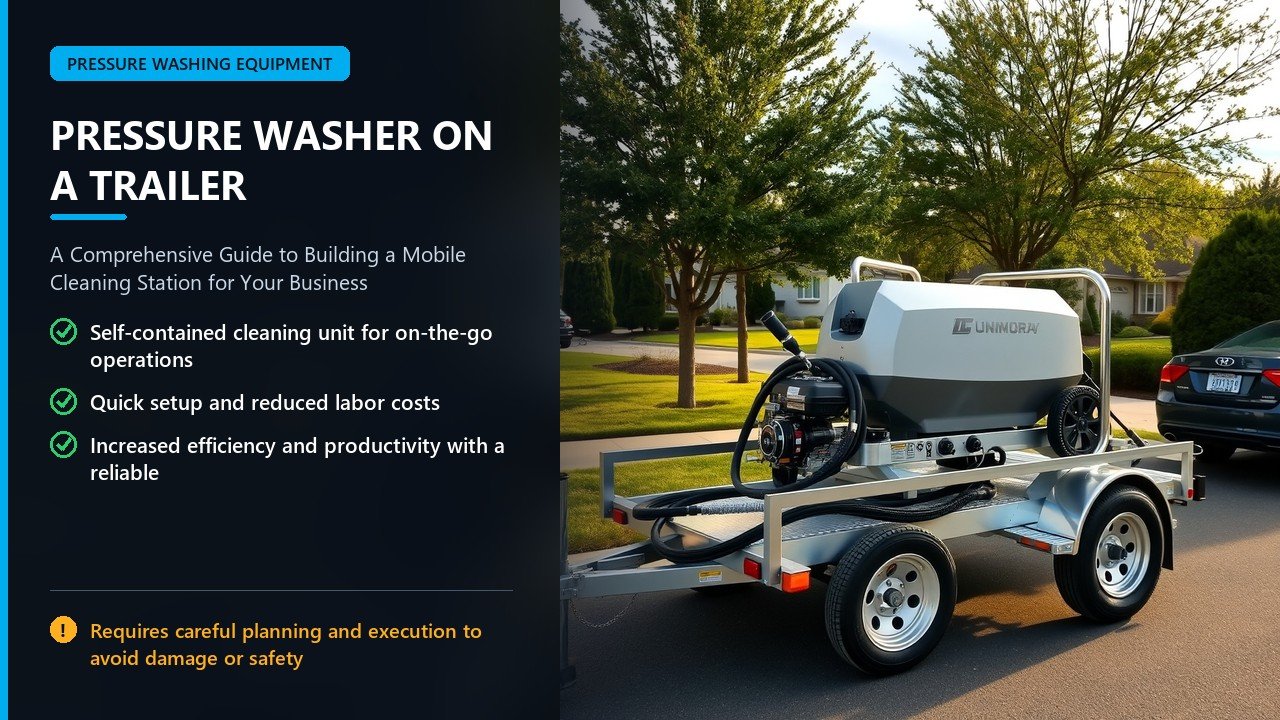
For anyone doing pressure washing on the move, from a small side business to a mobile detailing or cleaning operation, a trailer transforms a loose machine into a complete, self-contained cleaning unit. Instead of hauling a pressure washer in a truck bed and improvising water and power at each site, a trailer lets you build a mobile station with the machine, water tank, hose, chemicals, and accessories all in place and ready to work. But turning a pressure washer into a trailer-mounted setup involves more than setting the machine on a deck, with decisions about the trailer, mounting, water supply, plumbing, and power. This guide covers putting a pressure washer on a trailer, the components and considerations involved, and how to build a reliable mobile cleaning setup.
Why Put a Pressure Washer on a Trailer
A trailer-mounted setup offers advantages over carrying a machine loose.
The primary benefit is self-containment. A trailer can carry a water tank, so you are not dependent on a water source at each site, along with the machine, hose, chemicals, and accessories, making you ready to work anywhere. Everything has a place, so setup at a job site is quick: you arrive, position the trailer, and begin, rather than unpacking and improvising. For a business, this efficiency translates directly into more jobs completed and a more professional appearance.
A trailer also protects the equipment and makes transport easier. The machine and components are secured, reducing wear and the risk of damage in transit, and the trailer can be organized so everything is accessible. It can carry larger machines, water tanks, and more equipment than a vehicle alone, enabling more capable setups. For anyone who pressure washes away from a fixed location, a trailer is the practical way to bring a complete operation to the work.
Because mobile cleaning demands portability, water, and organization, a trailer addresses all three, making it the foundation of a professional mobile setup. This is why cleaning businesses overwhelmingly use trailer-mounted rigs rather than loose machines. Understanding the benefits clarifies why the investment makes sense, and the next step is understanding what building one involves. Once you see the trailer as a complete mobile workstation rather than just transport, the components and their arrangement become clear. Our guide to pressure washer components helps identify the parts that go into a mobile setup.
Choosing the Trailer
The trailer itself is the foundation of the setup.
Size and deck space. The trailer must be large enough for the machine, water tank, and accessories with room to work and secure everything. A larger trailer accommodates more equipment and a bigger water tank but is heavier and less maneuverable, so match size to your needs.
Load capacity. Consider the total weight of the machine, a full water tank (water is heavy, at roughly eight pounds per gallon), chemicals, hose, and accessories, and choose a trailer with adequate capacity, including a margin. Overloading a trailer is unsafe and illegal.
Axles and suspension. Match the axle rating and suspension to the load, and consider whether a single or tandem axle suits your weight and towing needs.
Deck and construction. A sturdy deck that supports the load and resists water and chemicals is important, and the trailer should be built to withstand the weight and the elements.
Hitch and towing. Ensure the trailer’s hitch, coupler, and towing characteristics suit your vehicle, and confirm your vehicle can safely tow the loaded trailer, including the tongue weight.
Choosing the right trailer sets the foundation for a safe, capable setup. An undersized or overloaded trailer is a hazard, while a well-matched one carries the load safely and provides room to work. Considering size, capacity, axles, deck, and towing ensures the trailer suits your equipment and vehicle. Because the trailer carries everything, including heavy water, getting these basics right is essential before adding components. A properly chosen trailer makes the rest of the build straightforward and the setup safe and effective. Our guide to a for sale pressure washer trailer covers buying a ready-made trailer setup.
Mounting and Securing the Machine
The machine must be fastened securely for both operation and travel.
Mount the pressure washer on the trailer’s deck using its mounting holes or a secure base, fastening it with bolts or heavy-duty hardware so it cannot shift or tip. Vibration during operation and movement during towing make secure mounting essential, since a loose machine is both a safety hazard and a source of damage. Use vibration-resistant fasteners or locking hardware, and mount the machine where it is stable and accessible, allowing room for connections and maintenance.
Beyond the machine, secure every component. Water tanks should be strapped or bolted down, chemicals stored in secured containers, hoses wound on reels or secured, and accessories stored so nothing shifts or flies off during travel. Use straps, brackets, and tie-downs rated for the loads, and check them regularly. Everything on a moving trailer is subject to vibration and motion, so thorough securing prevents damage and injury.
Secure mounting and load management are fundamental to a safe trailer setup. Because the trailer is both a work platform and a vehicle, everything on it must stay put during operation and travel, and the forces involved make this a genuine safety matter. A carefully secured setup looks professional, protects the equipment, and prevents accidents. Taking the time to mount and secure everything properly is not optional but essential, and it is one of the most important aspects of building a pressure washer trailer. Our guide to a pressure washer repair kit is a reminder that a well-secured machine suffers less wear and damage.
Water Supply
A reliable water supply is central to a mobile setup.
Onboard water tank. Many mobile setups use a water tank carried on the trailer, so water is available anywhere. The tank should be sized for your jobs, secured, and connected to the machine’s inlet, often through a filter. Remember that water is heavy, so the tank affects the trailer’s load and towing. Some setups add a transfer pump to feed the pressure washer from the tank with adequate flow.
Water inlet filter. An inlet filter protects the pump from debris, which is especially important when drawing from tanks or varied sources, and it should be cleaned regularly.
Feed from a site source. If you use water at the job site, the machine can be fed from a spigot through a supply hose, but this depends on availability, which is why many mobile setups carry a tank.
Connection and plumbing. The inlet, filter, and any tank or supply must be plumbed to the machine securely, with fittings that do not leak and that allow the pump an adequate, unrestricted water supply, since starving a pump of water damages it.
Water supply determines where and how you can work, making it a key design decision. An onboard tank provides independence, while site water is lighter but less reliable, and many operators combine the two. Protecting the pump with a filter and ensuring adequate flow are essential to avoid damage and poor performance. Planning the water supply carefully ensures the machine runs correctly and the setup works wherever you go. Our guide to a pressure washer inlet water filter covers the filter that protects the pump in a mobile setup.
Plumbing, Hose Reels, and Power
The supporting components turn the trailer into a working station.
Hose reel. Mounting a hose reel on the trailer keeps the high-pressure hose organized and ready, and it is one of the most valuable additions to a mobile setup. A reel rated for the machine’s pressure, mounted securely, lets you deploy and wind the hose quickly at each site.
Hose and fittings. Route the high-pressure hose from the machine or reel, using quality hoses and fittings rated for the pressure, and provide convenient connection points for the gun and wand.
Power. If the machine is electric, provide power via a generator on the trailer or a cord to site power, and if it is gas, ensure fuel storage and ventilation. Many mobile setups use gas machines for independence from power, or carry a generator for electric machines and other equipment.
Chemical storage. Provide secured, ventilated storage for detergents and chemicals, with the ability to apply them via the machine’s injector or a separate sprayer.
Accessories and organization. Store nozzles, tips, guns, wands, and spares in organized, secured locations so everything is accessible and nothing shifts.
| Component | Purpose |
|---|---|
| Water tank | Onboard water supply, secured and plumbed |
| Inlet filter | Protects the pump from debris |
| Hose reel | Organizes and manages the high-pressure hose |
| Power source | Generator or site power for electric machines |
| Chemical storage | Secured, ventilated storage for detergents |
These components, arranged thoughtfully, turn the trailer into an efficient mobile station. The hose reel, water tank, power, and storage are the core of a working setup, and their arrangement should support a smooth workflow at the job site. Planning how the components fit and connect before building saves time and rework. With the machine, water, hose, power, and chemicals all in place and secured, the trailer is ready to work wherever you take it, which is the goal of a mobile pressure washing setup. Our guide to a pressure wash hose reel covers the reel that makes the mobile hose manageable.
Road Safety and Maintenance
A trailer-mounted setup must be safe on the road and maintained.
Follow towing safety: ensure the trailer is properly hitched and secured, the load is balanced with adequate tongue weight, tires are in good condition and correctly inflated, and lights and safety chains function. Do not overload the trailer, and secure every load item for travel. Check the hitch, coupler, and tie-downs before every trip, since a shifting load or a loose connection is dangerous. Respect towing laws and weight limits, and drive according to the load.
Maintain the trailer and its components: inspect tires, bearings, lights, and the deck periodically, and service the pressure washer and its components as usual, including pump oil, filters, and hoses. Keep the setup clean and organized, and winterize the machine and water system to prevent freeze damage. Check the securing of the machine and components regularly, since vibration can loosen fasteners over time.
Road safety and maintenance protect both the operator and the equipment. A mobile setup travels frequently, so towing safety and regular inspection are ongoing responsibilities, and neglect can lead to accidents or equipment failure. Treating the trailer as both a vehicle and a workstation, with attention to both aspects, keeps the operation safe and reliable. A well-maintained, properly secured trailer setup performs professionally and avoids the breakdowns and hazards that poor maintenance causes. Our guide to a hot water pressure washer trailer shows a more advanced mobile setup for demanding cleaning.
Common Mistakes to Avoid
Several mistakes undermine a pressure washer trailer.
Overloading the trailer. Too much weight, often from an oversized water tank, is unsafe and illegal. Match the load to capacity.
Inadequate securing. A loose machine or unsecured components shift and fly during travel. Fasten and strap everything.
Starving the pump. Inadequate water supply or a clogged filter damages the pump. Ensure proper flow and clean the filter.
Ignoring towing safety. Improper hitching, poor load balance, and bad tires are hazards. Follow towing practices.
Poor component arrangement. A disorganized setup slows work and causes frustration. Plan the layout for workflow.
Neglecting maintenance. Unmaintained trailers and machines fail. Inspect and service regularly.
Avoiding these mistakes makes a mobile setup safe, reliable, and efficient. The themes are proper load management, thorough securing, adequate water supply, towing safety, good organization, and regular maintenance. Because a trailer setup combines a vehicle and a workstation, mistakes in either area cause problems, and care in both yields a professional operation. A well-built, well-maintained pressure washer trailer is a powerful asset for mobile cleaning, delivering efficiency and capability that a loose machine cannot match. Our guide to a pressure washer wall mounted hose reel is a reminder that even a mobile setup benefits from organized hose management.
Building Versus Buying a Trailer Setup
There are two routes to a trailer-mounted pressure washer: build one yourself or buy a ready-made setup.
Building your own gives you control over every component, letting you match the trailer, machine, tank, reel, and accessories precisely to your needs and budget. You can source parts separately, sometimes saving money, and design the layout to suit your workflow. The trade-off is the time, effort, and knowledge required, plus the risk of design mistakes or incompatibilities if you are new to the process. For a handy operator who knows what they want, building can be satisfying and economical.
Buying a ready-made trailer setup, or a package that combines the trailer and machine with the components, saves time and ensures compatibility, since the components are designed to work together. It is faster to get started and often more polished, though it may cost more and offer less customization. For someone who wants to start working quickly or lacks the time to build, a ready-made setup is appealing. Many businesses buy a complete rig for these reasons, then customize it over time.
The choice depends on your budget, timeline, skills, and preferences. Building suits those who value customization and have the time and ability; buying suits those who value speed and compatibility. A middle path is common: buy a trailer and machine, then add components yourself, gaining some control while limiting the build. Either way, the goal is the same, a safe, capable mobile setup, and the key is matching the components and securing them properly. Understanding both options helps you choose the path that fits your situation. Our guide to a for sale pressure washer trailer covers ready-made options in detail.
Considerations for a Mobile Business
For those running a cleaning business, a trailer setup has business as well as technical dimensions.
A well-built trailer presents a professional image, and appearance matters to customers, who judge reliability partly by how the operation looks. An organized, clean, well-maintained rig inspires confidence and can command higher rates than a loose setup. Branding the trailer with the business name and contact information also advertises the service wherever you park, turning the rig into a marketing asset. These business considerations make the quality of the build and the organization of the setup more than cosmetic.
Efficiency also drives profitability. A setup that allows quick arrival, fast setup, and uninterrupted work means more jobs per day and less downtime, directly increasing revenue. Carrying an onboard water supply, having hoses on reels, and keeping chemicals and accessories organized all contribute to efficiency, which is why serious operations invest in well-designed rigs. The ability to work without dependence on site water or power expands the range of jobs you can take, opening more opportunities. Reliability matters too, since a breakdown on a job costs money and reputation, making maintenance and quality components worthwhile.
For a business, the trailer is not just equipment but a core asset that affects image, capability, and profit. Treating it as such, with attention to professionalism, efficiency, and reliability, supports growth and success. The same components that make a mobile setup convenient for an individual make it profitable for a business, and the investment pays back through more jobs, higher rates, and a stronger reputation. Building or buying a capable rig is therefore both an operational and a business decision, and getting it right matters. Our guide to a ride on pressure washer shows another advanced cleaning setup for large-scale or commercial work.
Winterizing and Storing a Trailer Setup
A trailer-mounted setup needs protection in cold weather and during storage.
In freezing conditions, water trapped in the machine, pump, hoses, and tank can freeze and cause cracks and damage, so winterizing is essential. Drain the water tank, hoses, pump, and machine, and use a pump antifreeze or blow out the lines where appropriate, following the machine’s guidance. Remove or protect chemicals, since some can freeze or degrade, and protect the trailer’s components from the cold. If you keep working in winter, use a heated setup or take precautions to prevent freezing between jobs, and if you store the rig, winterize thoroughly.
For storage, protect the trailer and equipment from the elements where possible, by storing under cover or using covers, and keep the machine maintained with fresh pump oil and a clean filter. Check tires and bearings before returning to service after storage, and inspect the securing of components, since fasteners can loosen. A clean, dry, protected rig lasts longer and starts the season ready to work. Whether the setup rests for the season or works year-round, seasonal care prevents the damage that freezing and neglect cause.
Winterizing and proper storage extend the life and reliability of a trailer setup, protecting a significant investment. Because the rig combines a machine, a water system, and a trailer, each needing care, thorough seasonal maintenance repays the effort by preventing costly damage. A well-cared-for setup emerges from storage ready to work, while a neglected one may need repairs before the season begins. Treating storage as part of ownership keeps the mobile operation dependable year after year. Our guide to winterizing a pressure washer covers the steps that protect the machine and water system in a mobile setup.
Frequently Asked Questions About a Pressure Washer on a Trailer
Can I mount any pressure washer on a trailer? Most pressure washers can be mounted on a trailer with proper fastening, but the trailer must have adequate size, load capacity, and securing for the machine, water, and accessories.
How big a trailer do I need? Size it for your machine, water tank, and equipment with room to work and a load capacity that covers the total weight, including water, with a margin.
How do I supply water on a trailer? Use an onboard water tank plumbed to the machine through a filter, often with a transfer pump, or feed from a site water source. A tank provides independence from site water.
How do I power the pressure washer on a trailer? Use a gas machine for independence, or an electric machine powered by a generator on the trailer or a cord to site power.
How do I secure everything for travel? Fasten the machine with bolts, strap or bolt the water tank, secure chemicals and accessories, and use rated tie-downs. Check securing before every trip.
Is a trailer-mounted setup worth it? For mobile cleaning, yes. It provides a self-contained station with water, power, hose, and chemicals ready, saving setup time and enabling work anywhere.
Final Verdict on a Pressure Washer on a Trailer
Putting a pressure washer on a trailer turns a loose machine into a self-contained mobile cleaning station, with the machine, water, hose, chemicals, and accessories all in place and ready to work. The foundation is the right trailer, sized and rated for the load, including heavy water, and the essentials are securely mounting the machine, providing a water supply such as a tank with a filter, plumbing the inlet and outlet, adding a hose reel, ensuring power, and storing chemicals safely. Everything must be secured for road travel and maintained for safety and reliability.
Plan the layout around your workflow, choose components rated for the machine and the task, follow towing safety, and maintain both the trailer and the pressure washer. With these elements in place, a trailer-mounted setup delivers the efficiency, capability, and professionalism that mobile cleaning demands, enabling you to bring a complete operation to any job site. Built and maintained well, a pressure washer trailer is a powerful asset that turns pressure washing into a genuine mobile business, ready to work wherever the jobs are.