The first hot dog cart outside a football stadium taught Dwayne everything he knows about equipment packages. The vendor did not buy the cart, the griddle, the condiment trays, and the umbrella separately. He bought one system that worked on day one, and he was selling before the parking lots filled. When Dwayne later started a washing business, he applied the same logic and compared pressure washer trailer packages instead of stitching together an engine, a pump, a tank, a reel, and a trailer from five different sellers.
That decision saved him months of guesswork. One company answered the phone for warranty claims, one delivery arrived instead of five, and the components were already plumbed to work together. The rig earned its cost on a string of parking lot jobs, and it never sat in the driveway waiting on a backordered fitting.
Not every package is built that way, though. Some are little more than a discount engine bolted to a rental trailer, and buyers discover the difference only after the first leak or the first highway pull. This guide breaks down what a trailer package actually includes, how the tiers differ, which specifications match which jobs, what to inspect before paying, and the mistakes that turn a business-building purchase into an expensive lesson.
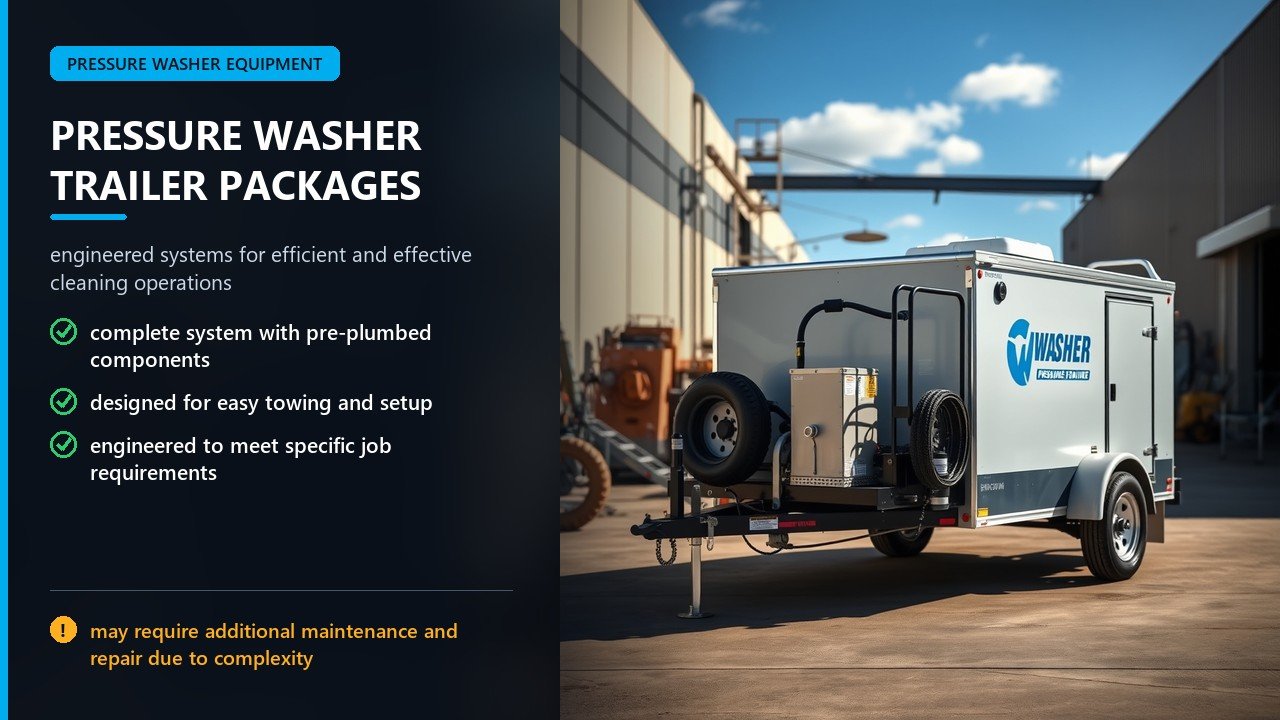
What a Pressure Washer Trailer Package Actually Includes
At its best, a trailer package is an engineered system: every component selected to match the others and mounted so the whole rig can be towed to a job and put to work in minutes. A complete package typically bundles the following:
- The trailer itself — usually a single-axle rated around 3,500 pounds or a tandem-axle for heavier builds, with lights, brakes, a hitch coupler, and a jack.
- The pressure washer — a gas or diesel engine driving a triplex pump, either cold water or hot water with a burner and coil.
- Water storage — a baffled poly tank, commonly 100 to 500 gallons, with a fill port, float valve, and screen filter.
- Hose management — high-pressure and sometimes supply hose reels mounted where they will not be damaged during work.
- Accessories — spray gun, lances, nozzles, detergent system, and often a tool box or wand rack.
- The plumbing and wiring — the part buyers forget to ask about, and the part that fails most often on cheap builds.
The value of buying them together is compatibility. The pump flows enough to feed the reel, the hose diameter matches the output, the trailer axle carries the loaded weight, and the tank size suits the runtime. When you assemble those pieces yourself, mismatches are easy to make and expensive to fix.
The Main Tiers of Trailer Packages
Prices below reflect typical United States retail ranges for new equipment. Used rigs and custom commercial builds move well outside these numbers.
| Package Tier | Typical Spec | Price Range | Best For |
|---|---|---|---|
| Entry cold water package | 3,000–3,500 PSI, 2.5–4 GPM, 100–200 gal tank, single axle | $5,500 – $9,500 | Sidewalks, homes, small storefronts, part-time operators |
| Workhorse hot water package | 4,000 PSI, 4 GPM, 200 gal tank, diesel burner, electric start | $10,000 – $16,000 | Driveways, equipment cleaning, restaurant exteriors, daily route work |
| High-flow commercial package | 4,000 PSI, 5–8 GPM, 300–525 gal tank, tandem axle | $16,000 – $25,000+ | Surface cleaner work, fleet washing, industrial and municipal contracts |
| Skid-mount package | Washer and tank on a forkliftable skid, trailer sold separately | $4,000 – $8,000 for the skid | Operators who already own a trailer or swap between vehicles |
Notice that flow rate climbs faster than price across the upper tiers. That matters because productivity on flatwork comes from gallons per minute, not pressure. A machine moving 6 GPM behind a surface cleaner finishes a driveway dramatically faster than a 3 GPM unit at the same pressure. Our guide to 8 GPM power washers explains why high flow changes the economics of big jobs.
Hot Water or Cold Water: Choosing the Right Package
Roughly seven in ten commercial washing tasks are handled fine with cold water: concrete flatwork, siding, fences, and general dust control. Hot water becomes essential when grease, oil, gum, animal fat, or heavy industrial film enters the picture. A burner adds cost, fuel planning, and maintenance, but it also opens contract categories that cold water rigs simply cannot bid on.
Consider the work you actually get, not the work you imagine:
- Cold water suits driveways, sidewalks, patios, vinyl siding, vehicles, and routine dust control.
- Hot water suits restaurant drive-throughs, loading docks, grease pits, fleet equipment, and oil-stained concrete.
- Hot water with high flow suits warehouse floors, heavy equipment, and municipal work where time on site is billed by the hour.
A 4 GPM hot water pressure washer in a trailer package is a versatile middle ground: enough flow for a surface cleaner, and heat for the greasy jobs that pay premium rates.
What Should Actually Be in the Package
Brochures show glossy photographs of the whole rig. The details decide whether it survives real work. Use this checklist when comparing offers side by side.
| Component | What a Solid Package Uses | Red Flag |
|---|---|---|
| Engine | Commercial-grade engine with low-oil shutdown and parts availability nationwide | Consumer-only engine with no local service network |
| Pump | Belt-drive triplex with ceramic plungers and accessible unloader | Direct-drive pump jammed against the frame with no service access |
| Burner (hot water) | Coil with stainless wrap, separate fuel tank, accessible nozzle and filters | Exposed burner with cheap fittings and no service documentation |
| Water tank | Baffled poly tank, screened fill, float valve, drain | Unbaffled tank that sloshes load weight side to side while towing |
| Hose reels | Steel reel rated for the hose length, mounted low and protected | Plastic reel or a reel mounted where backing up will crush it |
| Trailer | Welded steel frame, rated axle, lights, brakes where required, titled and tagged | Light utility trailer with no rating plate and household wiring |
| Plumbing | Stainless or brass high-pressure fittings, proper bypass loop, no plastic in the pressure path | Plastic quick connects on the discharge side of the pump |
Matching the Package to Your Work
Specs should follow the jobs you plan to bid. This quick matching guide keeps buyers from paying for capacity they will never use, or worse, discovering they bought too little.
| Type of Work | Suggested Package | Why |
|---|---|---|
| Residential driveways and patios | 3,500 PSI / 4 GPM, 100–200 gal tank, cold water | Matches standard surface cleaners and fits a suburban street presence |
| Restaurant and grease work | 4,000 PSI / 4 GPM, hot water, 200 gal tank | Heat breaks down grease that cold water merely pushes around |
| Large flatwork and parking lots | 4,000 PSI / 5–7 GPM, 300+ gal tank, tandem axle | High flow drives surface cleaner speed and reduces refill stops |
| Remote or rural job sites | Any tier with a 300–500 gal tank and supply hose reel | Onboard water removes dependence on spigots that may not exist |
| One trailer, many vehicles | Skid-mount package instead of a dedicated trailer | The same skid moves between a truck, trailer, or shop floor |
Skid Mount Versus a Purpose-Built Trailer
One decision sits underneath every package purchase: whether the equipment bolts permanently to the trailer or sits on a removable skid.
Skid mount advantages. The unit lifts out with a forklift, can be stored indoors, swapped between vehicles, and serviced on a bench. If the trailer is damaged or stolen, the expensive equipment is separate. Operators running multi-day jobs appreciate being able to drop the skid and move the trailer.
Purpose-built trailer advantages. Everything is welded and plumbed as one system, so there is no loading time, no quick-connect wear from repeated disconnection, and no chance of the skid shifting in transit. Route work rewards that speed. For daily commercial schedules, integrated builds are the common choice.
The compromise many operators settle on is a bolted skid: fast enough to live on the trailer permanently, but removable with basic hand tools if the trailer needs to haul something else. Our comparison of wall, skid, and trailer mounts digs further into that tradeoff.
A Real Job Day With a Trailer Package
Specifications matter most when you picture an actual workday. Consider a two-person crew running a mid-tier hot water package on a commercial route.
7:40 a.m. — Arrival. The trailer backs into the lot, the jack drops, chocks go under the wheels, and the crew unhooks the supply reel toward the building’s rear spigot. Nothing has been assembled; everything was already plumbed the night before during a five-minute pack-out.
7:50 a.m. — Water and power. The tank holds 200 gallons as a buffer, so the crew does not wait on spigot pressure. The float valve tops the tank while the pump draws from it, and the burner warms the coil on the way to the first surface. A surface cleaner comes off the rack, connects with a quick connect, and the flatwork begins.
9:30 a.m. — Grease section. At the drive-through, the crew switches to the lance, turns on heat, and cuts accumulated grease that cold water would only spread. Chemical stays in its own tank, proportioned through the injector rather than poured by guesswork.
11:00 a.m. — Refill and move. The supply reel rewinds, the tank drains for highway weight, and the trailer rolls to the next address. Total downtime between sites is minutes because the system never came apart.
Now compare that with a portable machine in a truck bed: every stop means unloading, finding a water source, running a garden hose, discovering the spigot does not work, and repacking everything before the next address. The package does not clean harder; it removes the friction around the cleaning, and that is where the money is.
Keeping a Trailer Package Running
A trailer rig lives a harder life than a garage machine. It vibrates in transit, sits in weather, hauls weight, and runs longer hours. A straightforward care routine protects the investment:
- Engine and pump service. Follow oil change intervals aggressively, often earlier than the manual suggests under commercial loads, and check air filters far more often than a stationary unit would require.
- Burner maintenance. Hot water packages need fuel filter changes, nozzle inspection, and coil descaling before efficiency drops off.
- Trailer running gear. Grease the bearings, check brake operation, verify light functions, and inspect tire pressure before every long tow.
- Tank hygiene. Drain and rinse stored water to keep algae and sediment out of the inlet filter and pump.
- Winterization. In freezing climates, pump out completely, add antifreeze through the pump, and store with lines dry. Freeze damage is the single most common insurance claim on stored wash equipment.
- Fastener rounds. Road vibration loosens bolts at reel mounts and tank brackets; a monthly torque check prevents parts from working loose on the highway.
Towing, Weight, and Legal Details Buyers Overlook
A loaded trailer with a full water tank is heavier than it looks. Water weighs about 8.3 pounds per gallon, so a 500-gallon tank alone adds over 4,100 pounds before equipment, hose, and steel are counted. That single fact changes axle choice, brake requirements, and which vehicle can legally tow the rig.
- Know your gross vehicle weight rating. The tow vehicle’s capacity must exceed the fully loaded trailer weight, not the dry weight printed in the brochure.
- Brakes matter. Most United States states require trailer brakes above a threshold that many loaded washer rigs cross. Electric brake packages are common on tandem builds.
- Fill the tank for work, not for travel. Some operators haul empty and fill on site to keep highway weight and slosh down.
- Check tire ratings and pressure. Trailer tires fail from underinflation more often than from overload.
- Carry the paperwork. Titled, tagged, and insured trailers get stopped far less often, and a roadside inspection without documentation creates real legal exposure.
The National Highway Traffic Administration publishes towing fundamentals that apply directly to these rigs, including load distribution and brake requirements. The towing section at nhtsa.gov is a reliable primary reference before hitching up a heavy water load.
Two more numbers deserve a place in your planning. First, tongue weight should usually run about 10 percent of the loaded trailer weight, so a 5,000-pound loaded rig wants roughly 500 pounds pressing down on the hitch. Too little tongue weight causes sway; too much overloads the rear axle of the tow vehicle and lifts weight off the steering tires. Second, fuel consumption on a hot water rig is not just engine fuel. A 200,000 to 400,000 BTU burner cycles through a separate diesel supply, and operators who plan for at least a full day of burner fuel rarely get stuck mid-job. Treat both fluids as part of the job cost, not an afterthought.
How to Inspect a Package Before You Pay
Whether the purchase is new from a dealer or used from a marketplace listing, a physical inspection prevents most regret. Bring a notebook and check these points in order:
- Start cold. Ask the seller to leave the machine cold so you can see how it starts and whether smoke, knock, or pressure drops appear on first ignition.
- Watch the pressure gauge. Bounce, drift, or failure to hold rated pressure points to worn valves or a tired unloader.
- Pull every hose and fitting. Look for weeping, streaking, or mismatched thread sealant that suggests repeated repairs.
- Inspect the frame underside. Rust at the axle mounts and tank brackets tells you more about care than a waxed deck does.
- Test the reels. A reel that binds when loaded is a reel that fails during a job.
- Ask for maintenance records. Pump oil changes, burner service, and engine hours separate a maintained rig from an abandoned one.
If you are comparing multiple sellers, our pressure washing trailer for sale inspection guide walks through the same checks with photos in mind.
Common Mistakes With Trailer Packages
The same errors appear again and again in buyer forums and shop repair bays:
- Buying on price alone. The cheapest package often uses consumer-grade pumps and plastic fittings that fail within the first season of commercial use.
- Ignoring parts availability. An exotic pump with a six-week parts lead time shuts a business down. Common triplex pumps keep service intervals short.
- Undersizing the trailer. A 1,750-pound axle carrying a 2,000-pound loaded rig is a highway hazard, not a bargain.
- Skipping the tank. Relying on customer spigots limits when and where you can work, and long supply hose runs starve the pump of water.
- Forgetting ergonomics. Reels mounted too high or too far back make every job harder and invite damage during loading.
- No plan for runoff. Commercial washing discharges are regulated in many municipalities; our pressure wash chemical safety guide covers responsible product use, and the Environmental Protection Agency’s stormwater program explains discharge oversight.
What Owning a Trailer Package Changes About the Work
Operators who move from a portable machine to a trailer package consistently report the same shifts. Setup shrinks from twenty minutes to a few. The rig looks professional in a customer’s driveway. Water supply stops being a negotiation because the tank travels along. Longer jobs become practical because refills are handled by a supply reel and a nearby spigot rather than hauling buckets.
There are costs too. Storage becomes a real estate problem, insurance and registration add to overhead, maintenance schedules get more serious, and a trailer that does not fit the driveway becomes a logistics puzzle. A pressure washer on trailer setup is a commitment, not an accessory.
Quick Answers About Pressure Washer Trailer Packages
How much should I expect to spend on a new package?
Quality entry packages start around $5,500 to $9,500 for cold water setups, workhorse hot water rigs cluster between $10,000 and $16,000, and high-flow tandem builds climb past $20,000. Used equipment can cut those figures significantly if maintenance records exist.
What size water tank does a trailer need?
For residential route work, 100 to 200 gallons handles most homes between refills. Commercial flatwork and remote sites benefit from 300 to 500 gallons. Remember the weight: every 100 gallons adds roughly 830 pounds to the loaded trailer.
Is a skid mount better than a built-in trailer?
Neither is universally better. Skids offer flexibility and serviceability; built-in trailers offer speed and simplicity. Choose based on whether you value moving equipment between vehicles or minimizing setup time on daily routes.
Can I finance a pressure washer trailer package?
Many dealers offer equipment financing, and some lenders treat titled trailers as secured equipment with favorable terms. Confirm that insurance, registration, and maintenance fit your monthly cash flow before signing.
Do I need hot water to start a washing business?
No. Cold water covers the majority of entry-level work. Add heat once grease-heavy contracts appear in your pipeline, or buy a hot water package from the start if restaurant and equipment cleaning is your target market.
Are used pressure wash trailers for sale worth considering?
Yes, if the engine hours are documented, the pump has service history, and the frame shows no crash or rust damage. Avoid rigs with unbaffled tanks, household wiring, or plastic fittings in the high-pressure path.
How long does it take to set up a trailer package on site?
A properly organized rig reaches working pressure in roughly five to ten minutes: back in, chock, drop the jack, connect the supply hose, and start the engine. Skid systems add loading and unloading time, usually fifteen to thirty minutes per job, because the equipment must be lifted on and off the trailer.
What extras should be budgeted beyond the package price?
Plan for extra high-pressure hose, spare nozzles, pump oil, a supply hose rated for drinking-water use where required, wheel chocks, a fire extinguisher, registration and insurance, and a secure storage solution. Those items commonly add several hundred dollars on top of the sticker price.
Final Thought
A trailer package is really a business decision dressed up as an equipment purchase. The right one collapses setup time, expands the jobs you can bid, and presents a professional image before you say a word. The wrong one leaks money through cheap fittings, undersized axles, and components that never quite matched each other.
Start from the work you want, work backward to flow and heat, then confirm the trailer, tank, and plumbing can carry that specification safely. Inspect before you pay, budget for the accessories brochures omit, and buy from someone who will still answer the phone next season. When the package is right, you get what Dwayne got: a rig that rolls off the lot and starts earning immediately. For more on the buying path, see our guides to choosing a pressure washer trailer and hot water trailer components.