Sometimes you need a serious cleaning rig for one big job, not for a lifetime. A fleet of trucks needs washing before an inspection. A commercial property has a parking lot full of grime and a deadline. You have more work than your own machine can handle. In moments like these, a pressure washing trailer for rent can save the day without emptying your bank account or tying up capital in equipment you will only use twice. Renting a trailer-mounted pressure washer is a smart, low-risk way to take on bigger jobs, test a machine before you buy, or bridge the gap while your own rig is down. This guide explains what a rented trailer really includes, what it costs, what you must provide, and how to decide whether renting or buying is the right move for your situation.
A pressure washing trailer for rent is a complete mobile cleaning system mounted on a towable trailer and leased to you for a set period, usually a day, a weekend, a week, or a month. The trailer carries the pressure washer, and often a water tank, hose reels, a chemical injector, and accessories, so you can pull it to a job site and start cleaning without assembling anything. Renting gives you commercial-grade equipment for a fraction of its purchase price, which is exactly why contractors, property managers, and even serious homeowners turn to rentals for short-term, high-demand work.
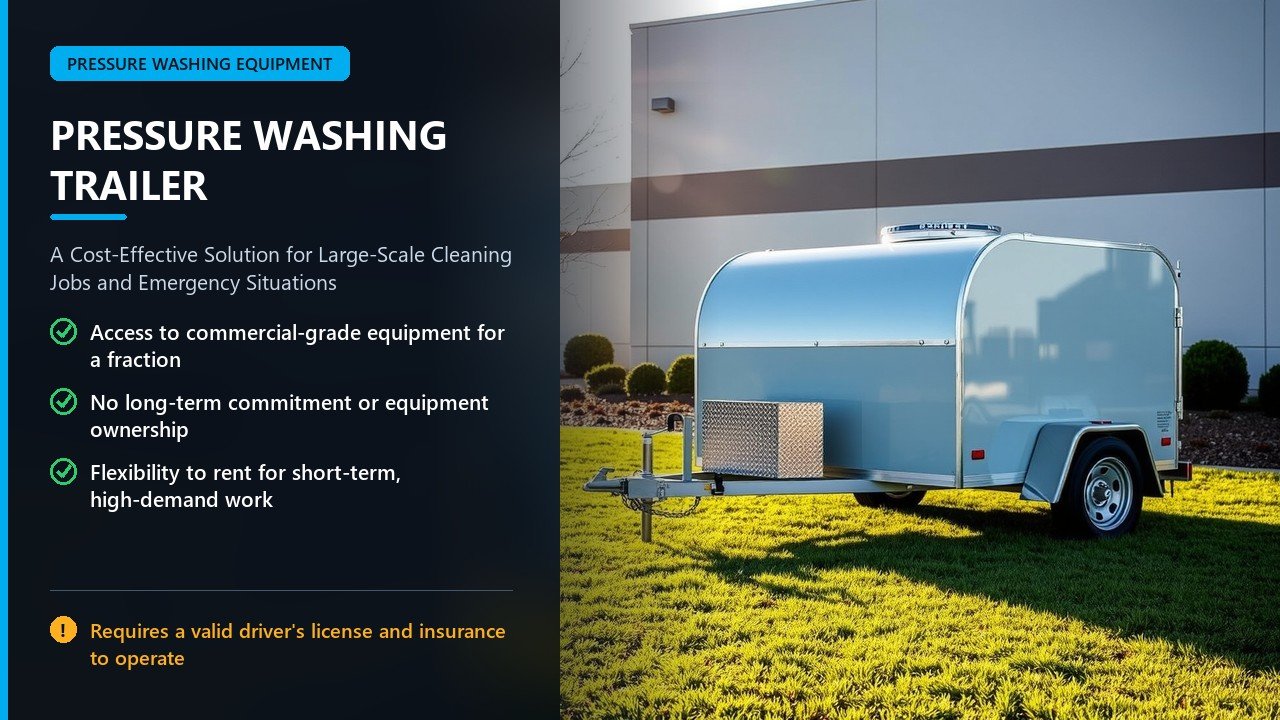
What a Pressure Washer Trailer Rental Actually Is
It helps to picture the difference between renting a small pressure washer from a hardware store and renting a full trailer rig. The hardware store machine is a residential unit you carry in a car and hook to a garden hose. A trailer rig is a different class of equipment entirely. It is a mobile cleaning station built for commercial work, and it usually arrives ready to clean with almost everything you need already on board.
Most rental trailers share a common recipe. There is a gasoline engine driving a heavy-duty pump, a burner if the machine is a hot water model, a water tank so you are not chained to a spigot, and a set of reels, hoses, a gun, a wand, and nozzles. Some units add a surface cleaner for flat work, a chemical tank, and a downstream injector for soap. The trailer itself is a steel frame on one or two axles with a hitch, lights, and often brakes. You supply the tow vehicle, the fuel, the water to fill the tank, and a driver who knows how to tow safely.
Understanding what a rental is not is just as useful. It is not usually a long-term solution, because daily and weekly rates add up fast. It is not a substitute for insurance and safe towing habits, because the rental company will require proof of coverage and hold you responsible for damage. And it is not always cheaper than owning, because the math changes depending on how often you would use the machine. Renting is a tool for specific situations, and it works brilliantly when matched to the right one. For many cleaning businesses, a trailer is the foundation of the whole operation, as our article on how a pressure washer trailer turns cleaning into a business explains.
What a Typical Rental Includes
Rental inventory varies by company, but the better rigs come equipped similarly. Knowing the standard package helps you ask the right questions and avoid paying extra for something that should have been included. A typical commercial trailer rental often includes the following.
- The trailer and pressure washer. A towable trailer with a mounted gas-engine pressure washer, often rated around 3,500 to 4,000 PSI and 5 GPM for hot water units.
- A water tank. Usually 200 to 425 gallons, letting you work where there is no water hookup. This is what makes the rig truly self contained for remote jobs.
- Hose and reels. Typically a high-pressure hose of around 100 feet and a garden or supply hose, both on reels for fast setup and cleanup.
- Gun, wand, and nozzles. A spray gun and wand with a set of nozzles for different spray angles and a steam or chemical nozzle where applicable.
- A chemical injector. A downstream injector that draws soap into the spray without sending chemicals through the pump.
- A burner and hot water. If it is a hot water trailer, a diesel or oil fired burner heats the water, often to around 200 F, which makes short work of grease and oil.
- Occasional extras. Some rentals throw in a surface cleaner, an extra hose length, or a gallon of cleaning chemical, especially on longer rentals.
The exact package depends on the company and the trailer. A cold water trailer will be simpler and cheaper, while a hot water trailer with a big tank and a surface cleaner commands a higher rate. Always confirm in writing what is included before you drive away, because missing a surface cleaner or an injector you assumed was part of the deal can turn a smooth job into a scramble.
Typical Rental Rates
Rental pricing swings with region, machine size, and season, but the structure is consistent across the country. Companies charge by time period, with longer rentals costing less per day. The table below shows representative rates for commercial trailer rigs so you can budget realistically. Treat these as ballpark figures, because your local market may differ.
| Rental Period | Typical Cold Water Trailer | Typical Hot Water Trailer |
|---|---|---|
| Half day (about 4 hours) | Rarely offered, portable units only | About $225 |
| Daily (24 hours or 8-hour day) | About $95 to $150 | About $250 to $350 |
| Weekend (3 days) | About $285 | About $400 to $600 |
| Weekly (7 days) | About $665 | About $1,000 to $1,400 |
| Monthly (28 to 30 days) | Varies, ask for a quote | About $3,400 to $3,750 |
A few details in that table matter more than the headline numbers. Daily rates are often based on a set number of hours, frequently eight, or on a 24-hour window from pickup, so confirm whether a midnight return counts as another day. Weekend rates usually run from Friday afternoon to Monday morning, which can be excellent value if you have a two- or three-day job. Fuel and water are usually not included, and you are expected to return the machine with the same fuel level, or pay to have it refilled. Delivery is often available for an extra fee, which is worth considering if you would rather not tow a loaded trailer yourself.
What Is Not Included, and the Extra Costs
The advertised rate is rarely the whole bill. Rentals are priced for the trailer and the machine, and many of the things you need to actually do the job come at an additional charge. Plan for these extras so your final invoice does not surprise you.
- Fuel. You pay for the gasoline that runs the engine and, on hot water units, the diesel or oil that feeds the burner. Fuel is almost never part of the rate, and you usually return it full.
- Water. If you fill the onboard tank, the water is on you, and a 200 to 425 gallon tank takes real volume to fill.
- Accessories. Surface cleaners, extra hose lengths, additional guns and wands, and chemical injectors are often rented separately, with their own day and week rates.
- Towing hardware. You may need to rent or own the correct ball hitch, and a trailer with brakes needs a properly wired tow vehicle.
- Delivery and pickup. Having the company deliver saves you towing hassle but adds a charge.
- Damage waiver or insurance. Many companies require proof of coverage or sell a damage waiver, and a deposit is common.
Add these up and the true daily cost of a hot water trailer rental can climb well past the sticker rate, especially on a single short job. That is not a reason to avoid renting, but it is a reason to do the math before you commit and to compare the all-in cost of renting against the cost of owning a machine you would use over and over.
Requirements to Rent a Pressure Washer Trailer
Because you are taking a valuable, towable piece of equipment off the lot, rental companies put reasonable guardrails in place. The requirements are not hard to meet, but arriving unprepared wastes a trip. Most companies ask for the following.
- Valid identification. A government-issued ID and a major credit card are standard.
- A security deposit. A deposit or a card on file protects the company against damage and late returns.
- Proof of insurance or a damage waiver. Trailer rentals frequently require a certificate of insurance, or COI, and some companies require full-coverage auto insurance because you will be towing on public roads. If you cannot show coverage, a damage waiver program is usually offered instead.
- A capable tow vehicle. The trailer must be pulled by a vehicle rated for its weight, with the right hitch. Hot water trailers are heavy once the water tank is full, and many companies specify a full-size truck.
- Towing knowledge. You should know how to connect the hitch, cross the safety chains, connect the lights, and drive a trailer safely. If you have never towed, practice before the job or pay for delivery.
Confirm the tow rating and hitch requirements before you reserve, because showing up with a vehicle that cannot safely pull the loaded trailer will either cancel your rental or, worse, put you and everyone else on the road at risk.
Renting Versus Buying
The decision to rent or buy comes down to frequency and cash flow. Renting wins when the need is short and sharp. Buying wins when the need is steady and long. Laying the two side by side makes the choice clearer.
| Consideration | Renting | Buying |
|---|---|---|
| Upfront cost | Low, just the rental and deposit | High, full machine and trailer price |
| Best for occasional work | Yes, ideal for one-off big jobs | Poor value if rarely used |
| Best for frequent work | Expensive over many weeks | Yes, pays off with heavy use |
| Maintenance and repairs | Company handles them | You handle and pay for them |
| Storage and insurance | None, once returned | You provide both year round |
| Testing a machine type | Great way to try before buying | Commits you to one choice |
The rule of thumb is simple. If you would rent a trailer more than a handful of times in a year, the money is probably better spent owning a machine, because rental fees for a hot water trailer can climb past the cost of a used rig within a few weeks. If you need a powerful rig only for a seasonal rush, a single large project, or to cover for a machine in the shop, renting is the cheaper, lower-risk choice. Renting also lets you test different machines before buying, so you know exactly what you want when you are ready to commit. If you decide ownership is the better path, our guide on how to choose power wash trailers for sale that last will help you buy well.
Rent-to-Own Programs
Many rental companies offer rent-to-own, sometimes called a rental purchase option, which bridges the gap between the two. Under these programs, a portion of what you pay in rental fees is credited toward the purchase price if you decide to buy the machine. Companies often credit a higher percentage for longer rentals, such as up to half the rental cost after thirty days and a smaller share for shorter rentals. If you are on the fence about a particular trailer, a rent-to-own deal can let you put the equipment to work and decide with real experience, while keeping some of your rental money working toward ownership. Ask about the details before you rent, because the credit terms vary widely and are only valuable if you actually intend to buy.
How to Choose a Rental Company
The machine matters, but so does the company behind it. A great trailer from a disorganized rental yard can still ruin your job. Look for these qualities when you compare options.
- A well-maintained fleet. Ask when the machine was last serviced and whether it is inspected between rentals. A trailer that breaks down mid-job costs you far more than the rental fee.
- Clear pricing. A good company tells you upfront what is included, what is extra, and how fuel, water, and cleaning are handled at return.
- Support when you need it. A phone number that reaches a real person matters when a burner will not light or a hose fails on a Saturday.
- Flexible periods. Companies offering half-day, weekend, and weekly rates give you more ways to save than those offering only a rigid daily rate.
- Delivery options. If you would rather not tow, confirm delivery and pickup are available and what they cost.
- Rent-to-own terms. If you might buy, an attractive credit program can make one company a much better deal than another.
Picking the Right Machine for the Job
Not every rented trailer suits every job, and choosing well is the difference between finishing early and fighting the equipment all day. Match the machine to the work before you reserve.
Hot water or cold water. Grease, oil, fat, and food soil need heat, so a hot water trailer is usually the right call for commercial kitchens, engines, and fleet washing. Mud, dirt, and general outdoor grime are fine with cold water, which is simpler and cheaper to rent. Pressure and flow. Look for a balance of PSI and GPM, because for large commercial surfaces, flow drives how fast you cover ground. A 3,500 PSI, 5 GPM machine is a common and capable rental standard. Tank size. A bigger tank means fewer refills and more time cleaning, which matters on remote sites with no water access. Surface cleaner. For flat concrete, driveway, or parking lot work, a surface cleaner attachment speeds you up dramatically and improves the finish, so rent one if your job is mostly flat. If you would rather build or buy a compact rig, our article on building a 5×8 pressure washing trailer that works shows how a small trailer comes together.
Operating a Rented Trailer Safely
A rented trailer deserves the same respect as your own equipment, and a little care keeps you safe and protects your deposit. Before you leave the lot, walk the trailer and confirm the hitch is locked, the safety chains are crossed and attached, the lights work, and the tires look sound. Check the oil and fuel levels and ask what fuel to use. At the job site, park on level ground, chock the wheels, and never run the engine indoors, because gasoline and diesel exhaust contains carbon monoxide. If the trailer has a burner, keep its exhaust away from anything flammable and let the coil cool before shutdown. If you do decide to buy, keeping the pump oil fresh is the maintenance habit that matters most, as our guide on what type of oil for a pressure washer pump keeps it running explains. When you finish, the machine should be clean, fueled to the agreed level, and free of chemical or debris before you return it. For broader safety habits around hot water and fuel-fired machines, the Occupational Safety and Health Administration publishes guidance worth reviewing before commercial use.
Returning the Trailer and Protecting Your Deposit
The fastest way to lose part of a deposit is a dirty, damaged, or late return. Follow the return rules in your rental agreement closely. Return the machine during the agreed window, because late fees can be steep and often convert to another day’s charge. Fuel the equipment back to the level specified, since companies frequently refuel at a premium rate and bill you for it. Clean off mud, chemical residue, and debris, because a machine returned filthy may draw a cleaning charge. Inspect the trailer for damage before handing it back, and take photos when you pick it up and drop it off so there is no dispute about pre-existing wear. If something breaks during your rental, report it immediately rather than hiding it, because an honest report is usually handled far better than a surprise discovery on inspection. These habits protect your deposit and your relationship with the rental company, which matters the next time you need a machine in a hurry. One responsibility rentals do not remove is wastewater. Wash water carrying oil, grease, and detergent should never be dumped into a storm drain, which usually flows untreated to a river or lake. The Environmental Protection Agency publishes stormwater guidance that applies to many commercial cleaning jobs.
Common Mistakes to Avoid
- Assuming fuel and water are included. They almost never are, and returning the machine empty can trigger a refill charge.
- Showing up without the right tow vehicle or coverage. Confirm the tow rating, hitch, and insurance requirements before your reservation date.
- Ignoring the clock. Daily rates often run on a 24-hour or set-hour basis, and late returns cost extra.
- Skipping a pre-rental inspection. Note existing damage, and photograph it, so you are not blamed for it later.
- Booking the wrong machine. Renting a cold water trailer for greasy work forces you to fight soil that heat would have melted away.
- Renting repeatedly instead of buying. If the trailer has become a regular expense, run the numbers on ownership, because the fees add up fast.
- Underestimating weight. A hot water trailer with a full tank is heavy, and a marginal tow vehicle is a safety risk, not a saving.
Answers to the Questions Renters Ask Most
How much does it cost to rent a pressure washing trailer?
Expect roughly $250 to $350 per day and about $1,000 to $1,400 per week for a commercial hot water trailer in most markets. Cold water trailers are cheaper, often $95 to $150 per day, and longer rentals cost less per day.
What is included in a pressure washer trailer rental?
Usually the trailer, the pressure washer, a water tank, hose reels, a gun and wand, nozzles, and a chemical injector. Hot water units include a burner. Surface cleaners, extra hose, and chemicals are often extra.
Do I need my own tow vehicle?
Usually yes, unless you pay for delivery. The vehicle must be rated to tow the loaded trailer, and hot water trailers with full tanks often require a full-size truck and the correct hitch.
Do I need insurance to rent a pressure washer trailer?
Most companies require proof of insurance, often a certificate of insurance, and some require full-coverage auto insurance because you tow on public roads. A damage waiver may be offered as an alternative.
Is fuel included in the rental?
No. You typically pay for the engine fuel and, on hot water models, the burner fuel, and you return the machine at the same fuel level. Water you add to the tank is also your responsibility.
Can I rent a trailer for a business instead of buying one?
Yes, and many cleaning businesses do for seasonal rushes, large one-off projects, or when their own machine is being repaired. It only makes financial sense, though, when the rental is occasional rather than routine.
Is there a rent-to-own option?
Many companies offer rent-to-own, crediting part of your rental fees toward the purchase price, with a higher credit for longer rentals. It is worth asking about if you might buy the machine later.
What happens if I damage the trailer?
You are generally responsible for damage beyond normal wear. Report any issue immediately, keep your inspection photos, and rely on your insurance or the damage waiver to cover the cost, minus any deductible or deposit.
The Bottom Line on Renting a Pressure Washing Trailer
A pressure washing trailer for rent is one of the smartest tools available to anyone who occasionally needs serious cleaning power without the cost and commitment of ownership. For a few hundred dollars a day, you can put a self-contained rig with a big water tank, hot water, and a surface cleaner to work on a job your own machine could never handle, then hand it back and walk away from maintenance, storage, and insurance. The catch is that renting is priced for short-term need, so it rewards occasional users and punishes those who rent week after week when they should own. Do the math on your actual workload, choose the right machine for the soil and surface, meet the insurance and towing requirements, and care for the equipment like it is yours. Do all that, and a rented trailer becomes a profit-making asset on the days you need it and a cost you never carry on the days you do not.