A first-time buyer named Priya stood in the aisle holding two boxes, both machines painted bright yellow, and could not tell whether the color meant anything. Then she opened a nozzle kit with five colored tips, and the yellow one looked exactly like the machine. Was yellow a brand, a warning, or a setting? The answer turned out to be all three, depending on whether the yellow was on the machine or on the nozzle. Understanding that split saved her from a costly mistake, because the yellow tip is one of the most aggressive nozzles in the kit, and it is not the one a beginner should reach for first.
“Pressure washer yellow” is a search that usually means one of two things. Sometimes it means the bright yellow color of many pressure washing machines, a mix of brand identity, visibility, and safety. Sometimes it means the yellow nozzle tip, a specific pressure setting in the standard color code. This guide explains both, why so many pressure washers are painted yellow, what the yellow tip actually does, and how to read color correctly so you choose the right machine and the right nozzle for the surface in front of you.
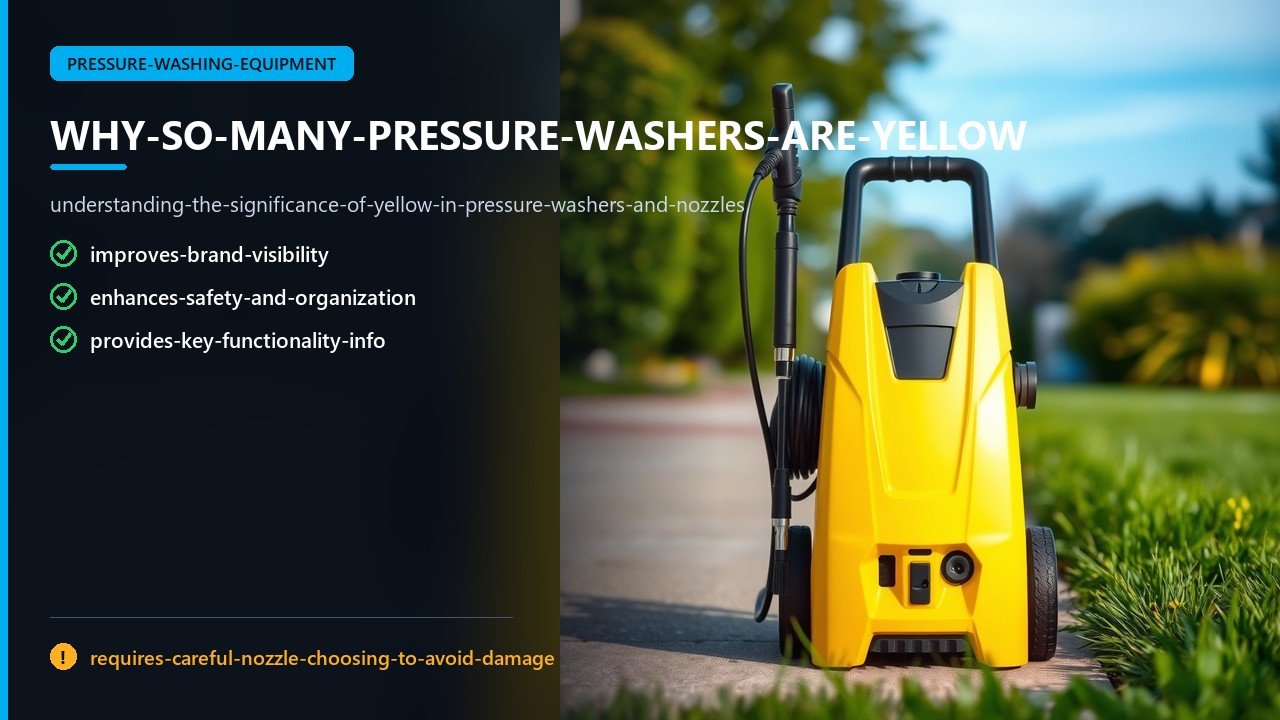
Why So Many Pressure Washers Are Yellow
The yellow pressure washer is not a coincidence. Color is one of the most powerful tools a brand has, and in a category tied to water, dirt, and power, yellow does several jobs at once.
Brand identity. The most famous association is Kärcher, the German cleaning company whose machines are almost always yellow and black. That color has become so linked to the brand that a yellow pressure washer instantly reads as a Kärcher to many shoppers, whether or not it actually is one. Kärcher built its identity around a color the way other brands own red or blue. Our guide to what is inside an electric pressure washer covers how the big brands position their machines.
Visibility and safety. Yellow is the highest-visibility color in the spectrum, which is why it is used for caution signs, school buses, and safety gear. On a jobsite or in a busy driveway, a bright yellow machine is easy to see, easy to find, and easy to keep away from hazards. A pressure washer combines high voltage or fuel, high-pressure water, and moving parts, so visibility is a small but real safety benefit. The Occupational Safety and Health Administration reserves yellow for caution in its color-code system, which reinforces the instinct.
Marketing psychology. Yellow is energetic, optimistic, and attention-grabbing. It suggests power, brightness, and cleanliness, all of which suit a cleaning machine. In a crowded aisle, a yellow machine stands out and feels approachable rather than industrial. That is not an accident, it is design.
Association with cleanliness and the sun. Yellow evokes sunlight and freshness, which pairs naturally with washing and drying. A machine that cleans driveways and vehicles benefits from that subconscious link, which is one reason the color keeps appearing even on brands that are not Kärcher.
The Yellow Nozzle Tip Explained
The other meaning of “pressure washer yellow” is far more technical, and far more important to get right. Most pressure washer nozzles follow a color-coded system, and yellow has a specific, powerful role.
Yellow is the 15-degree tip. In the standard North American nozzle color code, yellow marks a 15-degree fan pattern. That is a narrow, high-pressure spray used for stripping, tough stains, and stubborn grime on hard surfaces. It is more concentrated than the green 25-degree tip and less dangerous than the red 0-degree tip, but it still carries serious cleaning force.
What yellow is for. The yellow 15-degree tip is the right choice for stripping loose paint, blasting heavy mildew off concrete, cleaning tough stains on hard surfaces, and removing caked mud from equipment. On concrete, brick, and other tough surfaces, it is a workhorse. Our guide to pressure washer nozzle colors walks through every tip in the set.
What yellow is not for. The yellow tip is too aggressive for car paint, wood, siding, and any delicate surface. Held too close, it can etch concrete, strip finish, and gouge soft materials. For those surfaces, step down to a wider tip such as green or white, and let the wider fan spread the force.
How it compares. The color code runs from the most concentrated to the most spread out: red at 0 degrees, yellow at 15, green at 25, white at 40, and black for low-pressure soap. Yellow sits near the aggressive end, which is exactly why beginners are often warned to start with green or white and earn their way to yellow. Our guide to choosing a turbo nozzle covers another aggressive option and when to use it.
| Color | Fan Angle | Typical Use |
|---|---|---|
| Red | 0 degrees | Pinpoint blasting, toughest spots only |
| Yellow | 15 degrees | Stripping, tough stains, hard surfaces |
| Green | 25 degrees | General cleaning, all-purpose default |
| White | 40 degrees | Gentle cleaning, siding, paint, delicate areas |
| Black | 65 degrees (low pressure) | Soap and chemical application |
Don’t Confuse the Machine Color With the Nozzle Color
Because both the machine and the nozzles can be yellow, it is easy to blend the two ideas together. Keeping them separate is the key to using color well.
Machine color is cosmetic and branding. A yellow machine tells you almost nothing about its pressure, flow, or quality. It tells you who might have made it and that the brand wants visibility. It is not a performance spec, and it is not a guide to what the machine can do.
Nozzle color is functional. A yellow nozzle is a 15-degree tip with a specific job. Here the color is a genuine instruction about pressure and pattern, not a branding choice. When a professional talks about “the yellow one,” they mean the 15-degree tip, and they mean it with respect.
Where the confusion bites. A beginner sees a yellow machine and a yellow tip, assumes they belong together, and uses the aggressive tip on a delicate surface at full pressure. That is how paint gets stripped and wood gets gouged. The machine color and the nozzle color share a hue but nothing else.
| Where the Yellow Appears | What It Means | What to Do |
|---|---|---|
| On the machine body | Brand and visibility choice | Ignore it when judging performance |
| On a nozzle tip | 15-degree high-pressure fan | Use with care on tough surfaces only |
| On safety signage | Caution and visibility | Heed the warning |
Buying a Yellow Pressure Washer
If you like the look of a yellow machine, or you are considering a yellow-brand model, the color should not be your deciding factor. Judge the machine on what actually matters.
Pressure and flow. These are the real specs. A machine rated at 1,500 PSI and 1.2 GPM cleans very differently from one rated at 3,000 PSI and 2.5 GPM. For a given job, flow often matters more than pressure, because flow rinses away the loosened dirt. Our guide to high-flow hose as the standard choice explains the role of flow.
Electric versus gas. Yellow machines come in both, and the choice depends on your work. Electric units are quiet, light, and ideal for home jobs near a power outlet. Gas units are more powerful and mobile but louder and heavier. Our guide to what is inside an electric pressure washer helps you decide.
Build quality, not paint. A yellow shell hides the parts that matter. Look at the pump, the fittings, the hose, and the gun. A quality pump outlasts a decorative casing every time, and a rebuildable pump saves money for years. Our guide to why a triplex pump outlasts budget machines shows what to look for.
Accessories included. Check which nozzles and accessories come in the box. A kit with the full color-coded set, a turbo nozzle, and a good hose saves you from buying them later. Our guide to choosing a gun and kit that fits covers the accessories that matter.
Using the Yellow Tip Safely
The yellow 15-degree tip is a powerful tool, and using it well comes down to distance, angle, and honesty about the surface.
Start farther away. Because the fan is narrow, the yellow tip concentrates force. Begin with the nozzle farther from the surface and move closer only if needed. Distance is your most important control, more than any setting.
Keep it moving. A stationary narrow jet etches concrete, strips paint, and marks soft materials. Use smooth, even passes and never hold the tip in one spot.
Match the tip to the surface. Use yellow on concrete, brick, and tough hard surfaces. Switch to green or white for siding, wood, and paint. For vehicles, stay away from yellow entirely and use white or a foam cannon. Our guide to a soap-dispenser attachment covers gentler vehicle cleaning.
Respect the recoil. A narrow tip at high pressure produces noticeable kick. Grip the gun firmly, brace if needed, and never point it at a person, an animal, or yourself. High-pressure water can cause serious injection injuries, which is why OSHA treats high-pressure cleaning as a genuine hazard.
Color as a Safety and Organization Cue
Color is not just cosmetic. Used well, it is a system for keeping a pressure washing setup safe and organized.
Nozzle color keeps you honest. The color code exists so that you can identify a tip’s job without reading a number in the middle of a job. Learning the order, red then yellow then green then white then black, means you always know how aggressive your tip is before you pull the trigger.
Machine color keeps you visible. A bright yellow machine is easier to see in a driveway, on a trailer, or beside a road. That visibility protects the operator and everyone nearby, and it makes the machine easy to find in a crowded garage. If you work near traffic or on jobsites, visibility is a small but genuine advantage.
Consistent color aids others. If a helper or a family member uses the machine, a clear color system means they can identify the safe tip for a given surface without training. A simple chart taped inside the lid of a nozzle case prevents a lot of damage.
How to Tell a Quality Yellow Machine From a Cheap One
Because yellow is a popular color, it appears on machines at every price and quality level. The paint tells you nothing, so judge the machine by what it is made of and how it is built.
Look at the pump. The pump is the heart of the machine and the first thing to inspect. A quality triplex pump with a brass or stainless manifold signals a machine built to last, while a sealed plastic pump signals a disposable one. Ask whether the pump can be rebuilt, because a rebuildable pump is a long-term asset. Our guide to why a triplex pump outlasts budget machines explains the difference.
Check the fittings and hose. Metal quick-connect fittings and a quality rubber or hybrid hose are signs of a serious machine. Plastic fittings and a thin, stiff hose are signs of corners cut. These parts fail first, and replacing them on a cheap machine often costs more than the savings on the purchase.
Weigh it in your hands. All else being equal, a heavier machine contains more metal and less plastic. That is not a perfect test, but it is a useful one. A machine that feels flimsy is usually flimsy inside too.
Read the specs, not the label. Look for continuous pressure and flow, a real pump brand, and a serviceable design. If the box leads with a huge peak pressure and hides the flow rate, treat that as a warning. Our guide to picking components that fit covers matching the parts to the machine.
| Quality Cue | Built to Last | Built to Replace |
|---|---|---|
| Pump | Triplex, rebuildable | Sealed, disposable |
| Fittings | Brass or stainless | Plastic |
| Hose | Rubber or hybrid, flexible | Thin, stiff PVC |
| Frame | Steel, stable, rubber feet | Thin plastic, rattles |
| Specs | Continuous pressure and flow | Peak rating only |
Other Pressure Washer Colors and What They Signal
Yellow is not the only color with a story. Machine colors across the category are chosen for branding, and a few carry useful associations.
Yellow and black. The most recognizable combination, closely tied to Kärcher and to the idea of a bright, approachable, consumer-friendly machine. It signals a wide product range from light home units to serious machines.
Blue and gray. Often used by brands that want to look professional, durable, or industrial. Blue machines tend to occupy the contractor and prosumer space, and it is a common color for pressure washers aimed at people who clean for a living.
Red and black. Red signals power and toughness, and it is common on gas machines and heavy-duty equipment. It pairs with the aggressive, high-output end of the market.
Green. Frequently used to suggest an eco-friendly, gentle, or garden-friendly machine, and also to echo outdoor and lawn-care branding. Some cordless and light-duty machines use green.
What the color really means. In every case, the color reflects brand positioning rather than performance. Two machines in the same color can differ enormously in pressure, flow, and build. The color is a first impression, and a first impression is not a specification. Our guide to high-flow hose as the standard choice shows how the real specs, not the paint, decide what a machine can do.
Why this matters for shoppers. It is easy to assume a color signals a class of machine, but that is not reliable across brands. Judge each machine on its own merits, and treat the color as decoration rather than a grade. The one place color genuinely communicates function is on the nozzle, not the machine.
Common Mistakes When Reading Pressure Washer Color
Color is helpful once you understand the system and confusing until you do. These are the mistakes that trip people up.
Assuming the machine color is a spec. The most common error. A shopper sees a bright yellow machine and assumes it is a certain class of power, but the paint says nothing about pressure or flow. Always read the pump, the ratings, and the build.
Using the yellow tip on everything. Because yellow is a familiar, friendly color, beginners reach for the yellow nozzle by default. In the color code, though, yellow is one of the more aggressive tips. Starting with green or white and moving to yellow only for tough surfaces is the safer habit.
Trusting color over the printed degree. Some nozzles are worn, repainted, or from a set that follows a different code. If there is any doubt, check the degree marked on the nozzle or in the manual rather than guessing from color. A misread tip is a damaged surface waiting to happen.
Forgetting that colors can change between brands. The red, yellow, green, white, black sequence is the common standard, but not every maker follows it exactly. Treat the code as a strong convention, not a universal law, and confirm with your own manual.
Overlooking safety colors. Yellow on a machine or a sign can also mean caution. When yellow appears as a warning, it deserves attention rather than interpretation. A machine, hose, or connection marked in caution yellow is telling you something, so read it as a safety cue rather than a style choice.
Frequently Asked Questions
What does a yellow pressure washer mean? On a machine, yellow is usually a brand and visibility choice, most associated with Kärcher. On a nozzle, yellow is the 15-degree high-pressure tip. The two meanings are unrelated.
Is the yellow nozzle safe for cars? No. The yellow 15-degree tip is too aggressive for car paint and can strip or damage the finish. Use a white 40-degree tip or a foam cannon for vehicles, and keep the pressure moderate.
What is the yellow tip best for? Stripping, tough stains, and heavy grime on hard surfaces such as concrete and brick. It is a cleaning workhorse on tough surfaces and a hazard on delicate ones.
Do all brands use yellow for 15 degrees? The red, yellow, green, white, black sequence is the common standard, but colors can vary by brand. Always confirm your tip’s angle from the manual or the marking on the nozzle.
Are yellow pressure washers better than other colors? No. The paint has no effect on performance. Judge a machine by its pressure, flow, pump, build quality, and accessories, not its color.
Why is yellow used for caution signs? Yellow is the most visible color and is widely used to signal caution. That is part of why pressure washer makers and safety authorities use it, because it draws attention and reduces accidents.
Is a yellow pressure washer more powerful? No. The color has no effect on pressure, flow, or cleaning power. A yellow machine can be a light-duty home unit or a serious commercial machine, and it must be judged on its components and specs alone.
What is the difference between a 15-degree and a 40-degree tip? A 15-degree tip, often the yellow one, produces a narrow, high-pressure fan for tough surfaces and stripping. A 40-degree tip, often white, produces a wider, gentler fan for delicate surfaces such as paint and siding. Match the tip to the surface before you start.
Final Thoughts on Pressure Washer Yellow
“Pressure washer yellow” points to two different worlds. On the machine, yellow is about branding and visibility, most famously attached to Kärcher, and it tells you almost nothing about how the machine performs. On the nozzle, yellow is a precise instruction: a 15-degree high-pressure tip built for stripping and tough stains on hard surfaces, and a poor choice anywhere delicate.
Keeping those meanings separate is the whole lesson. Judge a machine by its pressure, flow, pump, and build, not its paint. Read a nozzle by its color code, and remember there is nothing hard and fast about the red, yellow, green, white, black sequence unless the manual confirms it. Use the yellow tip the way it is meant to be used, at a distance, in motion, on tough surfaces, and keep it away from paint, wood, and vehicles.
Do that and color becomes a genuine asset in your kit. The bright machine is easy to see and easy to find, and the yellow tip is a precise tool you reach for deliberately rather than accidentally. Priya learned the difference before she damaged anything, and once she did, the color that confused her became the simple, dependable system it was designed to be.