A restaurant owner named Priya spent hours every week fighting the same battle. The grease trap area behind her kitchen, the concrete loading dock, and the exhaust hood surrounds had a layer of baked-on cooking oil that laughed at her cold-water pressure washer. Detergent helped a little. Scrubbing helped a little more. Nothing actually won. Then a cleaning contractor rolled in one afternoon with a hot water machine, and the difference was almost absurd. The greasy film that had resisted everything simply melted off in a single pass. The water coming out of that wand was around 200°F, and heat was the ingredient Priya had been missing.
That is the whole case for a pressure washer with burner. Cold water cleans dirt, and it does it well. But grease, oil, animal fat, and the film that builds up in commercial kitchens and on engines respond to heat in a way no amount of pressure can replicate. A burner turns a pressure washer into a genuine industrial cleaning tool, and it also adds a whole second machine under the hood that you have to understand and maintain.
This guide explains how a pressure washer burner works, what fuel options exist, how hot the water actually gets, what can go wrong, and how to keep the burner firing cleanly season after season. By the end you will know whether you need one and how to run it.
What a Burner Actually Does
On a cold-water pressure washer, the pump is the only heart of the machine. On a hot water unit, there is a second heart, the burner, and it does its work in a specific place for a specific reason.
The water is always heated after it leaves the high-pressure pump and the unloader valve, never before. This is deliberate. Hot water is hard on seals, and by heating the water only at the final stage, the pump and its rubber parts stay relatively cool. The pump pushes cold water into a heating coil, the burner fires into the center of the coil, and the hot gases transfer heat through the coil pipe to the water inside as it snakes through the tubing. The water exits the coil hot and pressurized, ready to melt grease the moment it touches a surface.
The coil is the crucial heat exchanger. It is typically a length of heavy steel pipe wrapped into a spiral inside an insulated jacket, arranged so the burner flame and hot exhaust pass over as much pipe surface as possible. The design details, how many layers of pipe, how the baffles direct the hot air, all exist to maximize heat transfer. The water has to travel through the coil long enough to pick up heat without losing too much pressure along the way. Our guide to how a power washer heater turns cold water into cleaning power covers the heat-exchange side in more depth.
The Anatomy of a Burner
A burner looks like a simple metal box, but it contains a surprisingly precise set of parts, and understanding them makes troubleshooting far easier. Most portable hot water machines use a gun-type oil burner, and the components below are the ones you will encounter.
Fuel pump. Pulls fuel from the tank and pressurizes it before sending it to the nozzle. Many installations use a return line so fuel keeps circulating and lubricates the pump even when the burner is not firing.
Fuel nozzle. Atomizes the fuel into a fine cone-shaped mist so it ignites easily and burns cleanly. A tiny particle can block it, which is one reason fuel filtration matters so much.
Ignition transformer and electrodes. The transformer steps up voltage, and two electrodes create a spark across a gap to light the atomized fuel. Worn or misaligned electrodes are a leading cause of a burner that will not light.
Air bands. These regulate how much air mixes with the fuel. Too much or too little air produces smoke, soot, or a weak flame. A dirty or misadjusted air band is a common cause of a smoking machine.
Combustion chamber and cone assembly. The cone shapes the air and fuel so combustion happens efficiently inside the coil jacket rather than sputtering around it.
Fuel solenoid, thermostat, and flow switch. These safety and control parts tell the burner when to fire and when to stop. The flow switch prevents the burner from firing when no water is moving, and the thermostat shuts off the fuel when the water reaches the set temperature. Our overview of hot box heater units walks through how these controls work together.
Choosing Your Fuel
Burners run on several fuels, and the choice affects cost, convenience, cleanliness, and where you can legally operate. Diesel is the most common fuel for portable hot water machines because it is widely available and less reactive than propane or natural gas.
| Fuel | Common On | Advantages | Considerations |
|---|---|---|---|
| Diesel / #2 fuel oil | Portable and most hot water units | Widely available, high heat, cheap per BTU | Soot builds up, gels in cold, some emission rules |
| Kerosene / #1 oil | Portable units | Cleaner burn, less soot | Costs more than diesel |
| Propane | Portable and stationary | Clean burn, no soot, easy storage | Fuel cost, tank handling and refills |
| Natural gas | Stationary, plumbed in | Cheap, no refills, clean | Requires a fixed gas line and a permanent site |
| Electric | Small stationary units | No flame, no fuel storage | Slower heat, high power draw, limited temperature |
Diesel and kerosene burners dominate the portable world because you can refuel anywhere, and the machines travel. Propane and natural gas shine on stationary equipment where a permanent supply makes sense and where a soot-free burn keeps the coil clean. The choice is mostly about whether the machine moves and what fuel is cheap and available where it lives.
How Hot Does It Get, and Why It Matters
Hot water pressure washers typically heat water to about 200°F, and some models produce wet steam at higher temperatures, up to around 300°F. That range is not arbitrary. It maps to what heat does to the specific soils that cold water struggles with.
Water at 200°F melts the bond between grease and a surface in a way that cold water simply cannot. Cooking oil, animal fat, engine oil, and the greasy film that builds up in commercial kitchens all soften and release far more readily when the water carries real heat. The result is faster cleaning, less detergent, and a surface that actually comes clean instead of a thin film that keeps reappearing.
Heat also helps on jobs where hygiene matters. Hot water does a better job of killing bacteria and other biological contamination than cold water, which is why food processing plants, kitchens, and some medical or agricultural settings lean on hot water cleaning. Our guide to the 4 GPM hot water machine and what it melts explains the practical side, and the overview of steam pressure washers covers what happens when you push the temperature higher still.
The Safety Systems That Keep a Burner Honest
A burner is a controlled fire inside a machine, and it depends on a set of safety switches to keep that fire where it belongs. Understanding them helps you recognize when something is wrong.
The flow switch tells the burner to fire only when water is actually moving through the coil. Without it, the burner would heat a stationary coil, boil the water, and create a dangerous pressure and temperature situation. If your burner will not fire when you squeeze the trigger, this switch is an early suspect.
The thermostat or high-limit control cuts fuel to the burner once the water reaches the set temperature. When the water cools, it reopens and the burner fires again. This cycling is normal and is what holds the outlet temperature steady.
The fuel solenoid is the valve that physically stops fuel flow to the nozzle when the safety switches say so. When the circuit is complete, fuel flows and the burner fires. Break the circuit and the flame goes out, even though the fuel pump keeps circulating fuel back to the tank.
Beyond the machine’s own systems, ventilation is a safety requirement, not an option. A burner produces exhaust gases, including carbon monoxide, and running a fuel-fired machine in a closed space is genuinely dangerous. The Occupational Safety and Health Administration and the CDC’s National Institute for Occupational Safety and Health on carbon monoxide both treat engine and burner exhaust in enclosed spaces as a serious hazard. Always run a fuel-burning machine outdoors or with proper ventilation and, ideally, a carbon monoxide alarm nearby.
Maintenance That Keeps a Burner Firing
A burner is reliable when it is maintained and temperamental when it is neglected. Almost every burner problem traces back to fuel quality, air, or ignition, and all three are manageable with a routine.
Use clean, correct fuel. The manufacturer’s recommended fuel matters. Water and particulate contamination cause soot, poor combustion, and clogged nozzles. Keep a good filter on the fuel line and drain water from the tank. In cold weather, number two diesel can gel below freezing, so plan for a fuel treatment or a kerosene blend in winter.
Replace the fuel nozzle and check the electrodes. These are wear items. A worn nozzle sprays a poor pattern, and worn or misaligned electrodes make ignition unreliable. Replacing them on a schedule, and checking the electrode gap, prevents the most common failure: a burner that will not light.
Set the air band correctly. Too little air produces black smoke and soot; too much produces a rough or unstable flame. If you see smoke, the air and fuel mixture is off. A smoke spot test tells you whether combustion is clean.
Clean the coil. Soot on the coil exterior insulates it and robs heat transfer. Periodically remove the burner, inspect the coil, and clean it with a degreaser and pressure washer when soot accumulates. This single task restores lost heat more than almost anything else.
Check the fuel pump and filter. The fuel pump pressurizes fuel for atomization, and a weak pump causes poor combustion. Replace the fuel filter regularly and check pump pressure against the specification.
| Symptom | Likely Cause | First Thing to Check |
|---|---|---|
| Burner will not light | Worn nozzle, weak spark, air in fuel line | Fuel nozzle and electrode gap |
| Black smoke | Too little air, wrong fuel pressure | Air band adjustment and fuel pressure |
| Water not hot enough | Soot on coil, low fuel, thermostat | Coil cleanliness and fuel supply |
| Burner fires then stops | Flow switch or thermostat cycling | Water flow and thermostat setting |
| Rough or loud flame | Air/fuel imbalance, altitude | Air band and elevation adjustment |
Do You Actually Need Hot Water?
Hot water is powerful, but it is not free. A hot water machine costs more to buy, costs more to run because it burns fuel, needs more maintenance, and requires ventilation. So the honest question is whether your work justifies it.
You probably need hot water if: you clean commercial kitchens, grease traps, exhaust hoods, or food processing areas; you degrease engines, equipment, or machinery; you clean fleet vehicles where road film and oil mix; you work in food service, agriculture, or industrial settings with hygiene requirements; or you face heavy grease and oil that cold water demonstrably fails to remove.
You probably do not need hot water if your work is residential concrete, siding, decks, and driveways. Cold water handles those jobs beautifully, and a hot water machine adds cost and complexity for no real benefit. For a homeowner, a good cold-water machine is the right answer almost every time. The guide to diesel hot water pressure washer costs and the diesel hot water basics help with the buying math for anyone operating commercially.
Running a Hot Water Rig in the Real World
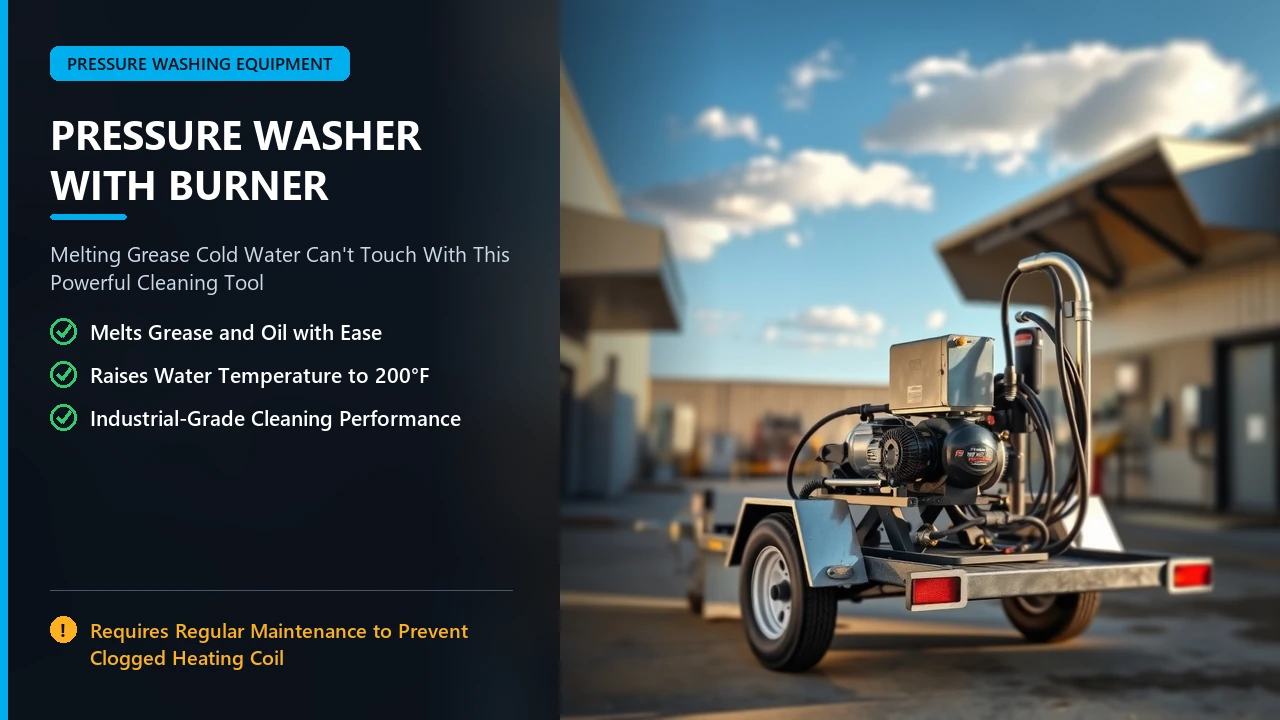
For contractors, the burner usually lives on a mobile rig, not on a cart. That means the machine also has to carry fuel, water, and often a heating coil rated for trailer life. Trailer-mounted hot water machines add fuel tanks, larger coils, and sometimes a second burner or a larger one to keep up with high flow. The plumbing has to handle both high pressure and high temperature, and the fuel system has to survive vibration and weather.
If you operate a hot water rig, treat the burner as its own maintenance line item alongside the engine and pump. Keep spare fuel nozzles, electrodes, and filters on the truck, because a burner failure in the middle of a kitchen degreasing job is a lost contract. Our hot water pressure washer trailer guide and the overview of diesel engines and heaters cover the rig-building side.
Regulations You Should Know
Fuel-fired burners are subject to air quality rules in some regions, especially in California. There, operators of diesel-fired pressure washers with heaters in certain heat-capacity ranges have been required to register equipment with the local air quality management district. Rules vary by state and air district, and they change. If you operate a commercial hot water machine, check the requirements where you work; the South Coast Air Quality Management District registration form is an example of what such registration can look like. Ignoring these rules can mean fines, so it is worth ten minutes of checking before you buy.
What Hot Water Costs to Run
The burner’s running cost lives in two numbers: the heat output of the burner and the price of the fuel. Burners are rated in BTUs per hour, and the higher the flow and the temperature rise, the more BTUs the burner must supply. A machine pushing more gallons per minute to a higher temperature needs a bigger flame and burns more fuel per hour.
The practical way to think about it is cost per hour of running, not cost of the machine. A diesel burner might burn a gallon or two of fuel an hour depending on its size. At commercial diesel prices that is a real number, and over a busy season it can rival the cost of the machine itself. The good news is that hot water cleans faster, so you often finish a job in less time and use less chemical, which offsets part of the fuel expense.
For anyone weighing a purchase, the honest math is: does the hot water let you take work you currently cannot do, or finish work fast enough to take on more of it? If yes, the fuel cost is a cost of doing business and the machine pays for itself. If you are cleaning driveways and siding where cold water already works fine, the fuel bill is pure overhead with no return. Our breakdown of diesel hot water pressure washer costs and when it pays to buy walks through the numbers.
Cold Weather and Altitude Change Burner Behavior
Two environmental conditions surprise new burner owners, and both can cause a machine that worked fine to suddenly act up.
Cold weather affects number two diesel, which can thicken and gel at low temperatures. Gelled fuel flows poorly, atomizes badly, and produces poor combustion or a burner that will not light. In winter, use a winter blend, add a fuel treatment, or switch to kerosene, which stays fluid at lower temperatures. The fuel itself is often the culprit when a burner suddenly misbehaves in a cold snap.
Altitude reduces the density of the air, which changes the air and fuel mixture the burner needs. At high elevation, a burner tuned at sea level runs rich, smoking and sooting. Air band adjustments, and in some cases fuel nozzle changes, bring combustion back into balance. If you operate at altitude, this is worth tuning once rather than fighting every winter.
Portable vs Stationary Burner Machines
Hot water pressure washers come in two broad physical forms, and the burner is packaged differently in each.
Portable hot water units are self-contained machines with an onboard fuel tank, a battery or electric-start burner system, and everything on a wheeled frame or a skid. They are the contractor’s choice because they go where the work is. The burner on these machines is often powered by twelve volts from the machine’s battery or charging system, which is why the safety circuit that shuts the burner off also conserves electrical power.
Stationary hot water units are plumbed into a building’s water, power, and often its natural gas or propane supply. They are the choice for fixed wash bays, food plants, and facilities that clean in the same place every day. With no fuel tank to refill and no exhaust to chase around a parking lot, they are simpler to run, but they never leave the building.
Which one you need depends entirely on whether the machine travels. Most mobile cleaning businesses choose portable or trailer-mounted hot water units; fixed facilities choose stationary. Both use the same fundamental burner design and the same maintenance discipline.
A Simple Burner Maintenance Calendar
Burner care follows the calendar as much as the hour meter. This is the routine that keeps a hot water machine firing cleanly through a busy season.
| Interval | Task | Why It Matters |
|---|---|---|
| Every use | Check fuel level, look for leaks, verify water flow before firing | Prevents dry firing and fuel issues |
| Weekly to monthly | Inspect and clean the fuel filter | Stops contaminants reaching the nozzle |
| Seasonally | Replace fuel nozzle and inspect electrodes | Restores clean atomization and reliable ignition |
| Seasonally | Check air band and run a smoke spot test | Confirms clean combustion, less soot |
| Annually | Clean the coil and inspect the combustion chamber | Restores heat transfer and efficiency |
Burner Questions Owners Ask
Can I use a pressure washer with burner for car washing? Yes, but only at the right temperature. Hot water helps remove road film and salt, but water that is too hot can damage some finishes. Keep the temperature moderate and use a wide nozzle and safe distance.
How hot does a hot water pressure washer get? Most produce water up to about 200°F. Steam-capable machines can exceed that, reaching wet steam well above 200°F and approaching 300°F on some models.
Will hot water damage my pump? Not when the machine is built correctly. The water is heated after the pump and unloader, so the pump itself stays cool. The heat is applied downstream in the coil, which is designed for it.
What fuel should I use? Diesel is the common choice for portable machines. Kerosene burns cleaner and produces less soot. Propane and natural gas suit stationary units. Always follow the manufacturer’s recommendation for your specific burner.
Why is my hot water not getting hot anymore? The most common cause is soot buildup on the coil reducing heat transfer, followed by a fouled nozzle or low fuel. Clean the coil and service the burner components.
Do I need a special hose for hot water? Yes. Use a hose and fittings rated for high temperature, or the heat will degrade the inner liner and cause early failure. Our guide to hot water pressure washer hose explains the rating you need.
Heat Is the Difference Between Cleaning and Winning
A pressure washer with burner is not a bigger version of a cold water machine. It is a different category of tool, one that adds the single ingredient cold water cannot substitute: heat. That heat is what melts grease, dissolves oil, and lets a machine finish in one pass what cold water and chemicals fight for hours. For the right work, a kitchen, a fleet, an industrial floor, it is the difference between a job and a job that is actually done.
For the right owner, it also demands respect. A burner is a small furnace inside your pressure washer, and it rewards clean fuel, a correct air and fuel mixture, a clean coil, and a working set of safety switches. Give it those things and it fires reliably for years. Neglect it and you will chase the familiar complaints: no light, black smoke, and water that is not hot enough. Keep it maintained, ventilate it properly, and use it where heat belongs, and the burner becomes the most valuable part of the machine. For related reading, our guides to the power washer heater and the hot box heater units round out the picture.