Pressure Washer Antifreeze: Pump Saver vs RV Antifreeze Explained
Every winter, the same call comes into repair shops: the machine worked fine in October, and by spring the pump is cracked, the seals have failed, and water pours out of the housing. The cause is almost always the same. A little water was left inside the pump, it froze, and the ice expanded with enough force to split metal and destroy rubber. Pressure washer antifreeze is the cheap insurance that prevents it, but not all antifreeze is safe for your machine. This guide explains what pressure washer antifreeze really is, how it differs from RV and automotive antifreeze, and exactly how to use it to protect your pump through the cold.
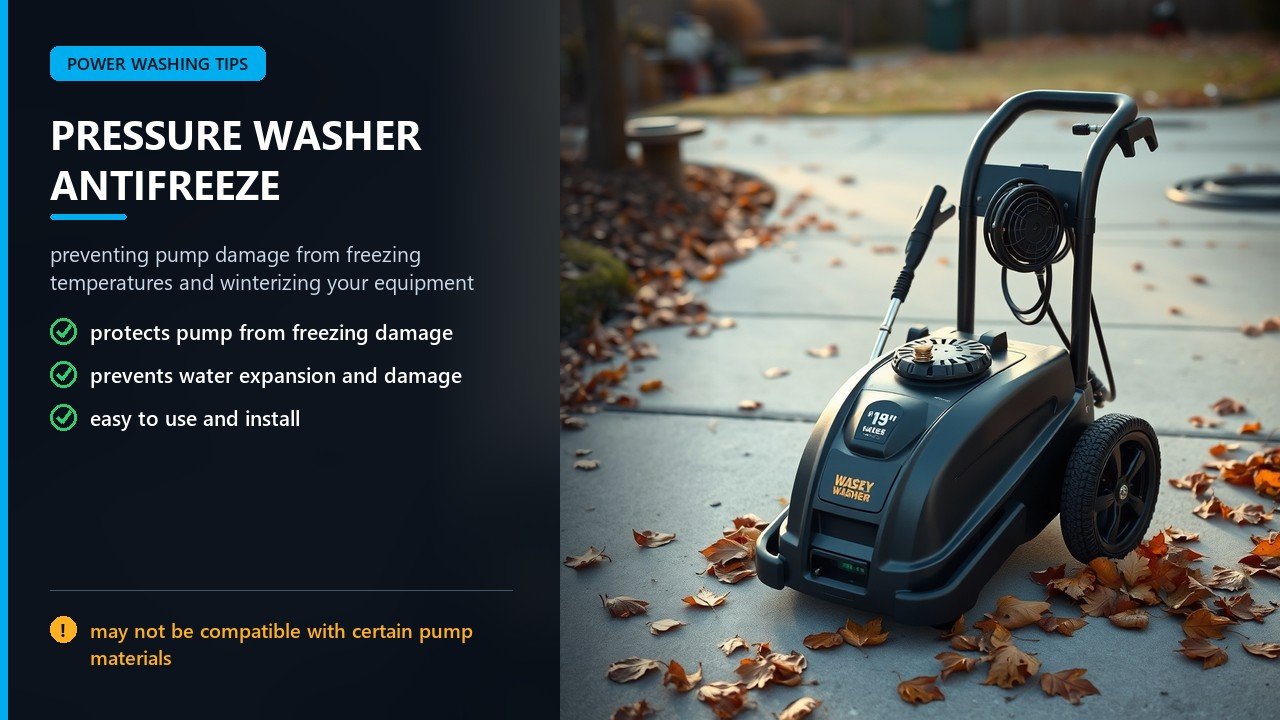
Why Pressure Washer Antifreeze Matters
Water is one of the few liquids that expands when it freezes, growing by roughly nine percent as it turns to ice. Inside a pressure washer pump, that expansion has nowhere to go. The pump is a sealed, precision assembly of pistons, valves, seals, and a crankcase, with narrow passages that trap water after every use. When that trapped water freezes, it cracks the pump head, deforms the valves, and pushes seals out of place.
The damage is silent and often total. Unlike a worn nozzle or a tired O-ring, a freeze crack usually ruins the pump beyond economical repair. Replacing a pump can cost more than a third of the price of a new machine, and on high-end triplex pumps the figure is higher still. Prevention is far cheaper than cure, and a small bottle of the right antifreeze is all it takes.
Rule of thumb: If the forecast is going to dip to freezing and your machine will sit unused for more than a couple of weeks, winterize the pump with a purpose-made antifreeze. It costs a few dollars and takes five minutes.
How Freezing Destroys a Pressure Washer
The vulnerable spots are not evenly spread through the machine. Some parts tolerate freezing better than others, and knowing which is which tells you where to focus your protection.
| Component | Freeze risk | What happens |
|---|---|---|
| Pump head | High | Water trapped in the head cracks the manifold |
| Unloader valve | High | Pocket of water splits the valve body |
| Seals and O-rings | High | Displaced or torn, causing leaks and pressure loss |
| Chemical injector | Moderate | Internal damage stops detergent draw |
| Coil and burner (hot water) | High | Trapped water splits the heating coil |
| Trigger gun and wand | Low | Usually survive; drain them anyway |
| Nozzles | Low | Rarely crack, but keep them dry |
The pattern is clear. The pump and its immediate plumbing carry the most risk because they hold water in tight spaces. The gun, wand, and nozzles are more forgiving, though they should still be drained as good practice. The bottom line is that everywhere water can sit, it should be displaced with antifreeze or drained completely.
What Pressure Washer Antifreeze Actually Is
The term “pressure washer antifreeze” is a bit misleading, because the best products are not just antifreeze at all. They are pump protectants, formulated to do three jobs at once. First, they displace water so there is nothing left to freeze. Second, they lubricate the pistons and seals so the pump does not seize during long storage. Third, they contain corrosion inhibitors that stop rust from forming in the pump head and valves while the machine sits idle.
Most quality pump protectants are propylene glycol based, which makes them far less toxic than automotive antifreeze. They are typically ready to use with no mixing, and they are designed specifically for the materials inside a pressure washer pump. Think of them as a combined antifreeze, lubricant, and rust preventative in one bottle, which is why they outlast plain antifreeze on storage duty.
Pump Saver: The Purpose-Built Option
Products sold under names like Pump Saver, Pump Guard, or pump protector fluid are the gold standard for winterizing. They are made for exactly this task, and they are the safest choice for any pump you care about. Brand examples include CAT Pump Saver, General Pump Saver, Simpson Pump Guard, Briggs & Stratton Pump Saver, and Forney pump-saving antifreeze.
Pricing is modest, generally from around seven dollars for a small generic bottle to fifteen dollars or so a quart for premium brands. Simpson’s Pump Guard, for instance, is a four-ounce can that protects pumps down to about minus twenty-five degrees Fahrenheit and is listed as suitable for both gas and electric washers. The manufacturer recommends applying it whenever the pump will sit idle for more than two weeks, not only in winter.
Because pump savers contain lubricants and corrosion inhibitors, they protect through the whole storage season, not just against one cold snap. That dual benefit is why they are worth the small premium over generic antifreeze. If you are going to buy one product, buy this one.
RV Antifreeze: A Pinch Hitter, Not a Replacement
RV antifreeze, the pink non-toxic fluid used to winterize camper plumbing, is sometimes pressed into service for pressure washers. It is usually propylene glycol based, so it will not poison pets or wildlife the way automotive coolant can, and it does displace water and prevent freezing. In a pinch, it will often get a pump through a cold snap without cracking.
The catch is that RV antifreeze is formulated for plumbing lines, not for precision pumps. It generally lacks the lubricants and corrosion inhibitors that a pressure washer pump needs during months of storage, and it may not protect to as low a temperature as a dedicated pump saver. It can leave seals dry and allow rust to form over a long winter. Use it only when a proper pump protectant is unavailable, and plan to replace it with the right product as soon as you can. For related protection advice, see our guide on pump savers that prevent freeze damage.
Why Never to Use Automotive Antifreeze
Automotive antifreeze, also called engine coolant, is the one product you must never put in a pressure washer pump. It is built around ethylene glycol, which is highly toxic and can kill pets and wildlife that lick even a small spill. Worse from a mechanical standpoint, it is chemically wrong for high-pressure pump seals and can deteriorate the very rubber and polymer components it touches. The seals can swell, soften, or fail, turning a good pump into a leaker.
Automotive antifreeze is also designed for a closed engine loop with a specific mix of water, not for displacing water in a pump and then sitting for months. Its additive package does not serve a pressure washer. The advice is simple: if the label says engine coolant or shows an ethylene glycol warning, keep it away from your pump. The difference between a two-dollar bottle of the wrong fluid and a two-hundred-dollar pump replacement is not a risk worth taking.
Can You Use Compressed Air Instead?
Blowing the system out with compressed air is a popular shortcut, and it works well for hoses, guns, and wands. For the pump itself, however, air alone is not reliable enough to trust through a hard winter. Air can clear the main passages, but small pockets of water cling to the interiors of valves, fittings, and the pump head, and those pockets freeze with the same destructive force as a full chamber.
Compressed air also leaves the pump completely dry, which means no lubrication and no corrosion protection for the internal parts. A dry pump can rust and seize over the storage season. The practical answer is to use air as a helper, not a substitute. Blow out the lines to reduce the water load, then follow with a proper antifreeze or pump protectant to coat and defend everything inside. For a full routine, see our winter storage guide.
Hot Water Washers: Protect the Coil and Burner
Hot water pressure washers add another vulnerable system to the equation. The heating coil, the burner, and the associated plumbing hold water that can freeze and split the coil, an expensive failure that can sideline a machine for the season. Winterizing a hot water unit means not just protecting the pump but also draining the coil and any water-bearing burner parts.
Many hot water machines have a drain plug on the coil specifically for this purpose, and you should follow the manufacturer procedure for your model. Some also have a burner bypass or a way to pump antifreeze through the coil before storage. Do not overlook the fuel system either. A diesel or oil-fired burner needs fuel treated with a stabilizer, and gasoline engines should be run with stabilized fuel or drained. For the heating side in general, see our guide to how a hot water machine heats.
Step-by-Step: Winterizing a Pump with Antifreeze
With the right product in hand, the process is quick and repeatable. Work through these steps in order, and take your time on the first few runs until the routine is familiar.
- Disconnect the high-pressure hose and the water supply from the machine.
- Start the engine or switch on the electric motor and let the pump run for ten to fifteen seconds to push out most of the standing water. Do not run it longer, because running dry builds heat and risks pump damage.
- Turn the machine off before it runs dry completely.
- Set up a short length of hose on the pump inlet, with the other end in a bucket of pump protectant.
- Start the machine briefly, just two to three seconds, to draw fluid into the pump. Most pumps pull in around an ounce per second, so a short run is plenty. Stop as soon as you see protectant coming out.
- Reconnect the high-pressure hose if you removed it, then squeeze the trigger gun in brief one- to two-second pulses, three to five times, until you see pink or coloured fluid at the nozzle. That confirms the protectant has reached all the way through the system.
- Disconnect everything, cap the inlet and outlet, and store the machine.
A quick note on amounts
Because most pumps draw roughly an ounce per second of running, you can estimate the volume you need by how long you run the machine. A few seconds at the inlet is usually enough to fill the pump body, and a handful of trigger pulses pushes it out to the nozzle. If you overshoot, the extra fluid simply sits in the system, which is harmless.
How Much Antifreeze Does a Pump Need?
Most small and mid-size pressure washer pumps need surprisingly little protectant, often just a few ounces to coat everything internally. A four-ounce bottle is enough for many electric and light gas washers, while larger triplex pumps and hot water machines may want a larger bottle or two applications. The goal is not to fill the pump with fluid but to displace the water and leave a protective film on every surface.
If you want to be certain the pump is fully treated, watching for protectant at the nozzle is the reliable sign. When you see the colour arrive at the tip, the whole path from inlet to outlet is protected. Buying a larger container is economical if you treat several machines or winterize more than once, but a small can is fine for a single washer used seasonally.
Tip: Apply protectant any time the machine will sit unused for more than two weeks, not just in winter. Long idle periods let seals dry and internal parts rust, exactly the problems a pump saver is designed to stop.
Antifreeze for Hoses, Guns, and Wands
The pump is the priority, but the rest of the system deserves attention too. Hoses, trigger guns, and wands hold water that can freeze and crack fittings or split a hose wall. You do not need to fill them with protectant, but you should drain them thoroughly after every cold-weather use, and coil hoses loosely so any trapped water can run out rather than pooling.
For hoses, lifting one end and letting gravity do the work is usually enough, and a few seconds of compressed air will clear the rest. Blow out the gun and wand the same way, and store them indoors if you can. Nozzles should be removed, dried, and kept somewhere warm. These parts are inexpensive compared with a pump, but a cracked hose or a frozen gun can end a job just as surely as a failed pump.
Choosing the Right Antifreeze
The table below compares the three main options at a glance. The short version is that a dedicated pump protectant wins on every count that matters for storage, RV antifreeze is an acceptable fallback, and automotive antifreeze should never be used.
| Product | Base | Lubricates seals | Safe for pump |
|---|---|---|---|
| Pump saver / protectant | Propylene glycol plus additives | Yes | Yes, best choice |
| RV antifreeze | Propylene glycol | Limited | Fallback only |
| Automotive antifreeze | Ethylene glycol | No, damages seals | Never use |
When you shop, read the label for the words “pump protector,” “pump saver,” or “pump guard.” Products sold for pressure washer winterizing are formulated for the task, while general-purpose coolants are not. A few brands also make a pump protector fluid for year-round use, and those are a fine choice if you want one product for both seasonal and short-term storage.
When to Winterize: Temperature Triggers
The decision point is the freezing mark. Once overnight temperatures are forecast to reach thirty-two degrees Fahrenheit or below, water left in the machine is at risk. You do not need a hard freeze to cause damage; a single cold night with the machine in an unheated garage or shed is enough to crack a pump that was put away wet.
A common and sensible rule is to winterize whenever the machine will sit unused for more than two weeks and freezing weather is possible. That covers late autumn storage, mid-winter idleness, and the shoulder seasons when temperatures swing. If you use the machine through the winter, treat the pump with protectant after every session in freezing conditions. As a general reference for cold-weather work, see our piece on winter storage for power washers.
Using Your Pressure Washer in Freezing Temperatures
Some jobs cannot wait for spring, and contractors routinely work in subzero conditions with the right precautions. The key is to treat every session as if winterizing is part of the job, not a separate chore. After each use in the cold, flush the pump with protectant or drain it completely, blow out the lines, and store the machine somewhere it will not freeze between uses.
Cold also affects the cleaning side. Water freezes on cold surfaces, detergents can lose effectiveness at low temperatures, and your own comfort and safety matter more when the ground is icy. Keep the machine in a heated space when you can, insulate or cover it if you cannot, and never let a machine sit full of water outdoors. The products and habits that protect a stored machine are the same ones that protect a working one.
Storing the Machine After Treatment
Once the pump and accessories are treated, where the machine lives matters almost as much as what you put in it. An unheated garage or shed is better than the open yard, but even there a hard cold snap can push temperatures low enough to worry any residual water. Indoors, in a heated space, is the safest option, and it also protects the machine from rust, UV, and pests.
Before storage, treat the fuel system if the washer has a gas engine. Stabilized fuel prevents the gum and varnish that clog carburettors over winter, and for long storage a drained tank is even safer. Change or check the pump oil as part of the routine, and cover the machine to keep dust and moisture out. Our guide on pump oil covers the right lubricant for your brand. For fuel, see our fuel storage guide.
Common Antifreeze Mistakes to Avoid
A handful of errors cause most winter pump failures, and every one is easy to avoid once you know it. Watch for these in particular.
- Using automotive antifreeze, which damages seals and is toxic.
- Relying on compressed air alone, which leaves pockets of water and no lubrication.
- Skipping the trigger-gun pulses, so protectant never reaches the far end of the system.
- Running the pump dry for too long while expelling water, which builds damaging heat.
- Forgetting the hot water coil and burner on heated machines.
- Putting the machine away still wet, even with a light frost expected.
- Treating only once at the end of the season and ignoring mid-winter idle periods.
Avoid these and your pump will come through the winter in the same condition it went in. The mistakes are all about shortcuts, and none of them save meaningful time compared with the cost of a new pump.
Spring Startup: Flushing Out the Antifreeze
When warm weather returns, the pump needs to be flushed of protectant before you use it. Connect a water supply, run the machine briefly without the high-pressure hose attached, and let fresh water push the protectant out of the pump. Then reconnect the hose and gun and run the machine normally for a minute, watching for the coloured fluid to clear. Any residual protectant is harmless, but flushing gives you a clean start.
Spring is also the time for a broader check. Inspect O-rings and seals, clear nozzles of any mineral build-up, check the pump oil, and look over the hose for cracks that may have appeared over winter. If the machine was stored correctly, it will fire up and run just as it did last season. If you find a leak, the pump may have been damaged by water that was missed, which is why the winterizing routine is worth doing carefully.
Antifreeze and the Detergent System
If your machine has a chemical injector, soap tank, or downstream detergent system, do not forget it in the winterizing routine. Detergent left in a tank or injector can freeze and expand, cracking the container or blocking the small passages inside the injector. Empty and rinse the tank, flush the injector with clean water, and then introduce a little pump protectant into the line so it does not sit wet. On machines with a built-in soap tank, remove the tank if the design allows and store it indoors.
The injector is a common casualty of winter neglect because it is easy to overlook. A blocked or cracked injector stops the machine drawing detergent, which changes how it cleans far more than most owners expect. Rinsing chemical lines after every use, and protecting them at the end of the season, keeps the whole cleaning system working. For more on that side of the machine, see our guide to pump protector fluid.
Frequently Asked Questions
Can I use RV antifreeze in my pressure washer?
You can in a pinch. RV antifreeze is propylene glycol based and non-toxic, and it prevents freezing, but it lacks the lubricants and corrosion inhibitors a pressure washer pump wants for long storage. Use a dedicated pump protectant whenever possible and treat RV antifreeze as a temporary fallback.
Is automotive antifreeze ever safe for a pressure washer?
No. Automotive antifreeze is ethylene glycol based, is highly toxic, and can damage the seals inside a high-pressure pump. Keep engine coolant away from your pressure washer and use a purpose-made pump protector instead.
How much pressure washer antifreeze do I need?
Often just a few ounces. A four-ounce bottle is enough for many small and mid-size pumps, and the reliable sign of a full treatment is seeing protectant arrive at the nozzle after a few trigger pulses.
Can I just blow out the pump with air?
Air is fine for hoses, guns, and wands, but it is not reliable enough for the pump. It leaves small pockets of water and provides no lubrication, so follow any air blow-out with a proper antifreeze or pump protectant.
At what temperature should I winterize?
Once overnight temperatures are forecast at thirty-two degrees Fahrenheit or below, or any time the machine will sit unused for more than two weeks with freezing weather possible. A single cold night can crack a pump left full of water.
Do hot water pressure washers need a different antifreeze?
The pump protection is the same, but hot water machines also need the heating coil and burner drained and, where the manufacturer allows, flushed with protectant. Check your manual for the coil drain procedure on your model.
The Bottom Line
Pressure washer antifreeze is one of the cheapest and most effective pieces of maintenance you can buy. A purpose-made pump saver, usually propylene glycol based with added lubricants and corrosion inhibitors, displaces water, protects seals, and stops rust while the machine sits idle. RV antifreeze is an acceptable fallback, and automotive antifreeze should never go anywhere near your pump. Treat the pump, drain the accessories, handle the hot water coil if you have one, and store the machine somewhere it will not freeze. Do that, and spring will arrive with a machine ready to work instead of a cracked pump and a repair bill.