A Garage Mounted Pressure Washer Setup That Stays Ready to Use
A garage mounted pressure washer turns a machine you drag out twice a year into a wash station that is ready the moment you pull in. Instead of untangling a hose, hunting for nozzles, and wrestling the washer off a shelf, you keep everything on the wall, wired, plumbed, and within reach. For anyone who washes cars, bikes, or gear regularly, it is the difference between a chore and a habit.
The best garage stations share a few traits: the machine sits at a comfortable height, the hose and power are already connected, and the runoff has somewhere to go. Get those three things right and the rest is detail. This guide covers how to plan and build a garage pressure washer setup the right way. It explains why mounting pays off, how to choose between wall and floor options, and how to handle power, water, drainage, ventilation, and storage. Wall-mounting a pressure washer is not complicated, but doing it safely and thoughtfully makes the station easier to live with for years.
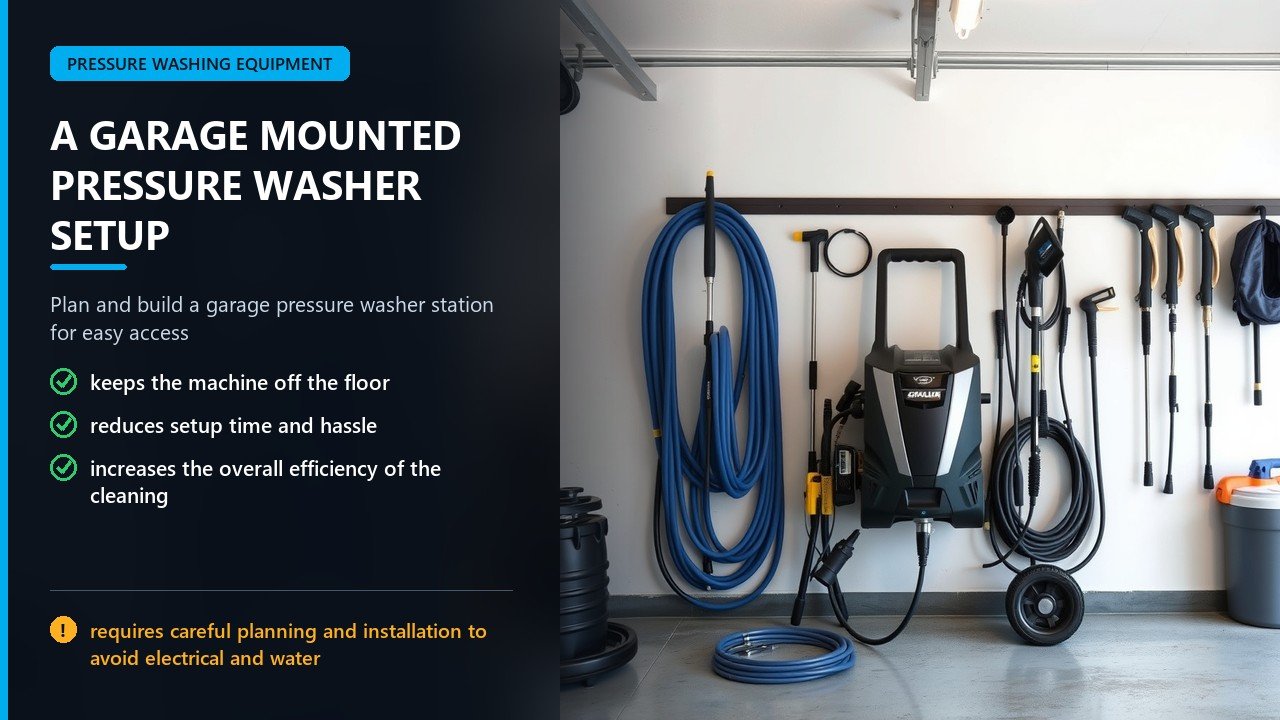
Why Mount a Pressure Washer in the Garage
A garage is the natural home for a pressure washer, and it is usually the only place a permanent installation makes sense for a homeowner who wants the station out of the weather. It is sheltered from weather, close to cars and concrete, and usually has power and a water tap. Mounting the machine keeps the floor clear, protects it from being kicked or buried, and puts the controls where you can reach them. The result is a machine you actually use.
A fixed setup also speeds every job. With the washer mounted, a hose reel on the wall, and nozzles on a rack, you connect one quick-couple, switch on the supply, and start cleaning in under a minute. That convenience is the entire point of mounting. It removes the friction that makes people skip washing their car.
There is a practical payoff too, and an aesthetic one. A machine kept off the floor is less likely to be damaged, and a coiled hose is far less likely to be crushed underfoot and replaced early. A tidy wall of equipment looks intentional and keeps the garage easier to park in and work in. Our guide to getting the machine and gear off the floor covers the broader benefits of a wall setup.
Wall Mount vs Floor Cart in a Garage
You can mount a pressure washer on the wall or keep it on a cart, and each suits a different garage. A wall mount saves floor space, keeps the machine dry and above splashes, and pairs naturally with a hose reel. A cart is easier to move to the driveway or the back yard and needs no drilling or framing.
If your garage is tight or you mostly wash in or near it, a wall mount wins. If you clean all over the property and want one machine to roam, a cart is more flexible. Some owners do both: a mounted machine for the garage bay and a portable unit for elsewhere. Neither is wrong, but the mount rewards anyone who values a permanent, ready station.
| Factor | Wall Mount | Floor Cart |
|---|---|---|
| Floor space | Frees the floor entirely | Occupies a footprint |
| Weather protection | Stays up and dry indoors | Exposed unless stored |
| Portability | Fixed in one place | Rolls anywhere |
| Setup speed | Fastest when wired and plumbed | Needs rolling out and hookup |
| Best for | Tight garages and heavy home use | Whole-property cleaning |
| Install effort | Needs a sound mount and planning | None beyond assembly |
For the wall option, a purpose-built bracket or a reinforced mount gives the cleanest result. Our guides to the best wall-mounted washers and to choosing a pressure washer mount help you match the hardware to the machine.
Planning the Location: Power, Water, and Drainage
Before you drill, plan the spot. Put the washer near a power outlet and a water tap so you are not running long cords or hoses across the floor. Leave room to reach the controls and the connections. Keep the machine high enough to stay clear of puddles but low enough to reach comfortably.
Think about where the water goes. Washing a car in the garage sends runoff toward the door, and you want it to drain out rather than pool around the machine. Keep the floor around the machine dry so fasteners and electrical parts do not corrode and so you do not slip, and keep a squeegee and broom near the station for quick cleanup. A slight slope toward the door or a floor drain helps. If your garage slopes the wrong way, wash just outside the door with the machine mounted just inside.
Plan the hose and cord runs too. A hose reel mounted between the machine and the door keeps the high-pressure line off the floor, and a cord routed along the wall avoids trip hazards. Our guide to adding a hose reel shows how to lay out the run.
Ventilation and Exhaust for Gas Machines
If your pressure washer runs on gasoline, ventilation is not optional. Gas engines produce carbon monoxide, an odorless gas that can kill in a closed space. Never run a gas pressure washer inside a closed garage. Run it with the door fully open and the machine positioned to vent exhaust outside, or better, run it outdoors and keep only the hose routed inside.
Even with the door open, position the exhaust so fumes do not drift back into the space. Never idle a gas washer in a closed garage to warm it up. If you must run it in the doorway, keep the machine pointed outward and stay aware of airflow. Carbon monoxide is the single most serious garage hazard with pressure washers.
Electric machines have no exhaust, which makes them the safer choice for a fully enclosed garage. If your station is indoors with the door closed, an electric washer is the only sensible option. Our guide to electric wall-mounted washers shows what those machines offer.
| Machine Type | Indoors (door closed) | Indoors (door open) | Best Garage Use |
|---|---|---|---|
| Electric | Safe | Safe | Enclosed garages, indoor bays |
| Gas (petrol/diesel) | Never – carbon monoxide risk | Only with exhaust vented outside | Outdoors or open-door wash bays |
Note: Carbon monoxide from a gas engine is colorless and odorless, and it can build to deadly levels in minutes. Even with the garage door open, never run a gas pressure washer if the exhaust can drift back inside. When in doubt, run the machine outdoors and keep only the hose and water line indoors.
Water Supply and Freeze Protection
Feed the washer from a nearby tap with a short, kink-resistant supply hose, and add a quick-connect at the machine so hooking up takes seconds. A shutoff valve at the tap lets you cut the water when finished without walking to the main. Keep the supply hose off the floor to avoid trips and damage.
Freeze protection matters in cold climates, even in a garage that stays mostly above freezing. Water left in the pump, hose, or gun can freeze and crack metal or split seals. In winter, either drain the machine after each use or move it to a heated space. A wall-mounted unit in an unheated garage needs winterizing, and the tap feeding it should be protected too.
For garages without a convenient tap, a water tank and pump can feed the washer and free you from plumbing. Our guide to a pressure washer tank setup explains how to run without a fixed supply, and our fuel and storage guide covers protecting a gas machine in the off-season.
Electrical Outlets and Cords
Electric pressure washers draw real current, so use a proper outlet, ideally a GFCI-protected one, and never run them from a light-duty extension cord. A long thin cord drops voltage and can overheat, starving the motor and risking a fire. If you need an extension, use a heavy-gauge cord rated for the machine’s amperage and keep it as short as possible.
Mount the outlet so the plug sits above splash height, and keep connections out of puddles. A switched outlet or a dedicated circuit makes the station cleaner and safer. For a permanent setup, having an electrician add a GFCI outlet near the machine is money well spent.
Route cords overhead or along the wall so they never lie in water. Never let a cord run through a doorway where it can be pinched or cut. Our setup guides for wall-mount electric installation cover the electrical side in more detail.
Note: A long, thin extension cord is one of the most common causes of electric pressure washer failure. It drops voltage, makes the motor run hot, and can melt the plug. If you truly need an extension, use a heavy-gauge one rated above the machine’s amperage and keep the run short. A dedicated GFCI outlet near the washer is the safer long-term choice.
Hose Reels, Guns, and Line Runs
A hose reel is the finishing touch that makes a garage station effortless. Mount the reel on the wall between the machine and the door, sized for your hose, and use a short jumper hose from the pump to the reel. When you finish, the hose winds in and disappears instead of snaking across the floor.
Keep the gun and nozzles on a wall rack or in a tray near the reel so everything is together. A foam cannon, a surface cleaner, and spare nozzles fit neatly on hooks. This organization is what separates a real wash station from a pile of gear, and it protects your tools from being stepped on or lost.
Match reel, hose, and fittings as a system so nothing chokes the flow. Our guides to choosing a hose reel and to adding a reel to your machine help you size the run.
Storage for Chemicals and Gear
Store detergents, soaps, and chemicals off the floor and out of direct sunlight, ideally in a closed cabinet or on a high shelf. Keep them away from the washer’s intake and from any ignition source, and never store fuel near a hot machine. Label everything and keep safety data sheets for anything harsh.
Hang hoses to drain rather than coiling them wet, which breeds mold and shortens life. Store nozzles and fittings in a tray so they stay clean and findable. Keep a small maintenance kit, spare O-rings, a fuse, and a nozzle pick, near the station so small fixes do not stall a job.
A tidy storage zone keeps the garage safe and the equipment ready. Label shelves, keep like items together, and put the things you use most at eye level. Our fuel and storage guide covers keeping gas machines healthy when they sit, and the reel guides show how to keep hoses draining and out of the way.
Commercial Garage and Wash-Bay Mounts
For a business, a garage mount often means a wash bay with a heavy-duty wall-mounted or skid machine. These setups are built for continuous use, with metal pumps, larger supply lines, and often hot water, and they are designed to be serviced in place. The mounting is sturdier and the plumbing and drainage are engineered, but the principles are the same as a home station.
A commercial bay also needs proper ventilation for hot-water burner exhaust, robust drainage, and safe electrical service. The payoff is a fast, repeatable wash process that keeps vehicles moving. Our guide to commercial wall-mounted washers covers the wash-bay class.
If your operation moves between sites, a skid or trailer may beat a fixed mount. Our guide to choosing between wall, skid, and trailer helps match the mount to the work.
Choosing the Right Machine for a Garage Station
The machine you mount matters as much as where you mount it. For an indoor garage, an electric washer is usually the best fit: no exhaust, quieter, and easy to wire. Look for a model with a metal pump and a proper pressure hose if you will use it often. Compact wall-mount units are designed for exactly this job.
If you need more power and can run the machine at the door or outdoors, a gas washer with a cart may suit heavy concrete and multi-car cleaning. For a fixed indoor station, though, electric keeps the air clean and the setup simple. Match the pressure and flow to your work rather than overbuying, and favor serviceable parts.
| Need | Suggested Machine | Approx. Pressure |
|---|---|---|
| Rinsing cars, bikes, patio furniture | Compact electric wall-mount | 1,500-2,000 PSI |
| Home driveways and sidewalks | Mid-range electric or gas | 2,500-3,200 PSI |
| Heavy, repeated concrete cleaning | Gas machine run at the door | 3,200-4,000 PSI |
| Business wash bay | Commercial wall or skid unit | 3,000-4,000+ PSI, often hot water |
A major retailer’s pressure washer range, such as the Grainger pressure washer category, shows how features and durability scale with price, which helps you set a realistic budget for a station.
Building the Station Step by Step
Start by choosing and marking the location, checking that the outlet and tap reach without long runs. Shut off power and water before you work. Locate wall studs or solid concrete, because a pressure washer is heavy and vibrates, and fasten the mount into structure, not just drywall.
Mount the bracket, then lift the machine into place and secure it. Connect the water supply with a shutoff valve and a quick-connect at the machine. Wire the electrical connection to a GFCI outlet and confirm the cord routes clear of water. Add the hose reel, then hang the gun and nozzles on their rack.
Prime and test the machine with a short run, checking every connection for leaks and watching for vibration at the mount. Adjust anything loose before you clean for real. A few minutes of testing now prevents a failed mount or a burst fitting later.
Choose fittings and hoses that match as a system so the flow and pressure stay consistent. A supplier such as Pressure Wash Supply carries the reels, jumpers, and couplings that keep a fixed station sealed and serviceable.
Commercial Wash Bays and Machine Choices
For a business, a garage or bay mount is usually a commercial unit built for continuous duty. These machines pair metal pumps and heavy frames with hot-water burners and robust plumbing, and they are meant to be serviced in place. Hot-water units clean faster and cut grease, which suits fleets, dealerships, and food-service equipment.
A commercial layout needs engineered drainage, proper ventilation for burner exhaust, and safe electrical service sized to the load. Brands such as Hotsy hot-water pressure washers are built for this duty. The principles match a home station, just at a larger scale and with stricter safety requirements.
If your work moves between sites, a skid or trailer may beat a fixed bay. Our guide to choosing between wall, skid, and trailer helps match the mount to the operation.
Detergents, Nozzles, and Gear to Keep on Hand
Stock the station with what each job needs. A car soap that flows through a foam cannon, a concrete or deck detergent, and a degreaser cover most work. Keep the right nozzles for each task, a surface cleaner for flat areas, and brushes for agitation. Having it all at the wall turns a big job into a quick one.
Store chemicals off the floor and away from heat and the machine’s intake. Never mix cleaners or decant fuel indoors, and label every bottle. Keep a spill kit and a rag supply nearby so a drip never becomes a hazard, and keep fuel in an approved container well away from any ignition source or hot engine. Safe storage is part of a good wash bay.
Because a fixed station uses hoses hard, buy quality and keep a spare. Our hose and reel guides show how to size and protect the line, and keeping one backup hose on the wall has saved many a job.
Keeping the Garage Setup Clean and Maintained
Use this checklist to build and then look after the station. Checking each item keeps the setup safe and ready.
| Checkpoint | Why It Matters | How Often |
|---|---|---|
| Secure wall bracket and fasteners | Prevents the machine falling or vibrating loose | After install, then twice a year |
| GFCI outlet and heavy-gauge cord | Prevents shock and motor damage | Every use |
| Inlet filter and supply hose | Keeps grit out and flow strong | Monthly |
| Hose, gun, and quick-connects | Stops leaks and burst failures | Every use |
| Drainage and dry floor | Prevents pooling, slips, and corrosion | After each wash |
| Freeze protection | Prevents cracked pump and split seals | Before each frost |
Maintain the station as you would any washer. Check the inlet filter, inspect hoses for wear, and test the quick-connects for leaks. Change the oil and service the pump on gas models, and protect the machine from freezing in winter. Keep the area around the washer dry and clear so it stays safe to use.
Wipe up spills promptly, sweep runoff toward the drain or door, and keep the floor free of cords and hoses that could trip you. A dry, tidy bay is a safe bay, and it keeps the machine and its fasteners from corroding. Small upkeep keeps the whole station reliable season after season.
Treat the mount as part of the machine. A secure bracket, a sound outlet, and protected plumbing are what let the washer do its job. Check the mount for looseness whenever you service the machine, and tighten any fastener that has worked loose from vibration. Get these basics right and the garage becomes the best place in the house to clean anything.
Frequently Asked Questions
Can I mount a pressure washer in my garage? Yes, as long as it is secure, powered safely, fed with water, and drained of runoff. Gas machines must be run with the door open or outdoors because of exhaust.
Is it safe to run a gas pressure washer in a garage? Only with the door fully open and the exhaust vented outside, ideally not at all. Never run a gas washer in a closed garage because of carbon monoxide.
How high should I mount a pressure washer? Mount it above splash height but within easy reach, usually a comfortable working height where you can see the controls and access the connections without a ladder.
Do I need a floor drain for a garage wash bay? It helps. Without one, slope runoff toward the door or wash in the doorway so water does not pool around the machine and equipment.
How do I keep a mounted washer from freezing? Drain the pump, hose, and gun after use in cold weather, protect the supply tap, or move the machine to a heated space for the winter.
Can I use an extension cord with an electric pressure washer? Only a heavy-gauge cord rated for the machine’s amperage and kept as short as possible. A thin, long cord can overheat and damage the motor.
How much wall space does a garage pressure washer station need? A compact setup needs roughly a width of wall for the machine, plus a spot for the hose reel and a rack for the gun and nozzles. A single bay of clear wall is usually plenty.
What PSI should a garage pressure washer be? About 1,500 to 2,000 PSI electric covers cars and light cleaning, while 2,500 to 3,200 PSI suits driveways and heavier grime. Choose by the work, not the biggest number.
Do I need hot water for a garage wash station? Hot water cleans faster and cuts grease, which helps commercial bays and heavy grime. For home car washing, cold water with good soap is usually enough.
How do I stop hoses and cords from tangling in the garage? Mount a hose reel and route cords along the wall or overhead. Keeping both off the floor prevents trips, kinks, and damage, and makes every job faster.
Should I mount the washer on drywall? No. Fasten the bracket into wall studs or solid concrete, because a pressure washer is heavy and vibrates. Anchors into drywall alone cannot hold it safely.
Final Thoughts
A garage mounted pressure washer is less about the bracket and more about building a complete, ready station. Put the machine where power, water, and drainage make sense, choose electric for enclosed spaces, mount a reel and organize the gear, and protect everything from freezing. Do that and every wash starts in seconds instead of a scavenger hunt.
Start with the location and the safety basics, then add the conveniences that fit your space and budget. Even a simple installation, a bracket, a short supply line, and a reel, transforms how often you clean. You do not need a full commercial build to enjoy the benefit; you just need the machine wired, plumbed, and within easy reach. Whether you build a simple wall station or a full commercial wash bay, the goal is the same: a clean, safe, always-ready setup that makes washing easy enough to do often.