How to Carry Power Tools by the Case, Belt, or Bag
Knowing how to carry power tools by the right method protects your body, your equipment, and your work rate. Hauling a heavy drill, saw, or impact driver the wrong way strains your back, damages the tool, and slows you down. Carrying it the right way keeps you safe and productive.
This guide covers the main ways to carry power tools, from factory cases and tool bags to belts, vests, carts, and hands-free options. It explains how to choose a method for the job, how to balance the load, how to transport tools in a vehicle, and how to keep batteries and cords safe while you move.
Why How You Carry Tools Matters
Power tools are deceptively heavy, and the cost of carrying them badly adds up. Repeatedly lifting a heavy tool by one handle, or holding it at arm’s length, stresses your shoulder, back, and wrist. Poor carry habits cause fatigue, reduce accuracy, and lead to injury over time.
Carrying tools well also protects the tools. Dropping a drill or banging a saw against a ladder damages housings, batteries, and precision parts. A proper case, bag, or belt absorbs knocks and keeps the tool where you expect it, ready for the next task.
Note: If a tool is too heavy or awkward to carry safely by hand, use a cart, a bag, or a second trip. No job is worth a back injury, and a strained muscle can sideline you for weeks. Plan the carry the same way you plan the work.
Carrying Power Tools in a Case
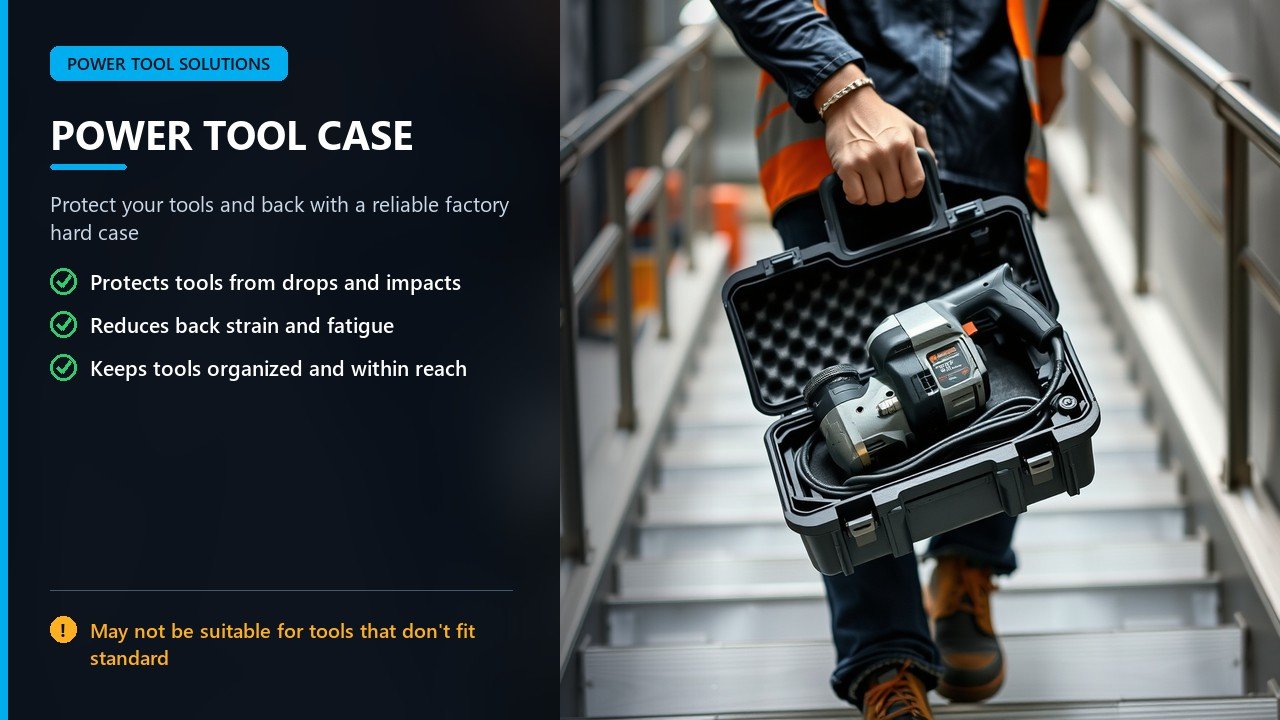
Factory hard cases are designed around a specific tool, so they protect it and carry comfortably. Most have a moulded handle and often a place for the charger, battery, and manual. For a single expensive tool such as a rotary hammer, the matching case is the best everyday carrier.
A hard case protects against impact, dust, and moisture, which matters on rough sites. The trade-off is bulk and weight, and a case holds only what it was built for. For a small set of tools, a case each may be impractical, and a bag becomes the better choice.
| Carrier | Best For | Trade-offs |
|---|---|---|
| Hard case | One valuable tool | Bulk, single-tool |
| Tool bag | Several tools and bits | Less impact protection |
| Tool belt | Tools in constant use | Limited to light tools |
| Cart or trolley | Heavy or many tools | Needs firm ground |
Carrying Power Tools in a Bag
A tool bag carries several tools plus batteries, chargers, and accessories in one load. Open-top bags are easy to load, while closed bags protect better from rain and dust. A bag with a padded shoulder strap lets you carry more comfortably and keep a hand free.
Pack heavier tools at the bottom and lighter items above, and keep the weight close to your body. Use internal pockets and dividers so tools do not bang together, which damages finishes and batteries. A well-packed bag is faster to work from than a pile of loose tools.
| Bag Type | Strength |
|---|---|
| Open tote | Fast access, roomy |
| Zippered bag | Dust and weather protection |
| Backpack | Balanced, hands-free carry |
| Rolling bag | Heavy loads, less lifting |
A rolling bag is a smart choice when you carry a lot of weight between sites, since it takes the load off your shoulders. On uneven ground, though, a backpack or shoulder bag is easier. Our guide to hand tools in electricity work applies the same think-about-the-job approach to the tools themselves.
Carrying Tools on a Belt
A tool belt or pouch keeps the tools you use constantly within reach, so you are not bending down or climbing for them. Belts suit light tools and fasteners: a driver, a tape, a level, or a handful of screws. Distribution across the belt spreads the weight around your waist.
Keep the belt balanced, with weight on both sides, and avoid overloading it, since a heavy belt puts pressure on your hips and lower back. A padded belt and suspenders help for all-day wear. Reserve the belt for the tools you reach for most, and leave the rest in a bag or cart.
Note: Do not carry a heavy power tool loose in a belt pouch where it can slip out and fall. A dropped drill can injure a foot and destroy the tool. Use a holster or a lanyard point for heavier tools, or leave them in a bag until needed.
Vests, Harnesses, and Holsters
Tool vests distribute weight across the shoulders and chest, which is easier on the body than a heavy belt. They suit work at height or in tight spaces where a bag would catch. A holster or a dedicated clip holds a power tool securely and frees both hands between tasks.
For work at height, a lanyard and a proper attachment point keep a tool from falling if you drop it. This protects people below and saves the tool. Never improvise a lanyard from a cord or a wire, and always anchor to a rated point on the tool.
Carts, Trolleys, and Wheeled Loads
When the load is heavy or the distance is long, a cart or trolley is the answer. A wheeled stack of tools, batteries, and materials lets you move an entire workstation in one trip, saving your back and your time. This is common on larger sites.
Choose a cart rated for the load, with wheels suited to the ground. Pneumatic tyres roll over rough ground and thresholds, while hard wheels roll easily on smooth floors. Load the heaviest items low and centred, and secure the load so it does not shift as you move.
| Surface | Best Wheels |
|---|---|
| Finished floors | Hard or soft rubber casters |
| Rough ground | Pneumatic tyres |
| Stairs | Stair-climbing trolley |
Our guide to turning a tangle into a tool with a cart shows how a wheeled setup works in a different trade, and the principle carries over to any heavy tool load.
Hands-Free Options
There are times when you need both hands and the tool must come along. A shoulder strap, a chest harness, or a clip-on holster lets a tool ride with you hands-free. Battery-powered tools are especially well suited to this, since there is no cord to manage.
Clip a compact tool to a belt loop or a rated clip when you are climbing or carrying materials, and keep the heavier tools in a bag or on a cart. Hands-free carrying keeps your grip free for ladders, rails, and loads, which is safer on any job site.
Transporting Power Tools in a Vehicle
How you carry tools between sites matters too. In a vehicle, loose tools slide, roll, and rattle, which damages them and can become a projectile in a sudden stop. Use cases, bags, or a secured tote, and keep heavy items low and restrained.
| Vehicle Storage | Benefit |
|---|---|
| Stacked cases | Protection and order |
| Lockable box | Security on site |
| Lashing points | Stop movement in transit |
| Battery separation | Reduce short and fire risk |
Keep batteries separate from metal tools and out of direct sun, since heat and short circuits damage cells. Use a lockable box or a secure area to deter theft, and keep heavy cases low in the vehicle so they cannot become projectiles in a sudden stop.
Carrying Batteries, Cords, and Chargers
Batteries, cords, and chargers travel with the tool, and they need care too. Store batteries in a cool, dry place and carry them in a dedicated bag so terminals cannot contact metal. Cords for corded tools should be coiled properly rather than wrapped around the tool body, which damages the insulation.
| Item | Carry Tip |
|---|---|
| Battery packs | Bag them, terminals clear of metal |
| Cords | Coil loosely, do not wrap around tool |
| Chargers | Protect from damp and impact |
| Bits and blades | Organized case, not loose in a pocket |
Organizing the small parts makes carrying easier and safer. A bit case, a blade holder, and a pouch for fasteners keep sharp or small items from causing injury or getting lost. A little order in the bag saves time on every job.
Note: A shorted lithium battery can overheat and catch fire, so never carry loose batteries among metal tools, keys, or screws. Use terminal covers or a battery bag, and check packs for damage before charging them.
Ergonomics of Carrying Tools
Carry heavy loads close to your body, with the weight over your feet, and keep your back straight as you lift. Use your legs, not your back, and avoid twisting while loaded. Split a heavy load into two lighter trips rather than one straining lift.
Alternate sides with a shoulder bag to avoid loading one side all day, and take breaks. For long carries, use a cart. Good ergonomics are not a luxury on a job site; they are what keeps you working tomorrow without pain.
Choosing the Right Carry Method
Match the method to the job. A single tool and a short walk calls for a case or a holster. Several tools across a site call for a bag or a cart. Constant use at one spot calls for a belt or vest. The right choice depends on distance, weight, and frequency.
| Situation | Best Method |
|---|---|
| One tool, short distance | Hard case or holster |
| Several tools, walking site | Tool bag or backpack |
| Constant use in one spot | Belt or vest |
| Heavy load, long distance | Cart or trolley |
| Work at height | Holster plus lanyard |
Owning a few carriers covers most needs: a good bag, a belt, and a cart handle the majority of jobs. Our guides to battery handheld tools and to a wheeled tool cart show how carrying choices shape how a job feels.
Common Mistakes When Carrying Tools
The most common mistake is carrying too much at once, which strains the body and risks dropping something valuable. Make two trips. The second mistake is carrying a tool by its cord or battery, which damages the connection and can break the casing.
People also carry tools loose in a truck bed or car, where they slide, knock together, and get stolen. Others overload a belt or skip a lanyard at height. Each of these is easy to fix with the right carrier and a little planning before the job begins.
Note: Never lift a power tool by its power cord, and never carry a cordless tool by the battery. Both put stress on the weakest connection in the tool. Grip the tool body or the handle, and use a bag or case for anything heavy.
Protecting Tools While You Carry Them
Carrying is also about protection. A tool that bumps against others or hits the ground loses accuracy and may fail. Use padded compartments, keep sharp blades covered, and separate tools so they cannot knock together. The carrier should absorb small impacts so the tool does not have to.
Cover blades and bits before carrying, both to protect the tool and to protect you. A loose saw blade or drill bit in a bag can cut through the fabric or your hand. A simple blade guard or bit case removes that risk and keeps edges sharp.
Note: Never carry a power tool by its cord, hose, or battery. These are not handles, and using them as one damages the connections and can cause a fall or a shock. Grip the tool’s own handle, and let the cord hang free or use a cord hook.
Carrying Tools Up Ladders and Stairs
Ladders and stairs are where carrying goes wrong. Keep three points of contact on a ladder and use a hoist line, a tool belt, or a bag hung from the ladder to move tools up. Do not climb with both hands full, and never carry a tool in a way that blocks your grip on the rails.
For stairs, keep one hand free on the rail and carry a balanced load in the other, or use a bag over the shoulder. Take one trip for the tool and another for the material if needed. A little patience on the climb prevents a serious fall.
| Situation | Safe Approach |
|---|---|
| Up a ladder | Hoist line or ladder bag |
| Down stairs | Free hand on rail |
| At height | Holster plus lanyard |
| Long climb | Split into trips |
Weather and Site Conditions
Weather affects carrying. Rain makes a tool slippery and can reach the battery and motor, so keep tools in a bag or case and dry them before storage. Cold makes batteries weaker and handles harder to grip, so wear gloves and keep batteries warm until use.
On a rough or muddy site, choose a carrier that keeps tools clean and a cart that can roll over uneven ground. A little planning for conditions keeps tools working and reduces cleanup at the end of the day. Site conditions are part of the carry decision, not an afterthought.
Organizing a Tool Bag
An organized bag saves time and protects tools. Put the heaviest tools at the bottom and the lightest on top, keep frequently used items near the opening, and group small parts in pouches. A place for everything means you can find a tool without emptying the bag.
| Position in Bag | What Goes There |
|---|---|
| Bottom | Heavy tools |
| Middle | Hand tools and drivers |
| Top | Bits, blades, fasteners |
| Side pockets | Tape, pencils, small parts |
Pack the bag for the job, not for everything you own. A lighter, focused load is easier to carry and quicker to work from. Rethink the bag after each job so it stays efficient rather than becoming a heavy catch-all. Our guide to choosing safe hand tools pairs well with an organized carry setup.
Setting Up a Tool Belt
A good belt is balanced and not overloaded. Put the tools you use most on the side of your dominant hand, and counterweight the other side so the belt sits level. Use a padded belt for long wear, and suspenders if the load is heavy.
Adjust the belt to sit on your hips, not your waist, and tighten it so it does not slide. Keep heavy tools in a holster rather than a loose pouch. Review the belt before each job and remove anything you will not use, since every extra tool adds weight.
Carrying Cordless vs Corded Tools
Cordless tools carry easily because there is no cord to manage, which makes them ideal for moving around a site. Corded tools offer constant power but demand care with the cord as you move, so they suit fixed work near an outlet. Choose by how much you move.
For corded tools, use a cord hook or a cord carrier so it drags behind rather than snagging, and never carry the tool by the cord. For cordless tools, carry spare batteries in a bag and keep used ones separate so you can track your charge. Each type has its own carry routine.
| Type | Carry Advantage |
|---|---|
| Cordless | No cord, easy to move |
| Corded | Constant power, needs cord care |
Preventing Theft and Loss
Power tools are valuable and attractive to thieves, so carrying well includes carrying securely. Keep tools in a lockable box or a locked vehicle when not in use, and never leave a bag unattended on a site. Marking or engraving your tools helps recovery if they are stolen.
At the end of a job, count the tools back into the bag rather than leaving them scattered. A simple inventory habit stops tools being left behind and makes a missing item obvious. Losing a tool is expensive; losing a whole bag is worse.
Caring for Your Carriers
Bags, belts, and cases take a beating, so look after them. Empty and clean a bag regularly to remove dust and grit, check the straps and zips for wear, and repair or replace a broken buckle before it fails under a full load. A worn strap can drop a heavy bag.
Keep hard cases clean and check the hinges and latches. Store carriers dry, since damp fabric rots and promotes rust on the tools inside. Small care extends the life of the carrier and keeps it protecting the tools you paid for.
Weight Limits and Safe Lifting
Know your limits. Lifting a heavy bag with a rounded back or a twist is how most tool-carrying injuries happen. Bend at the knees, keep the load close, lift smoothly, and do not twist while loaded. If a bag feels too heavy, it is.
Split loads, use wheels, or ask for help. No deadline justifies a back injury. A cart, a second trip, or a lighter per-trip load all protect you. Safe lifting is a habit, and it keeps you working season after season.
Note: If you feel strain or pain while lifting a loaded bag or case, stop immediately and set it down safely. Pushing through a lift is how minor strains become serious injuries. Adjust the load, use a cart, or get assistance.
Buying a Tool Bag, Belt, or Cart
Buy carriers built for the load you actually carry. Look for reinforced stitching, heavy-duty zips, and a base that resists wear. A cheap bag that splits at the seams is false economy when it drops your tools. A well-made bag or belt lasts for years.
Try a belt or vest on before buying if you can, because fit decides comfort. For bags, check the strap and the shape of the opening. For carts, check the wheels and the load rating. Buying from reputable sellers helps, including the wide ranges at Grainger, Wiha Tools, and Amazon.
Building a Complete Carry Kit
A complete kit covers most situations without weighing you down. A good tool bag, a belt for close work, a cart for heavy loads, and a couple of holsters and lanyards will handle home projects and job sites alike. Add only what each job needs.
| Kit Item | Purpose |
|---|---|
| Tool bag or backpack | General carrying |
| Tool belt | Tools in constant use |
| Cart or trolley | Heavy or bulky loads |
| Holster and lanyard | Work at height |
| Battery bag | Safe battery transport |
Keep the kit organized and ready, and carrying tools stops being an afterthought. A few well-chosen carriers make every job easier and safer, and they protect the tools you have invested in. Our guide to using a cart to tame a load shows the payoff of getting the carrier right.
Frequently Asked Questions
What is the best way to carry power tools? Match the carrier to the job. A hard case or holster suits one tool over a short distance, a tool bag or backpack suits several tools around a site, and a cart suits heavy loads or long distances. For work at height, use a holster and a lanyard.
Is it bad to carry a tool by its battery or cord? Yes. Cords and batteries are not handles, and using them as one damages the connections and can cause a fall or an electric shock. Always grip the tool’s own handle and let the cord hang free or use a cord hook.
How do I carry a heavy power tool safely? Carry it close to your body, keep your back straight, and lift with your legs. Split heavy loads into two trips, use a cart for long carries, and never twist while loaded. If it feels too heavy, it is.
Should I use a tool belt or a bag? Use both for different jobs. A belt keeps the tools you use constantly within reach, while a bag carries a larger set between tasks. Keep the belt light and balanced, and put heavy or occasional tools in the bag.
How should I transport power tools in a vehicle? Keep tools in cases or a locked box, stack heavy items low, and secure the load so it cannot move in transit. Carry batteries separately, away from metal and out of direct sun, to reduce short-circuit and fire risk.
How do I carry tools up a ladder safely? Keep three points of contact and move tools with a hoist line, a ladder bag, or a tool belt rather than climbing with both hands full. For work at height, use a holster plus a lanyard so a dropped tool cannot fall on anyone below.
Final Thoughts
Knowing how to carry power tools by the right method protects your body, your tools, and your productivity. The best approach changes with the job: a case for one valuable tool, a bag for a set, a belt for constant use, and a cart for heavy loads. Match the carrier to the task.
Carry heavy loads close, keep the load balanced, cover blades and bits, and take the safe route with ladders and stairs. Keep batteries out of contact with metal, transport tools securely, and look after the carriers themselves. These habits prevent most carrying injuries and accidents.
A few well-chosen carriers turn tool movement from a daily strain into a simple routine. Whatever you carry and wherever you work, the right method keeps you safe, keeps your tools running, and keeps the job moving. Choose the carrier for the job, and it will serve you every day.
Note: Build your carry kit around the jobs you do most, and replace worn straps, buckles, and zips before they fail under load. A tool bag that drops its contents can injure a foot and destroy the tool, so inspect your carriers and keep them in good condition.