How to Pick a Pressure Washer Stand That Keeps Your Machine Steady
A pressure washer stand is the frame or base that holds your machine upright, steady, and portable. It can be the built-in frame the washer came on, an aftermarket cart or caddy you drop the machine into, or a stationary stand that keeps a base-mounted unit off the floor. Get the stand right and cleaning gets easier, because the machine stays stable, the hose and wand have a home, and you can roll it where the work is.
This guide explains what a pressure washer stand is, how it differs from a cart and a wall mount, the types available, and how to choose one for your machine. It also covers materials, wheels, mounting plates, DIY versus ready-made, and the safety and maintenance details that keep a stand solid for years.
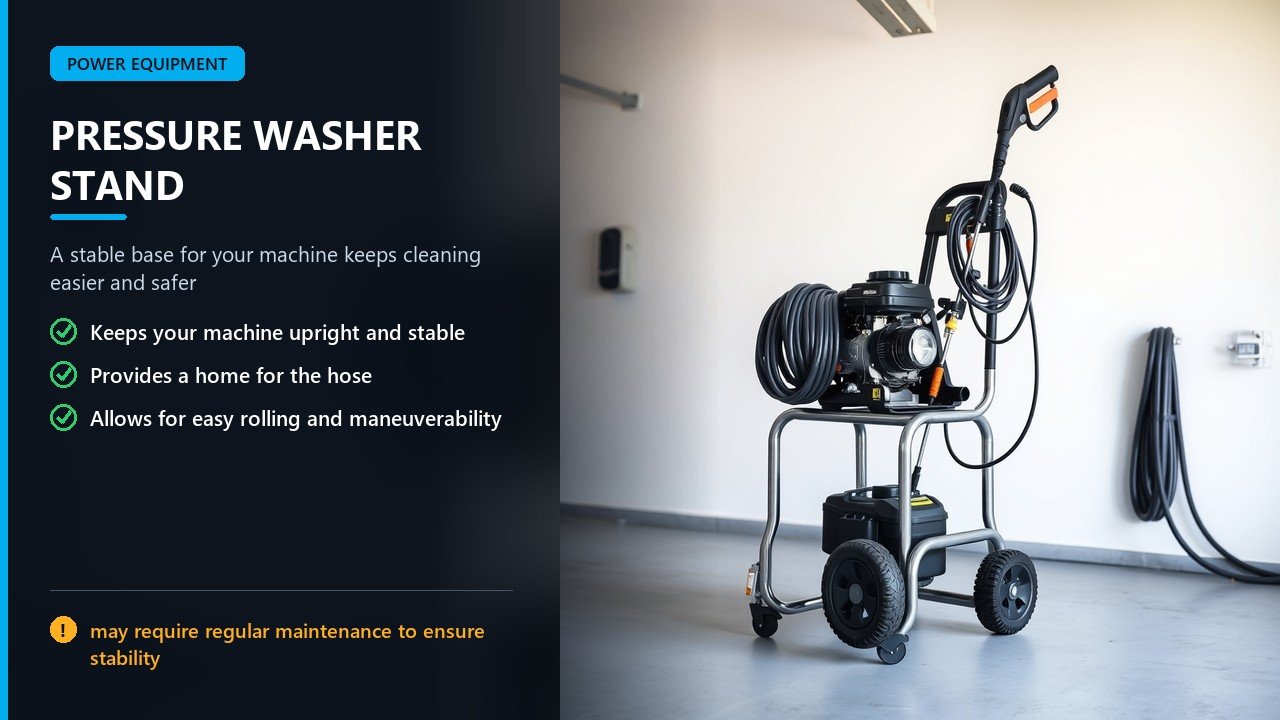
What a Pressure Washer Stand Is
A stand is the supporting structure that gives a pressure washer a stable, upright base. On a consumer machine, it is the molded frame with wheels that the washer sits in. On a base-mounted commercial unit, it is a steel skid or stand that holds the pump and motor. On a DIY build, it is the cart frame you buy or weld to mount your own pump, motor, and accessories.
The stand matters because a pressure washer is heavy, vibrates, and gets pulled by a pressurized hose. A weak or tippy base makes the machine walk, tip, or fall, which can damage the pump and the surroundings. A strong stand with a wide footprint, good wheels, and secure mounting keeps everything planted while you work.
Beyond stability, a stand organizes the whole setup. Most include a handle, a hose holder, and nozzle storage, so the machine, hose, and tips live together. That convenience is why many owners upgrade a flimsy factory frame to a proper stand. Our guide to carts with hose reels shows how far the organization can go.
Stand, Cart, and Wall Mount: What’s the Difference
People use the terms loosely, but they mean different things. A stand is the base or frame that supports the machine, whether or not it rolls. A cart is a stand with wheels and a handle, built for mobility. A wall mount fixes the machine to a wall, keeping it off the floor entirely. Each suits a different situation.
Choose a stand when you want a stable base, a cart when you need to move the machine between jobs, and a wall mount when you have a fixed spot and want to free the floor. Many commercial machines convert between cart and skid (a stationary stand), so one unit can serve both roles. Our guide to whether to choose a wall, skid, or trailer setup maps the options.
In practice, the categories blur. A rolling stand is a cart. A stand with a wall bracket can hang on a wall. The key is to match the form to how you clean: fixed, mobile, or a bit of both. Our pressure washer mount guide covers the decision.
Types of Pressure Washer Stands
The most common is the rolling stand or cart, with wheels and a push handle. It suits anyone who moves the machine around a driveway, shop, or job site. A heavier version uses pneumatic tires for rough ground and casters for tight spaces, and it may include a hose reel and storage bin.
A stationary stand or skid holds a base-mounted machine in one place, often in a wash bay or on a workbench. It does not roll, so it is simpler and very stable. Commercial Karcher HD and similar units ship as a cart that can convert to a skid stand, giving you both. The Karcher HD series brochure shows the cart-to-skid conversion.
A wall stand or bracket hangs the machine on a wall, freeing the floor and keeping it clear of backspray. It suits garages and small shops. Finally, a simple accessory stand holds a foam cannon, gun, or wand at a convenient height so you can grab it quickly during a wash.
Built-In Frames vs Aftermarket Stands
Most consumer pressure washers come with a built-in frame, often molded plastic with small wheels. It works, but it can be light, narrow, and short on storage. An aftermarket stand or cart replaces that frame with a sturdier steel platform, larger wheels, a better handle, and holders for the hose and nozzles.
Upgrading matters most for heavy or frequent use. A weak factory frame flexes, tips on slopes, and rattles loose over time. A proper stand keeps the machine planted and makes moving it easy, which matters when the washer is heavy or the hose pulls hard. The PW210L cart is an example of a purpose-built stand with pre-drilled holes, a wand holder, and a hose holder.
For base-mounted commercial machines, the stand is separate from the pump and motor, so you choose it to match. These stands are steel, powder-coated, and drilled for many pump and motor configurations, with hose and nozzle holders built in. The Comet pressure washer cart shows the commercial style.
Materials and Build Quality
Look for a powder-coated steel frame, which resists rust and stands up to vibration. Cheaper stands use thinner metal or plastic and flex under load. A good stand has welded or heavily bolted joints, not flimsy clips, and a finish that survives water, chemicals, and the outdoors.
The platform should be rigid, with a wide footprint to resist tipping. If the stand holds a heavy gas engine and pump, the base must support that weight without sagging. Check the weight rating and the axle and wheel size, since undersized wheels and axles are the first parts to fail on a cheap stand.
Hardware quality matters too. Stainless or plated bolts resist rust better than plain steel, and rubber grips and feet protect surfaces and reduce vibration. A stand is a long-term purchase, so the few extra dollars for solid construction usually pay off. The Canpump cart frame shows the oversized-wheel approach.
Wheels, Casters, and Stability
Wheels decide how the stand moves. Pneumatic tires roll smoothly over grass, gravel, and curbs, while solid wheels and casters suit smooth concrete and tight shop spaces. Locking casters let you park the stand and keep it from rolling while you work. Match the wheel type to your usual surface.
Stability comes from a wide base and a low center of gravity. A tall, narrow stand tips easily, especially with a full hose pulling sideways. Prefer a stand with a broad footprint, and load it low. If you work on slopes, locking wheels and rubber feet are essential to keep the machine from sliding.
The handle position also affects control. A well-placed handle lets you steer without bending, and a durable one does not flex. When comparing stands, imagine rolling a loaded machine over your worst surface and up a curb; that mental test exposes weak designs quickly. Our pressure washer carts guide covers the rolling details.
Mounting Plates and Accessory Holders
A good stand has a pre-drilled mounting plate so you can bolt on a pump, motor, or the machine itself. Many plates fit a range of configurations, which matters for DIY builds and for converting a static unit to a mobile one. Check the hole pattern against your equipment before buying.
Accessory holders turn a plain stand into a workstation. A wand or lance holder keeps the gun within reach; a hose holder or reel prevents tangles; nozzle holders keep the tips organized. Pre-drilled top holes often let you add a hose reel or a bin later. The PW210L includes a lance holder, a hose holder, and five nozzle holders with grommets.
Think about what you want to carry. If you move between jobs, a stand with a hose reel and a storage bin saves trips. If you work in one spot, simple holders are enough. Our guide to reel types and mounting helps you plan the accessories.
Matching a Stand to Your Machine
Start with the machine’s size and weight, then choose a stand rated for both. Match the mounting plate to your pump and motor, and the wheel type to your surface. Decide whether you need mobility, storage, or pure stability, and pick the form that delivers it. A stand that is too small for the machine is a hazard.
For a consumer electric washer, a light rolling stand with a hose hook is plenty. For a gas machine, choose a heavier steel stand with pneumatic wheels and a wide base. For a base-mounted commercial unit, select a stand drilled for your pump and motor, with room for a hose reel and nozzle holders. The Grainger cart range shows the size and rating spread.
If your machine already has a frame, measure its footprint and mounting points before ordering a replacement. If you are building a machine from parts, pick the stand first, since it sets the mounting geometry. Our guide to building or buying a cart walks through the choice.
Build or Buy: DIY vs Ready-Made
Ready-made stands are designed, drilled, and finished for the job, and they save time. They come with the right wheel sizes, holders, and hardware, and they are proven to work. For most owners, buying is the faster, more reliable path, especially when the stand must fit a specific machine.
A DIY stand can be cheaper and perfectly tailored if you can weld or bolt a frame and want a custom layout. But you must get the geometry, weight rating, and wheel sizes right, and a homemade stand that flexes or tips is worse than no upgrade. Only build if you can match or beat the strength of a commercial stand.
For most people, a quality ready-made stand is the better value once time and safety are counted. Our guide to making a washer mobile and the wheeled machine or trolley guide cover both routes.
Converting a Static Machine to a Mobile Stand
If you have a base-mounted machine on a skid and want mobility, an aftermarket cart converts it in an afternoon. Unbolt the machine from its skid, set it on the new stand’s mounting plate, and bolt it down using the matching holes. Add a hose reel and nozzle holders, and the static unit becomes a rolling station.
The reverse works too: a cart can be locked in place or its wheels removed for a stationary setup. That flexibility is why many commercial stands convert between cart and skid. Check the weight rating and the mounting pattern before you swap, and make sure the base is stable once loaded.
A conversion is a good time to inspect the pump, motor, and fittings, and to route the hose cleanly. Done well, it upgrades both mobility and organization. Our trolley guide covers the practical steps.
Safety and Maintenance
A stand is a safety device as much as a convenience. A tip-prone base can drop a running machine, spilling hot water and fuel or damaging the pump. Keep the footprint wide, lock the wheels when parked, and never overload the stand beyond its rating. Check the fasteners after the first few uses, since vibration loosens bolts.
Maintain the stand by keeping wheels and casters free of debris, watching for rust at welds, and replacing worn tires or bearings before they seize. Store the machine on the stand indoors when possible, and protect it from freezing. A stand that rolls smoothly and sits level makes every job safer and faster.
Follow the same discipline you would with any pressure washer: bleed the system, lock the trigger, and shut down properly. Our mount guide and cart build guide round out the setup.
Stationary Stands for Wash Bays
A stationary stand keeps a machine in one place, which is perfect for a wash bay, bench, or dedicated cleaning corner. Because it does not roll, it can be simpler, heavier, and more stable. Many base-mounted commercial machines sit on a steel skid that bolts to the floor or a bench, and some stands include rubber feet to damp vibration and stop sliding.
Stationary stands suit hot-water and high-PSI machines that stay put and feed a long hose. They also suit wall-adjacent setups where you want the machine off the floor but not mobile. The trade-off is that you cannot take the machine to the work, so you need a hose long enough to reach every job. Our guide to the wall, skid, or trailer choice explains when fixed is best.
A stationary stand should be inspected now and then even though it never moves. Vibration still loosens fasteners, and standing water can rust a frame over time. Check the bolts, keep the base dry, and clear the area around the machine so water and chemicals do not pool around the stand.
Rolling Stands for Mobile Cleaning
A rolling stand adds wheels and a handle so the machine follows you to the work. This suits driveways, parking areas, and job sites where the washer must move. Pneumatic tires handle grass and gravel, casters suit smooth floors, and locking wheels hold the stand in place while you clean.
The best rolling stands balance mobility with stability. A wide wheelbase, a low-mounted machine, and a solid handle keep it from tipping when the hose pulls. A hose reel mounted on the stand keeps the hose off the ground and lets you extend just what you need, which reduces drag and tangles.
For detailing and mobile work, a compact rolling stand with a reel and a storage bin doubles as a full kit. For heavy contractual cleaning, a rugged stand on large wheels carries the machine across rough ground without bogging down. Our carts guide covers the mobility details.
How to Load and Balance a Stand
Load the machine low and centered on the stand so the center of gravity stays as close to the wheels as possible. A top-heavy load tips easily, especially on a slope or when the hose yanks sideways. Keep heavy items like the pump and motor low, and put lighter accessories up top.
Distribute weight evenly so the stand does not lean, and secure the machine to the mounting plate with all the recommended bolts. A machine that shifts while rolling is dangerous. If the stand has a bin, put heavy tools at the bottom and light items up top to preserve stability.
Check the balance with the machine mounted and the wheels unlocked. Roll it a few feet and turn it, watching for wobble or tip. If it feels tippy, lower the load or widen the stance before using it under pressure. Our mount guide covers siting and balance.
Nozzle, Gun, and Foam Cannon Stands
Not every stand holds a whole machine. Small accessory stands hold a foam cannon, gun, or wand at a convenient height so you can grab it mid-wash. These are common in detailing, where you switch between foam, rinse, and blow-dry often and want each tool within reach.
A gun or cannon stand also keeps the tool off the ground, so it is not set down in grit or dropped. Some wall-mounted organizers hold the gun, cannon, and nozzle tips together, keeping the station tidy. These stands pair well with a wall-mounted pressure washer or a rolling cart.
Match the holder to the tool’s size and weight, and mount it where you actually work. A stand at the wrong height is worse than none. Our guide to reel types and mounting helps you plan where each piece lives.
Stand Accessories Worth Adding
A hose reel is the single best stand accessory. It keeps the high-pressure hose coiled, prevents kinks, and lets you extend just enough hose for the job. Mounted on the stand, it moves with the machine and keeps everything together. The cart with hose reel guide shows the payoff.
Nozzle holders keep the quick connect tips organized and within reach, and a small storage bin carries goggles, gloves, and detergent. A jumper hose connects the machine to the reel cleanly. A gun or lance holder keeps the trigger off the ground between passes.
Add accessories in the order you will miss them: hose reel first, then nozzle storage, then a bin. Each one reduces downtime and keeps the station tidy. Our guide to reel types and mounting helps you choose.
Common Stand Problems and Fixes
The most common complaint is a stand that wobbles, usually from loose bolts or an uneven base. Tighten the fasteners and adjust the feet or add a shim. A stand that rusts points to a thin or poorly coated frame; treat the rust and repaint, or upgrade to a powder-coated steel stand.
Wheels that seize or squeal need cleaning and lubrication, or replacement of the bearings. A handle that flexes signals a weak frame that may not survive heavy use. A stand that tips under hose pull is too narrow or top-heavy, so lower the load or widen the stance.
Most stand problems trace to cheap construction or loose hardware, both of which are fixable or avoidable. Buying a solid stand up front prevents most of them. Our build-or-buy guide helps you avoid the weak options.
Understanding Weight Ratings
Every stand has a weight limit, and the machine plus accessories must stay under it. A gas engine and pump can weigh well over a hundred pounds, and a full hose reel and bin add more. Exceeding the rating stresses the frame, sags the axle, and makes the stand tippy, so choose a stand rated comfortably above your loaded weight.
Look at the wheel and axle ratings too, not just the frame. Undersized axles bend under a heavy load, and small wheels bog down and crack. A stand rated for a light electric washer is not suitable for a gas engine, even if the platform looks big enough. Always size up when in doubt, because a stand has to withstand vibration and hose pull, not just static weight.
When comparing stands, check the weight rating, the wheel and axle specs, and the material thickness. Those three numbers separate a stand that lasts from one that fails. Our carts guide explains how frame strength ties to the rolling experience.
Frequently Asked Questions
What is a pressure washer stand? It is the frame or base that holds the machine upright and steady. It can be a built-in frame, a rolling cart, a stationary skid, or a wall bracket, depending on whether you need stability, mobility, or both.
What is the difference between a stand and a cart? A stand is any supporting base; a cart is a stand with wheels and a handle for mobility. A wall mount is a stand that fixes the machine to a wall.
Can I put any pressure washer on a cart? Most machines can go on a suitable stand if the mounting plate matches and the stand is rated for the weight. Check the hole pattern and weight rating before buying.
Are pneumatic wheels better than solid wheels? Pneumatic wheels roll better over grass, gravel, and curbs, while solid wheels and casters suit smooth concrete and shops. Match the wheel to your surface.
Can I mount a hose reel on a pressure washer stand? Yes. Many stands include pre-drilled top holes for a hose reel or bin. A reel keeps the hose off the ground, reduces tangles, and lets you extend only what you need.
Do I need a stand if my washer already has wheels? Only if the factory frame is weak, tippy, or short on storage. A sturdier stand improves stability, mobility, and organization, which is worth it for heavy or frequent use.
What makes a pressure washer stand stable? A wide footprint, a low center of gravity, locking wheels, and solid construction. Load the machine low and centered, and secure it with all the recommended bolts.
How much weight can a pressure washer stand hold? It varies by model, so always check the rating. Choose a stand rated above your machine and accessories, and check the wheel and axle ratings too, since under-sized running gear fails first.
Should I build or buy a pressure washer stand? Buy for reliability and fit; build only if you can match a commercial stand’s strength and geometry. For most owners, a ready-made stand is the better value.
Final Thoughts
A pressure washer stand is the base that keeps your machine stable, organized, and ready. Choose the form that matches how you work, whether that is a steady stationary stand, a rolling cart, or a wall mount, and match it to your machine’s weight and mounting pattern. Built well from powder-coated steel with good wheels, it turns a loose pile of equipment into a solid workstation.
Keep it maintained, respect its weight rating, and service the wheels and fasteners, and your stand will keep the washer planted and mobile for years. It is a simple upgrade with an outsized effect on how easy and safe your cleaning becomes, and it is often the first thing owners improve on a machine that otherwise works well.