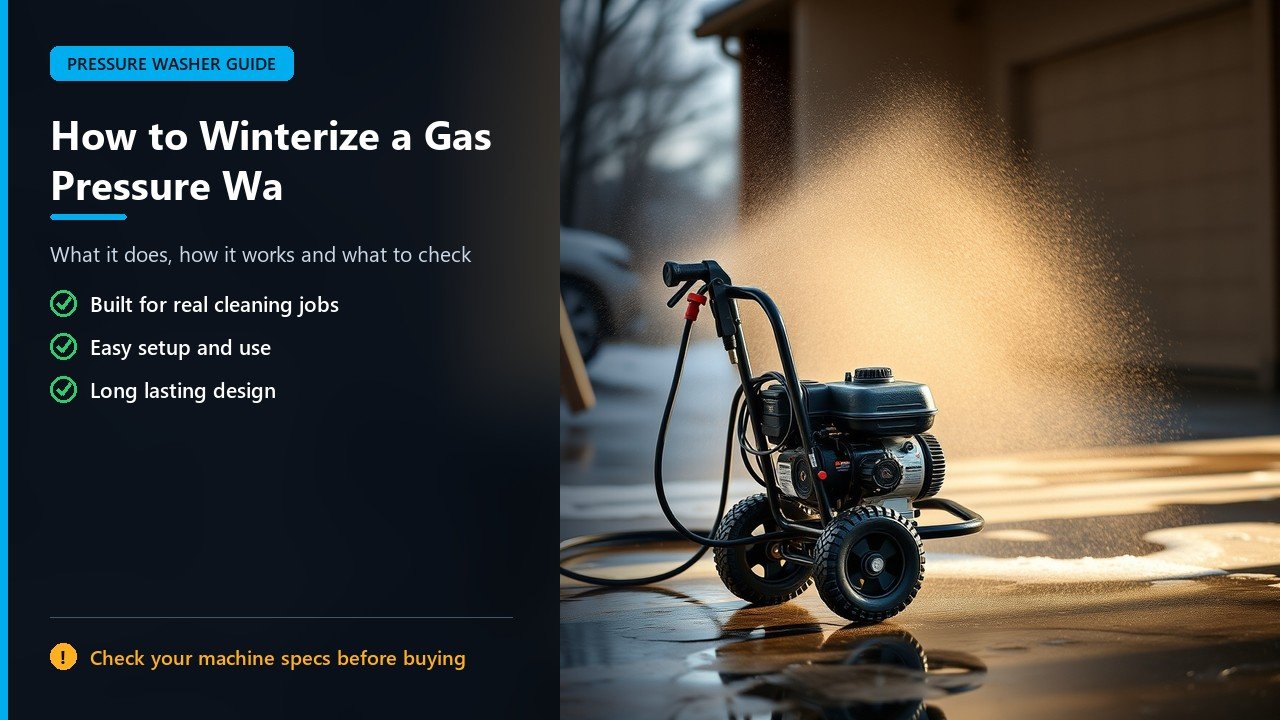
How to Winterize a Gas Pressure Washer So It Starts on the First Pull
Tony’s gas pressure washer was nine years old and had never been serviced. Every spring, he gave it a raw pull, cranking until his arm ached, spraying a fine patter of gas into the air as the carburetor fought for life. One April it simply refused. A carburetor full of varnish and a pump with a hairline freeze crack ended its run for good. The man who sold him the replacement asked one question: “Did you ever do anything to it before winter?” The silence answered for Tony.
A gas pressure washer has two completely separate personalities, a gas engine and a water pump, and winter threatens both of them. Frozen water cracks the pump; untreated fuel destroys the carburetor; stale oil lets a dry engine corrode from inside. Learn how to winterize a gas pressure washer and you protect both halves at once. It takes about an hour, costs a few dollars, and is the single most important routine for keeping a gas machine alive through the off-season and starting on the first pull next spring.
Why Gas Machines Need Their Own Routine
Electric units are simple in winter: drain the water, protect the pump, store it dry. Gas machines add a second machine on top, a small four-stroke engine with fuel, oil, and a carburetor. Each engine component has its own winter failure mode, and they are almost all caused by the same two enemies: untreated fuel and moisture.
- Stale fuel degrades quickly, especially ethanol-blended gas, which is what most fuel sold in the United States contains. It separates, varnishes, and clogs carburetor passages.
- Condensation forms where warm air meets cold metal, rusting cylinders and corroding fuel system parts from the inside.
- Used oil holds combustion acids and moisture, which attack engine bearings and bores during months of stillness.
- Trapped water in the pump freezes and expands, cracking the manifold, valves, and seals.
Manufacturers publish gas-specific winterization procedures for a reason. Briggs & Stratton spells out engine oil, fuel stabilization, and pumping water out in a single routine, and STIHL does the same. Both treat the job as standard, not optional.
When to Winterize a Gas Pressure Washer
Timing is simple: before the first freeze, and before you plan to stop using the machine for more than a few weeks. In most of the United States that means late fall. Do not wait for the forecast to promise a deep freeze, because a single overnight dip is enough to crack a pump full of water. Get it done when the nights start cooling, and you can relax all winter.
If you still use the machine occasionally during cold months, keep it protected between uses. A gas machine that sits unused for two months or more in a cold space needs the full treatment.
The Complete Gas Pressure Washer Winterization
Work in this order so you protect the engine, then the water side, then the machine itself.
Step 1: Run It Warm First
Before any work, run the machine for a minute or two with the water connected, just enough to bring the engine to operating temperature. Warm oil drains faster and carries more contaminants out. This also confirms the machine was running well before storage, which makes spring diagnosis easier.
Step 2: Change the Engine Oil
Old oil is full of moisture and combustion acids. Over winter it sits against internal parts and causes corrosion. If your oil is due, change it now, warm, before storage. Use the oil grade your manual specifies. This step is cheap, takes ten minutes, and removes a whole category of engine failure. If your machine uses a separate pump oil, check and top that off as well, or change it if you suspect water has entered the pump.
Step 3: Stabilize or Drain the Fuel
This is the decision that most affects spring starting. You have two proven paths.
- Stabilize and run: Add a quality fuel stabilizer to fresh fuel in the tank, then run the engine for two to three minutes so the treated fuel reaches the carburetor. Store the tank full to reduce condensation. This is the easiest path for most owners.
- Drain and run dry: Drain the fuel tank completely, then run the engine until it stalls from fuel starvation so the carburetor bowl empties. This is the best path for long-term storage and carbureted machines that sit many months.
Either way, never leave untreated fuel sitting in the tank and carburetor all winter. Ethanol-blended gas simply cannot hold up to months of idle time. For a deeper look at fuel choices and basics, our article on the right gas for a power washer covers what to avoid.
Step 4: Protect the Pump From Freezing
The pump is the water-side twin of the engine. After the machine has cooled, disconnect the garden hose, release pressure through the gun, and drain the pump completely. Then introduce pump saver or a proper pump protector through the inlet and pull the starter several times so the solution circulates through the pump internals. This lubricates seals and pistons and raises the freezing point of any tiny residual film of water. Never use automotive antifreeze, which is toxic and can damage seals.
Step 5: Drain the Hoses, Gun, and Wand
Disconnect the high-pressure hose from both ends and drain it by raising one end. Squeeze the gun trigger and shake out any water. Remove the wand and drain it, then clean and dry the nozzles and bag them separately. Water trapped in a hose splits it from the inside when it freezes, and a hose stored wet may not show damage until it bursts months later.
Step 6: Inspect the Spark Plug and Air Filter
While the engine is accessible, pull the spark plug, inspect it for heavy fouling, and check the gap. A crisp, tan-colored electrode is normal. If the plug is black, oily, or worn, replace it now so spring starts are easy. Check the air filter and clean or replace it if it is dirty. These are ten-minute items that improve starting and smooth running dramatically.
Step 7: Position and Store
Store the machine on a flat surface in a dry, ventilated location above freezing if possible. Keep it away from any flame source, because fuel vapors are flammable. Cover it with something breathable, block it off the floor to reduce moisture and pest access, and store hoses, gun, and nozzles separately. Electric pressure washers can go indoors, but gas units belong in ventilated spaces only.
Cheat Sheet: What Every Gas Machine Needs
| Area | Winter Action | Failure It Prevents |
|---|---|---|
| Fuel | Stabilize and run, or drain fully | Varnished carburetor, no spring start |
| Engine oil | Change before storage | Internal corrosion and bearing wear |
| Spark plug | Inspect, clean, or replace | Weak starts and misfires |
| Air filter | Clean or replace | Restricted air, rough running |
| Pump | Drain fully, add pump saver | Freeze cracks and dried seals |
| Hoses and gun | Drain and store dry | Split hoses and trapped pressure |
| Storage spot | Dry, ventilated, above freezing | Rust, pests, and fuel vapor hazards |
Pump Saver vs Antifreeze for a Gas Machine
For the pump, the safe choices are a purpose-made pump saver (also called pump conditioner or winterizer) or a propylene glycol RV/marine antifreeze. Both displace water, keep seals from drying, and protect against light freezing. If you live in a very cold region, a pump saver with a lower protection point, or an RV antifreeze flush on top of the pump saver, adds margin.
The one thing to avoid is automotive ethylene glycol antifreeze. It protects plumbing but is toxic to people and animals, can damage rubber seals over time, and is not formulated for pressure washer pumps. Our guide on pump saver versus RV antifreeze explains the differences so you buy the right bottle.
Understanding the Small Engine Before You Winterize
It helps to picture what is actually inside the gas-powered half of your washer. Most consumer and prosumer machines use a small four-stroke engine with a carburetor, and knowing what each part does explains why the winter routine looks the way it does.
- Carburetor: mixes air and fuel in the correct ratio. Its passages are tiny, measured in fractions of an inch, which is why varnish clogging is such a common failure. Dried fuel leaves a film that narrows and eventually blocks these passages.
- Fuel tank and lines: store and carry fuel. Ethanol attracts moisture from the air, which can separate and settle in the tank.
- Cylinder and piston: the heart of the engine. Corrosion here comes from condensation and old oil breaking down.
- Crankcase oil: lubricates and cools moving parts. After hours of use it holds acids and water, making it toxic to the engine if left in place for months.
- Spark plug and air filter: the ignition and breathing system. Both get blamed for starting trouble when the real culprit is fuel, but both should be inspected while you are at it.
This is why gas winterization is not just about the pump. The engine has its own set of failure modes, and the routine exists to remove stale fuel, refresh oil, and keep moisture away from every internal surface.
Ethanol: The Quiet Carburetor Killer
Most gasoline sold in the United States is blended with ethanol, usually around 10 percent, and it changes the storage equation completely. Ethanol is alcohol, which does three unfriendly things when left to sit:
- It attracts moisture out of the air, and water in fuel corrodes and separates.
- It evaporates faster than gasoline, changing the fuel’s chemistry and leaving sticky deposits.
- It breaks down the plastic and rubber of fuel lines and seals more aggressively than straight gasoline.
The result is the classic spring scenario: varnish in the carburetor, water in the tank, and a machine that will not start no matter how many times you pull the cord. Fuel stabilizer is formulated to counteract exactly these effects, which is why the stabilizer-and-run method is the single best improvement most owners can make to their storage routine. If you want to dig deeper into fuel choices and what to avoid, our guide on the right type of gas for a power washer is worth a read.
Winterizing the Fuel System in Depth
Let me walk through the fuel system decision so you can choose confidently.
The Stabilize-and-Run Method
Start with a nearly full tank of fresh fuel. Pour in the correct dose of stabilizer, then run the engine for two to three minutes. The goal is to get stabilized fuel all the way through the carburetor and out of the bowl’s spray circuit, because the carburetor is the part that varnishes first. When you shut it down, the entire fuel system is coated in protected fuel. In spring, simply top off with fresh fuel and start as usual.
The Drain-and-Run-Dry Method
For long storage, or if you prefer working on a dry system, drain the tank completely, then run the engine until the carburetor bowl empties and the engine stalls. This leaves nothing to break down. In spring you refill and go. The catch is that a dry fuel system can also let rubber seals dry out, so this method suits machines stored for the shortest or the longest intervals, not everything in between.
Which Should You Choose?
For most owners in a typical climate, stabilize-and-run is simpler and kinder to the engine’s seals. For machines parked for a year or more, draining and running dry, then fogging the engine if the manual allows, is the more thorough path. Either method beats leaving untreated fuel alone.
Long-Term Gas Storage: A Year or More
If a gas pressure washer will sit unused for a whole year or longer, add a few extra steps so the engine is truly preserved.
- Drain the fuel system completely and run the carburetor dry.
- Fog the cylinder with a storage oil if your manual recommends it, to coat cylinder walls against rust.
- Repeat the engine oil change so clean oil is what sits against internal parts.
- Protect the pump generously and top off pump oil.
- Store with the spark plug wire removed and the machine elevated off the floor under a breathable cover.
- Peg a note to the machine summarizing everything you did.
Long-term storage is where most owners get lazy or disorganized, and it is also where the stakes are highest. A labeled winder of maintenance history turns an impossible guess in spring into a five-minute readiness check.
Common Mistakes When Winterizing a Gas Machine
These are the mistakes that turn a simple routine into a spring repair bill.
- Skipping the oil change. Old oil quietly corrodes the engine from inside all winter.
- Leaving untreated gas in the tank. The number one cause of carburetor failure.
- Forgetting the pump. People winterize the engine and then find a cracked pump in spring.
- Running the machine dry too long. A few seconds to purge water is fine; extended dry running damages the pump.
- Using automotive antifreeze. Toxic and seal-damaging. Use pump saver or RV antifreeze instead.
- Storing near a flame source. Fuel vapors are flammable; store away from furnaces and water heaters.
- Storing outside uncovered. Condensation and pests undo all your preparation.
If You Skipped Winterizing and the Freeze Came
If your gas washer sat through a freeze without preparation, do not panic, and do not just pull the cord and hope. Inspect first.
- Check the pump visually for cracks in the housing and around fittings.
- Look at the hoses for damage and confirm the gun releases cleanly.
- Test the fuel. If gas smells sour or the engine will not run right, drain and refill with fresh, stabilized fuel.
- Pull the plug and check the cylinder for signs of moisture or rust if you have reason to worry.
- Listen for new noises on the first run. A knocking pump or surging engine signals internal damage.
Address small issues immediately. A worn seal replaced now is far cheaper than a rebuild discovered on the first big job of the year. If the pump will not build pressure or the engine starts hard, our guides on restoring lost pressure and classic troubleshooting cases will help you narrow it down.
Gas vs Electric Winterizing Compared
| Task | Gas Machine | Electric Machine |
|---|---|---|
| Drain and protect the pump | Yes | Yes |
| Drain hoses, gun, wand | Yes | Yes |
| Stabilize or drain fuel | Yes | N/A |
| Change engine oil | Yes | N/A |
| Spark plug and air filter | Yes | N/A |
| Indoor storage allowed | Ventilated space only | Yes, including basements |
The pump work is identical. Everything beyond that is the engine, and the engine is precisely why gas machines need more attention and reward it with a far longer working life when cared for.
Spring Checklist for a Gas Pressure Washer
Once the routine is done, spring is only a few steps away.
- Inspect for cracks, corrosion, and pest damage.
- Reconnect hoses and check every joint for leaks before full pressure.
- Flush the pump with fresh water to clear the pump saver.
- Add fresh, stabilized fuel if needed, and check engine oil.
- Test the spray and confirm steady pressure and a clean pattern.
- Listen and watch for anything unusual during the first minute of running.
If the machine fires up on the first or second pull and holds steady pressure, your winterization worked, and you are free to enjoy the season.
A Real Winter in a Cold Garage
To see why every step matters, follow one machine through a Minnesota winter. A homeowner runs the annual routine in October: fresh stabilized fuel, a warm oil change, a drained and protected pump, dry hoses curled on a shelf, and the machine parked under a breathable cover in an unheated garage. Temperatures drop to minus twenty in January. In March, the garage thaws.
Spring comes and the owner pulls the cord. Second pull, it fires. Pressure is steady off the gun. The hoses look new. The only surprise is how easy it was. Meanwhile, an identical machine across the street, also bought the same year, spent the winter with a half tank of untreated gas, water in the pump, and no cover. In March it refuses to start, sprays weak, and needs a carburetor clean plus a pump rebuild. Same climate. Same age. Wildly different outcomes, and the difference was entirely in the hour of preparation each machine received the previous fall.
Cold itself does not randomly destroy equipment. It destroys unprepared equipment. Garages in freezing climates are survivable for a well-winterized gas pressure washer, provided the fuel, oil, and pump are in the right state and the machine is protected from moisture and pests. The routine works precisely because it removes the two things freezing aggravates: water and stale fuel.
A Few Tools Worth Owing
You do not need a workshop to winterize a gas pressure washer, but these items make the job faster and cleaner.
- An oil drain pan and funnel. For the warm oil change and refill.
- A fuel can labeled for stabilized gas. Ends the “is this tank old?” guessing game.
- A small pump saver bottle and a roll of cardboard or tape. Clean this-up during the pump protection step.
- A plug wrench and gap gauge. For the spark plug check.
- Breathable machine cover and a shelf. For proper placement.
- A marker and labels. So the machine tells you its own story next spring.
None of these is exotic, and together they fit in one drawer. Owning them means you will actually do the routine every fall instead of improvising.
Frequently Asked Questions
Can I store a gas pressure washer with a full tank?
Yes, if the fuel is fresh and treated with stabilizer. A full tank reduces condensation. If you prefer, drain the tank completely and run the carburetor dry; both methods are correct as long as you commit to one.
Is automotive antifreeze okay for the pump?
No. Use a pressure washer pump saver or a propylene glycol RV/marine antifreeze. Automotive ethylene glycol is toxic and can damage seals.
Do I need to change the oil every year before storage?
If the oil is near or past its change interval, yes. Even if it looks clean, used oil contains moisture and acids that accelerate corrosion during long idle periods. Many owners simply change it annually with the winterization routine.
Should I disconnect the spark plug for storage?
Removing the plug wire is a safe habit that prevents accidental starts and hard you a chance to inspect the plug. On long-term storage, some manuals recommend it. It cannot hurt.
Can I run my gas pressure washer in winter?
Yes, you can use it in cold weather as long as you are careful to drain and protect it after every session. What you cannot do is let water freeze inside the pump or let untreated fuel sit idle for months.
The Bottom Line
Learning how to winterize a gas pressure washer is the skill that separates owners who replace machines every few years from owners who pass the same machine down. You are protecting two machines at once: a small engine that dies quietly from stale fuel and old oil, and a pump that dies violently the night the water inside it turns to ice. Give the engine stabilized fuel, fresh oil, a clean plug, and a dry, ventilated place to sleep. Give the pump drained water and protective winterizer. That is the entire job, and it costs less in an hour than a single pump repair. Do it once, and spring becomes a first-pull victory instead of a tow to the shop.