A neighbor of mine bought a pressure washer almost a decade ago because it had a Kohler engine, and at the time I admit I thought he was paying for a name. Then I watched that machine start on the second pull in twenty-degree weather, run flawlessly every spring and fall for years, and outlast two of the bargain machines that came and went around it. That experience is why so many experienced buyers search specifically for a kohler pressure washer. It is not the brand of the washer that matters nearly as much as the engine bolted to it, and Kohler has earned a reputation among small engines that makes a used machine with one worth a second look.
If you are shopping for a pressure washer, considering a used one, or just trying to understand why some machines are described as “Kohler-powered,” this guide explains what Kohler engines bring to a pressure washer, which machines use them, how they compare to Honda and Briggs and Stratton, and how to keep one running for years.
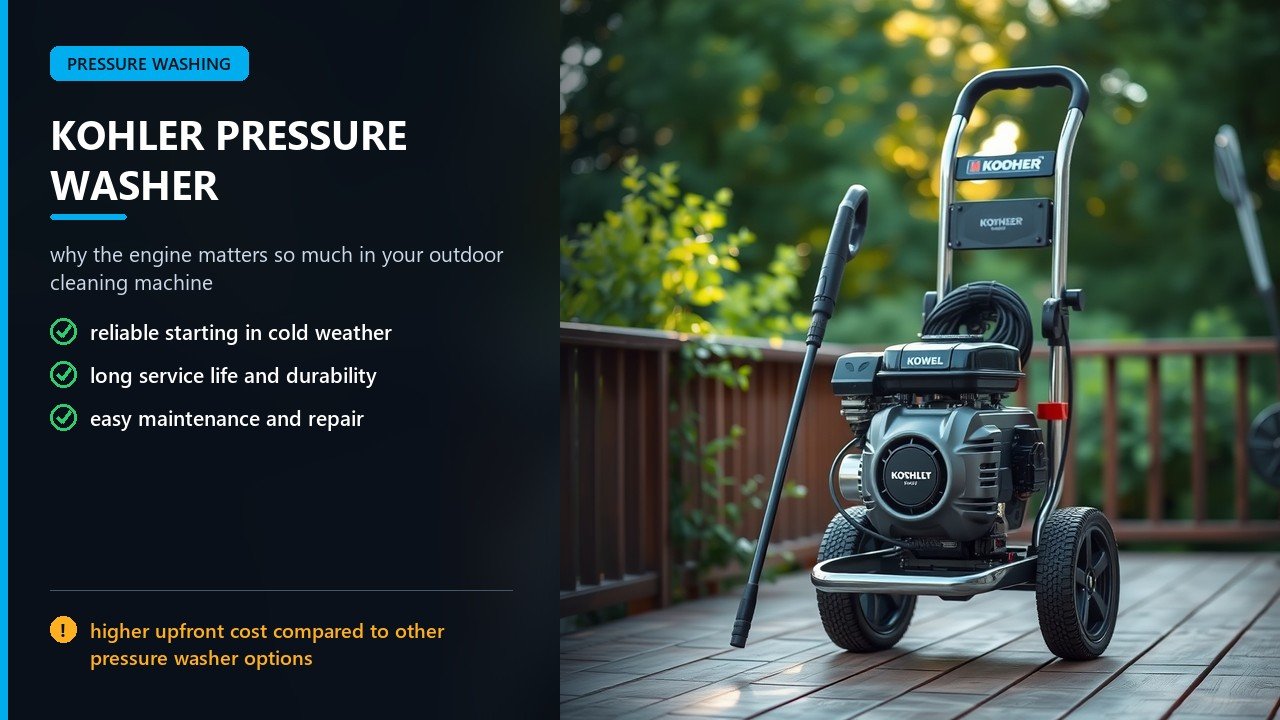
What Is a Kohler Pressure Washer
To be precise, Kohler is an engine manufacturer, not primarily a pressure washer brand. When you see a pressure washer advertised as a Kohler machine, it means the pressure washer builder installed a Kohler engine to drive the pump. That is a common arrangement in the outdoor power equipment world, where washers from various brands may use Honda, Kohler, Briggs and Stratton, or their own in-house engines.
The distinction matters because the engine is the most expensive and most failure-prone part of a gas pressure washer. A great pump and frame on a weak engine is a machine that frustrates you. A strong, reliable engine on a decent pump and frame is a machine that works for years. When buyers specifically seek out a Kohler pressure washer, they are actually seeking the reliability and serviceability that the Kohler name implies.
Kohler engines are known for durability, torque, and starting reliability. They are used in everything from pressure washers to generators, mowers, and small industrial equipment. That broad use is an advantage, because it means parts and service knowledge are widely available.
Kohler Engine Families You Will Encounter
Kohler has produced several engine families over the years, and knowing the names helps you evaluate a machine. You can browse current models and specifications on the official Kohler Power engines website to match an engine to its service and parts information.
Command series. A well-regarded professional and heavy-duty line, often used in commercial equipment. Command engines are known for durability and are frequently found on higher-end machines. Parts and service are widely available.
Courage series. A consumer and light-commercial line that appeared on many residential mowers and pressure washers. Courage engines are capable for homeowner use, though some variants developed a reputation for valve and head issues if maintenance was neglected. Condition and maintenance history matter more than the name here.
Kohler 7000 series and other modern families. Kohler has continued to develop engines with updated designs, including vertical and horizontal shaft models. Some of these appear on newer equipment and offer improved efficiency.
The exact engine on any given pressure washer depends on the model and year. What matters is that Kohler builds engines capable of long service with proper care, and that the brand’s ubiquity means you can find parts, filters, and service almost anywhere.
Why the Engine Matters So Much
People focus on PSI and GPM when they shop, and those numbers matter. But the engine determines whether the machine starts when you need it and whether it survives years of seasonal use.
A reliable engine gives you consistent power, easy cold starts, and predictable fuel economy. An unreliable one gives you hard starts, rough running, and the dread of pulling a cord fifty times. On a pressure washer, which often sits unused for months between jobs, starting reliability is especially important, because a machine that will not start is worthless no matter how good its specs are.
The engine also determines serviceability. A widely used engine like a Kohler means air filters, spark plugs, carburetor parts, and ignition components are easy to find, and any small engine shop can work on it. That keeps maintenance simple and repairs affordable, which extends the machine’s life far beyond what a cheap, hard-to-service engine would allow.
Finally, the engine affects resale value. A pressure washer with a recognized engine brand holds value better than an off-brand machine, because buyers know they can maintain and repair it. That is part of why experienced buyers seek out engines like Kohler and Honda specifically.
Kohler vs Honda vs Briggs and Stratton
How does Kohler compare to the other common engine brands you will find on pressure washers? Each has strengths, and the best choice often comes down to condition and maintenance rather than brand alone.
Honda. The gold standard for small engines in many buyers’ minds, especially the GX series. Honda engines are known for exceptional reliability, easy starting, and long life. They are often found on premium pressure washers and command a price premium. Parts are widely available.
Kohler. A close competitor with a strong reputation for durability and torque. Kohler engines are common on both residential and commercial equipment, and their broad use means good parts availability. Many users find them every bit as reliable as Honda when maintained properly.
Briggs and Stratton. The most common small engine brand overall, with a huge range from basic consumer engines to professional lines. Parts are ubiquitous and cheap, and service is easy. Reliability varies by line, with the professional series being far more durable than the entry-level engines.
| Engine Brand | Reputation | Parts Availability | Typical Use |
|---|---|---|---|
| Honda | Exceptional reliability, smooth starting | Excellent | Premium and commercial washers |
| Kohler | Durable, strong torque | Excellent | Residential to commercial |
| Briggs and Stratton | Wide range, variable by line | Excellent | Entry to professional machines |
The practical conclusion is that all three can serve well, and the deciding factor is usually condition and maintenance history. A well-maintained Kohler will outperform a neglected Honda, and vice versa. When shopping used, inspect the engine’s condition rather than relying on the badge alone.
Which Pressure Washers Use Kohler Engines
Kohler engines appear on a wide range of pressure washers across brands. You will find them on residential gas machines, commercial units, and various models from manufacturers who use multiple engine suppliers. Because the same washer brand may use different engines across its lineup and over the years, the engine is tied to the specific model and production year, not the brand as a whole.
When you see a listing for a Kohler pressure washer, confirm the exact engine model, the pump type, and the machine’s overall condition. The combination of a good Kohler engine and a durable triplex pump is a strong foundation. A Kohler engine on a machine with a cheap axial cam pump may still clean well, but the pump is likely to be the weak link. Ask about the pump as carefully as the engine.
Performance and What to Expect
Kohler engines power washers across a range of pressure and flow ratings, so performance depends on the specific machine rather than the engine brand alone. What the engine contributes is reliable power delivery that lets the pump produce its rated pressure and flow consistently.
In practice, a well-tuned Kohler engine starts easily, runs smoothly under load, and holds its speed as you clean. If you notice surging, hard starting, or loss of power, those are maintenance issues rather than design flaws, and they are usually addressed with basic engine service. A clean air filter, fresh oil, a properly gapped spark plug, and clean fuel go a long way toward keeping any engine running well.
One advantage of a strong engine is the ability to drive a demanding pump without bogging down. On a machine with high pressure and flow, the engine must be matched to the pump’s demand. When the engine and pump are well matched, the machine performs consistently and lasts. When they are mismatched, the engine struggles or the pump is underused.
Maintenance That Keeps a Kohler Running for Years
The reliability that makes Kohler engines desirable depends on maintenance. Neglect will kill any engine, and Kohler is no exception.
Change the oil. Follow the manufacturer’s interval, using the correct oil grade for your climate. Fresh oil is the single most important factor in engine longevity. For pressure washer pump oil, use the exact spec, as covered in our guide to what type of oil goes in a pressure washer pump.
Service the air filter. A clogged air filter causes rich running, hard starting, and power loss. Clean or replace it regularly, and more often in dusty conditions.
Check and replace the spark plug. A worn or fouled plug causes hard starting and rough running. Replace it per the schedule and verify the gap.
Keep fuel fresh. Stale fuel is the enemy of small engines. Use fresh fuel, add a stabilizer for storage, and drain the system before long storage. Old fuel gums up carburetors and causes the hard-starting problems that plague seasonal equipment.
Maintain the carburetor. If the engine surges or will not idle, the carburetor likely needs cleaning. This is a common issue after storage with old fuel.
Keep the cooling system clean. Air-cooled engines need clean cooling fins and unobstructed airflow. Debris and grass buildup cause overheating.
| Task | Frequency | Why It Matters |
|---|---|---|
| Engine oil change | Per manual, often seasonal | Prevents wear, the top longevity factor |
| Air filter service | Regular, more in dust | Prevents rich running and power loss |
| Spark plug | Per schedule | Ensures reliable starting and smooth running |
| Fuel treatment/storage | Before storage | Prevents gummed carburetor and hard starts |
| Cooling fin cleaning | Seasonally | Prevents overheating |
Troubleshooting Common Kohler Engine Issues
Most engine problems on a pressure washer trace back to a few causes. Understanding them saves time and money.
Will not start. Check for old fuel first, then spark, then air. A fouled plug, stale gas, or clogged carburetor are the usual suspects. Verify the fuel valve is open and the choke is set correctly.
Starts then dies. Often a fuel delivery issue, such as a partially clogged carburetor or a dirty fuel filter, or a fuel cap vent that is blocked.
Surging. A classic sign of a lean condition, usually from a dirty carburetor or an air leak. Clean the carburetor and check gaskets.
Loss of power under load. Could be a clogged air filter, old fuel, a worn plug, or a pump issue creating excessive load. Check the engine first, then the pump.
Overheating. Usually blocked cooling fins, low oil, or extended running in extreme conditions. Clean the cooling system and check the oil.
Buying a Kohler Pressure Washer
If you are shopping, whether new or used, focus on the whole machine while giving the engine the attention it deserves.
Confirm the engine model. Look at the engine label to identify the exact model and series. This tells you about parts availability and service need.
Check the pump. A triplex pump with an oil bath is the durable choice. Match the pump type to your workload, because the pump is often the first major component to fail.
Start it cold. A cold start reveals more than a warm one. If it starts and runs smoothly from cold, that is a good sign. If it needs excessive pulling or runs rough, expect carburetor work.
Inspect for leaks and abuse. Check the engine for oil leaks, the pump for oil condition, and the frame for rust and damage.
Ask about maintenance. Records of oil changes and service indicate a well-kept machine. A neglected engine may still be reliable, but it will need immediate attention.
Consider parts support. Kohler’s broad use means parts are easy to find, which is a real advantage for long-term ownership. Confirm the specific engine’s parts are available before buying an unusual or discontinued model.
How the Engine, Pump, and Frame Work Together
A pressure washer is a team, and the Kohler engine is only one member. Understanding how the parts interact explains why some Kohler machines last a decade and others fail early.
The engine turns a shaft that drives the pump. The pump pressurizes water and sends it to the gun. The frame and tank hold everything together and channel water and fuel. The engine’s job is to deliver consistent torque at the right speed so the pump can produce its rated pressure and flow. If the engine is undersized or struggling, the pump never reaches its potential. If the engine is strong but the pump is cheap, the pump fails regardless of how good the engine is.
The frame matters more than people think. A rigid frame resists the vibration that engines produce, which reduces wear on engine mounts, fasteners, and plumbing. A flimsy frame lets everything shake, and vibration accelerates failure across the whole machine. That is why a well-built pressure washer with a Kohler engine feels solid and lasts, while a cheap frame with the same engine feels loose and falls apart.
When you evaluate a Kohler pressure washer, think of it as a system. A reliable Kohler engine, a durable triplex pump, and a rigid frame form a machine that will serve for years. Any weak link drags down the whole rig, so evaluate all three before you commit.
New vs Used Kohler Pressure Washers
Because Kohler engines are associated with durability, they are common in the used market and can offer strong value. Understanding the tradeoffs helps you decide.
A new machine gives you warranty coverage, fresh components, and no unknown history. You pay full price, but you get predictable reliability. For a business or a homeowner who wants peace of mind, new is a reasonable choice. The engine will be current, and parts and service will be straightforward.
A used Kohler machine can be a bargain, especially if the previous owner maintained it well. Because the engine is a known quantity, a used machine with a healthy Kohler engine often has years of life left, and you can save a substantial amount compared to new. The risk is the unknown: a tired pump, a clogged carburetor from old fuel, or hidden wear. The way to manage that risk is inspection and testing. Start it cold, check the oil, listen for unusual noise, examine the pump, and ask about service history. A well-kept used Kohler machine is one of the best values in pressure washing, while a neglected one can cost you more than you saved.
One rule applies to both new and used: match the machine’s pressure and flow to your actual work. Buying more machine than you need wastes money on fuel and maintenance, while buying too little leaves you struggling on hard jobs.
Real-World Ownership Scenarios
Seeing how a Kohler-machine performs in different hands makes the value concrete.
The homeowner with a seasonal routine. This person cleans a driveway, patio, and siding a few times a year. A Kohler-powered machine with a durable pump serves for many seasons with basic maintenance. Starting reliability after months of storage is the key benefit, and fresh fuel plus an oil change each spring keeps it dependable.
The part-time cleaner starting a business. Reliability and uptime matter most. A Kohler machine that starts every time and holds up to frequent use lets a new business build a reputation without equipment delays. Pairing it with a good pump and a reasonable pressure and flow rating covers most residential and light commercial jobs.
The small operation running daily. At this level, a commercial-grade machine with a strong engine and triplex pump is essential. Daily use exposes weaknesses fast, and the combination of a durable Kohler engine and a robust pump is what keeps a crew working. Maintenance discipline becomes non-negotiable.
The budget buyer on the used market. Someone willing to inspect carefully and do minor service can buy a used Kohler machine for far less than new and get years of service. The keys are a cold start test, a pump inspection, and a willingness to replace a carburetor or spark plug to bring the engine back to health.
Seasonal Storage for a Kohler Machine
Most pressure washer failures happen not during use but after storage. Protecting a Kohler machine before winter is what keeps it reliable next season.
Drain all fuel from the engine and carburetor, or add a fuel stabilizer and run it through the system so the stabilized fuel reaches the carburetor. Old fuel that sits and gums is the leading cause of hard starting in spring. Change the engine oil before storage, because used oil contains contaminants that can corrode internals over the winter. Remove the spark plug and add a few drops of oil to the cylinder, then pull the starter slowly to distribute it. Clean the cooling fins and the air filter. Protect the pump by running a pump protector or antifreeze through it and draining water from the hoses, gun, and lines, because trapped water freezes and cracks components. Store the machine in a dry, protected location, and cover it if it must sit in a shed. Do all of this and a Kohler machine will start easily when the weather warms.
Quick Note: The two things that kill stored pressure washers are old fuel in the carburetor and water freezing in the pump. Address both before storage and you eliminate the most common springtime failures.
Kohler Pressure Washer: Frequently Asked Questions
Is a Kohler engine good for a pressure washer? Yes. Kohler engines have a strong reputation for durability, torque, and starting reliability, and they are widely used across residential and commercial equipment with good parts availability.
Is Kohler better than Honda? Both are excellent, and both can last for years with proper maintenance. The deciding factor is usually the specific engine’s condition and maintenance history rather than the brand name.
What oil does a Kohler engine use? Kohler specifies particular oil grades and service classifications for its engines. Consult the owner’s manual or the engine label for the correct oil, and remember the pump uses its own separate oil.
Why won’t my Kohler pressure washer start? The most common causes are old fuel, a fouled spark plug, or a clogged carburetor after storage. Check fuel, spark, and air in that order.
How long do Kohler engines last? With regular maintenance and proper storage, a Kohler engine can last many years. Neglect, especially stale fuel and skipped oil changes, shortens its life dramatically.
Are Kohler parts easy to find? Yes. Because Kohler engines are used across many types of equipment, air filters, spark plugs, carburetor parts, and service knowledge are widely available.
Final Verdict on Kohler Pressure Washers
A kohler pressure washer is worth considering because the engine is the part that most determines whether a gas pressure washer is a reliable tool or a seasonal headache. Kohler engines have earned their reputation through years of service in demanding equipment, and their widespread use means parts and service are rarely far away. When you buy a Kohler-powered machine, you are buying the confidence that it will start when you need it and last far longer than a bargain engine would.
The key is to evaluate the whole machine, not just the badge. Pair a good Kohler engine with a durable triplex pump, inspect the machine’s condition, start it cold before you buy, and keep it maintained with fresh oil, a clean filter, a good spark plug, and stabilized fuel. Do that, and a Kohler pressure washer will reward you with years of dependable cleaning, whether it is the first machine in your garage or the faithful workhorse you relied on for a decade.