Every spring, the same phone call comes into small engine shops across the northern states. A customer pulled the pressure washer out of the garage after a long winter, hooked up the hose, started the engine, and heard a strange groaning followed by water spraying from the pump housing. The diagnosis is almost always identical: the pump froze over the winter, and the first start finished the job. The repair costs more than the machine’s winter care ever would have, and the warranty almost never covers it.
Freeze damage is the most predictable, most preventable, and most expensive mistake in pressure washer ownership. The good news is that a few dollars of the right pressure washer pump antifreeze and fifteen minutes of work in the fall stand between you and a cracked pump in the spring. The bad news is that not all antifreeze is safe for a pressure washer, and the wrong choice quietly damages seals instead of protecting them.
This guide explains why a pump cracks, which antifreeze belongs in it, how to winterize with it step by step, and how to bring the machine back to life safely in the spring. It is the routine that separates machines that last a decade from machines that last a season.
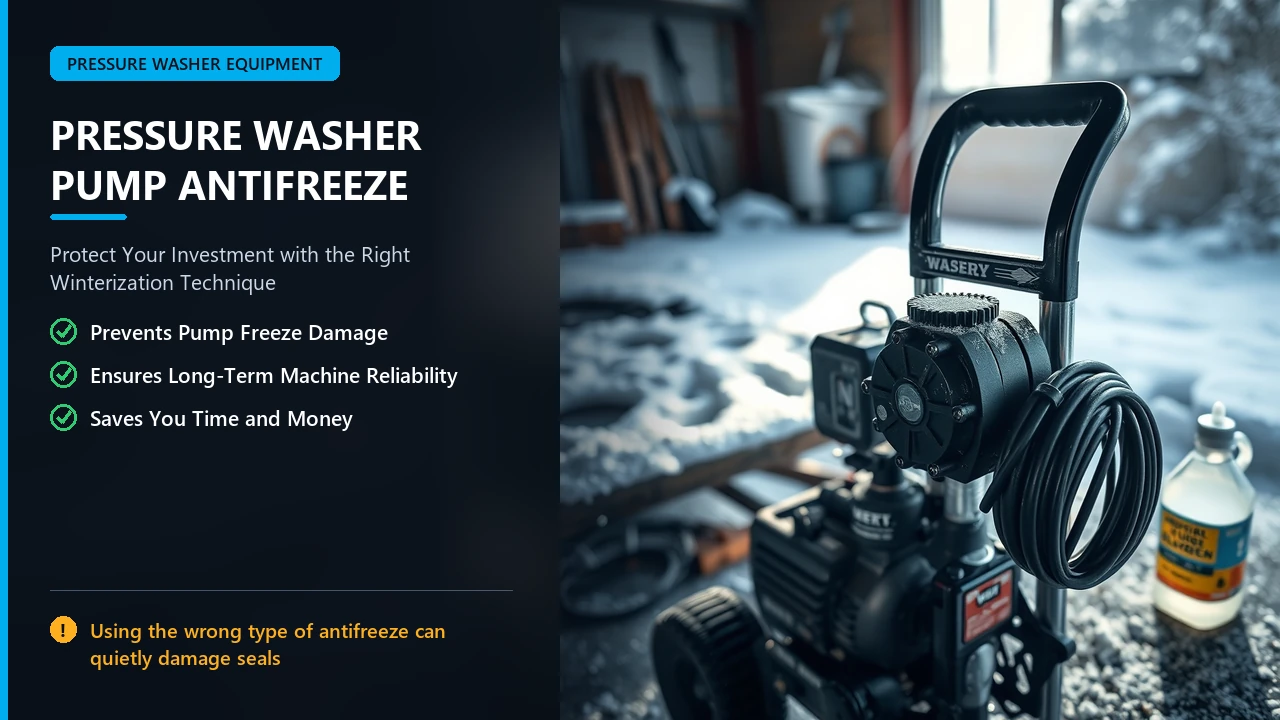
Why Water Cracks a Pump
Water does something unusual when it freezes: it expands. Unlike almost every other common liquid, water becomes less dense as it solidifies, which is why ice floats. Inside a sealed pump, that expansion has nowhere to go. As the water in the pump head, check valves, and unloader turns to ice, it pushes outward against metal and plastic with enormous force. The result is cracked housings, split manifolds, blown seals, and bent valves.
The damage is rarely obvious from the outside. A pressure washer pump can look perfectly fine, freeze solid, thaw quietly, and only reveal the crack when you put it under pressure for the first time. That delayed reveal is what catches owners off guard. It is also why some manuals warn bluntly that freeze damage is not covered under warranty, no matter how new the machine is.
The fix is not complicated. You have to remove the water, or replace it with a liquid that does not expand when it freezes. Antifreeze does the second job, and it does it while lubricating the internal rubber and metal parts that sit idle all winter.
Why the Right Antifreeze Matters
“Antifreeze” is a broad word, and the three common types behave very differently inside a pressure washer. Choosing the wrong one can do the same slow damage as leaving water in, only quieter.
Propylene glycol is the ingredient you want. It is non-toxic, non-flammable, and it acts as a lubricant rather than a solvent, which means it protects O-rings, seals, and plastic check valves while the machine sits. It is the base of the pink and blue RV and marine antifreeze sold at hardware stores, and it is what most equipment makers recommend, including Mi-T-M, which specifies environmentally safe antifreeze in its official winterizing guidance.
Ethanol-based antifreeze is the budget tier. It depresses the freeze point and costs less, but grain alcohol dries out rubber seals over a full winter of contact, it is flammable, and it leaves a lingering smell that takes multiple flushes to clear. For a machine you want to start clean and easy in the spring, it is a false economy.
Methanol-based windshield washer fluid is the one to avoid entirely, even though it is cheap and easy to find. Methanol attacks rubber gaskets, O-rings, and plastic check valves, which are exactly the components a pressure washer pump depends on. It also evaporates, so any protection fades before the coldest weeks arrive. Using it is a gamble that occasionally pays off and often does not.
| Type | Active Ingredient | Effect on Seals | Verdict for Pumps |
|---|---|---|---|
| RV / marine antifreeze | Propylene glycol | Lubricates, protects | Best choice |
| Ethanol antifreeze | Grain alcohol | Dries out rubber over time | Use only if nothing else is available |
| Windshield washer fluid | Methanol | Attacks gaskets and check valves | Avoid |
| Automotive engine coolant | Ethylene glycol | Harsh, toxic, wrong chemistry | Avoid |
Scan the label before you buy. You want to see propylene glycol listed, and you want a burst protection rating at least as low as the coldest temperature your storage space sees. A garage that hits twenty below zero needs the lower-rated product, not the standard one. The Crystal Clean product page for propylene glycol based winterizing fluid shows how burst protection is quoted and why the rating is the number that matters.
Burst Protection Explained in Plain Language
The label on a jug of RV antifreeze almost always mentions two things: freeze point and burst protection. They are not the same number, and confusing them leads people to buy the wrong strength.
Freeze point is the temperature at which ice crystals first start forming in the fluid. The mixture becomes slushy, but the slush is still moveable and has not expanded enough to break anything.
Burst protection is the lower temperature at which the fluid solidifies hard enough that it could push a pipe or a pump housing apart. This is the number that actually protects your machine. A jug rated for -50°F burst protection is safe in any climate where the actual low stays above -50°F, which covers most of the United States.
| Label Rating | What It Protects To | Where It Is Enough |
|---|---|---|
| Standard RV (-50°F burst) | Roughly -50°F | Most US garages and sheds |
| Heavy-duty (-100°F burst) | Roughly -100°F | Far-north climates, unheated barns |
| Windshield fluid | Varies, evaporates | Not recommended for pumps |
| Drain and air only | Depends on complete removal | Warm climates, short storage |
When in doubt, buy the lower rating. The extra cost is trivial next to a pump replacement, and a margin of safety is exactly what you want when the machine sits unattended for months.
Two Ways to Winterize a Pump
You can winterize with antifreeze, or you can winterize with compressed air. Both work. They suit different owners.
Antifreeze method. You draw propylene glycol into the pump and push it through the whole system until it comes out the wand. The advantage is that the antifreeze lubricates everything it touches and leaves a protective coating on seals and valves all winter. It is the method most manufacturers describe, and it is the one that best protects the internal rubber parts.
Compressed air method. You blow air through the system until no water remains. The advantage is that you do not need to flush antifreeze out in the spring, and there is no fluid to dispose of. The risk is completeness; a trapped pocket of water in a low spot can freeze and crack something. When done carefully, with the machine tilted and each section purged, it works well, and some manufacturers list it as an acceptable procedure.
Many owners in cold climates use antifreeze and consider it the safer default, because even a small leftover pocket of water becomes harmless if the surrounding fluid is glycol. If you plan to store the machine in a heated space, neither method is strictly necessary, but draining is still smart because standing water corrodes internals over time.
Step by Step: Winterizing With Antifreeze
This is the sequence that protects a pump through a hard winter. Work outdoors or in a ventilated area, and have a catch container ready.
Gather your supplies. You need a gallon of propylene glycol antifreeze, a short section of garden hose with a male fitting to draw from a bucket, a container to catch the discharge, and your usual safety gear. The manufacturer procedures for reference are widely available, and the Simpson and other equipment makers publish pump protection products and steps for their own machines.
Run and prime the machine. Start it with water flowing and purge the air until it runs smooth. You want the pump warm and primed so the antifreeze moves through easily.
Shut off the water supply. With the engine still able to run briefly, disconnect the garden hose and let the machine push out most of the standing water. Do not let the pump run dry for long; just enough to clear most of it.
Draw in the antifreeze. Put the short hose into the jug or bucket of antifreeze and restart. With the trigger gun open, the pump will siphon the glycol through the system. Watch the discharge; you are waiting for it to change color to match the antifreeze, which tells you the water has been pushed out.
Cycle the gun. Open and close the trigger a few times, pausing between bursts, so the antifreeze reaches every internal passage and the unloader valve. This is the step people rush, and it is the step that determines whether a pocket of water survives.
Coat and store. Once pure antifreeze is coming out, switch off the machine. Leave the antifreeze inside the pump and lines for the winter. Cap the inlet and outlet to keep insects and debris out, and store the machine upright in a dry place.
Treat accessories too. Drain the hose, the gun, and the wand, and store them where they will not freeze with water trapped inside. A wand full of water splits just as happily as a pump.
Spring Startup: Flushing It Out
Come spring, the antifreeze has done its job and now needs to leave. Flush the system with clean water before you use it for anything, especially if the machine will touch vehicle paint or a surface where residue matters.
Connect the water, run the machine with the trigger open, and let it push fresh water through until the discharge runs clear with no color and no slimy feel. Expect to run a few minutes. If you used propylene glycol, the flush is quick because the fluid is water-soluble and leaves little behind. If you used ethanol-based antifreeze, expect a longer flush and a lingering smell.
This is also the moment to do your spring tune-up: check the engine oil, clean or replace the air filter, inspect the spark plug, and look the whole machine over for the leaks that freeze damage would have caused. Our pressure washer tune-up guide walks through the full pre-season checklist, and the step-by-step winterizing guide pairs with this article for the other end of the season.
Mistakes That Cost a Pump
Using windshield washer fluid. The most common shortcut and the most damaging. Methanol eats the rubber and plastic parts a pump relies on. Skip it.
Assuming a heated garage is safe. Power outages happen. A garage that usually stays above freezing can dip below it during a cold snap or a power failure. Antifreeze is cheap insurance against the exception.
Skipping the gun cycling. If you push antifreeze through without opening and closing the trigger, water hides in the unloader and the gun. Cycle it several times.
Forgetting the accessories. A hose, wand, or gun left full of water freezes and bursts just like the pump. Drain everything.
Not reading the machine’s manual. Hot water units, machines with onboard tanks, and units with chemical injection systems sometimes need an extra step. The manual is the final word for your specific model.
Leaving the antifreeze in all season. Come spring, flush it out. Leaving glycol in a machine that then runs all summer offers no benefit and can leave residue on surfaces you clean.
Disposing of Used Antifreeze
What you flush out in the spring is a mix of water and glycol, and it should not go down a storm drain or onto the ground. Collect it and dispose of it responsibly. Even though propylene glycol is far less toxic than the ethylene glycol in car coolant, the safest habit is to treat used winterizing fluid like any other shop fluid: capture it, label it, and take it to a facility that accepts it. Local rules vary, and state environmental agencies publish the requirements for your area. Following your state’s guidance keeps a routine maintenance task from becoming an environmental problem.
How Cold Is Cold Enough to Winterize
Many owners gamble because they think their storage spot is “probably fine.” The honest rule is simple: if the space where the machine sits can reach freezing, winterize. Water does not care that a garage is attached to a warm house. A cold snap, a power outage, or an open door on a windy night can push an unheated or semi-heated space below 32°F long enough to freeze a pump.
The exception is a genuinely heated, temperature-controlled space that never drops below freezing. If that is your situation, you still want to drain the machine to prevent internal corrosion, but you can skip the antifreeze. For everyone else, especially anyone in the northern half of the country, treat winterizing as mandatory. The margin between “probably fine” and a cracked pump housing is exactly the kind of gap that costs money.
Pump Guard Products vs Plain Antifreeze
Walk the aisles of a pressure washer supplier and you will find branded “pump guard” and “pump saver” products sitting next to jugs of generic RV antifreeze. They are closely related, and the choice is mostly about convenience and added lubrication.
Branded pump guard is typically a propylene glycol base with extra lubricants and corrosion inhibitors blended specifically for pump internals. It is sold in smaller containers sized for a single machine, and it advertises that it keeps seals pliable during storage. If your machine maker sells a version for your model, using it removes all guesswork.
Plain RV antifreeze does the same protective job for less money per gallon. As long as it is propylene glycol and carries a low enough burst rating, it protects the pump perfectly well. Many professional operators use standard RV antifreeze and never have a problem.
The practical advice: use what your manual recommends if it names a product, and otherwise use standard propylene glycol antifreeze. Both protect the pump. The lubricant-boosted products offer a small extra margin for seals that already have some age on them, which can be worth it for an older machine.
Don’t Forget the Chemical Injection System
Many pressure washers have a detergent tank, a siphon tube, or a downstream injector, and these small water-carrying parts freeze just as readily as the pump. Owners who winterize the pump and forget the chemical side often find cracked injectors or split siphon hoses in the spring.
Before storage, empty the detergent tank completely and flush the pickup tube and any injector with clean water. Then either run antifreeze through the chemical line where the design allows it, or physically remove, drain, and store the parts indoors. Downstream injectors and soap nozzles are cheap, but a cracked injector body or a split manifold can let air into the system and cause pressure problems you will chase for weeks. Our overview of pressure washing detergent systems shows where these parts sit in a typical setup.
Protecting Hot Water Machines and Coils
If you own a hot water pressure washer, the heating coil deserves its own mention. A coil is a long serpentine tube, and it traps water in places a simple pump draining will not reach. A pocket of water in a coil freezes and splits the tube, and replacing a coil is one of the more expensive repairs on a pressure washer.
The pump antifreeze routine gets you part of the way, but the coil often needs the machine’s specific procedure, which may involve running antifreeze with the burner off until it exits the wand, or blowing the coil out with compressed air from both ends. For a cold-water machine, the standard antifreeze method is enough. For anything with a burner, read the manual and follow the coil procedure exactly. Our guide to hot water pressure washer setups covers the components that need winter attention on those rigs.
A Simple Seasonal Calendar
Winterizing works best as a routine tied to the weather, not to a mood. A short calendar keeps the machine protected without guesswork.
Before the first freeze. Change the engine oil, run fresh stabilized fuel through the engine or drain the carburetor, then winterize the pump and plumbing with propylene glycol. Drain and store the hose, gun, and wand. This is the one appointment that matters.
Mid-winter check. If the machine lives in a cold space, glance at it once. Confirm it is upright, capped, and dry, and that nothing has leaked. A quick look costs nothing.
After the last freeze. Flush the antifreeze out with clean water, do a spring tune-up, check for leaks, and test the machine on a scrap surface before pointing it at anything valuable. If pressure seems low or water drips from the housing, investigate a freeze crack before using it hard.
For the engine side of this routine, our storing a pressure washer guide and the before-the-first-freeze checklist round out the calendar.
Pump Antifreeze Questions Owners Ask
Can I use car antifreeze in my pressure washer pump? No. Automotive coolant uses ethylene glycol, which is toxic, harsh on seals, and the wrong chemistry for a pressure washer. Use propylene glycol RV or marine antifreeze instead.
Is RV antifreeze the same as pressure washer antifreeze? In practice, yes. The pink or blue propylene glycol RV antifreeze sold for campers and boats is the same product recommended for pressure washer pumps. Some equipment brands sell their own branded pump guard, which is the same idea in a premium package.
Do I really need antifreeze if I blow the system out with air? Not always, but antifreeze is safer in cold climates because a missed water pocket becomes harmless. If you use air, be thorough and tilt the machine to reach low spots.
How much antifreeze does a pressure washer need? Typically one gallon is enough for a homeowner machine, since you only need to fill the pump, the short hose, the gun, and the wand. Larger commercial rigs with longer hose runs and coils need more.
What happens if I forget to winterize? The pump can crack or the seals and valves can fail. Sometimes you will see water leaking from the housing on the first spring start. If you suspect freeze damage, do not run the machine; inspect or have it serviced first.
Does antifreeze protect the engine too? No. Antifreeze protects the water side, the pump and plumbing. The engine needs its own winter care, including fresh oil and stabilized fuel. Our gas pressure washer winterizing guide covers the engine side, and the pump freeze-protection guide covers the water side in more depth.
Fifteen Minutes in the Fall Saves a Pump in the Spring
The whole point of pressure washer pump antifreeze is to trade a small, easy task now for an expensive, frustrating repair later. Water expands when it freezes, pumps are not built to survive that expansion, and freeze damage is the owner’s problem, not the warranty’s. Propylene glycol costs a few dollars, takes about fifteen minutes to run through the machine, and lubricates the internals while it sits.
Protect the pump. Drain and treat the accessories. Store the machine dry and upright. Flush it clean in the spring and give it a tune-up before the season starts. Do that and the machine greets you in April ready to work, instead of greeting you with a leak and a repair bill. For the full seasonal routine on both ends, our guides to winterizing a pressure washer, winterizing a power washer, and storing a pressure washer for winter walk through the calendar from first freeze to first spring startup.