A shop owner named Farid ran a hot water pressure washer that had served him for years, cleaning engines and greasy equipment in a busy garage. When the machine lost pressure, he assumed the heater was the problem, since hot water was the whole point. A technician showed him the real culprit: the pump’s seals had hardened and failed from years of cycling water that returned hot, and the pump itself needed a rebuild. The fix cost far less than a new machine, but it taught Victor something important. On a hot water pressure washer, the pump is not an afterthought. Heat changes what the pump must endure, and the parts that survive cold water are not always the ones that survive heat.
A hot water pressure washer pump is the heart of a heated machine, and it works differently from the pump on a cold water unit. This guide explains what the pump does in a hot water pressure washer, why heat changes the demands on it, how the water path runs through the machine, what heat-rated components look like, why triplex pumps dominate, how the unloader and bypass create heat that the pump and seals must survive, how to choose and match a replacement pump, what oil to use, how to maintain it, and when to rebuild or replace. If you own or are buying a hot water machine, understanding the pump is the key to keeping it running and avoiding expensive surprises.
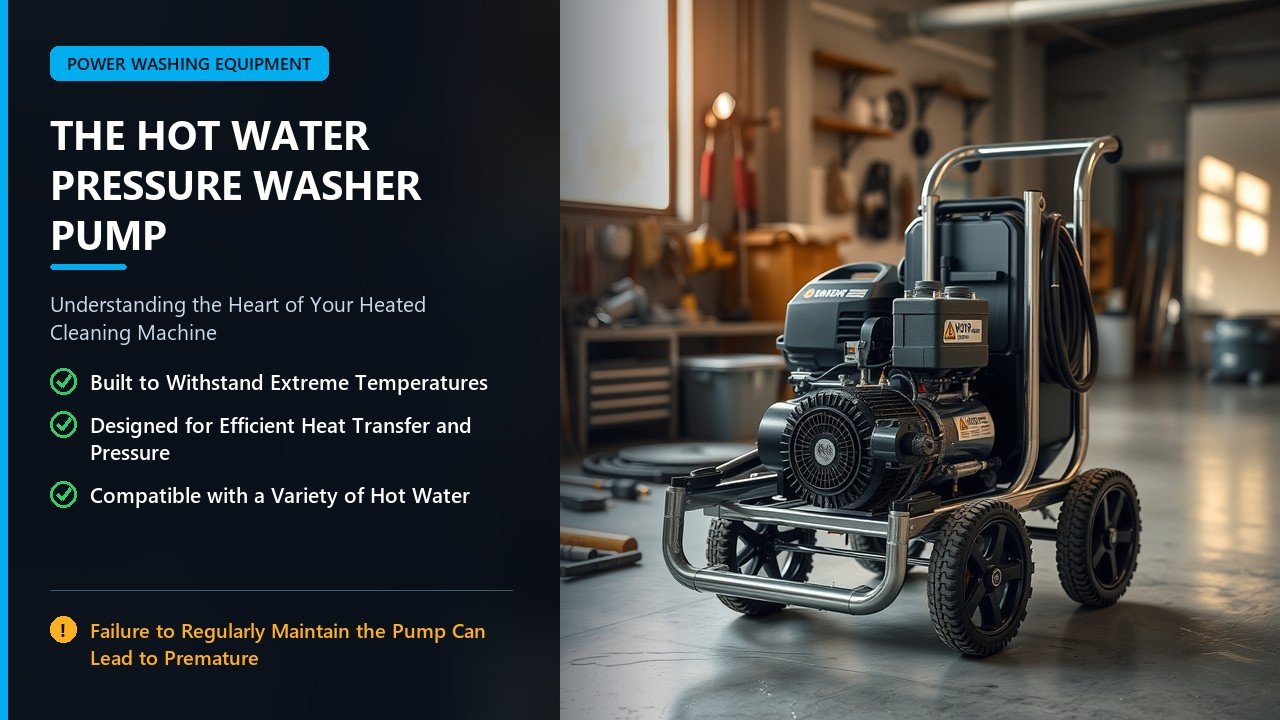
What a Hot Water Pressure Washer Pump Does
The pump is the heart of the machine, pressurizing water and pushing it through the system.
It pressurizes the water. The pump draws water from the supply and raises it to working pressure, which then drives the cleaning spray. Everything downstream depends on the pump doing its job reliably. Our guide to how a pressure washer pump works explains the basics.
It sits before the heater in most designs. In a typical hot water machine, cold water enters the pump, is pressurized, then passes through a heating coil or heat exchanger, and finally reaches the gun as hot water. The pump usually handles the cold side, which matters for understanding what it sees.
It still sees heat through recirculation. When you release the trigger, the unloader valve diverts water back through a bypass, and in a hot water machine that recirculated water can be warm or hot. Over time, this heat reaches seals and internal parts, which is why hot water machines use heat-tolerant components.
It must handle continuous duty. Hot water machines are often commercial tools that run for hours. The pump is built for that load, usually a triplex pump rather than the axial cam pumps common on light machines.
| Pump Type | Typical Use | Heat Tolerance |
|---|---|---|
| Axial cam | Light, cold-water machines | Low, not for hot service |
| Standard triplex | Cold-water commercial | Moderate |
| Hot-water-rated triplex | Hot water machines | High, high-temp seals |
| High-temperature industrial | Hot water and steam systems | Very high |
How Heat Affects a Pump
Heat is the difference that defines a hot water machine, and it stresses parts a cold-water pump never worries about.
Seals and o-rings soften or harden. Standard rubber compounds degrade faster at high temperatures, leading to leaks and lost pressure. Hot-water-rated pumps use seals and o-rings made from compounds that tolerate heat. Our guide to what fails inside a pump covers the parts.
Materials expand differently. Heat changes clearances between metal parts, which can accelerate wear if the pump is not designed for it. A pump rated for hot water accounts for that expansion in its tolerances and materials.
Lubrication is stressed. Higher temperatures can thin or break down pump oil faster, so hot water machines need the right oil and more frequent changes. Our guide to the right pump oil type explains the choice.
Recirculated water heats up. Repeated bypass without spraying lets water heat up in a loop, and that heat reaches the pump. This is why the unloader and bypass on a hot water machine must tolerate temperature as well.
Triplex Pumps for Hot Water Machines
Hot water machines almost always use triplex pumps, for good reasons.
Built for pressure and duty. A triplex plunger pump handles high pressure and continuous operation far better than an axial cam pump. Hot water machines are typically commercial tools, so they need this durability. Our guide to triplex versus axial cam explains the advantage.
Serviceable and rebuildable. Triplex pumps can be rebuilt with seal kits, valves, and plungers, which extends their life and lowers the cost of ownership. On an expensive hot water machine, a rebuildable pump is a major advantage. Our guide to matching and replacing a pump covers the process.
Available with high-temperature seals. Reputable pump makers offer hot-water versions with heat-rated seals and components, suited to machines where the pump sees heated or recirculated water. Choosing the hot-water variant is essential for a machine that runs hot.
Brand support matters. Pumps from established makers have parts and service available, which keeps a commercial machine running. Makers such as Cat Pumps build triplex pumps known for durability, and their hot-water variants are common in machines that run hot. Our guide to recognized pump makers and our guide to quality pump brands explain the value of known pumps.
The Unloader and Bypass
On a hot water machine, the unloader and bypass deserve special attention because they carry heat.
What the unloader does. When you release the trigger, the unloader redirects water away from the gun and back to a bypass or tank, protecting the pump from dead-heading. On a hot water machine, that diverted water can be hot.
Recirculation creates heat. If the machine runs with the trigger released, water recirculates and warms, and the unloader, fittings, and nearby pump components absorb that heat. This is why hot water machines specify heat-tolerant unloaders and hoses.
Thermal relief protects the pump. Many hot water machines include a thermal relief valve that releases a small amount of water when internal temperatures rise too high during recirculation. It is a safety feature for the pump, not a defect.
Bypass routing matters. How the bypass is routed affects how much heat reaches the pump. A properly designed system keeps recirculated hot water away from the pump inlet where possible, extending seal life.
| Component | Why Heat Matters | What to Use |
|---|---|---|
| Seals and o-rings | Degrade fast when hot | High-temperature compounds |
| Unloader valve | Carries recirculated hot water | Heat-rated unloader |
| Bypass hose | Moves hot water | Heat-rated hose |
| Thermal relief valve | Protects pump from overheat | Correctly set, replaced as needed |
| Pump oil | Thins and breaks down when hot | Correct type, changed on schedule |
Choosing and Matching a Pump
Replacing or upgrading a pump requires matching several specifications so the machine performs correctly.
Match pressure and flow. The pump must deliver the pressure and flow the machine is designed for. An undersized pump underperforms; an oversized pump can stress other components. Our guide to matching a 3,500 PSI pump shows the process.
Match the drive. Direct-drive and belt-drive pumps mount differently and require matching flanges, shafts, and couplings. Get the drive type right or the pump will not fit or will fail early. Our guide to matching a pump to the work covers the details.
Match the shaft and mounting. Shaft diameter, keyway, and bolt pattern must match your engine or motor. A mismatched pump can be adapted, but it is easier to buy the correct one.
Choose the hot-water version. For a hot water machine, select the pump with high-temperature seals and components, even if a standard version is cheaper. This is the single most important choice.
Confirm fittings and plumbing. Inlet and outlet sizes and thread types must match your machine’s plumbing so hoses and unloaders connect without adapters that restrict flow. Our guide to hose and pump flow explains why unrestricted flow matters.
Pump Oil for Hot Water Machines
The pump needs oil, and heat makes the right oil and a faithful change schedule more important.
Use the specified oil. Pump makers specify the oil type for their pumps, often a non-detergent or specific-weight oil. Using the wrong oil shortens pump life, especially under heat. Our guide to the right pump oil type by brand explains the options.
Check the oil for heat damage. If the oil looks milky, dark, or thin, or if metal particles appear, the pump may be running too hot or wearing. Address the cause, not just the oil. Our guide to what keeps a pump alive covers the signs.
Change it on schedule, and sooner if hot. Heat accelerates oil breakdown, so hot water machines often need more frequent changes than cold-water machines. Our guide to changing pump oil walks through the process.
Avoid cheap substitutes. The wrong oil or a poor substitute can kill a pump that would otherwise last years. The savings are never worth the cost of a failed pump. Our guide to where a cheap substitute kills the pump explains the risk.
Maintenance That Protects a Hot Water Pump
A hot water pump rewards consistent care, especially because heat is already working against it.
Keep the inlet supplied. Never let the pump run dry. Loss of supply at speed damages a triplex pump quickly, hot water or not. Our guide to keeping the pump fed covers the supply side.
Don’t idle with the trigger held off for long periods. Extended recirculation builds heat in the pump and unloader. If you pause, shut the machine down to let it cool, or follow the maker’s guidance.
Inspect seals and fittings. Small leaks waste pressure and signal worn seals. Replace seals as part of routine service rather than waiting for failure. Our guide to what fails inside a pump covers the parts.
Protect from freezing. Hot water machines still hold water, and freezing cracks pumps and coils. Winterize thoroughly before cold storage. Our guide to preventing freeze damage covers the steps.
Service the heater and pump together. The pump and heater are one system. Descaling the coil, checking the burner, and servicing the pump keep the whole machine efficient. Hot water also introduces burn and scald hazards, and the Occupational Safety and Health Administration treats hot water and high pressure as combined hazards that demand care. Our guide to heater basics covers the heat side.
Rebuild or Replace
When a hot water pump fails, you usually have options, and rebuilding is often the best value.
Rebuild when the housing is sound. If the pump body is in good shape, a seal kit, valves, and plungers can restore performance at a fraction of a new pump’s cost. Triplex pumps are designed for this. Our guide to when to rebuild or replace helps you decide.
Replace when damage is internal. Cracked housings, scored plungers, or worn bearings usually mean a new pump is the sensible choice. Match the replacement carefully to the machine.
Upgrade to the hot-water version. If your machine currently has a cold-water pump that keeps failing, replacing it with a proper hot-water-rated pump often ends the cycle of failures and pays for itself in reliability.
Keep spare seals. For a machine used daily, keeping a seal kit on hand lets you fix a leak quickly and avoid downtime. Downtime costs more than parts in commercial work.
Signs Your Hot Water Pump Needs Attention
Pumps usually warn you before they fail, and catching the signs early saves a rebuild or a replacement.
Lost pressure. If the machine no longer reaches its usual pressure, worn seals, valves, or plungers are likely culprits. A gradual loss points to wear; a sudden drop can mean a failed valve or air intake. Our guide to what fails inside a pump covers the diagnosis.
Leaks around the pump. Water seeping from the pump body or under it usually means worn seals or o-rings, which heat accelerates. Fix leaks early, before they damage bearings or the crankcase. Our guide to repairing and replacing a pump helps.
Milky or discolored oil. Water in the oil or burned-looking oil signals internal trouble or overheating. Change the oil and investigate the cause rather than just topping up. Our guide to pump oil condition explains what to look for.
Unusual noise or vibration. Grinding, knocking, or excess vibration can indicate worn bearings or cavitation from a restricted inlet. Address cavitation immediately, since it destroys pumps. Our guide to keeping the pump fed covers supply problems.
Overheating. If the pump is hot to the touch when it should be warm, recirculation or a failing thermal relief valve may be to blame. Long idle periods with the machine running make this worse. Let the machine cool and check the bypass system.
Upgrading or Choosing a Hot Water Machine
If you are shopping for a hot water machine, the pump is one of the first things to evaluate.
Insist on a triplex pump. A hot water machine should have a robust triplex pump with a rebuild path, not a light pump that will not survive commercial heat and duty. This is the foundation of a machine that lasts.
Confirm the hot-water rating. Ask whether the pump is the hot-water-rated version with high-temperature seals. On a machine that runs hot, this is not optional, and it is a question worth asking any seller.
Check the heater and pump match. The heater’s capacity and the pump’s flow should be matched so the machine can deliver hot water at the rated pressure. A mismatched system underperforms. Our guide to how hot water machines heat and perform explains the system.
Weigh the applications. Hot water shines on grease, oil, and grime that cold water cannot fully remove, which makes it valuable for commercial and industrial work. Our guide to what hot water cleans that cold cannot and our guide to hot water versus cold on grease explain when the upgrade pays off.
Consider the power source. Hot water machines use diesel, propane, natural gas, or electric heat, each with trade-offs in cost and convenience. Our guide to gas hot water machines and our guide to comparing gas, electric, and hot water cover the options.
| Consideration | What to Look For | Why |
|---|---|---|
| Pump type | Triplex, rebuildable | Handles heat and duty |
| Heat rating | High-temp seals | Survives hot service |
| Pump and heater match | Flow matched to heater | Rated hot water output |
| Application fit | Grease and oil work | Where heat earns its cost |
| Service support | Parts availability | Keeps the machine running |
Frequently Asked Questions
Does a hot water pressure washer use a special pump? Often, yes. Hot water machines typically use triplex pumps, and those that see heated or recirculated water should have a hot-water-rated version with high-temperature seals and components.
Is the pump before or after the heater? In most designs, the pump is before the heater and moves cold water, with heat added afterward. Even so, recirculated water during bypass can carry heat back to the pump, so heat tolerance still matters.
Can I use a regular pressure washer pump in a hot water machine? You can physically fit one, but a standard cold-water pump will leak and fail early under heat. Always use the hot-water-rated version for a machine that runs hot.
What oil does a hot water pump need? Use the oil specified by the pump manufacturer, and change it more frequently because heat breaks oil down faster. Avoid cheap substitutes, which can destroy the pump.
Why does my pump get hot when I’m not spraying? With the trigger released, water recirculates through the bypass and warms up, and a thermal relief valve may release water to protect the pump. Avoid long idle periods with the machine running.
Can a hot water pump be rebuilt? Usually yes. Triplex pumps are designed to be rebuilt with seal kits, valves, and plungers. Rebuild when the housing is sound; replace when internal damage is severe.
Final Thoughts on the Hot Water Pressure Washer Pump
The pump is the heart of a hot water pressure washer, pressurizing the water and driving the entire cleaning system. In most machines it moves cold water before the heater, but heat still reaches it through recirculation during bypass, and that heat is what shortens the life of ordinary pumps and seals. This is why hot water machines use triplex pumps, often in hot-water-rated versions with high-temperature seals, along with heat-tolerant unloaders, bypass hoses, and thermal relief valves.
Keeping a hot water pump alive comes down to respect for heat and steady care. Use the correct pump and oil, change the oil more often, avoid long idle recirculation, keep the inlet supplied, and protect the machine from freezing. When the pump does fail, rebuild it if the housing is sound, or replace it with the proper hot-water-rated unit rather than a cheaper cold-water substitute. Treat the pump and heater as one system and service them together.
That is what the contractor learned when his pump failed: the heat that made the machine valuable was also what attacked the pump, and a pump built for hot water service was the real fix. If you own a hot water machine, the pump is not a background part. It is the component that decides whether the machine cleans for years or spends its life in the shop. Understand it, maintain it, and it will keep earning its keep.