There is a moment every cleaning contractor remembers. It happens the first time they point a diesel steam pressure washer at a job that cold water could not touch. The grease melts and slides off. The baked-on carbon on an engine block lifts in seconds. Nothing about the pressure changed; the heat changed everything. This guide explains the diesel-fired steam pressure washer, how it makes its heat, what it does best, and how to run one safely and efficiently.
A diesel steam pressure washer is a hot water pressure washer that burns diesel (or kerosene or fuel oil) to heat water far past the ordinary hot-water range and, when pushed, to produce a high-temperature steam spray. Understanding what it is starts with one fact: it is not a magic box. It is a pressure washer with a burner bolted to a heat exchanger, and once you know how those two parts work together, the machine becomes simple to operate and maintain.
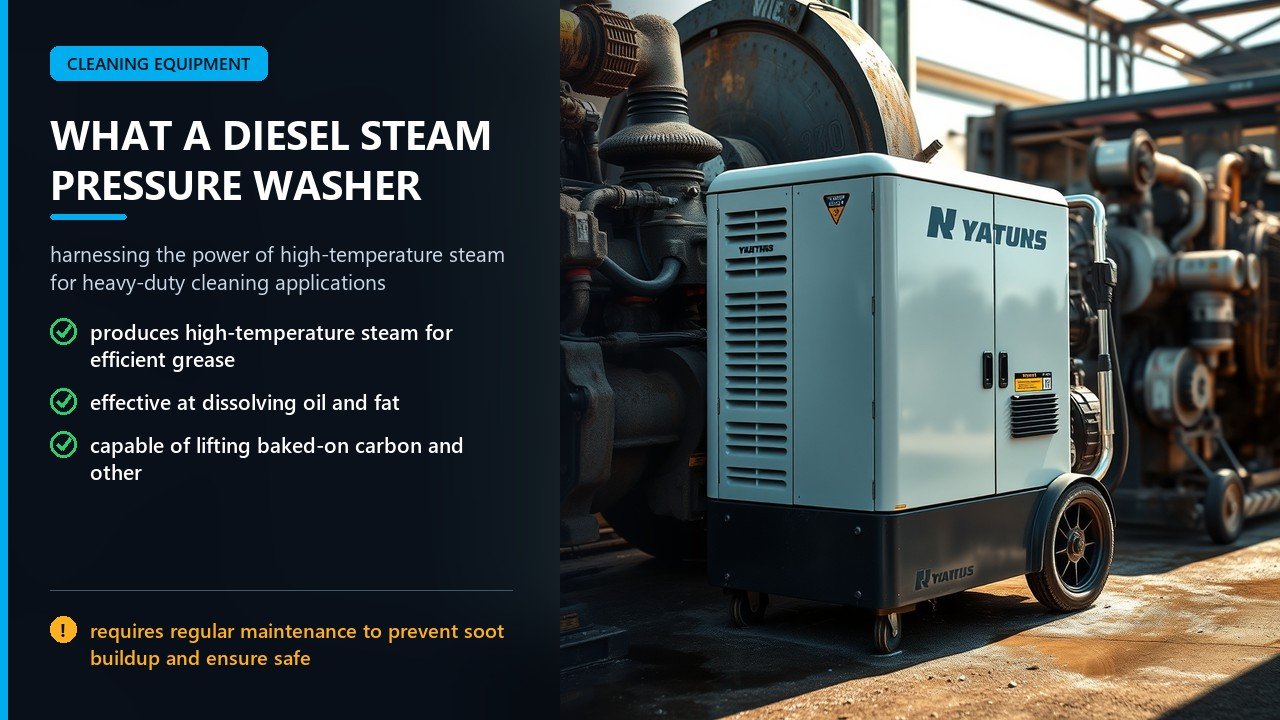
What a Diesel Steam Pressure Washer Actually Is
A standard cold water pressure washer does one thing: it takes water from a garden hose, pressurizes it with a pump, and forces it out a nozzle at speed. A diesel steam pressure washer takes that same machine and adds a heating system. The water is pumped the same way, but before it leaves the machine it travels through a coil of steel pipe wrapped inside a heat exchanger. A diesel burner fires a flame across that coil, and the water picks up the heat on its way to the nozzle.
That single addition changes what the machine can do. Hot water dissolves grease, oil, and fat far faster than cold water, because heat thins those substances and makes them easier to flush away. Push the temperature high enough and the water flashes into what the industry calls wet steam, a turbulent mixture of hot water droplets and vapor that carries far more usable heat to the surface than ordinary hot water. That is the difference between a machine that rinses a surface and a machine that cleans it.
The diesel part matters for a practical reason. Diesel and kerosene burn hot and are cheap and widely available in bulk, which makes a diesel-fired burner the workhorse choice for commercial and industrial cleaning. Electric heaters struggle to reach the temperatures and flow rates that big jobs demand, and propane heaters burn through fuel quickly at high output. Diesel keeps a heavy machine running all day without constant refueling, which is why most serious hot water and steam pressure washers on a trailer are diesel fired. For the engine side of the same story, see our article on why a diesel engine pressure washer beats ordinary machines.
The Core Idea: Why Heat Cleans Better Than Pressure Alone
Most people believe pressure alone does the cleaning. In reality, cleaning power comes from three forces working together: the impact of the water, the chemistry of any detergent, and the heat of the water. Cold water lets you use impact and chemistry. Heat adds the third force, and it is often the strongest of the three. Grease, oil, and fat are the reason. At room temperature these substances are thick and sticky, clinging to surfaces and resisting water. Raise the temperature and they soften, thin, and lose their grip.
A hot water spray does in one pass what a cold spray does in five, because the heat is doing chemical work on the contaminant while the pressure is doing mechanical work. Add steam and the effect multiplies, because wet steam transfers a huge amount of latent heat to the surface as the vapor condenses back into liquid. This is why a diesel steam pressure washer can clean a greasy commercial kitchen hood, a machine shop floor, or a piece of heavy equipment with less chemical and less dwell time.
| Water Type | Typical Temperature | Best At | Weak At |
|---|---|---|---|
| Cold water | Roughly 50 to 70 F | Rinsing, mud and dirt, light surface work | Grease, oil, fat, baked-on deposits |
| Hot water | Up to about 200 F | Heavy degreasing, equipment, floors, fleet washing | Sanitizing at spore level, delicate surfaces |
| Wet steam | About 212 to 300 F at the nozzle | Grease melting, sanitizing, food and processing areas | Stripping thick coatings, jobs needing max impact |
The table makes an important point. Steam is not simply hotter hot water. It is a different tool. Its temperature is high, but because steam is generated by restricting flow, its spray impact is gentler than a full-pressure hot water spray. That gentleness is a feature on delicate surfaces and in food handling, where you want heat and low splash-back rather than a fire hose.
How the Diesel Burner Makes Steam
The heart of the machine is the burner, which works much like an oil furnace in a home. A fuel pump draws diesel from the tank, pushes it through a nozzle that atomizes it into a fine mist, and an ignition system lights the mist. A blower forces air into the mix and drives the flame through the heat exchanger, where it wraps around the water coil. The hot gases then exit through an exhaust vent. The flame never touches the water directly, only the outside of the coil, but the coil gets very hot and passes that heat into the water inside.
Burner design matters more than most buyers realize. Many quality machines use a downdraft burner, which forces the flame and hot gases downward through the helical coil rather than letting them rise naturally. That forced flow extracts more heat from the fuel before the exhaust escapes, and manufacturers claim efficiency gains of up to a third over simpler burner designs. Better efficiency means less diesel burned for the same heat, which is real money for anyone running a machine daily.
Turning that hot water into steam is a matter of temperature and nozzle choice. The machine is still pumping and heating water normally; to make steam you set the thermostat high enough that the water leaving the coil is at or above the boiling point under pressure, and you switch to a steam nozzle. The steam nozzle restricts flow, which lets the water heat beyond 212 F without turning to vapor inside the coil, and when that superheated water exits the nozzle into the open air it flashes into a wet steam spray. A pressure washer does not build a boiler; it heats water hot and lets physics do the rest at the nozzle.
Wet Steam Versus the Steam You See in Movies
People often picture steam as an invisible dry gas that burns instantly. What a diesel steam pressure washer actually produces is wet steam, which is different and safer to work with. Wet steam is a combination of tiny liquid water droplets and water vapor. It is visible as a white plume, it carries a huge amount of heat, and it condenses back to liquid when it hits a cooler surface, releasing stored energy onto the grime. Dry or superheated steam contains almost no liquid droplets and is far less effective at transferring heat to a surface, so the wet steam most pressure washers produce is actually the better product for cleaning.
The practical temperature range you will see advertised sits between roughly 200 F for standard hot water and about 250 to 300 F for wet steam, with some units flashing steam closer to 300 F. The exact number depends on the pump, the coil, and the thermostat limit. A capable machine does both hot water and steam, and you switch between them by changing the temperature setting and the nozzle.
What a Diesel Steam Pressure Washer Does Best
Steam and hot water shine on specific jobs, and knowing them helps you decide whether this machine earns its fuel and cost. These are the applications where a diesel steam pressure washer outperforms a cold water unit by a wide margin.
- Heavy degreasing. Engine blocks, transmissions, machine tools, and shop floors coated in oil and cutting fluid come clean fastest with heat. The grease melts and rinses instead of smearing.
- Food processing and commercial kitchens. Grease traps, hoods, prep surfaces, and equipment need the sanitizing power of high-temperature water and the low splash-back of steam. This is one of the strongest use cases for wet steam.
- Heavy equipment and fleet washing. Tractors, trucks, and construction machines caked with mud, oil, and grime wash faster when the water is hot, and the heat helps break down road film and diesel residue.
- Industrial and manufacturing surfaces. Production floors, conveyor areas, and assembly spaces often carry oils and residues that cold water cannot lift without heavy chemistry.
- Sanitizing without chemicals. Because wet steam delivers intense moist heat, it can reduce the germ load on a surface without relying on a disinfectant, which matters in food, agricultural, and hygiene-sensitive settings.
For a broader look at how hot water machines handle this kind of commercial grime, see our guide on how hot water diesel pressure washers clean tough commercial grime. The same principles apply whether the machine produces hot water or full wet steam.
What Steam Is Not Good For
A diesel steam pressure washer is not the right tool for every task. Steam mode reduces flow and impact, so it is poor at heavy material removal like stripping paint or blasting thick caked mud. Steam is also a bad choice on heat-sensitive surfaces such as plastic, vinyl siding, and asphalt. The honest rule is that steam wins on grease, oil, and sanitizing, and loses on jobs that demand raw impact.
Diesel Versus Other Heat Sources
Not every hot water pressure washer burns diesel. Electric, propane, and natural gas heaters all exist, and the right choice depends on where the machine will live and how hard it will work.
| Heat Source | Strengths | Limits |
|---|---|---|
| Diesel or fuel oil | High heat output, cheap fuel in bulk, works off-grid, runs all day | Exhaust fumes, outdoor use, needs fuel handling and storage |
| Kerosene | Burns cleaner than diesel, good for indoor-vented setups | Costs more per gallon, still needs venting |
| Propane | Clean, convenient, portable, reaches about 200 F and wet steam on some models | Fuel runs out fast at high output, tank handling and freezing concerns |
| Natural gas | Endless fuel for stationary units, clean, no refueling | Fixed location only, needs a gas line, usually not portable |
| Electric | No flame or fumes, simple, good for indoor food service | Lower heat output, heavy power draw, limited max flow and temperature |
Diesel wins where you need maximum heat, portability, and the ability to work all day away from a power source, which is why it dominates trailer-mounted and industrial cleaning rigs. Propane and electric win in fixed or indoor settings where fumes are unacceptable or output demand is smaller.
Fuel Choices for the Burner
The fuel tank on a diesel steam pressure washer is not the same as the engine’s gas tank, and this trips up first-time owners. A gas-powered machine that is diesel-heated carries two tanks: gasoline for the engine and diesel, kerosene, or fuel oil for the burner. Filling the wrong one is a costly mistake. Manufacturers generally approve number 1 or number 2 diesel, kerosene, fuel oil, and low-blend biodiesel such as B5 or lower. Many machines also advise keeping at least half a gallon of fuel in the burner tank even when running in cold water mode, because the burner’s fuel pump relies on that fuel for lubrication and running it dry can damage the pump.
Fuel quality matters. Water and dirt in the burner fuel cause clogged nozzles, poor ignition, smoke, and hard starts, just as they do in a home oil furnace. Quality machines use a fuel filter and water separator, and changing that filter is part of routine service. In cold weather, number 1 diesel or kerosene resists gelling better, while number 2 diesel is fine in mild conditions.
How to Operate One Safely
A diesel steam pressure washer combines high pressure, high temperature, and an open flame, so safety is not optional. These essentials come from the machine builders’ own manuals and standard workplace guidance.
- Run it outdoors or with proper ventilation. The burner produces carbon monoxide, an invisible, odorless gas that can kill. Never run a fuel-fired pressure washer in an enclosed space without engineered ventilation.
- Keep a clear area around the burner. Before lighting the burner, make sure the surroundings are free of flammable vapors, dust, and materials, and only operate where an open flame is permitted.
- Never re-fire a burner that failed to light. Unburned fuel can accumulate and cause an explosion or fire, so follow the manual’s purge procedure before trying again.
- Protect your skin. Wear waterproof insulated gloves, eye protection with side and top coverage, and non-slip protective footwear. Wet steam and hot water can scald in an instant.
- Cool down before shutdown. After using the heater, run cold water through the coil for several minutes and cool the engine before storing, because a hot engine and coil are a fire hazard.
Most of these rules come down to two ideas: keep the flame away from anything that can burn, and keep the exhaust out of your lungs. For workplace safety specifics on engine-driven equipment and confined spaces, the Occupational Safety and Health Administration publishes guidance worth reviewing before any commercial use.
Routine Maintenance for a Fuel-Fired Machine
A diesel steam pressure washer has more wearing parts than a cold water unit, which is why it rewards a real maintenance routine. The engine still needs oil changes and air filters, and the pump still needs the correct non-detergent pump oil, which our guide on what type of oil for a pressure washer pump keeps it running explains in detail. The heating system adds its own list.
- Clean or replace the fuel nozzle. The burner’s atomizing nozzle is the most common cause of poor ignition, smoke, and uneven heat. It wears and clogs over time and is inexpensive to replace.
- Change the fuel filter and water separator. Dirty or wet fuel is the enemy of reliable ignition, so keep the filter fresh.
- Check the burner air and fuel mix. White or black exhaust and a smoky flame signal an out-of-tune burner. A properly adjusted burner burns clean and uses less fuel.
- Inspect the coil for scale. Hard water leaves mineral scale inside the coil, which blocks heat transfer and forces the burner to work harder. Descaling keeps heat output high and fuel use low.
- Winterize the coil and pump. Water left in the coil or pump can freeze and crack the metal. Pump saver fluid and a proper drain-down protect the machine between seasons.
None of this is difficult, but it is scheduled work. A diesel-fired machine that is maintained runs clean, starts easily, and lasts for years, while one that is neglected smokes, struggles to light, and eventually builds enough scale and carbon that it stops heating at all. For the full seasonal checklist, our article on power washing preventative maintenance walks through the whole routine.
Choosing a Diesel Steam Pressure Washer
Buying one comes down to matching the machine to the work, and a handful of specifications tell you almost everything you need to know. Reading a spec sheet correctly saves you from buying a machine that is either too small for the jobs or too big for the budget.
Pressure and flow. Pressure, measured in PSI, is the cleaning force, and flow, measured in GPM, is how fast the water moves and how much surface you can cover. For hot water and steam work, flow often matters more than headline pressure, because heat plus volume rinses grime away efficiently. A 3,000 PSI, 4 GPM machine typically out-cleans a 4,000 PSI, 2 GPM machine on greasy commercial jobs, because the extra gallons per minute carry more heat and rinse faster. Read the two numbers together, never in isolation.
Heating capacity and maximum temperature. Check the rated maximum outlet temperature and the burner’s heat output, usually measured in BTUs. A higher BTU rating means the machine can hold temperature at full flow, while a weak burner lets the water cool as flow rises. The best machines maintain hot water at their full rated flow, not just at a trickle. Confirm the steam capability separately, because not every hot water machine can produce true wet steam at the nozzle.
Pump and drive type. The pump is the heart of the pressure side, and premium brands such as Cat and General are worth the money for daily commercial use. A belt-driven pump typically runs cooler and lasts longer than a direct-drive pump, at the cost of a little more maintenance. Our article on why a Honda motor and Cat pump pairing lasts explains why component quality matters so much on machines that run hard.
Burner, controls, and serviceability. Look for an efficient burner, a reliable ignition system, and a digital thermostat that makes hot water and steam modes easy to control. Confirm the unit has the safety systems you expect: a flow switch, a high-temperature limit, a thermal relief valve, and a pressure relief or rupture disc. Serviceability matters too. Find out where the machine can be repaired and how easily you can get burner nozzles, filters, and coils, because the specialized diesel burner is the one system most owners cannot fix at home.
Common Mistakes Owners Make
- Putting diesel in the engine or gasoline in the burner. Two tanks, two fuels. Confusing them is a serious and expensive error.
- Running the burner with an empty fuel tank. The burner’s fuel pump depends on fuel for lubrication, and running dry damages it.
- Using steam for jobs that need impact. Steam is for grease and sanitizing, not for stripping paint or blasting caked mud.
- Skipping the cool-down. Running cold water through the coil after heating prevents scale baking and internal damage.
- Ignoring the burner nozzle and filter. Small, cheap parts that cause big problems when neglected.
- Letting the machine freeze. Water in the coil and pump freezes and cracks metal, so winterize thoroughly.
Steam and Environmental Responsibility
One advantage of a diesel steam pressure washer that rarely gets mentioned is that it can reduce chemical use. Because heat does so much of the cleaning, many jobs that would need a strong detergent with a cold machine can be handled with less chemical, or none at all, when the water is hot or steaming. The runoff still matters, though. Wash water carrying oil, grease, and detergent should never be dumped into a storm drain, which usually flows untreated to a river or lake. The Environmental Protection Agency publishes stormwater guidance that applies to many commercial cleaning operations.
Answers to the Questions Buyers Ask Most
What is a diesel steam pressure washer?
It is a hot water pressure washer that burns diesel, kerosene, or fuel oil in a burner to heat water through a coil, producing hot water and, at high settings, a wet steam spray. The diesel fire heats the water; the pump provides the pressure.
What temperature does a diesel steam pressure washer reach?
Hot water mode reaches up to about 200 F. Steam mode typically reaches about 212 to 300 F at the nozzle, depending on the machine, with the water flashing into wet steam as it leaves a dedicated steam nozzle.
Does steam clean better than hot water?
Not always, and not for every job. Steam is better for melting grease, sanitizing, and cleaning delicate surfaces with low splash-back. Hot water at full pressure is better when you need maximum impact to blast away heavy material.
Is a diesel steam pressure washer worth the cost?
For commercial degreasing, food processing, heavy equipment, and fleet work, yes. The heat cuts labor and chemical use dramatically. For occasional light residential cleaning, a smaller cold or hot water machine is more economical.
The Bottom Line on Diesel Steam Pressure Washers
A diesel steam pressure washer is best understood as a heat machine as much as a pressure machine. The pump provides the force, but the diesel burner provides the cleaning power that cold water cannot match, especially on grease, oil, fat, and the sanitizing work that food and industrial environments demand. The technology is straightforward: water flows through a coil, a diesel flame heats it, and a steam nozzle turns that hot water into wet steam that melts grime and rinses it away. The trade-offs are equally clear. Steam lowers impact and raises temperature, so it excels at some jobs and disappoints at others, and it runs on a second fuel that needs ventilation and regular burner maintenance. Choose by flow and heat output, not just pressure, keep the burner clean and the fuel dry, and respect the heat and the exhaust. Do that, and it will out-clean and out-last the cold water unit you used to call powerful.