A Gun Power Washer: How to Choose the Right Spray Gun and Keep It Working
A gun power washer trigger is the one part of the machine you hold, aim, and squeeze hundreds of times in a session, so a bad one ruins an otherwise good washer. The gun controls the flow, the feel, and the safety of every job, and it is the part most likely to be overlooked when people blame the pump or the nozzle for a poor result. Upgrading or replacing it is one of the cheapest ways to make a pressure washer nicer to use.
This guide covers everything about the gun on a power washer: what it does, how to match it to your machine, what materials last, how threads and fittings work, and how to keep it sealing and flowing. Whether you are replacing a broken gun or upgrading a cheap one, the goal is the same, a gun that fits your machine, feels right in your hand, and lasts more than a season. Get it right and the whole pressure washer becomes easier and safer to use.
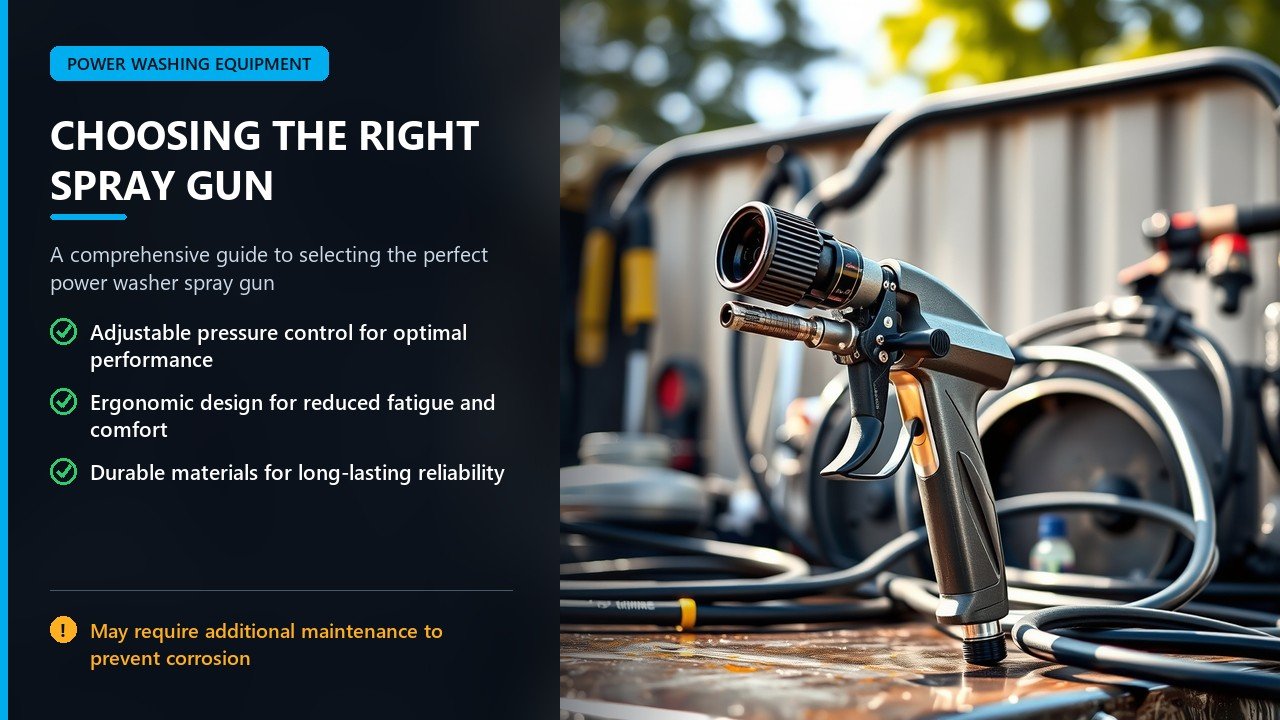
What a Pressure Washer Gun Does
The gun is the control point between the pump and the nozzle. It holds the trigger valve that starts and stops the flow, the handle you grip, and usually a wand or lance that carries water to the tip. A good gun stops the flow cleanly, resists leaks, and stays comfortable through a long wash, so it disappears into the job instead of demanding your attention. The right fit makes every other upgrade on the machine feel worth it, and a poor gun can make even a premium pump feel clumsy. It is a small part, but it is the one you touch most, so its feel and reliability set the tone for the whole job. A gun that seals, swivels, and sits comfortably is the quiet difference between a chore and a tool you look forward to using.
Guns come as trigger guns with a wand, pistol-grip units, and short stubby guns for surface cleaners and foam cannons, and the choice depends on whether you want reach, control, or a specialized function. Some have a swivel to stop the hose twisting, and some include a safety lock. Every feature exists to make the tool safer or easier to use, and a thoughtful design shows in how the gun behaves when the water is on.
Because the gun is where you interact with the machine, its ergonomics matter as much as its specs. Our guide to pressure wash gun ratings and types and to choosing and upgrading a trigger gun cover the basics of the category.
Matching the Gun to Your Machine
The gun must match your machine’s pressure and flow, its hose connection, and the work you do. A gun rated below your machine’s PSI can fail or leak; one with the wrong thread simply will not connect. Always check the pressure rating, the inlet thread, and the outlet fitting before buying.
For light electric washers, a compact plastic or composite gun is fine and keeps weight down. For gas machines and heavy use, a metal-bodied gun with a quality valve lasts longer and feels more solid. Match the build to the duty, not just the price.
The connection type is the most common mismatch. Most machines use a screw thread at the hose, often M22, while nozzles and accessories may use quick-connect. Our guide to matching PSI, GPM, and threads helps you get this right the first time.
Pressure Rating and Flow
A gun has a maximum pressure and flow, and exceeding either causes leaks, hard trigger pull, or failure. Choose a gun rated above your machine’s output so it has headroom. Underrated guns are a common cause of drips at the trigger and fittings.
Flow matters too. A gun with a narrow internal passage can restrict a high-flow machine, costing pressure at the nozzle. For high GPM machines, choose a gun with a large bore and a free-flowing valve. The gun should never be the bottleneck in the system.
| Machine | Gun Pressure Rating | Gun Build | Typical Connection |
|---|---|---|---|
| Light electric (1,300-1,700 PSI) | 2,000+ PSI | Composite | M22 inlet, quick-connect outlet |
| Mid electric (1,800-2,300 PSI) | 2,500+ PSI | Composite or metal | M22 inlet, quick-connect outlet |
| Gas (2,500-4,000 PSI) | 4,000-5,000 PSI | Metal body | M22 or 3/8 quick-connect |
| Commercial hot water | 4,000-5,000+ PSI | Heavy metal, insulated | Matched high-flow fittings |
When in doubt, buy the higher-rated gun and the larger bore, because headroom never hurts a pressure system. Extra headroom costs little and prevents the drip, the stiff trigger, and the early failure that a marginal gun invites. Our guide to heavy-duty gun upgrades shows what stronger guns offer.
Materials: Plastic, Composite, Brass, and Metal
Gun bodies range from basic plastic to machined metal. Plastic is light and cheap but wears at the trigger and valve, and it can crack if dropped. Composite blends plastic and reinforcement for better durability at moderate cost, and it suits most home machines.
Metal-bodied guns, often with brass or stainless internals, resist heat, pressure, and wear far better. They cost more and weigh more, but they last through heavy use and keep sealing, which matters when a leak means downtime and a stiff trigger means fatigue. For gas and commercial machines, a metal gun is the sensible choice.
| Gun Body | Durability | Weight | Best For |
|---|---|---|---|
| Plastic | Basic | Lightest | Occasional light electric use |
| Composite / reinforced | Good | Light | Most home washers |
| Brass internals, metal body | Very good | Moderate | Gas machines, frequent use |
| Full metal, stainless valve | Excellent | Heaviest | Commercial and heavy duty |
The valve and seals matter more than the shell. Look for a gun with replaceable seals and a well-machined valve, because those parts, not the body, decide how long it seals. Our gun-kit guide covers matching a gun to your machine.
Threads, Fittings, and Quick-Connects
The gun inlet usually connects to the hose with a screw thread, commonly M22, male or female. The outlet to the wand or nozzle may be a screw thread or a quick-connect plug. Knowing which you have is essential before ordering a replacement.
Quick-connects speed changes between nozzles, wands, and accessories, and they are reliable when they match. Threaded connections seal with an O-ring or washer, so inspect and replace that seal when you get drips. Mixing thread standards without an adapter is the fastest way to a leak.
Adapters exist for almost every combination, so a mismatch is rarely fatal, but each added joint is a potential leak and one more thing to check when a drip appears. Where you can, choose a gun whose fittings match your existing hose and wand directly. Our guides to hose fitting types and threads and to building a leak-free connection cover the details.
Note: Never use thread tape or pipe dope on a pressure washer gun or hose connection that seals with an O-ring or flat washer. The seal does the work on those joints, and tape can distort it and cause leaks. Reserve sealant for tapered metal pipe threads only, and only if the manufacturer calls for it.
Swivels, Ergonomics, and Comfort
A swivel at the gun inlet lets the hose rotate instead of twisting and fighting you, which reduces fatigue and kinking. A high-quality swivel is one of the best comfort upgrades for a power washer. Cheap swivels can leak, so choose one with good seals and a metal body.
Ergonomics matter over a long wash. A gun with a molded grip, a light trigger pull, and balanced weight is far easier to hold than a heavy, awkward one. Some guns offer a trigger lock to rest your hand, and a cushioned grip to reduce fatigue.
The wand length and nozzle type also affect comfort and reach. A longer wand reaches high siding and low wheels but is heavier and more tiring to hold, while a short gun is nimble for close work and easier to control at awkward angles. Our guide to fit, flow, and feel in a gun explains the comfort tradeoffs.
Safety Features and Proper Use
Most guns include a trigger lock or safety catch so the unit cannot fire accidentally. Use it whenever you set the gun down, and never point a pressurized gun at a person or animal. High-pressure water can cut skin and inject beneath it, causing serious and hard-to-treat injury, so treat the gun with the care of any power tool.
Always release pressure before disconnecting a hose by squeezing the trigger with the machine off. Never leave a pressurized system unattended, and relieve the pressure before storing. These habits keep you and the equipment safe, and they also protect the gun from the pressure spikes that shorten its life.
For very high pressure, a gun with a well-designed trigger, a firm lock, and heat protection is worth the money, because the wrong gun at the wrong pressure is a genuine hazard. Our guide to a 4000 PSI gun shows what high-pressure hardware demands.
Replacing or Upgrading a Power Washer Gun
Replace a gun when it leaks at the trigger, sticks, fails to shut off cleanly, or cracks. These faults waste water, drop performance, and can be dangerous. A replacement gun is inexpensive compared with the frustration of a failing one.
To choose a replacement, note your machine’s PSI and GPM, the hose inlet thread, the wand or nozzle outlet, and your material preference. Then pick a gun rated above your output with matching fittings. If you are unsure, buy a gun kit that includes adapters and a wand.
A good replacement gun should improve the trigger feel and stop the drips. If you also want simpler nozzle changes, pair it with quick-connect fittings. Our guides to gun kits and to thread matching walk through the purchase.
Maintaining Your Power Washer Gun
Keep the gun sealing by protecting the seals. Don’t leave it pressurized when idle, avoid dropping it, and store it clean and dry. After use, flush the system with clean water and relieve pressure so the valve and seals are not left compressed between jobs.
Inspect the inlet O-ring and any washers periodically and replace them at the first sign of wear. A spare set of seals is cheap insurance against a mid-job leak. Lubricate moving trigger parts only as the manufacturer allows, since some greases attack rubber.
In cold weather, drain the gun and wand along with the pump so freezing water does not crack the valve or fittings. Our guides to gun kits and to hose fittings include the maintenance items worth keeping on hand.
Types of Power Washer Guns
Guns come in several styles, each suited to different tasks. A standard trigger gun with a wand is the all-purpose choice for general cleaning. A short stubby gun is compact and easy to control for close work. A dedicated foam cannon or surface cleaner handle is a specialized variant with its own flow needs.
Some guns combine a trigger and wand in one molded unit, while others accept screw-on or quick-connect wands and extensions. Detachable wands are more flexible, letting you swap lengths and nozzles for different jobs. Fixed units are simpler but less adaptable.
| Gun Style | Best For | Notes |
|---|---|---|
| Trigger gun with wand | General cleaning | The all-round default |
| Short / stubby gun | Close-up work, cars | Compact, easy control |
| Foam cannon handle | Car washing | Draws and mixes soap |
| Surface cleaner handle | Flatwork | Feeds a spinning bar |
| Vented / insulated gun | Hot water | Protects against heat |
Match the style to the job and the flow, and buy a gun whose fittings suit the wand and nozzles you already own, so you are not stacking adapters that add leaks and bulk. Our guide to gun kits helps you assemble a complete, matching set.
Gun, Wand, and Nozzle: How They Work Together
The gun is only one link in a chain that includes the pump, hose, gun, wand, and nozzle. Each part must pass the flow and hold the pressure the others expect. A great pump and a great nozzle still underperform if the gun chokes the flow or leaks pressure, and a cheap gun can quietly cap the performance of an expensive machine.
The wand carries water from the gun to the tip and sets your reach, while the nozzle shapes the spray and converts flow into impact. Changing any one changes the balance. This is why a new gun sometimes reveals that the nozzle or hose is the real limit.
Think of the setup as a system and match every joint, bore, and rating. Our guides to thread and rating matching and to fit, flow, and feel show how the pieces align.
Common Gun Problems and Fixes
Drips at the inlet usually mean a worn O-ring or a loose connection. Replace the seal and re-tighten. A leak at the trigger often points to a worn valve or a gun rated below the machine’s pressure, which a higher-rated gun solves.
A stiff or sticking trigger may be dirt in the valve or a failing spring, and it usually means replacing the gun or its valve kit. Weak spray with the gun fully open can be a clogged nozzle or a restricted flow path, not a gun fault at all. Diagnose the whole system before replacing parts.
If a swivel leaks, its seals have worn, and a rebuild kit or a better swivel fixes it. For any recurring leak, check that the fittings match and that no thread sealant has been used where an O-ring should seal. Our guide to leak-free connections covers the repair.
Buying a Power Washer Gun: What to Check
Before you buy, confirm four things: the pressure rating exceeds your machine’s PSI, the flow matches your GPM without choking, the inlet thread fits your hose, and the outlet fits your wand or nozzles. Get those right and the gun drops in without adapters.
Then consider quality: a metal body and replaceable seals last longer, and a swivel adds comfort. Read the details, because a cheap gun that leaks costs more in frustration than a better one costs up front. A supplier such as Pressure Wash Supply lists the specs, ratings, and fittings you need to compare guns directly.
For a home machine, the everyday range works well, and a mainstream retailer category such as the Grainger pressure washer category shows how guns sit alongside machines and accessories. For commercial duty, professional-grade equipment such as Hotsy hot-water pressure washers uses heavier guns built for continuous use.
Rebuild or Replace? Choosing the Right Fix
When a gun leaks or sticks, you can sometimes rebuild it with a seal or valve kit, or you can replace it. Rebuild kits make sense for a good-quality metal gun whose body is sound, because the seals and valve are the wear items. For a cheap plastic gun, replacement is usually cheaper and better.
Rebuilds are also worth it when the gun is part of a matched set you like, or when a replacement is out of production. The job is simple: remove the old seals and valve, clean the body, and fit the new parts. Keep the kit and the tools on hand so a leak does not stall a job, and check the gun over each spring before the cleaning season starts.
If the gun body is cracked, the trigger pivot is worn, or the threads are damaged, replace it. No seal kit rescues a broken shell. And if the gun was marginal for your machine to begin with, upgrade rather than rebuild. Our materials table above helps you judge whether the body is worth saving.
Gun Upgrades That Are Worth It
The best value upgrades are a swivel inlet to stop hose twist, replaceable-seal metal body for durability, and matching quick-connects for fast nozzle changes. Together they transform how a gun feels and how quickly you work, and each one is easy to fit without touching the pump or the machine.
A foam cannon or a dedicated short gun are task upgrades rather than general ones, but each makes its job easier. A longer wand improves reach for siding and roofs, while a padded grip reduces fatigue on long washes. Buy upgrades that solve a real annoyance rather than collecting gadgets.
Keep pressure and flow headroom in any upgrade, so the gun never limits the machine. Our guides to heavy-duty gun upgrades and to trigger-gun upgrades show which changes pay off.
Note: A gun is only as good as its seal. Before blaming the gun for weak flow, check the inlet O-ring, the nozzle, and the hose for restrictions. Many “bad guns” are simply a worn seal or a clogged tip, both of which cost pennies to fix.
Caring for the Gun Between Jobs
Between washes, store the gun off the floor and out of the sun, with pressure relieved and the wand attached so the threads stay clean. A gun left pressurized slowly compresses its seals and shortens their life, and it keeps the whole system under load for no reason. A quick flush with clean water after each use keeps grit out of the valve and helps the trigger stay crisp over many seasons of use.
In winter, drain the gun with the rest of the system and store it where it will not freeze. Water trapped in the valve or wand can crack metal and split seals, a repair that costs far more than the minute it takes to drain. A minute of draining in fall saves a replacement gun in spring, and it protects the wand and fittings along with it.
Keep a small kit of spare O-rings, washers, and a nozzle pick near the machine, and a spare gun if you rely on the washer for work. Our guides to gun kits and to hose fittings list the spares worth keeping.
Frequently Asked Questions
What is a power washer gun? It is the trigger-controlled handle that sits between the hose and the wand or nozzle, letting you start, stop, and aim the water. It is often called a spray gun, trigger gun, or just the gun.
How do I know which gun fits my pressure washer? Check the pressure rating, the hose inlet thread, and the outlet fitting. Match those to your machine, and choose a gun rated above your machine’s PSI.
Can I put a different brand gun on my pressure washer? Yes, if the threads or quick-connects match, or you add the right adapter. Brand does not matter as long as pressure, flow, and fittings line up, though a known brand makes replacement seals easier to find.
Why is my pressure washer gun leaking? Usually a worn or missing O-ring or washer, a loose connection, or a gun rated below the machine’s pressure. Replace the seal first, then check the rating.
Do I need a swivel on my gun? Not strictly, but a good swivel stops the hose twisting, reduces fatigue, and prevents kinks, making long jobs easier.
How long should a pressure washer gun last? A composite home gun may last a few seasons, while a metal gun used well can last many years. Seals wear first, so replaceable-seal guns last longest.
Can I use any pressure washer gun on any machine? Physically yes, if the threads or quick-connects match, but the gun must also be rated above your machine’s pressure and flow, or it will leak and wear out early.
What thread does a pressure washer gun use? Most guns use an M22 inlet thread at the hose, though some use quick-connects. The outlet to the wand is often M22 or a quick-connect plug, so check both ends before ordering.
Why does my gun trigger feel hard to pull? A stiff trigger usually means a worn or gunked valve, or a gun rated below the machine’s pressure. Cleaning or rebuilding the valve, or fitting a higher-rated gun, fixes it.
Is a metal gun better than plastic? For frequent or heavy use, yes. Metal bodies with brass or stainless internals resist heat, pressure, and wear, while plastic guns suit occasional light use.
Do pressure washer guns have a safety lock? Many do, usually a trigger catch or lock. Use it whenever you set the gun down and never point a pressurized gun at a person or animal.
Can I rebuild a leaking gun? Often yes, with a seal or valve kit, if the body and threads are sound. If the body is cracked or worn, replace the gun instead of rebuilding it.
Final Thoughts
The gun on a power washer is small, but it shapes how the whole machine feels and performs. Match it to your pressure, flow, and fittings, choose a build that suits the duty, and keep its seals clean and its pressure relieved. Do that and the gun becomes an asset instead of the weak link.
Replace a tired gun early, add a swivel for comfort, and keep spare seals handy. A well-chosen gun makes cleaning faster, safer, and far more pleasant, one squeeze at a time.