A new owner named Grace stood in an auto parts store, holding a bottle of engine oil and staring at her gas pressure washer, unsure whether to pour it into the engine or the pump. She had heard people say pressure washers “use oil,” but nobody had explained that a pressure washer has two completely different oil systems that take two completely different oils. Pouring engine oil into the pump, or pump oil into the engine, can destroy the component in minutes. Grace asked an employee, learned the difference, and avoided a costly mistake. If you are wondering what oil a pressure washer uses, the honest answer is that it depends on which part you mean, and knowing the difference is essential.
The question of what oil a pressure washer uses has a two-part answer: a gas pressure washer uses engine oil for its engine and pump oil for its pump, while an electric pressure washer usually has no engine but may still have a pump that needs oil. These are not interchangeable, and using the wrong oil in the wrong place is one of the most damaging mistakes an owner can make. This guide explains the two oil systems, what engine oil a gas pressure washer uses, what pump oil a pressure washer uses, oil-free pumps, how to find the exact oil your machine requires, the mistakes to avoid, change intervals, and how oil relates to storage and pump protection. By the end, you will know exactly which oil to buy and where it goes. Always confirm with your machine’s manual, since specific requirements vary.
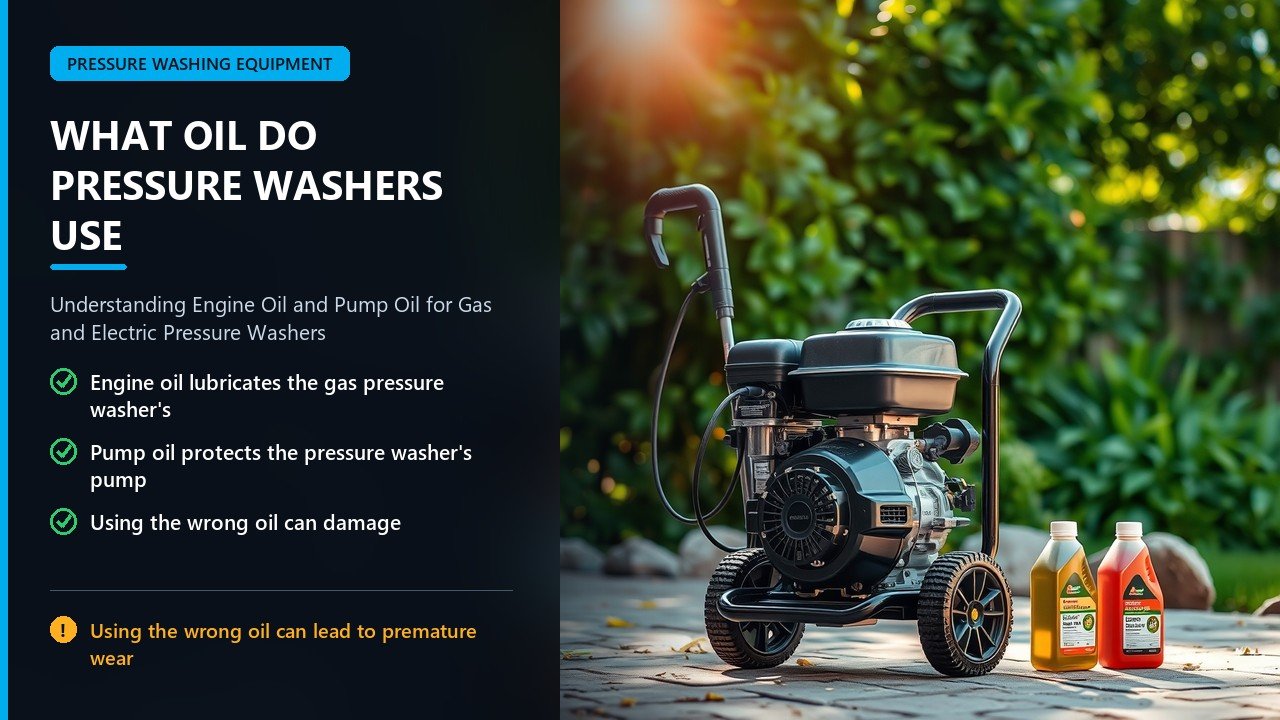
The Two Oils a Pressure Washer Uses
Everything starts with this distinction, so make it clearly.
Engine oil. A gas pressure washer’s engine takes engine oil, the same category of oil a lawn mower or generator uses. It lubricates the engine’s internal parts. Our guide to engine oil for pressure washers covers the details.
Pump oil. The pump, whether on a gas or electric machine, may have its own oil reservoir that takes pump oil, a very different fluid designed for the pump’s needs. Our guide to choosing pump oil covers the type.
Two systems, one machine. A gas pressure washer can have both an engine with oil and a pump with oil, so it may require two different oils at once. Our guide to engine and pump oil explained covers the distinction.
Not interchangeable. Engine oil and pump oil are formulated differently, and mixing them up causes damage. This is the single most important thing to understand about pressure washer oil. Our guide to where a substitute kills the pump explains the risk.
| Oil | Goes In | Found On |
|---|---|---|
| Engine oil | The engine crankcase | Gas machines |
| Pump oil | The pump crankcase | Gas and some electric |
| No oil | Sealed/oil-free pump | Some electric machines |
Engine Oil for a Gas Pressure Washer
Gas engines use oil similar to other small engines, but the exact grade matters.
Small-engine oil. Most gas pressure washer engines use a small-engine oil such as SAE 30, 10W-30, or a grade the manufacturer specifies. The correct grade depends on the engine and climate. Our guide to engine oil selection covers grades.
Viscosity and climate. Viscosity grades describe how oil flows at different temperatures, and the right choice depends on your climate. The SAE viscosity system is the standard behind those numbers. Our guide to 10W-30 engine oil explains one common grade.
Follow the manual. The engine manufacturer’s recommendation is the final word. Check the manual or the engine’s own documentation, not just the pressure washer brand. Our guide to oil explained covers where to look.
Change it on schedule. Engine oil breaks down with heat and use, so it must be changed regularly, especially after a break-in period. Our guide to oils ranked covers options.
Some engines need no changes. A few engines are designed to run their life on the factory oil, but most pressure washer engines need periodic changes. Confirm which yours is. Our guide to engine oil covers the schedule.
| Engine Type | Typical Oil | Notes |
|---|---|---|
| Common small gas engine | SAE 30 or 10W-30 | Per manual, by climate |
| Engine with specific spec | As manual states | Follow engine maker |
| Factory-fill engine | None needed | Rare; confirm |
Pump Oil for a Pressure Washer
The pump’s oil is a different animal, and the wrong choice is destructive.
A special, often non-detergent oil. Pressure washer pumps typically use a specific pump oil, often non-detergent, designed for the pump’s bearings and gears. Detergent engine oil can be harmful in a pump. Our guide to what to avoid in a pump explains why.
Grade and type matter. Pumps may call for a specific viscosity or a special formulation, sometimes brand-specific. Using the recommended pump oil protects the pump and maintains warranty. Our guide to the right pump oil by brand covers specifics.
Some pumps are oil-free. Many consumer pumps, especially axial cam pumps, are sealed and oil-free and need no oil changes. Never try to add oil to a sealed pump. Our guide to pump oil types explains the categories.
Triplex pumps usually use oil. Better triplex pumps have an oil reservoir that must be changed on schedule, which is part of why they last longer. Our guide to triplex versus axial cam explains the difference.
Change it and watch for water. Pump oil should be changed on schedule, and milky oil signals water intrusion and failing seals. Our guide to what pump oil keeps a pump alive covers the signs.
| Pump Type | Oil Need | Action |
|---|---|---|
| Axial cam (sealed) | None | Do not add oil |
| Triplex with reservoir | Pump oil | Change on schedule |
| Brand-specific pump | Specified oil | Follow the maker |
How to Find the Exact Oil Your Machine Uses
Rather than guessing, find the answer your machine provides.
Check the manual. The pressure washer manual states the engine and pump oil types. If the manual is lost, many are available online. Our guide to the value of the manual explains what to look for.
Check the engine’s own documentation. The engine may be made by a different company than the pressure washer, and the engine maker’s recommendation governs the engine oil. Our guide to engine and pump oil covers the split.
Look for a dipstick or fill plug. Engines have a fill point with a dipstick; pumps with oil have a sight glass or fill plug. Their location tells you which oil goes where. Our guide to changing pump oil shows the pump’s oil points.
Check the sight glass. Many pumps have a sight glass showing oil level and condition. A milky or low reading means service is needed. Our guide to pump oil condition covers reading it.
When in doubt, ask. A dealer or the manufacturer can confirm the right oil. Guessing risks an expensive mistake. Our guide to picking the best pump oil helps you decide.
Mistakes to Avoid
Most oil damage comes from a few avoidable errors.
Pouring engine oil into the pump. Detergent engine oil can damage pump internals. Always use pump oil in the pump. Our guide to where a substitute kills the pump explains.
Pouring pump oil into the engine. Pump oil lacks the additives an engine needs, so it will not protect the engine properly. Keep the two oils separate. Our guide to what to avoid covers the distinction.
Using the wrong viscosity. The wrong grade flows incorrectly for the climate, offering poor protection. Follow the manual’s grade. Our guide to pump oil types covers grades.
Adding oil to a sealed pump. Some pumps are oil-free and sealed; adding oil damages them. Confirm before opening anything. Our guide to pump oil choice explains.
Overfilling. Too much oil causes pressure, foaming, and leaks. Fill to the correct level, not above. Our guide to changing pump oil covers the level.
Skipping changes. Oil that is never changed loses its protective properties and damages the engine or pump. Change on schedule. Our guide to oils ranked covers choices.
Change Intervals and Storage
Getting the oil right includes changing it at the right time.
Engine oil intervals. Change engine oil after the first few hours of use and then on the schedule the manual specifies, which may be based on hours or seasons. Our guide to engine oil covers intervals.
Pump oil intervals. Pumps with oil reservoirs typically need changes at longer intervals, often measured in tens or hundreds of hours. Follow the maker’s schedule. Our guide to pump oil by brand covers intervals.
Watch for contamination. Mildew, water, or metal in the oil signals a problem and means an immediate change and inspection. Our guide to pump oil condition covers signs.
Oil for storage. Before winter storage, ensure the engine and pump oils are correct and fresh, and protect the pump from moisture. Our guide to winter storage covers the routine.
Dispose of oil responsibly. Used oil is hazardous waste and must be recycled, never poured down drains or onto the ground. The Environmental Protection Agency regulates used-oil disposal because a single quart can contaminate a large volume of water. Take used oil to a recycling center or an auto parts store that accepts it, and keep it in a sealed container until then.
Keep records. Note oil changes and types so you can repeat them correctly and maintain any warranty. A simple log of dates, types, and hours turns oil maintenance from guesswork into routine. Our guide to oil and the pump explains why consistency matters.
Check the level before big jobs. Low oil is as damaging as wrong oil, so check the engine oil and pump oil levels before long jobs, especially on older machines that may consume or leak a little oil. Topping up with the correct oil takes a minute and prevents a costly failure. Pairing a quick level check with your pre-job routine is one of the cheapest forms of insurance a pressure washer owner can adopt.
Electric Pressure Washers and Oil
Electric machines change the oil question, so they deserve their own look.
No engine, so no engine oil. An electric pressure washer has an electric motor instead of a gas engine, so there is no engine crankcase to fill. That removes one of the two oil systems entirely. Our guide to electric washer motors explains the internals.
The pump may still need oil. Some electric machines use pumps with oil reservoirs that need periodic changes, while many use sealed, oil-free pumps. Confirm which yours is before assuming anything. Our guide to pump oil by brand covers types.
Sealed pumps need nothing. Most consumer electric pumps are sealed and oil-free, meaning the oil question does not apply at all. Do not open a sealed pump to add oil. Our guide to pump oil types explains.
Motor lubrication is sealed too. Electric motors are typically sealed and lubricated for life, so there is no oil to add there either. Our guide to motor types covers design.
The practical answer for electric. For most electric washers, the oil question has a simple answer: check whether the pump has an oil reservoir, and if it does, use the specified pump oil on schedule; if not, nothing is needed. Our guide to engine and pump oil explained covers the split.
Choosing Among Brands and Grades
Once you know which oil you need, selecting a good one is straightforward.
Match the specification, not just the brand. The most important thing is meeting the required specification, whether that is an engine oil grade or a specific pump oil. A matching spec from a reputable brand is the goal. Our guide to oils ranked covers options.
Pump oil: use the pump maker’s recommendation. Pump oils are more specialized than engine oils, and the pump manufacturer’s recommendation is the safest choice. Some brands specify their own oil. Our guide to picking pump oil covers specifics.
Engine oil: a reputable small-engine oil works. For the engine, a reputable small-engine oil in the correct grade is fine, and you do not necessarily need a pressure-washer-specific product. Our guide to engine oil selection covers grades.
Beware of false economies. Saving a few dollars on the wrong oil can cost a pump or an engine worth far more. Choose the correct oil even if it costs a little more. Our guide to where a substitute kills the pump explains.
Buying in the right quantity. Pumps and engines hold small amounts, so a single small bottle usually covers several changes. Keep a labeled bottle of each oil on hand for easy, correct maintenance.
Oil and Pump Protection Go Together
Oil is only half of pump care; the other half is protecting the pump from water and cold.
Oil protects the mechanical side. Pump oil lubricates bearings and gears, but it does nothing for the water side of the pump, where corrosion and freeze damage occur. Our guide to pump conditioners covers the water side.
Conditioner protects the water side. A pump conditioner or saver fluid displaces water after use, preventing the corrosion and freeze damage that kill pumps. Oil and conditioner address different problems. Our guide to pump protector fluid explains.
Both are needed. A pump needs oil changes on schedule and conditioning after use. Neglecting either leaves the pump half-protected. Our guide to pump savers covers conditioning.
Never run dry. No oil or conditioner prevents the damage of running a pump without water, which wears seals rapidly. Always supply water before starting. Our guide to pump failure causes explains.
Store with protection. Before storage, ensure the oil is fresh, condition the pump, and protect the machine from freezing. Our guide to winter storage covers the routine.
Frequently Asked Questions
What oil does a pressure washer use? It depends on the part. A gas pressure washer uses engine oil in its engine and pump oil in its pump. An electric pressure washer has no engine but may have a pump that needs pump oil, or a sealed oil-free pump.
Can I use the same oil in the engine and pump? No. Engine oil and pump oil are formulated differently, and using one in place of the other can damage the component. Use each oil only where it belongs.
What kind of oil does a pressure washer pump use? A specific pump oil, often a non-detergent formulation, sometimes brand-specific. Check the manual or the pump maker’s recommendation, and never use engine oil in the pump.
What engine oil should I use? A small-engine oil such as SAE 30 or 10W-30, in the grade the engine manufacturer specifies for your climate. The engine’s own documentation governs.
Do all pressure washers need oil changes? No. Engines generally need oil changes, but many consumer pumps are sealed and oil-free and require none. Pumps with oil reservoirs need periodic changes.
How do I know my pump takes oil? Look for a sight glass, fill plug, or drain plug on the pump. If there is none, the pump is likely sealed and should not be opened.
What happens if I use the wrong oil? Engine oil in a pump or pump oil in an engine can cause poor lubrication, foaming, overheating, and failure, potentially within minutes. Always use the specified oil.
Final Thoughts on What Oil Pressure Washers Use
The answer to what oil a pressure washer uses begins with recognizing that a pressure washer has two separate oil systems. A gas machine uses engine oil in its engine and pump oil in its pump, and those two oils are not interchangeable. An electric machine usually has no engine, but its pump may need oil or may be sealed and oil-free. Understanding which part you are dealing with is the difference between protecting your machine and destroying it.
To get it right, check the manual and the engine maker’s documentation for the exact engine oil, and the pump maker’s recommendation for the pump oil. Use the correct grade for your climate, change each oil on schedule, watch for contamination, and dispose of used oil responsibly. Never substitute a random oil, never mix engine oil into a pump, and never open a sealed pump to add oil it does not need.
That is the lesson Grace learned in the auto parts store. Once she understood that her gas pressure washer had two oil systems needing two different oils, the confusing shelf of bottles became clear, and she chose correctly. Know which oil goes where, keep both on hand and labeled, and your engine and pump will reward you with years of service. The right oil in the right place is one of the simplest and most powerful maintenance habits you can build.