The owner of a small restaurant equipment repair shop spent months fighting the same problem. Every fryer hood, every greasy pan rack, and every caked grill grate came in coated in a layer of baked-on oil that cold water simply could not touch. He was buying cases of degreaser, scrubbing until his arms ached, and still sending parts back to the kitchen with a film on them. Then he rented time on an electric hot water pressure washer rated at 4000 PSI. The difference was not subtle. The heat softened the grease into something the water could simply push away, and what used to take an hour took fifteen minutes, with no harsh chemical smell lingering in the shop. He stopped thinking of hot water as a luxury and started treating it as a productivity tool.
That shift is why so many commercial and serious home users ask about an electric hot water pressure washer 4000 PSI machine. It sounds like the perfect combination: the plug-in simplicity and clean operation of an electric unit, the grease-melting power of hot water, and the top-tier pressure of the 4000 PSI class. The reality is a little more nuanced, because a machine that combines all three is a demanding piece of equipment with real electrical requirements and real trade-offs. This guide explains what these machines are, how hot water actually cleans, what it takes to run one, where they earn their keep, and how to choose wisely instead of buying blind.
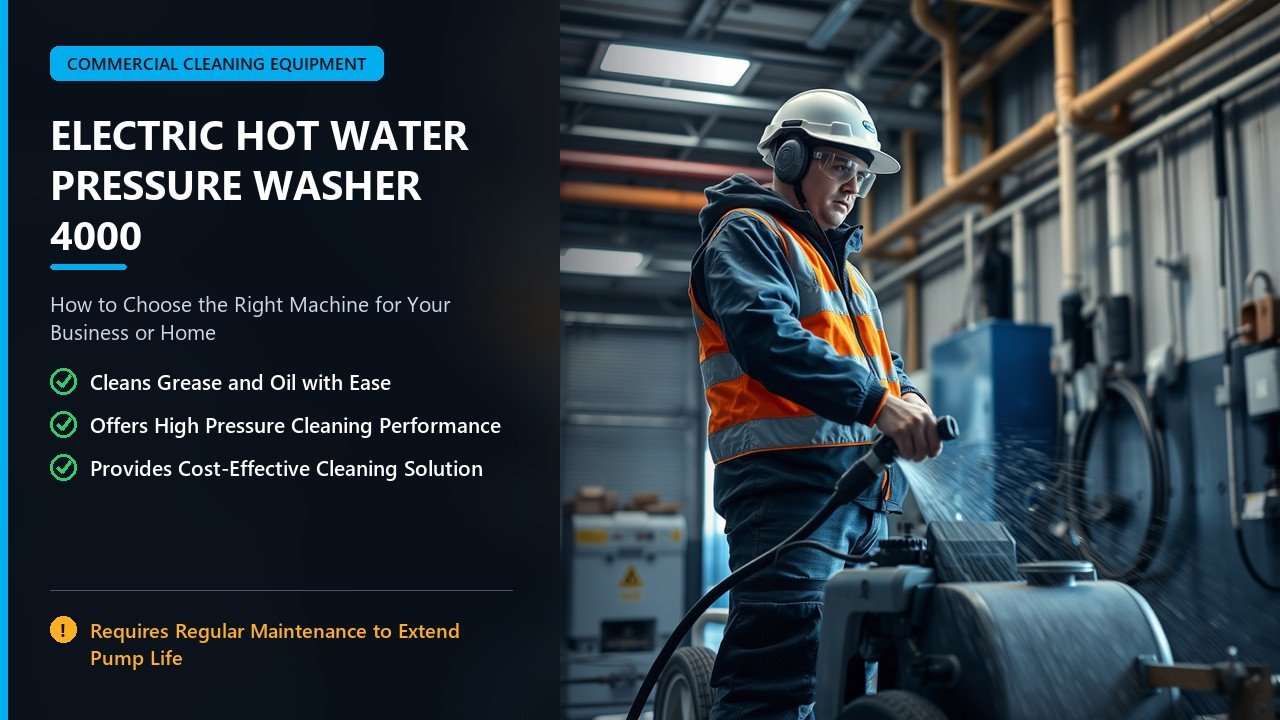
What “Electric Hot Water Pressure Washer 4000 PSI” Really Means
The phrase bundles three separate ideas, and separating them clears up a lot of confusion.
Electric. The pump is driven by an electric motor rather than a gasoline or diesel engine. That means no fuel to store, no exhaust, quiet operation, and the ability to run indoors where an engine would be unsafe and illegal. Electric motors come in different types, and a serious 4000 PSI unit uses a heavy-duty motor, often running on 240 volts or three-phase power, not a standard household outlet.
Hot water. The machine heats the water before it reaches the nozzle. This heat does not come from the electric motor; it comes from a dedicated heater. Most industrial hot water units use a fuel-fired burner, typically diesel, propane, or natural gas, while some smaller units use electric heating elements. The heat is what makes grease, oil, and heavy grime release from a surface far faster than cold water alone.
4000 PSI. This is the top of the mainstream pressure range, a class usually reserved for professional and heavy commercial work. At 4000 PSI with a healthy flow rate, a machine can strip stubborn buildup from concrete, machinery, and fleet vehicles. Pairing 4000 PSI with heat and an electric motor produces a true industrial tool, which is why an honest look at this category has to include the electrical demands it places on a building. Our guide to the 4000 PSI professional class covers the pressure end in detail.
How Hot Water Actually Cleans Better
Heat is not a gimmick added to impress buyers. It changes the physics and chemistry of cleaning in ways that cold water cannot replicate, which is why professional wash bays, food plants, and fleet shops rely on it.
Heat thins oils and grease. Grease is thick and sticky when cold. Warm it and it becomes a thin, flowing liquid that water can lift and carry away. This is the single biggest reason hot water beats cold on any oily surface, from a car engine bay to a commercial kitchen floor. What takes repeated passes and aggressive chemicals with cold water often comes off in one pass with hot.
Heat speeds up chemical reactions. Detergents and degreasers work faster and more completely in warm water. Heat helps the cleaning agents penetrate and dissolve grime, so you use less chemical and get a better result. In food-processing and healthcare settings, where chemicals are restricted, heat often does the work that harsh chemistry cannot.
Heat improves drying and sanitation. Hot water leaves surfaces warmer, which helps them dry faster and reduces the chance of streaks and water spots. Heat also helps sanitize surfaces that must be clean for health reasons, which is why food service and medical environments prize hot water cleaning. Our article on how hot water pressure washing beats cold on grease and grime digs into the details.
| Water Temperature | Effect on Grease and Oil | Typical Use |
|---|---|---|
| Cold (ambient) | Grease stays thick and resists removal | Light dirt, vehicles, siding, concrete |
| Warm (about 100 to 120 F) | Grease softens and loosens | General commercial cleaning |
| Hot (about 140 to 200 F) | Grease thins and releases quickly | Kitchens, engines, machinery, wash bays |
| Steam (above 200 F) | Melts, sanitizes, and cleans with little water | Heavy industrial and sanitizing work |
The Electrical Reality of a 4000 PSI Electric Washer
Here is where many buyers get surprised. An electric pressure washer at 4000 PSI draws serious power, and a standard 120-volt household outlet cannot feed it. These machines typically require 240-volt single-phase power or, in larger industrial sizes, three-phase service, and they pull enough current that the circuit must be dedicated to the machine.
Amps matter as much as volts. Power is pressure times flow on the water side and volts times amps on the electrical side, and a 4000 PSI machine needs a lot of electrical power. A typical high-output electric unit may need a 240-volt circuit on a 30-amp or larger breaker, and some three-phase industrial models draw even more. Running one on an undersized circuit trips breakers, heats wiring, and can damage the motor. Our breakdown of 240-volt pressure washer outlets, amps, and wiring walks through how to size a circuit correctly.
Rarely portable in the usual sense. Because they need a substantial power feed and often a water supply, these machines are usually installed rather than rolled around. If you truly need portability and 4000 PSI with heat, the more common solution is an engine-driven unit with a burner, which carries its own power source. That is a key reason the market for very high pressure hot water machines leans toward gas and diesel engines, while electric heat tends to dominate at lower pressures. Our guide to 4000 PSI washers compared lays out the trade-offs clearly.
| Power Source | Typical Supply | Portability | Best For |
|---|---|---|---|
| 120V electric (small) | Standard outlet, 15 to 20 amps | High | Light home cleaning, lower PSI |
| 240V electric (large) | Dedicated circuit, 30 to 50+ amps | Low to moderate | Fixed wash bays, indoor cleaning |
| Three-phase electric | Industrial service | Fixed | Heavy industrial wash systems |
| Gas or diesel engine | Onboard fuel | High | Mobile and remote high-pressure work |
How the Water Gets Hot: Heater Types
The heat source is a separate decision from the motor, and it changes how the machine runs, what it costs, and where it can be used.
Diesel-fired burner. The most common heat source on industrial units. Diesel burners heat water quickly and hold high temperatures well, which suits wash bays and heavy cleaning. They need a fuel supply and produce exhaust, so they must be vented and used with proper airflow.
Natural gas burner. Natural gas is clean and convenient where a gas line exists. It suits fixed installations in shops and plants, but it ties the machine to one location and requires proper venting and gas plumbing. Our look at a pressure washer with hot water and why heat wins on grease covers how these burners fit into a cleaning setup.
Propane burner. Propane offers fuel flexibility, especially for locations without a gas line or a diesel supply. It burns cleanly and heats well, and it can power a machine that is more portable than a fixed gas installation.
Electric heating elements. Some units heat water with electric elements rather than a flame. These are clean and fume-free, which is ideal indoors, but they draw even more electrical power, so they are typically found on smaller units and specialty applications. Our article on the all-electric hot water pressure washer explores where element heating makes sense.
Hot Water Versus Steam: Which Do You Need?
Hot water and steam are closely related, and buyers often confuse them. A hot water machine heats water to a high temperature and sprays it as a powerful liquid stream. A steam pressure washer heats a mix of water and steam to an even higher temperature, producing a lighter, drier vapor that cleans with far less water.
Choose hot water when you need the physical force of a strong spray to blast off caked grime, strip heavy buildup from concrete, or wash a fleet of muddy vehicles. The volume of water does a lot of the work, and the pressure gives it teeth. For most grease and dirt removal, hot water at 140 to 200 degrees Fahrenheit with strong flow is the practical answer.
Choose steam when water use must stay low, when surfaces cannot tolerate a soaking, or when sanitizing matters. Steam loosens sticky residues and can sanitize in a single pass, which suits food equipment, tight machinery, and areas where runoff is a problem. Many industrial machines offer both modes, letting you switch between hot water and steam depending on the job. If sanitizing and low water use are priorities, our look at a pressure washer steamer shows how the two modes compare in practice.
Where an Electric Hot Water Pressure Washer Earns Its Keep
These machines are not for everyone. They make sense where heat, power, and cleanliness matter more than portability.
Commercial kitchens and food service. Grease is the enemy in food service, and hot water is the natural weapon. Exhaust hoods, floors, walk-in coolers, and equipment all clean faster and more thoroughly with heat, and the lack of engine exhaust makes indoor use practical.
Auto and truck shops. Engine bays, undercarriages, and parts coated in oil and road grime come clean far faster with hot water. A fixed 4000 PSI electric unit with a diesel burner suits a dedicated wash bay where volume and consistency matter. Our guide to a commercial 4000 PSI pressure washer explains the duty cycle demands of this kind of work.
Manufacturing and industrial plants. Machinery, conveyor systems, and production floors accumulate oil, coolant, and process residue that cold water struggles to move. Hot water cleaning fits naturally into a maintenance routine, and electric drive suits enclosed spaces where engines are not allowed.
Large facilities with fixed cleaning stations. Hospitals, schools, and warehouses that want a permanent, ready-to-use cleaning station often choose a wall-mounted or floor-mounted electric hot water unit wired into the building. A fixed machine that is always ready removes the setup friction that keeps cleaning from happening.
The Challenges Nobody Mentions Up Front
A powerful tool brings powerful responsibilities, and buyers should know the hidden costs before committing.
Electrical infrastructure. You may need an electrician to run a dedicated circuit, upgrade a panel, or install three-phase service. That cost can rival the price of the machine, so budget for it.
Weight and footprint. A 4000 PSI hot water electric unit is heavy, often built on a skid or cart, and it needs a permanent home with clearance for airflow and hot components. This is not a machine you lift into a truck bed on a whim.
Fuel and venting for the burner. If the heat comes from diesel, propane, or gas, you need fuel storage or a supply line plus proper ventilation. Running a burner indoors without correct venting is a serious safety and legal problem.
Scale and hard water. Heating water accelerates scale buildup inside the coil and heater. Hard water shortens the life of a hot water machine if you do not manage it with softening or regular descaling. Our guide to keeping a stationary pressure washer ready every day covers the maintenance habits that protect a fixed machine.
Higher purchase cost. Combining heat with 4000 PSI and electric drive puts a machine in a premium price bracket. The justification is not the sticker price; it is the labor and chemical savings over years of hard use.
The Startup Cost of a 4000 PSI Machine
A 4000 PSI pressure washer is a special purchase with significant startup cost. Beyond the machine itself, budget for the electrical work, the fuel hookup and venting, a water supply that can keep up, and proper drainage for all the wastewater and grease you will be washing away. Many municipalities regulate what can go down a drain, especially where oil and grease are involved, so factor in a separator or an approved disposal method. The U.S. Environmental Protection Agency publishes guidance on fats, oils, and grease that clog sewer systems, and local pretreatment rules often apply to wash water from commercial cleaning. The full picture, including operating costs and what the machine can realistically clean, is covered in our complete guide to the 4000 PSI class. Buying the machine is step one; making the site ready is the rest of the project.
Sizing a 4000 PSI Machine to Your Real Work
Pressure gets all the attention, but three other numbers decide whether a hot water machine actually fits your operation: flow, duty cycle, and what the nozzle needs. Getting these right matters more than chasing the highest PSI on the spec sheet.
Flow rate moves the water. A 4000 PSI machine with a strong flow rate cleans faster than the same pressure with a weak flow, because more water carries away more loosened grime per pass. The higher flow also lets you run a wider nozzle, which cleans larger areas in the same time. When you compare machines, look at the combination of pressure and flow, not pressure alone. Our guide to why flow can matter more than pressure explains the relationship in plain terms.
Duty cycle is the honest spec. A machine rated for continuous commercial duty can run for hours without overheating, which is essential in a busy wash bay. A light-duty unit rated for only a fraction of that time will fail under the same workload. Be honest about how many hours a day the machine will run, and buy a machine rated to match. Nozzle size, in turn, must match the machine’s pressure and flow, or the pump will operate off its intended curve and lose efficiency. The U.S. Department of Energy notes that electric motors run most efficiently when they are properly sized to their load, and the same logic applies to a pressure washer pump.
Water supply and drainage. A 4000 PSI machine at commercial flow drinks water fast. Confirm your supply can keep up, or you will starve the pump and damage it. Plan the other end of the process too. All that hot water carries grease and grime, and where it goes matters. Handle wastewater responsibly with a separator or approved disposal, and follow local rules for what can enter the drain.
Match the machine to the workload, not the brochure. If your jobs are steady and heavy, a true commercial 4000 PSI hot water unit is the right tool. If your work is occasional, a smaller hot water machine or a cold unit with good chemistry will clean well for far less money and electrical hassle. The best machine is the one that fits the hours you actually work.
Common Mistakes Buyers Make
Assuming any outlet will do. A 4000 PSI electric machine will trip a household circuit immediately. Confirm your service before you buy, not after.
Ignoring the duty cycle. Continuous commercial use demands a machine built for it. A light-duty unit pushed hard will overheat and fail early. Match the machine’s rated duty cycle to your workload.
Forgetting ventilation. A fuel-fired burner indoors needs fresh air and an exhaust path. Skipping this is dangerous and often against code.
Neglecting descaling. Hot water plus hard water equals scale. Without regular descaling, the heater loses efficiency and eventually fails.
Buying too much machine. If your work is light, a smaller hot water unit or a cold machine with good chemistry may do the job for far less money and electrical fuss.
Maintenance That Protects a Big Investment
A 4000 PSI hot water machine is expensive enough that maintenance pays for itself. Change pump oil on schedule, because heat and hard use break oil down faster than on a cold machine. Descale the heater and coil regularly, especially in hard water areas, using a purpose-made descaling solution. Inspect the burner, fuel lines, and filters for safe, clean combustion. Check the nozzle and o-rings for wear, since a worn tip at 4000 PSI can etch and damage surfaces. Keep the unit clean and free of grease buildup, because a greasy machine is a fire risk. And protect it from freezing, since trapped water in a heater coil can crack expensive components. The right oil and fluid choices are covered in our guide to the pump oil that actually keeps a pump alive.
Frequently Asked Questions
Does a 4000 PSI electric hot water pressure washer need a special outlet? Yes. A 4000 PSI electric unit typically needs a dedicated 240-volt circuit or three-phase service, not a standard 120-volt outlet. Have an electrician confirm your service before buying.
Can I run a hot water pressure washer indoors? If it is electric-drive and the burner is properly vented, yes. An engine-driven unit cannot run indoors because of exhaust. Never run a fuel burner indoors without correct ventilation.
Is hot water worth the extra cost? For grease, oil, and heavy commercial grime, hot water saves so much labor and chemical that it often pays for itself. For light cleaning of siding or patios, cold water is usually enough.
How does the water get hot on an electric unit? The heat comes from a separate burner or heating element, not from the motor. Diesel, propane, natural gas, and electric heating elements are all used, and each has different installation needs.
Why are so many 4000 PSI hot water machines engine-driven? Because heating water and making 4000 PSI demand a lot of energy, and an engine carries its own power source. Electric hot water units at this level are usually installed where a strong electrical service already exists.
What temperature should I use? Most commercial degreasing happens between about 140 and 200 degrees Fahrenheit. Sanitizing and steam cleaning push higher. Start lower and increase heat only as needed, and always test on a hidden surface.
Final Thoughts on the Electric Hot Water Pressure Washer 4000 PSI Class
An electric hot water pressure washer at 4000 PSI is a specialized tool, not a casual purchase. It combines the clean, quiet, indoor-friendly operation of an electric motor with the grease-melting power of heat and the top-tier force of the 4000 PSI class. That combination is transformative in the right setting and impractical in the wrong one, and the deciding factors are almost always your electrical service, your ventilation, and the kind of grime you face every day.
If your work involves oil and grease, if you clean indoors, and if you are ready to provide the power and fuel the machine needs, a hot water electric unit can cut your labor dramatically and reduce your reliance on harsh chemicals. Start by confirming your electrical capacity, decide how you will heat the water, provide proper ventilation, plan for descaling and wastewater, and match the pressure and flow to your real jobs. Keep the machine maintained, protect the heater from scale and frost, and treat it with the respect a 4000 PSI tool deserves.
Do that, and the machine stops being a heavy, expensive box in the corner. It becomes the tool that turns a job that used to eat a whole morning into a fifteen-minute task, which is exactly the kind of change that makes the investment worth every dollar.