A mechanic named Priya had a stubborn problem: a transmission case coated in a thin, baked-on film of oil that refused to budge. She tried a stronger degreaser, then a stiffer brush, then more pressure, and still the film laughed at her. A veteran at the shop walked over, swapped her cold-water wand for the shop’s hot water unit, and cleaned the same case in a single pass. The grease did not resist this time. It simply melted and slid off. Priya had spent an hour fighting chemistry and force when the missing ingredient was temperature, and that afternoon taught her something every experienced cleaner knows: hot water for a pressure washer is not a luxury, it is a lever that multiplies everything else the machine does.
Heat changes how water behaves against grime. It softens oils, accelerates detergents, and helps surfaces release the dirt that cold water only pushes around. But hot water is not right for every job, and it is not free. It requires a heater, often a fuel source, and more maintenance, and on some surfaces the extra heat and pressure can do damage. This guide explains how hot water actually cleans, what temperatures matter for which jobs, how the water gets hot on different machines, when cold water is the smarter choice, and how to get the benefits of heat without overspending or risking the surface in front of you.
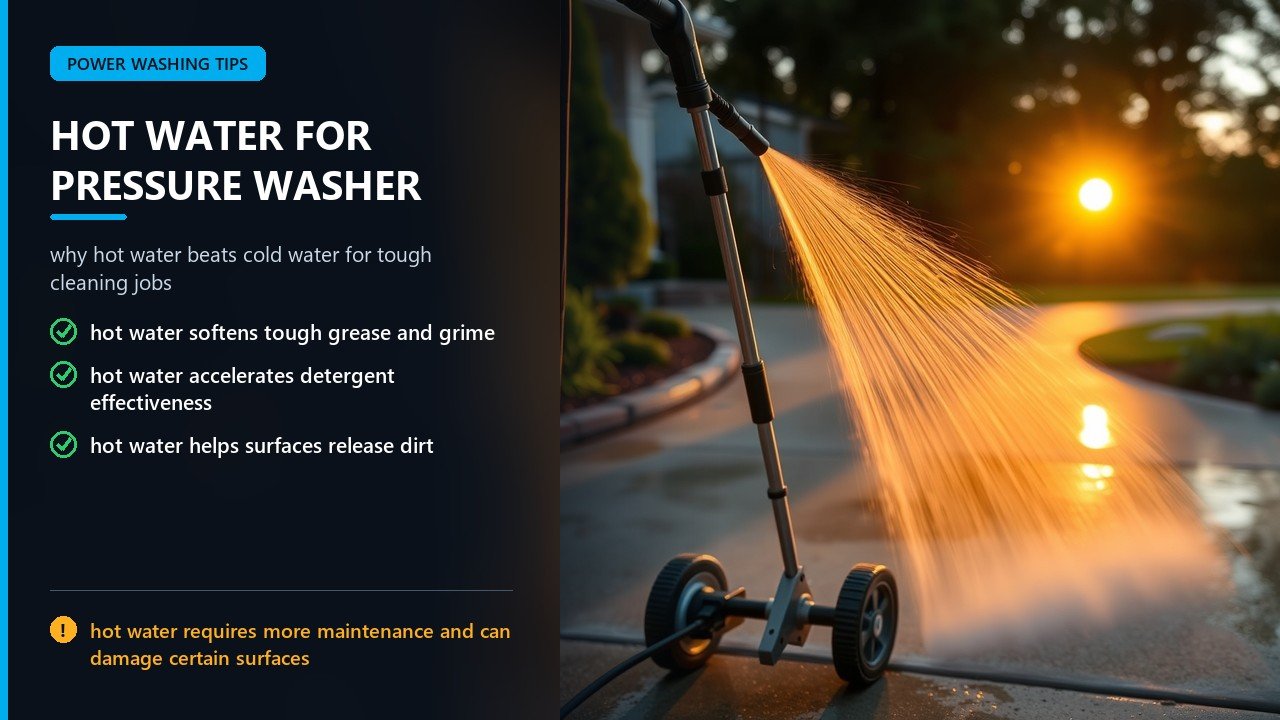
What Hot Water Means for a Pressure Washer
A hot water pressure washer is a cold water machine plus a heater. The pump, hose, and nozzle work much the same way, but before the water reaches the gun, it passes through a heating system that raises its temperature. That single change transforms what the machine can clean.
The temperature scale. Cold water comes out at whatever temperature the supply provides, often 50 to 70 degrees. Warm water, around 100 to 120 degrees, is the everyday commercial range. Hot water, roughly 140 to 200 degrees, is the heavy-duty degreasing range. Steam, above 200 degrees, is a specialized mode for sanitizing and for jobs where water volume must stay low. Each step up the scale widens the range of grime the machine can defeat.
Heat is a multiplier, not a replacement. Hot water does not eliminate the need for pressure, detergent, or technique. It amplifies them. Heat plus detergent plus pressure removes grease far faster than any one of those alone, which is why professional wash bays and food plants rely on all three together. Our guide to how hot water pressure washing beats cold on grease and grime explores that combination.
Hot water and steam are different tools. Hot water sprays a large volume of heated liquid, which rinses and pushes debris away. Steam delivers a high-temperature vapor with very little water, which softens and sanitizes with less runoff. Many machines offer both. Our comparison of a steam washer versus a pressure washer explains where each mode earns its keep.
How Heat Actually Cleans Better
The advantage of hot water is not psychological. It comes down to three physical and chemical effects that cold water cannot reproduce.
Heat thins grease and oil. Oils and fats are thick when cold and flow when warm. Heat turns a sticky, clinging film into a thin liquid that water can lift and carry away. This is the single biggest reason hot water outperforms cold on any oily surface, from an engine bay to a commercial kitchen floor.
Heat accelerates chemistry. Detergents and degreasers dissolve and react faster in warm water. Heat helps them penetrate the grime, so less chemical does more work. In settings where harsh chemicals are restricted, heat often closes the gap.
Heat speeds drying and improves sanitation. Warmer surfaces dry faster, reducing streaks and spots. In food service and healthcare, where cleanliness has a safety dimension, heat helps sanitize surfaces that must be free of contaminants. The U.S. Food and Drug Administration recognizes that hot water plays a role in cleaning and sanitizing food-contact surfaces, which is part of why hot water cleaning is standard in those environments.
| Water Temperature | What It Does to Grime | Typical Jobs |
|---|---|---|
| Cold (ambient) | Loosens light dirt, no effect on grease | Siding, patios, vehicles, light buildup |
| Warm (100 to 120 F) | Softens grease, boosts detergent | General commercial cleaning |
| Hot (140 to 200 F) | Thins and releases oil fast | Engines, kitchens, machinery, fleets |
| Steam (above 200 F) | Melts and sanitizes, low water use | Food equipment, tight machinery, sanitizing |
How the Water Gets Hot
The heater is a separate system from the pump, and the fuel it uses shapes where the machine can run and what it costs to operate.
Diesel-fired burners. The most common heat source on industrial machines. Diesel burners reach high temperatures quickly and hold them well, making them ideal for wash bays and heavy cleaning. They need fuel and produce exhaust, so they require ventilation.
Natural gas burners. Clean and convenient where a gas line is available, natural gas suits fixed installations in shops and plants. It ties the machine to one location and requires proper plumbing and venting. Our overview of a pressure washer with hot water covers how these burners fit into a cleaning setup.
Propane burners. Propane offers flexibility for sites without a gas line or diesel supply. It burns cleanly and heats well, and it suits machines that need to be more portable than a fixed gas unit.
Electric heating elements. Some machines heat water with electric elements. These are fume-free and ideal indoors, but they draw significant electrical power, so they tend to appear on smaller units and specialty applications. Our look at an electric hot water pressure washer that cleans grease and grime faster explores where element heating makes sense.
Coil and flow design. Most hot water machines heat water by passing it through a coil inside the burner, where it picks up heat rapidly. The machine’s flow rate and the burner’s output determine the temperature rise. Push too much flow through a small coil and the water never gets truly hot; match the flow to the heater and the temperature climbs as expected. This is why flow and heat are linked on a hot water machine.
When Cold Water Is the Better Choice
Hot water is a powerful option, not a universal one. On many common jobs, cold water is simpler, cheaper, and just as effective, and heating water for them wastes money and energy.
Use cold water for rinsing siding and roofs, cleaning patios and driveways of dirt and mold, washing vehicles that only need a rinse and a soap cycle, and any job where the grime is dirt rather than grease. Cold water handles soil, mud, and most biological growth perfectly well, especially with a good detergent. Our guide to a cold water pressure washer and when to use one makes the case.
Use hot water when grease and oil are the enemy, when chemical use must be minimal, or when sanitizing matters. Kitchens, engine bays, manufacturing floors, and food equipment are the classic hot water jobs, and heat turns each of them from a chore into a quick pass.
| Job | Cold Water | Hot Water |
|---|---|---|
| Vinyl siding and roofs | Ideal | Unneeded |
| Driveways and patios | Ideal | Unneeded |
| Vehicle exterior | Usually enough | Helpful for heavy grime |
| Engine bays and parts | Struggles with oil | Uses far less effort |
| Commercial kitchens | Chemicals required | Dramatically better |
| Machinery and floors | Slow on oil | Fast and thorough |
Practical Temperature Targets
Temperature is a dial you can use intelligently rather than an on-or-off switch. The right setting depends on the grime and the surface.
Start lower and increase as needed. Many operators clean grease at 140 to 160 degrees and only push to 180 or 200 for the toughest buildup. Starting cooler protects surfaces and saves fuel, and many jobs come clean without reaching the top of the range. If a lower temperature works, there is no reason to go higher.
Match heat to the surface, not just the grime. Some surfaces cannot take high heat, and some coatings, plastics, and painted finishes can be softened or damaged by hot water combined with pressure. Always test in a hidden area and keep the wand moving. The same rule that governs pressure governs temperature: enough to clean, not enough to harm.
Remember that heat plus pressure compounds. A hot, narrow, high-pressure jet is far more aggressive than any one factor alone. On delicate surfaces, reduce pressure or increase distance even when the heat is helping, and use the widest nozzle that still cleans.
Ways to Get Hot Water Without Buying a Hot Water Machine
Not everyone needs to own a heated unit. If you only face grease occasionally, several middle-ground options deliver heat without the cost and upkeep of a full hot water machine.
Rent for the big jobs. Equipment rental yards stock hot water pressure washers by the day. Renting lets you experience the difference, finish a specific job, and decide whether buying is justified. For a homeowner who cleans greasy equipment once or twice a year, renting is almost always the cheaper path.
Use a detergent designed for cold water. No heat source, but modern cold-water degreasers are formulated to work at lower temperatures. They will not match hot water on baked-on grease, but paired with a longer dwell time and a stiff brush, they close much of the gap. Applying the chemical, letting it sit, and then rinsing is often the missing step, not the temperature.
Feed the machine warmer water where permitted. Some operators connect the pressure washer to a warm supply, such as a utility sink or a heated tank. This can raise the outlet temperature a little, but the benefit is limited because household supplies rarely deliver enough hot water at the flow a pressure washer demands, and many pumps have maximum inlet temperature limits. Check your machine’s manual before feeding it anything warm.
Consider a dedicated hot water unit as a fixed station. If grease is a regular part of a business, a fixed hot water machine wired or plumbed into a wash bay is the right long-term answer. It costs more up front but removes the ongoing cost of renting and the frustration of working around a weak heat source. Our guide to the best hot pressure washer and what sets them apart helps compare models.
Temperature and Detergent: A Winning Pair
Heat and chemistry amplify each other, and the way you combine them often matters more than either one alone. A good detergent in hot water cleans far better than the same detergent in cold, which is why professional cleaners rarely use one without the other.
Apply, dwell, and rinse. The most effective technique is to apply detergent, let it sit long enough to break the grime down, and then rinse with hot water. The dwell time is the step most people skip, and it is often the difference between a hard scrub and an easy pass. Even a minute of dwell time lets the chemistry do work that pressure would otherwise have to do alone.
Match the detergent to the grime. Alkaline degreasers handle grease and oil, acidic cleaners handle mineral deposits, and neutral cleaners suit general dirt and delicate surfaces. Using the wrong chemistry wastes water and effort, and can harm surfaces. Heat makes the right chemistry work faster, so the combination of correct detergent and correct temperature is the real secret to fast cleaning.
Rinse thoroughly. Detergent left on a surface can leave streaks, attract dirt, or damage a finish. A clean, heated rinse removes residue and helps the surface dry spot-free, which is one more reason hot water leaves a better finish than cold.
The Costs and Challenges of Hot Water
Heat brings real advantages and real obligations. Understanding the downsides keeps the decision honest.
Higher purchase price. A hot water machine costs more than a comparable cold unit because of the burner or heater, the heavier frame, and the extra components. The price gap is significant and should be weighed against the labor and chemical savings.
Fuel or power consumption. Heating water uses energy, whether from diesel, propane, gas, or electricity. Operating costs are part of the ownership picture, and they add up with heavy use. The trade-off is usually justified only when grease is a regular part of the work.
Ventilation and safety. A fuel burner must be vented and used with adequate airflow. Running a burner indoors without proper exhaust is dangerous and often illegal. Electric element heaters avoid exhaust but demand substantial power.
Scale and hard water. Heating water accelerates the buildup of scale inside the heater coil. Hard water shortens a hot water machine’s life unless it is managed with softening or regular descaling. This maintenance is non-negotiable on a hot water unit.
More maintenance. Burners, coils, fuel lines, and filters all need attention. A hot water machine asks more of its owner than a cold one, which is why many owners who rarely face grease stay with cold water and save themselves the upkeep.
Descaling: The Maintenance That Keeps Hot Water Hot
If a hot water machine has one lifelong enemy, it is scale. Heating water causes dissolved minerals, especially calcium and magnesium, to deposit on the inside of the heater coil. Over time that crust insulates the coil, reduces heat transfer, and forces the burner to work harder for the same temperature. Left unchecked, scale can clog the coil entirely, and the machine that once produced scalding water produces lukewarm water at best.
How often to descale. The right interval depends on your water hardness and how much you run the machine. Hard water and heavy use mean more frequent descaling, sometimes monthly in commercial settings. Soft water and light use stretch the interval considerably. A good rule is to watch the machine’s performance: if it takes longer to reach temperature or never gets as hot as it used to, scale is building.
How to descale. Descaling uses a purpose-made acid solution circulated through the heater coil to dissolve the mineral deposits. Follow the manufacturer’s procedure and safety instructions, and wear protective gear, because descaling chemicals are corrosive. Many wash operators descale on a set schedule rather than waiting for symptoms, because prevention is far cheaper than a replacement coil.
Slow scale with soft water. If your water is hard, a water softener or a pre-filter on the supply line reduces the minerals that form scale in the first place. This single step can dramatically extend the life of a hot water machine and reduce descaling frequency. It is one of the smartest investments a hot water owner can make.
Protect the rest of the machine too. Heat also stresses pump oil and seals, so change oil on schedule and inspect for heat-related wear. Keep the burner clean and the fuel system sound, check the nozzle for wear, and protect the machine from freezing, since trapped water in a coil can crack it. A hot water machine rewards a routine the same way a good truck rewards regular service: it keeps working, and it keeps working well.
Common Mistakes With Hot Water Cleaning
Heating water for jobs that do not need it. Siding and driveways do not care about temperature. Heating water there wastes fuel and money.
Ignoring descaling. Hot water plus hard water equals scale. Skip descaling and the heater loses efficiency and eventually fails.
Using a cold-water hose or gun on a hot machine. Standard hoses and guns are not rated for heat and will fail. Use heat-rated components. Our guide to a heat-rated pressure washer hose explains what to look for.
Assuming hotter is always better. Excess heat can damage coatings and surfaces. Match the temperature to the surface, and test first.
Running a burner without ventilation. Dangerous and against code indoors. Vent the exhaust and provide fresh air.
Forgetting the pump still needs care. Heat stresses pump oil, so change it on schedule. Heat does not excuse the pump from maintenance, and our guide to the pump oil that keeps a pump alive applies just as much to hot machines.
Safety Around Hot Water and High Pressure
Hot water adds a burn hazard to everything a pressure washer already requires you to respect. Both hot water and high-pressure jets can injure someone in an instant, which is why the Occupational Safety and Health Administration treats high-pressure cleaning as a serious hazard. Never point the wand at a person or an animal, never use your hand to test the spray, and always wear eye and skin protection. Be mindful that hot water and steam scald instantly, and keep children and pets well clear of the work area. Check hoses and fittings for heat damage, since a hot-water failure can be worse than a cold one. Respect the fuel system of the burner, keep flames and vapors away from fuel, and store fuel safely. Heat is a powerful ally when handled with care and a genuine danger when treated casually.
Frequently Asked Questions
Does hot water clean better than cold water? For grease, oil, and heavy commercial grime, yes, often dramatically. For dirt, mud, and most outdoor surfaces, cold water with detergent cleans just as well, and heating water there is unnecessary.
What temperature should a pressure washer use? Most heavy degreasing happens between 140 and 200 degrees Fahrenheit, with many jobs clean at 140 to 160. Start lower and increase only as the grime demands, and always test on a hidden area.
Can I make a pressure washer produce hot water from a garden tap? Only if the machine has a heater. Feeding warm water from a household tap gives limited benefit because the supply cannot deliver enough hot water at the needed flow, and many pumps have temperature limits. For real hot water cleaning, you need a dedicated heated machine.
Do I need a special hose for hot water? Yes. Standard hoses are not rated for heat and will fail. Use a hot-water-rated hose, gun, and wand on any heated machine.
Is hot water worth it for home use? For most home jobs, cold water is enough. Hot water is worth it if you regularly clean greasy equipment, run a food or auto business, or need sanitizing, but for siding, patios, and cars, it is usually overkill.
Why does my hot water machine not get very hot? The most common causes are flow that is too high for the heater, a scaled or clogged coil, or a burner that needs service. Matching the flow to the heater and descaling regularly restores performance.
Will hot water damage my pressure washer? The heat itself will not, as long as the machine is designed for it and uses heat-rated hoses and guns. What damages a hot water machine is neglect: scale, worn seals, and bad pump oil. Maintain it and it will serve you for years.
Can I run hot water through a cold-water pressure washer? Only within the temperature limits stated in your manual, and typically only with a warm supply, not truly hot water. Feeding genuinely hot water to a cold-water machine can damage the pump. If you need real hot water cleaning, use a machine built for it.
Final Thoughts on Hot Water for Pressure Washer Work
Hot water is one of those tools that changes what a pressure washer can do, but it only pays off when it is matched to the job. For grease, oil, and the kind of grime that laughs at cold water and scrubbing, heat is a genuine multiplier that saves hours of labor and reduces the need for harsh chemicals. For dirt, mold, and everyday outdoor cleaning, cold water is simpler, cheaper, and just as effective, and heating it wastes money and energy.
If grease is a regular part of your work, hot water will earn its keep. Confirm how you will heat the water, provide proper ventilation, use heat-rated hoses and guns, and commit to descaling and pump care. If your cleaning is mostly dirt and grime outdoors, stay with cold water, spend that money on good detergent and technique, and rent a hot water machine the one time a year you truly need heat.
Choose deliberately, and hot water stops being an intimidating upgrade and becomes exactly what it should be: the right tool for the right job, one that turns a stubborn, greasy mess into a quick, satisfying pass.