The first time you run a pressure washer diesel machine all day, you understand why contractors pay more for them. The engine does not fade after two hours. The pressure holds steady job after job while the gas machine beside it gets hot and tired. Fuel stops are rare instead of constant. There is a reason diesel power sits at the top of the cleaning world, and it is not marketing. It is the physics of a heavier, slower, torquier engine built to work under load for hours without complaint. This guide explains what a diesel pressure washer really is, how it differs from gas and electric, what it costs to own, and how to decide whether one belongs on your trailer.
When people search for pressure washer diesel information, they are usually asking one of two questions. Does a diesel pressure washer mean the engine runs on diesel, or does it mean the water is heated by diesel? The honest answer is that it can mean either, and sometimes both. Understanding the difference is the first step to buying the right machine.
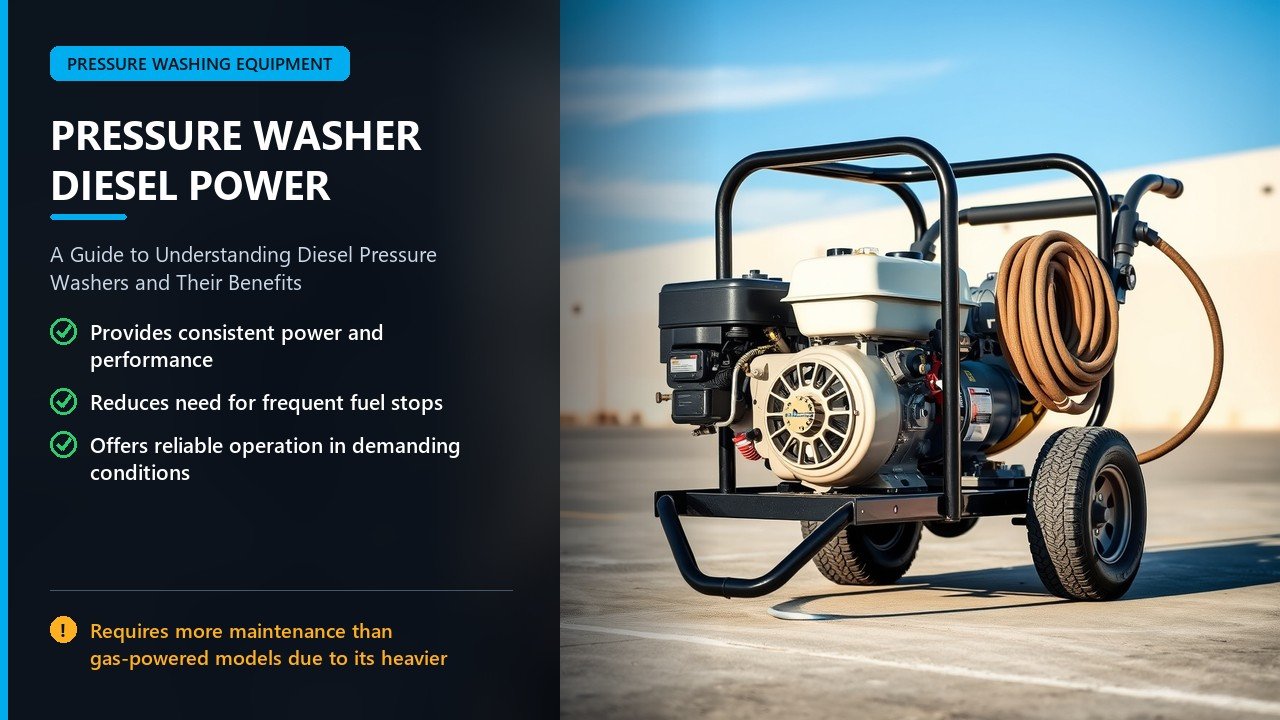
Two Diesel Systems That Often Get Confused
A pressure washer can be diesel in two completely separate ways. The first is the engine that drives the pump. A pressure washer diesel engine burns diesel fuel to turn the pump, exactly the way a gasoline engine burns gas to do the same job. The second is the burner that heats the water. Many hot water pressure washers use a diesel-fired burner, which burns diesel in a flame that heats the water as it passes through a coil. These are two different systems, and a machine can have one, the other, or both.
This matters because the words get used loosely. A cold water diesel pressure washer has a diesel engine but no heater at all. A hot water diesel pressure washer usually has both a diesel burner and either a gasoline or diesel engine. Only when you know which diesel systems a machine actually has can you compare it fairly to the alternatives. Our article on why a diesel engine pressure washer beats ordinary machines digs into the engine side, while the burner side is a topic of its own.
How a Diesel Pressure Washer Works
The engine is the heart of the machine. A pressure washer diesel engine compresses air so hard that it becomes hot enough to ignite injected fuel on its own, with no spark plug needed. That compression ignition is what gives diesel engines their famous torque, the twisting force that keeps the pump turning without bogging down. A diesel engine delivers its torque low in the RPM range, which means it holds pressure and flow even when the work gets heavy. A small gasoline engine tends to race and struggle when a big job loads the pump, while a diesel just leans into the load.
The engine turns the pump, and the pump is what actually pressurizes the water. Diesel machines typically pair with robust triplex plunger pumps, often from brands like Cat or General, because the whole point of a diesel machine is durability. The pump pulls water from a supply, forces it through the high-pressure hose, and out the nozzle. If the machine is also a hot water or steam model, the water then passes through a heated coil before it reaches the nozzle, adding heat to the cleaning equation. The result is a machine that delivers high pressure, high flow, and often high heat, all day, without the drop-off that smaller machines suffer.
Diesel Versus Gas Versus Electric
The cleanest way to understand diesel power is to place it beside the two other common power sources. Each has a real job, and each falls short somewhere. The table below puts the three side by side on the factors that decide most purchases.
| Factor | Gasoline | Diesel | Electric |
|---|---|---|---|
| Engine life under heavy use | Shorter, wears faster under load | Longest, built for continuous duty | Motor life varies, often shorter |
| Fuel efficiency | Thirsty, frequent refueling | Most efficient per hour of work | No fuel, but needs power access |
| Torque and heavy-load behavior | Races and bogs under load | Holds pressure without fading | Limited by motor and outlet |
| Mobility | Fully mobile, no cords | Mobile but heavier | Tethered to outlets or generators |
| Noise and emissions | Loud, outdoor use | Loud, outdoor use, more fumes | Quiet, zero on-site emissions |
| Upfront cost | Moderate | Highest | Lowest to moderate |
| Best for | General and mid-duty work | Industrial, continuous duty | Indoor and light-duty cleaning |
The pattern is clear. Gas wins on affordability and easy mobility. Electric wins on quiet, clean indoor operation. Diesel wins on endurance, fuel efficiency, and the ability to keep working when everything else tires out. That is why diesel dominates the hardest jobs in the industry, from mining equipment to fleet yards.
Why Diesel Torque and Duty Cycle Matter
Duty cycle is the term that separates a toy from a tool. A residential electric pressure washer might be rated for short bursts with long cool-down periods. A diesel pressure washer is built for what the industry calls continuous duty, meaning it can run for extended periods without overheating or losing performance. For a homeowner who cleans a driveway twice a year, duty cycle is irrelevant. For a contractor running a machine eight hours a day, it is everything.
The torque advantage compounds the duty-cycle advantage. Because diesel engines hold their power under load, the pump maintains its rated pressure and flow even when the job is demanding. That consistency matters on surfaces where you cannot afford to slow down. A machine that holds 4 GPM at full pressure for hours cleans far more square footage than one that surges and sags. In practice, this is why a diesel machine with a modest PSI rating can outwork a gasoline machine with a bigger advertised number. The diesel delivers its power continuously; the gas machine delivers it in bursts before the engine heats and weakens.
Diesel fuel also helps. Diesel carries more energy per gallon than gasoline, so a diesel engine does more work on a tank of fuel. For long shifts and remote job sites, that translates directly into fewer refueling stops and more billable hours. If you have ever watched a gas pressure washer sputter and die mid-job because it ran dry, you understand the value of running longer on one tank.
The Fuel Question: Diesel, Off-Road Diesel, and Availability
Diesel pressure washers run on number 1 or number 2 diesel, the same fuel sold at most stations that serve trucks. Some owners run off-road diesel, sometimes called red diesel, which is the same fuel dyed red and sold without the highway tax for off-road use such as farm and construction equipment. Where it is legal and available, off-road diesel can lower your running cost noticeably. It is not legal to run taxed-exempt off-road fuel on public highways, so keep it in the equipment, not in a road vehicle.
Fuel availability is a genuine advantage for many businesses. If you are a contractor, a farmer, or a fleet operator, you likely already store diesel and service diesel equipment. Adding a diesel pressure washer means one fuel supply for everything, no separate gasoline cans, and less risk of stale gas. That standardization is a real operational benefit that is easy to overlook at purchase time.
Diesel does demand cleaner handling than gasoline in one respect: the fuel system. Water and dirt in diesel can clog filters and damage injectors, so quality machines run a fuel filter and water separator, and those parts need regular service. Keep your fuel clean and dry, and a diesel engine will run for a very long time. Let contaminants through, and you will pay for injector work that costs far more than a filter.
Hot Water, Cold Water, and Steam
Diesel power is common across both cold water and hot water machines. A cold water diesel pressure washer is the simpler, cheaper machine, and it is the right choice when your work is about pressure and flow rather than heat. A hot water diesel machine adds a burner and a coil, and it can cut through grease, oil, and grime that cold water only smears around. The hottest versions push the water into wet steam territory for degreasing and sanitizing.
The choice between them follows the surface and the soil. Cleaning mud off construction equipment is a cold water job. Cleaning oil off an engine block or grease out of a commercial kitchen is a hot water job. Buying a cold water machine for greasy work means fighting chemistry battles you do not need to fight, and buying a hot water machine for basic rinse work means paying for heat you never use. For a closer look at how heat changes the job on commercial surfaces, see our guide on how hot water diesel pressure washers clean tough commercial grime.
What a Diesel Pressure Washer Is Best For
Diesel machines earn their keep in environments where downtime is expensive and jobs are big. These are the settings where their strengths pay off most.
- Industrial cleaning. Plant floors, production equipment, and machinery in factories and refineries need continuous power and often hot water, which diesel delivers without strain.
- Fleet and heavy equipment washing. Trucks, buses, tractors, and construction machines wash faster and more consistently with a high-flow diesel machine that never stops for a cooldown.
- Mining, oil, and gas. Remote sites with no reliable electricity are exactly where diesel shines, because the machine carries its own power and burns fuel available on site.
- Agriculture. Farms often store diesel for tractors and equipment, making a diesel pressure washer a natural fit with shared fuel and shared knowledge of diesel maintenance.
- Marine and shipyard work. Boat hulls, docks, and piers carry heavy marine growth and grime that demand serious pressure, and these locations are rarely near an outlet.
- Municipal and waste management. Garbage trucks, recycling equipment, and public infrastructure are cleaned outdoors in off-grid conditions where diesel is the practical answer.
- Professional cleaning businesses. Contractors who run long days need a machine that keeps pace with the schedule and holds its output from the first job to the last.
Where a Diesel Machine Is Overkill
Diesel is not automatically better, and paying the premium for it on tiny jobs is a waste. A homeowner cleaning a car, a patio, or outdoor furniture a few times a year does not need a diesel machine, and would find it heavy, loud, and fussy to maintain. Light commercial work such as washing storefronts, sidewalks, and residential exteriors often runs perfectly well on a gasoline or quality electric unit. The diesel premium buys endurance and fuel efficiency that only matter when you run the machine hard and long. If your work is occasional or light, a gasoline machine gives you more flexibility for less money, and an electric machine is quieter and cleaner for indoor spaces. The right question is never “what is the most powerful machine,” but “what does my actual workload demand.”
The Real Cost of Owning a Diesel Pressure Washer
Sticker price is only the beginning. A diesel pressure washer costs more upfront, but it can cost less per hour of work over its life, and that is the number that decides whether it was a smart purchase. The table below breaks the ownership cost picture into its parts.
| Cost Factor | What to Expect | Why It Matters |
|---|---|---|
| Purchase price | Highest of the three power sources | The premium buys engine life and duty cycle |
| Fuel per hour | Lower than gasoline per hour of work | Diesel does more work per gallon |
| Routine maintenance | Oil, filters, fuel filter, injector care | Skipped service is the main cause of diesel failures |
| Repair cost | Higher per repair than gas | Parts are industrial grade and cost more |
| Repair frequency | Lower over the machine’s life | Fewer breakdowns and less downtime |
| Resale value | Holds value well | Durability keeps used demand strong |
Looked at this way, the diesel premium is really a bet on how much you will use the machine. Run it a few times a year and the premium never pays back. Run it hundreds of hours a year, and the fuel savings, longer service life, and reduced downtime can make the diesel the cheaper machine to own. That is why diesel pressure washers cluster in commercial and industrial fleets, where machines are measured by hours of work, not by purchase receipt.
Maintenance for a Diesel Machine
A diesel pressure washer asks for more disciplined care than a gasoline or electric unit, and it repays that care with years of service. The engine side and the pressure side each have their own routines. On the engine side, stay on top of oil and oil filter changes, fuel filter and water separator changes, and air filter service. Diesel engines tolerate heavy work, but they do not tolerate dirty oil or contaminated fuel for long. Because they have no spark plugs, the ignition-side maintenance that gas engines need disappears, which is one fewer thing to worry about.
On the pressure side, the pump still needs the correct non-detergent pump oil on schedule. This is the single most overlooked maintenance item on any pressure washer, and ignoring it is how good pumps die early. Our guide on what type of oil for a pressure washer pump keeps it running covers the details. If the machine is a hot water model, add coil descaling and burner service to the list. Freezing weather adds one more task: winterizing the pump and coil so trapped water cannot freeze and crack the metal. For a full seasonal routine, our article on power washing preventative maintenance walks through every step.
Buying a Diesel Pressure Washer
When you are ready to buy, a few specifications and questions separate a pressure washer diesel machine that will serve you for a decade from one that becomes a repair bill. Work through this list before you commit.
- PSI and GPM together. Read pressure and flow as a pair. For heavy commercial work, flow often matters as much as pressure, because more gallons per minute means faster rinsing and better heat carry. A balanced machine usually beats a lopsided one.
- Cold water or hot water. Decide based on your soil. Grease and oil need heat; mud and dirt usually do not. Paying for a burner you never use wastes money.
- Pump and drive type. Look for a quality triplex pump and a belt drive for heavy use, because belt drives run cooler and last longer than direct drives on demanding jobs.
- Engine quality. Name-brand diesel engines are easier to service and hold parts availability better than no-name engines.
- Service and parts. Before buying, confirm who repairs the engine, the pump, and the burner near you. A great machine with no local support is a liability.
- Weight and transport. Diesel machines are heavy. Make sure your trailer, truck, or ramp can handle the weight and that the frame has proper wheels and lifting points.
- Fuel storage plan. Know where you will store diesel and how you will keep it clean and dry, because fuel quality is the difference between reliability and breakdowns.
It also helps to buy from a seller who stocks the consumables you will need, such as filters, nozzles, and pump oil. If you are building or buying a trailer-mounted setup around the machine, our article on how to choose power wash trailers for sale that last covers how the machine fits into a complete rig, and our guide on building a 5×8 pressure washing trailer shows the layout considerations up close.
Common Mistakes Owners Make
- Assuming diesel means heated water. A diesel engine and a diesel burner are different systems. Confirm what the machine actually includes.
- Buying more power than the work needs. The diesel premium only pays back under heavy, frequent use. Light jobs are served better by gas or electric.
- Neglecting the fuel filter and water separator. Contaminated diesel damages injectors, and injector repairs are expensive.
- Running cold water machines on greasy jobs. Without heat, grease and oil fight back no matter how much pressure you throw at them.
- Putting off pump oil changes. The pump quietly wears every hour the oil is overdue, and the failure comes without warning.
- Letting the machine freeze. Trapped water in the pump and coil freezes and cracks metal, so winterize before the first hard freeze.
- Ignoring exhaust safety. Diesel machines emit carbon monoxide and must run outdoors or with engineered ventilation, never in a closed space.
Diesel, Emissions, and Responsible Operation
Diesel equipment carries a bigger environmental footprint than electric, and responsible owners manage it. Run the machine outdoors or with ventilation that keeps exhaust away from people and building intakes. Keep the engine and burner well tuned, because a properly adjusted diesel burns cleaner and uses less fuel. Capture or properly dispose of wash water that carries oil, grease, or detergent, since that runoff should never reach a storm drain, which typically flows untreated to a lake or river. The Environmental Protection Agency publishes stormwater and emissions guidance that applies to many commercial cleaning operations. For workplace safety around engine exhaust and confined work areas, the Occupational Safety and Health Administration is the authority to follow.
Answers to the Questions Buyers Ask Most
Is a diesel pressure washer better than gas?
For heavy, continuous commercial and industrial work, yes. Diesel engines hold power under load, run longer on a tank of fuel, and last longer under hard use. For light or occasional residential work, a gasoline machine is usually the better value.
Does a diesel pressure washer heat the water?
Not necessarily. Diesel can refer to the engine, the burner that heats water, or both. A cold water diesel pressure washer has a diesel engine and no heater. A hot water model adds a burner and a coil.
What fuel does a diesel pressure washer use?
The engine uses number 1 or number 2 diesel, and some owners use off-road diesel where it is legal. If the machine has a diesel burner, that burner also runs on diesel, kerosene, or fuel oil.
Is diesel more fuel efficient than gas in a pressure washer?
Yes. Diesel engines generally burn less fuel per hour of work than gasoline engines of similar output, so long shifts need fewer refueling stops and cost less to run.
How long will a diesel pressure washer last?
With disciplined maintenance, a diesel engine and a quality triplex pump can deliver many years of service, often outlasting comparable gasoline machines. Neglected fuel and pump oil are what shorten that life.
Can I use a diesel pressure washer indoors?
Only with engineered ventilation. Engine and burner exhaust contains carbon monoxide. Diesel machines are designed for outdoor use or for spaces with proper exhaust management.
Is a diesel pressure washer worth the extra cost?
If you run it hard and often, yes, because fuel savings, longer engine life, and less downtime can outweigh the higher price. If you use it occasionally, the premium rarely pays back.
Why is a diesel machine harder to move?
Diesel engines are heavier than gasoline and electric power sources, so the whole machine weighs more. Plan for ramps, sturdy wheels, and a trailer or truck that can handle the weight.
The Bottom Line on Diesel Pressure Washers
A diesel pressure washer is not just a stronger pressure washer. It is a machine built around a different idea: work all day, every day, without fading. The diesel engine’s torque and fuel efficiency keep pressure and flow steady under load, the heavy-duty components last longer, and the fuel is efficient and often already on hand for anyone running diesel equipment. The trade-offs are real. Diesel costs more upfront, weighs more, runs louder, and demands disciplined fuel and oil maintenance. But in industrial cleaning, fleet washing, agriculture, mining, and professional contracting, those trade-offs are small compared to the value of a machine that simply does not quit. Match the machine to the workload, keep the fuel clean and the oil fresh, respect the exhaust, and a diesel pressure washer will reward you with years of steady, powerful work that a lighter machine could never sustain.