How to Add Soap to a Pressure Washer for a Deeper, Cleaner Result
Learning how to add soap to a pressure washer turns a plain water blaster into a real cleaning tool that lifts grime instead of only moving it around. Soap lifts dirt, grease, and grime so the water can rinse it away, which is why professionals never clean a car, a driveway, or siding with water alone. The good news is that adding soap is simple once you know which method your machine supports, and most owners can improve their results in a single afternoon.
This guide covers every common way to get soap into the stream, from a built-in tank to a foam cannon, plus how to mix it, apply it, rinse it, and avoid the mistakes that clog machines and dull paint. By the end you will know exactly how to add soap to your pressure washer and get the best result from it. You will also know which soap to use for each surface, how strong to mix it, and how to flush the system so the machine stays healthy season after season.
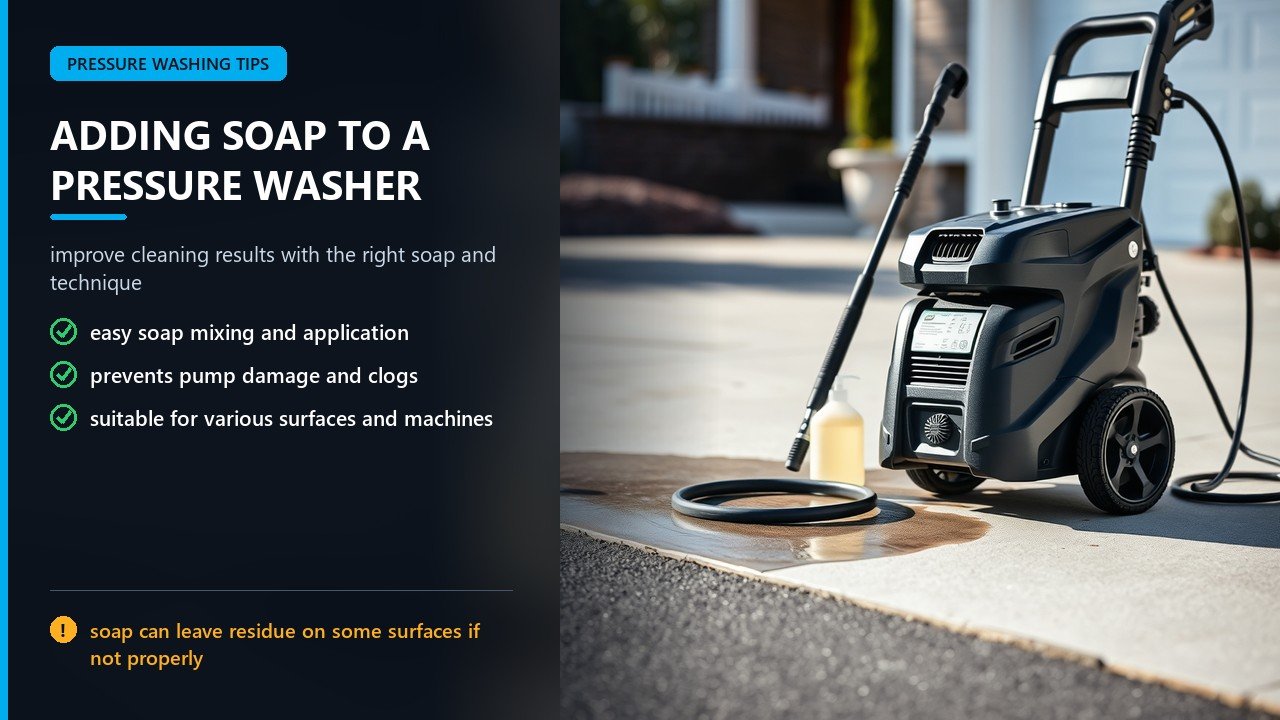
Three Ways Soap Gets Into the Stream
Pressure washers add soap in one of three ways: through a built-in tank or bottle, through a downstream injector or soap nozzle, or with a foam cannon attached at the gun. Each method mixes soap with water at a different point, and each suits different jobs and machines.
The key detail is that soap must never go through the pump on most machines. Soap is drawn in after the pump, on the low-pressure side of the gun, so it never touches the pump internals. Understanding that single fact prevents most mistakes.
Which method you can use depends on your machine and its accessories. Our guides to a soap and detergent bottle and to how detergent tanks work explain the built-in options.
Method 1: Built-In Soap Tank or Bottle
Many pressure washers have a small built-in tank or a clip-on bottle that feeds soap into the stream. You fill it with soap or a soap mix, fit the low-pressure soap nozzle, and the venturi effect in the nozzle draws the soap in. It works with no extra gear, which makes it the easiest place to start, and for a quick car wash it often does the job on its own. If the built-in tank feels slow or too small, a downstream injector or foam cannon is the better long-term upgrade.
The catch is that these systems only draw soap at low pressure, so you fit the black soap nozzle, drop to low pressure, and let the venturi pull the soap in. The soap tank empties quickly, holds only a little, and the mix is often weak, so it suits small jobs like a car or a set of patio chairs rather than large surfaces such as a whole driveway.
If your machine has a soap tank, use a dedicated soap nozzle and don’t expect thick foam. Our guide to soap nozzle colour codes helps you pick the right tip, and the tank guide covers filling and cleaning it.
Method 2: Downstream Injector and Soap Nozzle
A downstream injector fits between the pump outlet and the hose or gun and draws soap from an external bottle into the water after the pump. It is common on gas machines and gives a stronger, more controllable soap feed than a built-in tank, with a longer reach than a small bottle.
The injector only draws soap once the pressure drops, so you switch to the soap nozzle, drop the pressure for the soap pass, and then fit a high-pressure nozzle for a clean rinse. Siphon tubes can be long, letting you draw from a bucket of mixed soap for a big job.
Downstream injection is efficient for driveways, siding, and vehicles because you control the mix, can refill from a large container, and switch instantly between soap and rinse by changing tips. Our guide to the soap hose and siphon setup shows how to connect and size it.
Method 3: Foam Cannon
A foam cannon attaches at the gun and mixes soap with air and water to produce thick, clinging foam. It gives the best soap coverage and dwell time, which is why detailers reach for it on every car wash. A foam cannon needs a machine with enough flow to work well, and it is the method most people picture when they ask how to add soap to a pressure washer. Thick clinging foam is also safer on paint than a bare high-pressure jet, since the foam carries the cleaner while the rinse does the work.
You fill the cannon with a soap-and-water mix, set the air intake to dial in foam thickness, and spray an even coat over the surface, working from the bottom up so the foam runs into fresh areas. The foam clings to the surface and lifts dirt, then you rinse it away; because it dwells longer than a plain spray, the cleaner has more time to loosen the grime before it runs off. It’s ideal for cars, but a surface cleaner or soap nozzle may suit large flatwork better.
A foam cannon transforms car washing. Our guide to the best car-washing attachments covers foam cannons and matching them to your machine, and our foam and soap coverage shows the right mix.
Comparing the Soap Methods
| Method | Best For | Gear Needed | Foam Quality |
|---|---|---|---|
| Built-in tank / bottle | Small jobs, light soap | Soap nozzle | Thin |
| Downstream injector | Driveways, siding, cars | Injector, siphon, soap nozzle | Moderate |
| Foam cannon | Car washing, detailing | Foam cannon | Thick |
| Surface cleaner with soap | Flat concrete | Surface cleaner | Even soak |
Choose the method that fits the job, the surface, and your machine rather than assuming one solution suits everything. For cars, a foam cannon wins on cling and safety; for big flat surfaces, a downstream injector or a surface cleaner with soap is far more efficient. Our guide to surface cleaners shows the flatwork option.
Choosing a Pressure Washer Soap
Use a soap made for pressure washers and matched to the surface you are cleaning, because the wrong chemistry can harm what you are trying to wash. Car soap is gentle and won’t strip wax. Concrete and deck cleaners are stronger and often need dwell time. Degreasers cut oil and grease. Using the wrong cleaner, or a household detergent not meant for pressure washers, can damage surfaces, strip coatings, or clog the machine.
Some soaps are designed for downstream injection, some for foam cannons, and some for surface cleaners. Match the soap to the method for the best foam and cleaning, because a foam-cannon soap and an injector soap are not the same product. Avoid harsh acids or bleach unless the product and the surface specifically call for them, and never mix cleaners together in one bottle.
| Soap Type | Best For | Notes |
|---|---|---|
| Car shampoo | Vehicles | Gentle, wax-safe, high foam |
| Concrete / deck cleaner | Driveways, patios, decks | Stronger, needs dwell time |
| Degreaser | Engines, oil stains | Concentrated, use with care |
| House / siding wash | Siding, fences | Mold and mildew treatment |
Pick a product made for your surface and your chosen method. Our guide to soap and detergent choices and to brand cleaning products covers the options.
Note: Never pour soap, detergent, or any additive directly into the pump inlet or the water supply. Soap belongs after the pump, delivered through a tank, an injector, or a foam cannon. Soap inside a pump can strip its lubrication, cause foaming that damages the seals, and shorten its life dramatically.
Diluting Soap Correctly
Most pressure washer soaps are concentrates that must be diluted. The right ratio depends on the product and the method, but a common foam cannon mix is roughly one part soap to five to ten parts water, and a downstream injector draws a stronger concentrate that the injector dilutes in the stream.
Too much soap leaves residue that is hard to rinse and can streak the surface, while too little barely lifts the dirt you are trying to remove. Start with the manufacturer’s recommendation and adjust. Soft water foams better than hard water, so a hard-water area may need slightly more soap to reach the same thickness, and hard water can also leave spots.
| Method | Typical Soap-to-Water Mix | Adjust For |
|---|---|---|
| Foam cannon | 1:5 to 1:10 | Water hardness, foam thickness |
| Downstream injector | Concentrate, diluted by injector | Injector ratio, soil level |
| Built-in tank | Follow machine guide | Small tank size |
| Surface cleaner | Mild mix, often pre-soak | Concrete type, stains |
Mix in a clean container and label it clearly, and never store mixed soap for long, because it can separate or grow bacteria. Our guide to soap tanks and mixtures covers filling and cleaning the reservoir.
Applying Soap and Rinsing in Order
The ideal order is pre-rinse, soap, dwell, agitate if needed, then rinse, and each step has a reason. Pre-rinse knocks off loose dirt so the soap is not wasting itself on dust and grit, and it wets the surface so the soap spreads evenly. Apply soap from the bottom up and let it dwell, but do not let it dry on the surface. Then rinse from the top down.
Switch to a high-pressure nozzle for rinsing, and keep the nozzle moving so you don’t etch the surface or drive water where it shouldn’t go. For cars, work in the shade and in sections so the soap doesn’t dry before you rinse.
Dwell time matters more than many people realise. Let the soap lift the dirt for a few minutes, then rinse thoroughly before it dries, staying ahead of the sunshine. On stubborn grime, a soft brush or wash mitt helps after the soap pass, letting the soap do the loosening while you do the light agitation. Rinsing top to bottom lets dirty water run over areas you have already cleaned rather than the reverse. Our guide to gun tips and nozzle technique covers spraying like a pro.
Fixing Common Soap Problems
If no soap comes out, check that you are using the low-pressure soap nozzle, that the siphon tube is submerged and airtight, and that the soap is diluted enough to flow. A clogged injector, a blocked soap nozzle, undiluted soap, or a siphon that has come loose and is drawing air can all stop the soap flow. Soap that is too thick can block a siphon or foam cannon, so dilute it until it flows freely.
Weak foam from a foam cannon usually means too little soap, too much water, or not enough flow from the machine, since foam cannons need decent GPM. Hard water reduces foam too. Adjust the mix and the cannon’s air intake, and check that the machine flows enough.
If soap keeps coming when you switch nozzles, you may still be on the low-pressure tip or the injector is still drawing from the siphon. Reset the nozzle and let the line clear with water. Our guide to colour-coded nozzles shows how to switch correctly.
Flushing and Caring After Soap
Soap left in the machine can gum up the pump, injector, or foam cannon, so flush with clean water after every soap job. Run plain water through the soap path and the gun until no trace of foam remains at all, then rinse the siphon tube, tank, injector, and foam cannon.
Clean your foam cannon and injector with warm water and store them dry, never leave soap concentrate sitting in a reservoir, and check the siphon for cracks that let air in. In winter, drain the whole system, including the soap path, so residue and water can’t freeze and crack parts.
A minute of flushing after every use keeps the soap system working, keeps the injector and foam cannon clear, and protects the pump from sticky residue that hardens over time and slowly robs it of pressure. Our guides to soap tanks and soap hoses cover cleaning those parts, and our storage guide covers winterizing for cold weather. If you use soap often, make the flush the last habit of every wash.
Soap Nozzles and Colour Codes
The soap nozzle is the low-pressure tip that lets the machine draw soap, and it is the single most important part of any soap method. On most colour-coded sets it is black, and it is the widest, lowest-pressure tip in the kit. Higher-pressure tips like the white, green, red, and yellow nozzles are for rinsing and cleaning, not for drawing soap.
This is why people say their pressure washer won’t draw soap: they have a high-pressure nozzle fitted. Switch to the black soap nozzle and the venturi effect in the tip draws soap from the tank or siphon as long as the machine is at low pressure. Switch back to a high-pressure tip to rinse and the soap flow stops automatically, which is exactly how the system is designed to work.
| Nozzle Colour | Angle | Use With Soap? |
|---|---|---|
| Black | Low pressure | Yes, this draws soap |
| White | 40 degrees | No, gentle rinse |
| Green | 25 degrees | No, general cleaning |
| Red / yellow | 0-15 degrees | No, high-impact stripping |
Keep the soap nozzle clipped to the machine so it is always at hand, and label it so nobody swaps it by mistake. Our guides to nozzle colour codes and to gun tips and nozzles help you match the tip to the job.
How a Downstream Injector Works
A downstream injector is a simple, reliable venturi device with no moving parts. When water flows through it at low pressure, the pressure drop draws soap up a siphon tube from a bottle or bucket and mixes it into the stream. At high pressure the venturi stops drawing, so you only get soap at low pressure, which is why the nozzle choice controls the whole soap function.
You can fit an injector between the pump and the hose, or use a gun with a built-in one. The siphon tube length matters, since a very long tube may not draw reliably. Keep the tube submerged and the end screened so debris and undiluted soap do not clog the injector, and rinse the injector after use. A quick-connect on the injector makes it easy to remove and store when you are not using soap.
Injectors are common on gas machines and on setups that clean big surfaces. They let you refill from a large bucket of mixed soap and switch between soap and rinse by changing nozzles, which keeps a big job moving without constant refills. Our guide to the soap hose and injector setup shows how to install one.
Note: A downstream injector only draws at low pressure, so if you get no soap, first check that the black soap nozzle is fitted and the machine is not at full pressure. Most “broken injector” complaints are really a nozzle or siphon issue.
Soap, Detergent, and Foam: What Is the Difference
Soap, detergent, and foam are related but not identical. Soap is a cleaning agent, detergent is a synthetic cleaning agent, and foam is the aerated mix created by a foam cannon. A foam cannon turns soap and water into clinging foam that dwells on the surface longer than a plain spray, so more of the cleaner stays where you need it.
Foam matters because dwell time lets the cleaner work. A thick foam clings to vertical surfaces and lifts dirt, while a thin spray runs off before it can act. That is why detailers choose a foam cannon for cars and a downstream injector or surface cleaner for large flatwork where coverage and speed matter more than cling.
Choose the cleaner for the surface and the format for the job. Our guides to soap and detergent and to foam applications cover the differences.
Choosing Soap Gear and Supplies
Match any soap accessories to your machine’s fittings and flow. A foam cannon, a soap nozzle, a downstream injector, and a siphon tube are the core items, and each must fit the gun and hose you already own. Buy parts that match the thread and connection so you are not stacking adapters.
For repeated or commercial cleaning, choose durable gear that survives soap and hard water, and keep spare O-rings and nozzles on hand. A supplier such as Pressure Wash Supply lists cannons, injectors, and nozzles by fitting so you can match them to your machine, and a mainstream retailer category such as the Grainger pressure washer category shows how accessories sit alongside machines.
For commercial cleaning, professional equipment such as Hotsy hot-water pressure washers often combines hot water with soap injection for faster results. Hot water plus soap cuts grease far faster than cold water alone.
Surface Care and Safety With Soap
Soap changes how aggressive a wash is, so match both the cleaner and the pressure to the surface and the material. Strong cleaners can etch or discolor some materials, and too much pressure can damage wood, paint, and seals. Test a small, hidden area first, follow the product instructions closely, and never leave a strong cleaner on a surface longer than the bottle allows.
Never mix cleaners, especially bleach and ammonia products, which can create dangerous fumes. Wear eye protection and gloves when using strong degreasers, and keep soap off your skin and out of your eyes. Ventilate when working indoors, and never run a gas machine inside while applying soap.
Rinse thoroughly so no soap residue dries on the surface and leaves a film, and Protect plants by pre-wetting and then rinsing them, since some cleaners harm foliage, and keep runoff away from storm drains where local rules require it. Our guides to nozzle technique and to surface cleaners cover safe, effective application on each surface type.
Frequently Asked Questions
How do I add soap to a pressure washer? Use a built-in soap tank with a soap nozzle, a downstream injector drawing from a bottle, or a foam cannon at the gun. Whatever the method, soap enters after the pump, never through it.
Can I put soap in the pressure washer tank? Only if your machine has a dedicated soap tank meant for it. Never add soap to the pump inlet or the water supply, because it can damage the pump.
Why isn’t my pressure washer drawing soap? Usually the wrong nozzle, an unscrewed or clogged siphon, thick undiluted soap, or a broken injector. Use the black low-pressure soap nozzle and check the draw line.
Do I need a foam cannon to use soap? No, but a foam cannon gives the thickest, best-clinging foam and is ideal for cars. A soap nozzle or injector works for many other jobs.
What soap should I use in a pressure washer? A soap made for pressure washers and your surface, such as car shampoo, concrete cleaner, or degreaser. Avoid household detergents not meant for pressure washers.
Do I have to rinse off pressure washer soap? Yes. Rinse thoroughly after the soap dwells, before it dries, so no residue is left on the surface and no soap stays in the machine.
How much soap do I put in a foam cannon? Start with about one part soap to five to ten parts water, then adjust the ratio for foam thickness, soil level, and your water hardness. Too much soap leaves hard-to-rinse residue.
Can I use dish soap in a pressure washer? It is not recommended. Dish soap foams excessively, can clog injectors, and may leave residue or strip wax. Use a soap formulated for pressure washers, which foams in a controlled way and rinses cleanly.
Does soap need to be rinsed off a car? Yes. Rinse thoroughly before the soap dries so no film remains, then dry the car to avoid water spots. Leaving soap to dry can stain paint and trim.
What nozzle do I use to spray soap? The black low-pressure soap nozzle. High-pressure nozzles do not draw soap, which is why switching to the black tip is the first fix when soap will not come out.
How long should soap sit on a surface? Only a few minutes, just long enough to lift dirt. Never let soap dry on the surface, because it can streak paint, stain trim, and leave a film that is hard to rinse. Rinse before it dries.
Can soap damage my pressure washer? Not if it enters after the pump through a tank, injector, or cannon and if you flush afterward. Soap pushed through the pump, or left sitting in the system between jobs, can gum up valves and cause costly damage.
Final Thoughts
Adding soap to a pressure washer is easy once you know the method: tank, downstream injector, or foam cannon, always after the pump. Pick a soap that suits the surface, mix it correctly, apply it with the right nozzle, and rinse before it dries.
Then flush the system so the soap doesn’t set, and store the mix and gear clean. Do that and soap becomes a natural part of every wash, lifting dirt so the water can carry it away, and turning an ordinary rinse into a genuine clean.