Raj thought his pressure washer was the whole answer. Then he tried to clean a concrete step caked with years of dried mildew. The water blasted the loose dirt off in seconds, but the stubborn green film stayed put no matter how close he held the nozzle. He was about to reach for a scraper when a neighbor handed him a power washer brush that snapped onto the end of his wand. One pass with the spinning bristles and the surface came up clean. The lesson stuck: sometimes you do not need more pressure, you need agitation.
A power washer brush combines the reach of a pressure washer with the scrubbing action of a brush. Instead of forcing water against a surface and hoping the grime lets go, the brush physically loosens dirt while the spray rinses it away. For textured concrete, siding, grills, vehicles, and decks, that pairing cuts cleaning time dramatically and lets you drop the pressure to a safer level.
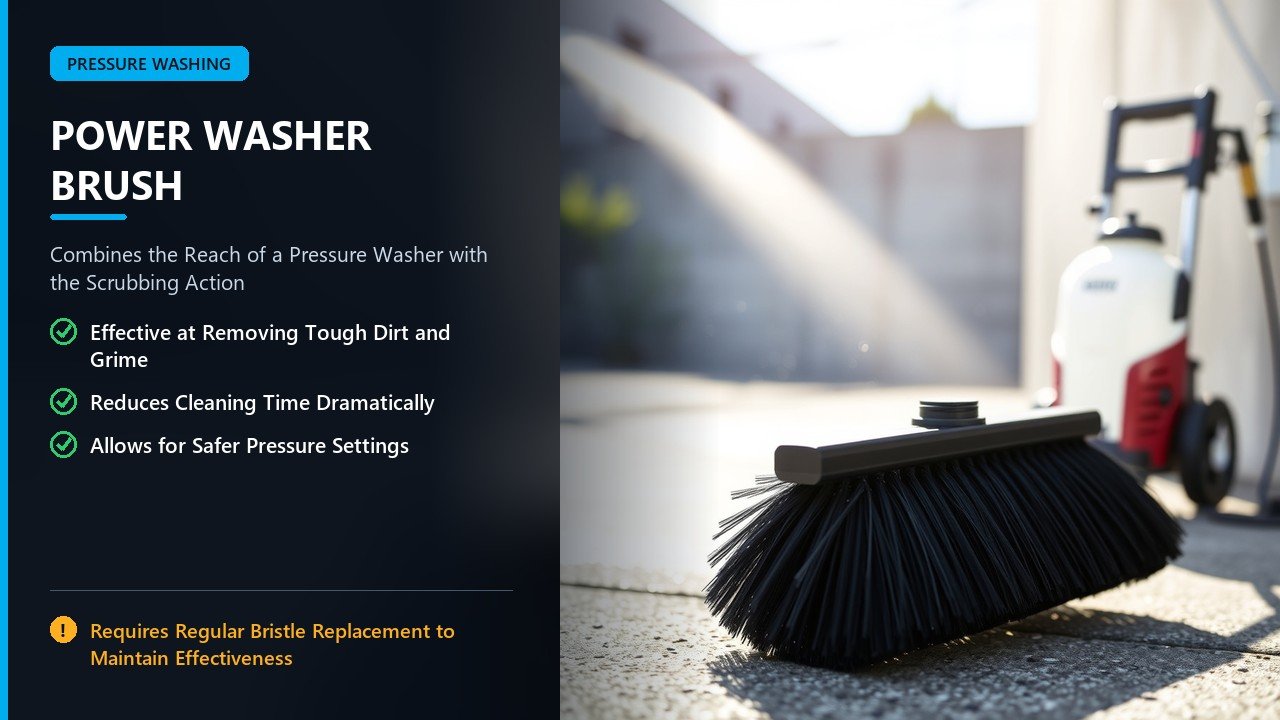
What Is a Power Washer Brush?
A power washer brush is an attachment that fits onto your spray wand, gun, or a dedicated extension. It has a set of bristles — sometimes mounted on a rotating head driven by water, sometimes fixed on a swivel joint — and an opening that lets the spray pass through or around the brush. As you move it across a surface, the bristles scrub while the water flushes away the loosened dirt.
There are two broad families. Rotating brushes use the force of the water to spin a turbo-style head, so the bristles whirl as they clean. Static brushes have a fixed face that you push and pull by hand. Each has a place, and the right choice depends on the surface and how much control you want.
Why Agitation Beats Pressure Alone
Pressure washing works by breaking the bond between dirt and a surface, then rinsing it away. On smooth surfaces, pressure alone is often enough. On textured or porous surfaces — brushed concrete, brick, stucco, wood grain, grout, and non-skid boat decks — the grime hides in the low spots where the spray cannot reach. Adding a brush solves this without cranking up the PSI, which is exactly what you want on surfaces that can be damaged.
Cleaner results. Bristles get into the texture that a flat spray misses.
Lower risk of damage. You can clean wood, paint, and delicate finishes at gentler pressure.
Faster jobs. Agitation plus rinse beats repeated high-pressure passes.
Better soap work. Brushing spreads detergent evenly and lifts grime so the rinse carries it off.
Quick Note: A brush is not a replacement for the right nozzle. Match your tip to the surface first, then use the brush for texture. See our pressure washer nozzle guide for a quick color-code refresher.
Types of Power Washer Brushes
Brush attachments come in several styles, each tuned to a different task. Knowing how they differ keeps you from buying the wrong one.
Rotating (Spinning) Brushes
These use a water-driven turbine to spin a round head of bristles. They cover more area per pass and scrub in multiple directions, which makes them ideal for flat surfaces like concrete, decks, and driveways. Many include a built-in spray bar so the rinse happens as you go.
Fixed-Face Scrub Brushes
A static brush you push along the surface. Because there is no spinning mechanism, they are simple, durable, and cheap. They shine on grills, siding, steps, and tight spots where a spinning head cannot fit.
Water-Fed Pole Brushes
A telescoping or fixed pole with a brush head and a water feed line, often used for soft washing siding, soffits, and windows. They let you scrub high areas from the ground. Pair one with the reach tips in our extension wand guide.
Specialty Brushes
This category includes grill brushes with heat-resistant bristles, wheel and tire brushes, gutter brushes, and soft detailing brushes for cars. Each is sized and stiffened for its surface.
| Brush Type | Action | Best Surfaces | Pressure Needed |
|---|---|---|---|
| Rotating brush | Water-driven spin | Concrete, decks, driveways | Medium |
| Fixed scrub brush | Hand push/pull | Grills, steps, siding, tight spots | Low–medium |
| Water-fed pole brush | Hand scrub at height | Siding, soffits, windows | Low |
| Specialty brushes | Task-specific | Grills, wheels, gutters, paint | Low |
Choosing the Right Bristle Material
Bristle stiffness and material decide how aggressive your brush will be. Get this wrong and you can scuff paint or scratch a finish as easily as you can leave grime behind.
Nylon. The workhorse for general cleaning. Durable, chemical-resistant, and available in soft to stiff grades.
Polypropylene. Softer and more economical, often used on delicate surfaces and light-duty brushes.
Stainless steel. Aggressive and long-lasting, suited to heavy rust and rough concrete, but too harsh for paint, aluminum, or vehicles.
Brass. A middle ground that resists corrosion and works on grills and tougher surfaces without the bite of steel.
Match stiffness to the surface, not to how tough the stain looks. A soft brush with good soap often beats a stiff one that damages the finish.
Matching the Brush to Your Pressure Washer
Compatibility comes down to fittings and pressure. Most brush attachments connect with a 1/4-inch quick-connect plug, the same fitting used by countless wands and nozzles. Confirm your wand uses quick-connect; if it uses a threaded or proprietary fitting, you may need an adapter.
Also check the brush’s pressure rating. A lightweight brush with plastic gearing will not survive a 4,000 PSI commercial machine, while a heavy rotating head may need a minimum flow to spin properly. Flow, not just pressure, drives a rotating brush, so a low-GPM electric unit may spin it slowly. Match the attachment to your machine’s real-world output.
How to Use a Power Washer Brush Effectively
1. Pre-soak with soap. Apply detergent first — a dedicated soap tip or a detergent tank makes this easy — and let it dwell so it breaks down the grime.
2. Work in overlapping passes. Move the brush in steady strokes, letting the bristles do the work instead of pressing hard.
3. Rinse as you go. On rotating brushes with a built-in spray, the rinse is automatic. With static brushes, follow immediately with a clean pass of water.
4. Keep the head flat. Tilting a spinning brush off the surface stops it from turning and can fling water.
5. Watch the edges. Around glass, trim, and seams, slow down and reduce pressure to avoid damage.
Best Uses for a Power Washer Brush
Brushes earn their keep wherever texture traps dirt. Concrete and pavers benefit from rotating heads that scrub the aggregate. Wood decks and fences clean well with soft-to-medium bristles at lower pressure, avoiding the fuzzing that high PSI causes. Siding — vinyl, stucco, and fiber cement — benefits from pole brushes that reach high and clean gently. Vehicles, boats, and grills rely on softened brushes that lift grime without scratching. Gutters and downspouts use narrow brushes that navigate tight channels.
If you are cleaning a large flat slab, a rotating brush and a surface cleaner solve different halves of the problem: the surface cleaner floods and lifts, while the brush scrubs the stubborn film the surface cleaner leaves at edges and in texture.
Choosing the Right Brush: A Practical Checklist
Before you buy, run through a short list. It takes a minute and prevents the most common mistakes.
Surface first. Decide what you clean most. Flat slabs point to a rotating head; siding and height point to a pole brush; grills and wheels point to specialty brushes.
Bristle material second. Softer for paint, wood, and vehicles; firmer for concrete and stone, but almost never steel on a finished surface.
Fitting third. Confirm the attachment matches your wand, whether that is a 1/4-inch quick-connect, a threaded port, or a proprietary mount, and budget for an adapter if needed.
Rating fourth. Match the brush pressure and flow rating to your machine so the head spins freely and the parts last.
Build quality last. Sealed bearings, stainless hardware, and replaceable brush heads add years of service and usually cost only a little more up front.
Brush vs Surface Cleaner vs Nozzle: Which Tool Wins?
These tools overlap, but each is best at something. A nozzle concentrates force into a fan pattern and is perfect for rinsing, spot cleaning, and hard-to-reach areas. A surface cleaner uses a spinning bar of water under a shroud to flood and lift grime from flat slabs quickly and evenly. A brush adds mechanical agitation for texture and delicate surfaces where neither of the other two performs well.
In real jobs, owners use all three. A surface cleaner handles the bulk of a driveway, a brush scrubs the stubborn edges and the aggregate texture the surface cleaner leaves behind, and a nozzle rinses and details. Thinking of them as teammates rather than competitors helps you get the most from each pass and keeps you from cranking pressure to unsafe levels just to compensate for the wrong tool.
Common Mistakes to Avoid
Using too stiff a brush. Steel bristles on paint or aluminum leave permanent scratches. Choose the softest brush that gets the job done.
Pressing too hard. Force does not clean faster; it flattens bristles and wears them out. Let the bristles and water work.
Skipping the dwell time. Rushing the soap step means more scrubbing. Give detergent a few minutes to act.
Ignoring the rinse. Loosened grime left on the surface dries into a haze. Rinse thoroughly and check your work in the light.
Running a rotating brush dry. Spinning brushes rely on water to turn. Pull the trigger wide and keep the flow steady.
Care and Maintenance
After every use, rinse the brush to remove soap and grit, then shake out excess water and let it dry bristles-down or hanging so they keep their shape. Inspect the bristles for bent or missing tufts, which cause uneven cleaning. On rotating heads, check the bearing and turbine for debris that slows the spin, and clear any clogged spray holes with a pin. Store brushes out of direct sunlight so the bristle material does not become brittle.
Frequently Asked Questions
Will a brush scratch my car? A soft detailing brush with nylon or polypropylene bristles and plenty of soap will not scratch a healthy finish. Avoid stiff or steel bristles on paint.
Can I use a power washer brush on wood? Yes. Use a soft brush at low pressure and keep the nozzle moving to avoid raising the grain or stripping stain.
Do brushes work with any pressure washer? Most fit any wand with a 1/4-inch quick-connect, but check the pressure and flow rating before using a brush on a high-output machine.
Is a rotating brush better than a surface cleaner? They do different jobs. A surface cleaner cleans flat slabs fast; a brush scrubs texture and edges. Many owners use both.
How much pressure should I use with a brush? Less than you think. Most brushing jobs clean best at 1,000–1,800 PSI, because the bristles, not the pressure, do the heavy lifting. Higher pressure with a brush mostly adds splash-back and wear.
Can a brush replace hand scrubbing entirely? On most exterior surfaces, yes. For delicate interior items like upholstery or fine trim, a brush attachment can still be too aggressive, so test a hidden spot first.
Final Thoughts
A power washer brush is the quiet upgrade that turns a one-tool setup into a real cleaning system. It lets you clean textured and delicate surfaces that pressure alone cannot handle safely, and it speeds up the job by loosening grime before the rinse. Choose bristles to match the surface, confirm the fitting and rating fit your machine, and let the brush — not brute force — do the scrubbing.
Start with one good rotating brush for flat work and one soft static brush for detail, and you will rarely reach for anything else. For more ways to expand your rig, explore our pressure washer reel guide and our tips on flat surface cleaning.