Tom learned the hard way that a deck is not a driveway. He treated his weathered wooden deck like concrete, hit it with the sharpest tip his machine came with, and left a row of deep gouges that no amount of sanding would fully hide. A pressure washer tip for a deck is not the aggressive tip that blasts concrete; it is a gentle, wide tip used with restraint, because wood is far softer than masonry and far less forgiving. Choosing the right tip for a deck, and using it correctly, is what separates a clean, revived deck from a ruined one.
The pressure washer tip for a deck must balance cleaning power against the softness of wood, which scars, splinters, and raises its grain under too much force. This guide explains why decks demand a gentler tip, the right tips for wood and composite decks, the pressure, distance, and technique that keep wood safe, how to prepare and clean a deck step by step, cleaning products and surface protection, what to do after cleaning, the mistakes that ruin decks, and answers to common questions. Choose the right tip and technique, and you can restore a deck’s appearance without damaging the very surface you are trying to protect.
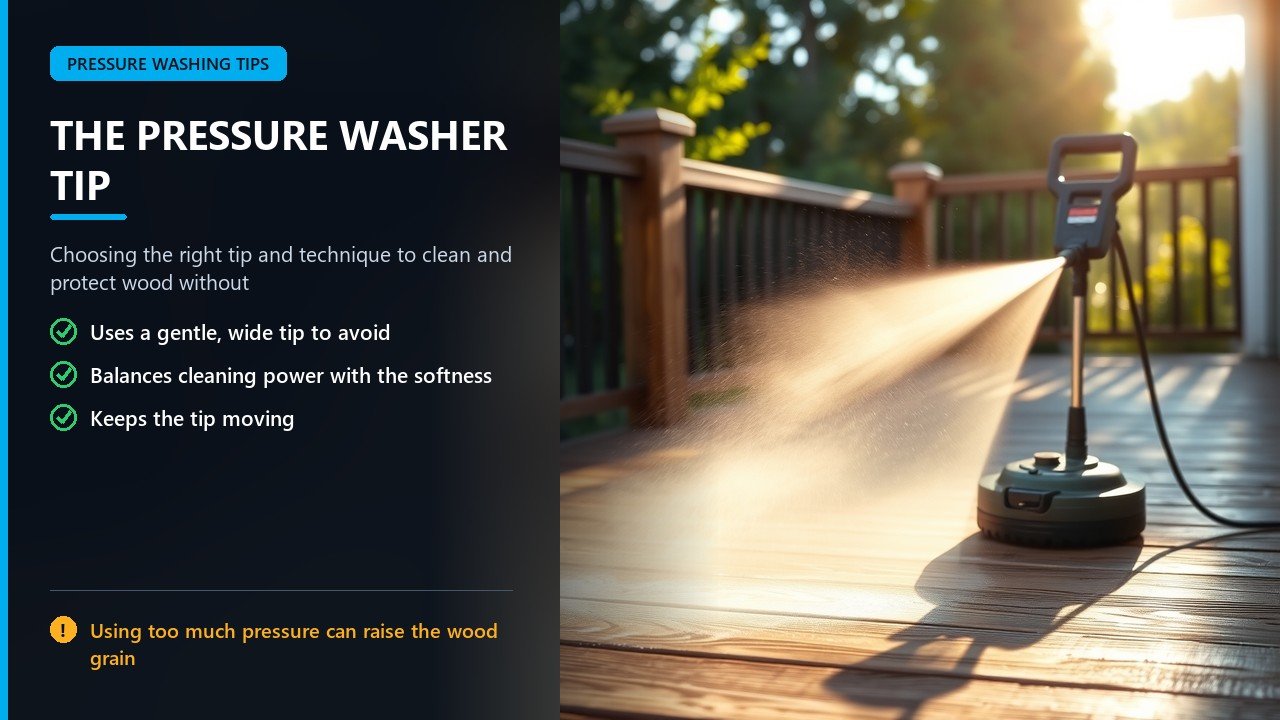
Why Decks Demand a Gentler Tip
Wood behaves very differently from the hard surfaces a pressure washer loves.
Wood is soft and fibrous. High-pressure water raises the grain, splinters the surface, and carves grooves into softwood, damage that is permanent once done. Our guide to saving surfaces with gentle tips explains.
Force strips more than dirt. Too much pressure strips the wood’s surface fibers and any remaining finish, leaving a fuzzy, damaged texture rather than a clean one. Our guide to protecting surfaces explains.
The goal is cleaning, not blasting. A deck needs dirt, mildew, and old finish removed gently, not material removed, which is why the tip and pressure matter more than raw power. Our guide to the right pressure for every surface explains.
Composite decks have their own limits. Composite boards resist water but can be damaged by high pressure and heat, so they too need a gentle tip and modest pressure. Our guide to the safest gentle tip explains.
The Right Tip for a Deck
For most decks, the answer is a wide-angle tip at reduced pressure.
White forty-degree tip. The white tip delivers the gentlest, widest fan, making it the safest choice for wood and composite decks. Our guide to the white tip explains.
Green twenty-five-degree tip. The green tip is the general-purpose choice and can work on sturdy, weathered decks at lower pressure and a greater distance, but it is riskier on soft wood. Our guide to the green tip explains.
Avoid red and yellow. The zero and fifteen-degree tips concentrate far too much force for wood and should never touch a deck. Our guide to what every tip does explains.
Soap tip for detergent. A low-pressure soap tip applies deck cleaner evenly before rinsing, an important part of deck cleaning. Our guide to soap tips explain.
| Surface | Suggested Tip |
|---|---|
| Wood deck | White 40-degree (or green at low PSI) |
| Composite deck | White 40-degree, low PSI |
| Deck stairs/rails | White 40-degree |
| Concrete patio (adjacent) | Green, yellow, or turbo |
| Applying deck cleaner | Black soap tip |
Pressure, Distance, and Technique
The tip alone does not protect a deck; how you use it matters just as much.
Lower the pressure. Many machines let you reduce pressure, or you can keep the wand farther away; both lower the force reaching the wood. Our guide to pressure control explains.
Keep a safe distance. The farther the tip is from the deck, the gentler the stream; distance is one of the easiest ways to protect wood. Our guide to distance and force explains.
Follow the grain. Moving the spray along the grain cleans more evenly and reduces the risk of raising the wood’s fibers. Our guide to surface cleaning science explains.
Keep the tip moving. Holding the spray in one spot, even with a gentle tip, concentrates force and marks the wood; sweep steadily. Our guide to avoiding surface marks explains.
Test a hidden area first. Clean a small, less visible board first to confirm the tip, pressure, and distance are safe before doing the whole deck. Our guide to protecting surfaces explains.
| Deck Condition | Approach |
|---|---|
| Lightly soiled | White tip, gentle, distance |
| Weathered with mildew | Deck cleaner, then gentle rinse |
| Old failing finish | Cleaner plus gentle white tip |
| Soft or aged wood | Lowest pressure, greatest distance |
Preparing a Deck for Cleaning
Preparation protects the deck and the home around it.
Clear the deck. Remove furniture, planters, and anything loose, and check for nails or screws sticking up that could catch the spray or cause injury. Our guide to flat surface preparation explains.
Protect surrounding surfaces. Cover or wet nearby plants and protect siding, doors, and windows from spray and overspray. Our guide to protecting surroundings explains.
Choose a deck cleaner. A cleaner designed for wood loosens dirt and mildew so cleaning needs less force; match the product to the deck material. Our guide to choosing cleaning solutions explains.
Plan for runoff. Deck cleaning produces dirty runoff that can carry cleaner; direct it away from plants and waterways, since discharge that reaches storm drains is regulated.
Cleaning a Deck Step by Step
A simple sequence keeps the work safe and effective.
Wet the deck and apply cleaner. Pre-wet the wood, then apply deck cleaner at low pressure with a soap tip, working in sections. Our guide to soap application explains.
Let the cleaner work. Give the product the dwell time its label recommends so it loosens dirt and mildew without scrubbing force. Our guide to cleaner dwell time explains.
Rinse gently with a wide tip. Switch to the white tip at a safe distance and rinse along the grain, section by section. Our guide to gentle rinsing explains.
Rinse rails and stairs carefully. Rails and stairs have edges and joints that trap water and damage easily, so use the gentlest setting there. Our guide to tip selection explains.
Check and re-rinse. After cleaning, check for missed spots and rinse again, then let the deck dry thoroughly before finishing. Our guide to surface cleaning explains.
After Cleaning: Protecting the Wood
Cleaning is only the first step for a healthy deck.
Let it dry completely. Wood must dry fully before sealing or staining, or the finish will not adhere properly. Our guide to surface care explains.
Check for damage. Inspect the deck for loose boards, popped nails, and any cleaning marks, and repair them before finishing. Our guide to deck inspection explains.
Seal or stain. Applying a sealer or stain protects the cleaned wood from moisture and sun, extending its life. Our guide to surface protection explains.
Maintain regularly. A gentle cleaning every year or two, followed by resealing, keeps a deck looking good without harsh methods. Our guide to routine care explains.
Common Deck Cleaning Mistakes
Avoiding these protects the deck.
Using too sharp a tip. The single biggest mistake; red and yellow tips gouge wood instantly. Our guide to tip selection explains.
Pressure too high. Even a gentle tip at full pressure and close distance damages wood; lower the pressure and increase the distance. Our guide to pressure guidance explains.
Holding the spray in one spot. Concentrating the stream marks the wood; keep moving along the grain. Our guide to even cleaning explains.
Skipping the cleaner. Trying to blast dirt away with water alone demands more force and risks damage; use a cleaner to do the work. Our guide to using cleaners explains.
Cleaning composite like wood. Composite decks need gentle pressure too, and some are harmed by high pressure or heat. Our guide to composite care explains.
Decking Materials and How Each Responds
Not every deck board is wood, and each material answers to pressure differently.
Softwood decks. Cedar, pine, and other softwoods are the most vulnerable, raising their grain and gouging easily, so they demand the gentlest tip and lowest pressure. Our guide to protecting softwood explains.
Hardwood decks. Hardwoods resist damage better but still mark under sharp tips, so a wide tip and moderate distance remain the rule. Our guide to surface protection explains.
Composite decks. Composite boards resist rot and water but can be damaged by high pressure, heat, and some cleaners, so clean them gently and check the maker’s guidance. Our guide to gentle cleaning explains.
Vinyl and PVC decking. These smooth surfaces clean easily with a gentle tip and low pressure, but sharp tips can scratch them, so stay wide. Our guide to pressure guidance explains.
| Deck Material | Key Concern |
|---|---|
| Softwood | Raises grain, gouges easily |
| Hardwood | Marks under sharp tips |
| Composite | Damaged by high pressure/heat |
| Vinyl/PVC | Scratches under sharp tips |
Choosing the Right Deck Cleaner
The cleaner does much of the work, so choosing it well reduces the pressure you need.
Wood deck cleaners. Cleaners formulated for wood loosen dirt, mildew, and graying so a gentle rinse is enough, protecting the boards. Our guide to choosing cleaning solutions explains.
Oxygen-bleach cleaners. Oxygen-based cleaners brighten wood and lift mildew without the harshness of chlorine bleach, making them a common choice for decks. Our guide to applying cleaners explains.
Composite-safe cleaners. Composite decks need cleaners compatible with the material, since some products can dull or stain it; follow the maker’s recommendation. Our guide to composite care explains.
Applying through the machine. A soap tip or a soap tank applies cleaner evenly at low pressure before you switch to a rinse tip. Our guide to soap tips and tanks explains.
Avoid harsh or wrong products. Bleach-heavy or inappropriate cleaners can harm wood, plants, and finishes, so match the product to the material and follow the label. Our guide to safe cleaning explains.
Working Safely Around a Deck
Deck cleaning combines water, electricity, and sometimes height, so safety matters.
Watch fixtures and outlets. Keep the spray away from lights, outlets, and wiring; water and electricity are a lethal combination. The Occupational Safety and Health Administration treats high-pressure water as a significant hazard.
Mind wet surfaces. A wet deck and wet ground are slippery, so move carefully and wear footwear with grip. Our guide to safe surface cleaning explains.
Protect plants and grass. Cleaner and runoff can harm landscaping, so wet or cover plants and keep runoff off lawns and beds. Our guide to protecting surroundings explains.
Manage runoff. Deck cleaning sends cleaner and dirt into the runoff, which should be contained and kept out of waterways. The Environmental Protection Agency regulates discharge that reaches storm drains.
How Often to Clean a Deck
Frequency depends on climate, use, and how the deck is finished.
Once a year in most climates. A gentle annual cleaning keeps a deck free of dirt and mildew and lets you inspect boards and fasteners at the same time. Our guide to routine deck care explains.
More often in damp climates. In humid or shaded areas, mildew returns quickly, so decks there may need cleaning more than once a season. Our guide to mildew cleaning explains.
Before resealing or staining. Clean the deck before applying a new finish, since a clean surface helps stain or sealer adhere and perform. Our guide to finishing surfaces explains.
Lightly for routine upkeep. A quick rinse with a wide tip between deep cleans removes surface dirt without stressing the wood. Our guide to gentle rinsing explains.
Getting the Technique Right
Small adjustments turn a risky job into a safe routine.
Section by section. Clean in manageable sections so cleaner does not dry before rinsing and so you can keep the tip moving steadily. Our guide to section cleaning explains.
Consistent distance. Holding a steady, generous distance from the wood keeps the force even and prevents concentrated marks. Our guide to consistent distance explains.
Angle the spray slightly. Spraying at a shallow angle rather than straight down cleans and lifts dirt without driving water deep into the grain. Our guide to spray angle explains.
Rinse from the top down. On railings and stairs, rinse from the top so dirty water runs down and away rather than being re-deposited. Our guide to rinse technique explains.
Don’t over-clean. Once the deck is clean, stop; repeated passes add force without benefit and only increase the risk of damaging the wood. Our guide to avoiding over-cleaning explains.
Deck Rails, Stairs, and Details
The parts of a deck that are not flat boards need extra care.
Railings and balusters. Rails have many edges where force concentrates, so use the gentlest tip and the greatest distance, and work along each piece. Our guide to gentle tips explains.
Stairs and treads. Stair treads are walked on and often softer at the edges; clean them gently and avoid driving water into the joints between treads and risers. Our guide to tip care explains.
Posts and caps. Newel posts and caps collect dirt in their details, which a gentle tip cleans well, but their end grain is vulnerable, so keep the spray at an angle and moving. Our guide to protecting end grain explains.
Fasteners and hardware. Check for protruding nails, screws, and metal connectors before cleaning, and avoid blasting directly at hardware, which can force water into the wood around it. Our guide to deck inspection explains.
Skirting and steps to grade. The lower boards and the ground contact area stay damp and are prone to rot, so clean them gently and let them dry fully before finishing. Our guide to surface care explains.
When to Call a Professional
Some deck situations are better handled by a specialist.
Delicate or historic wood. If the deck is made of rare or aged wood, or has delicate details, a professional with the right equipment and experience can clean it without damage. Our guide to professional surface care explains.
Large or high decks. Big multi-level decks and high railings involve more risk and time than most homeowners want, and a professional can work safely and efficiently. Our guide to large surface cleaning explains.
Restoration and refinishing. If the deck needs stripping, sanding, and refinishing, a professional restoration can deliver results a pressure washer alone cannot. Our guide to restoring surfaces explains.
When damage is already present. If boards are soft, rotted, or already scarred, address the damage before cleaning, and let a professional advise on repairs. Our guide to surface repair explains.
Frequently Asked Questions
What pressure washer tip should I use on a deck? The white forty-degree tip is the safest choice for wood and composite decks, used at reduced pressure and a safe distance. A green tip may work on sturdy wood at low pressure, but never use red or yellow tips.
What pressure is safe for cleaning a deck? Keep pressure low and distance generous; many owners use a machine on its lowest setting and stay well back from the wood. A cleaner does most of the work so less force is needed.
Can I pressure wash a wooden deck? Yes, with a wide, gentle tip, reduced pressure, a safe distance, and a deck cleaner. The goal is to clean the surface, not to remove wood fibers.
What about composite decks? Composite decks should also be cleaned with the gentlest white tip and low pressure, since high pressure or heat can damage the boards.
Do I need a cleaner? Yes, a deck cleaner loosens dirt and mildew so less pressure is required, which is the key to cleaning wood without damage.
Should I seal the deck after cleaning? Let the deck dry completely, then seal or stain it to protect the cleaned wood from moisture and sun.
Why did my deck get fuzzy after pressure washing? Furring means too much pressure or too sharp a tip raised the wood’s fibers. Use a gentler tip, lower pressure, and more distance next time, and sand lightly if needed.
Final Thoughts on the Pressure Washer Tip for a Deck
The right pressure washer tip for a deck is almost always the gentlest one: a white forty-degree tip at reduced pressure and a safe distance, used with a deck cleaner so the cleaning solution does the work instead of raw force. Red and yellow tips belong nowhere near a deck, and green tips only on sturdy wood with care.
Prepare the area, protect nearby surfaces and plants, work along the grain, and keep the tip moving. Let the deck dry, inspect it, and seal or stain the cleaned wood to protect it. Used this way, a pressure washer becomes a safe tool for caring for a deck rather than a hazard to it.
Tom’s gouges were a lesson, but an avoidable one. Match the gentlest tip to the wood, do most of the cleaning with a good product, and your deck will come clean and stay sound for years.