Two pressure washers sit side by side in a garage. Both say 3200 PSI on the box. Both cost a similar amount. Two summers later, one owner is still happy and the other has replaced his pump, fought a surging wand, and started watching classified ads for a used machine with a better reputation. The difference is not the PSI number on the sticker. It is what is bolted to the other end of the engine, and that is exactly why the DeWalt 3200 PSI pressure washer earns the loyal following it does.
This particular machine, sold as model DXPW60603, is a gas-powered cold water unit rated 3200 PSI at 2.8 GPM. On paper those numbers are ordinary. Plenty of machines claim 3200 PSI. What sets this one apart is the pairing underneath the numbers: a Honda GX200 commercial engine and a CAT industrial triplex plunger pump. If you have spent any time around serious cleaning equipment, you already know that combination is the real story. If you have not, this guide will explain why it matters, what the machine does well, where it falls short, and who should actually buy it.
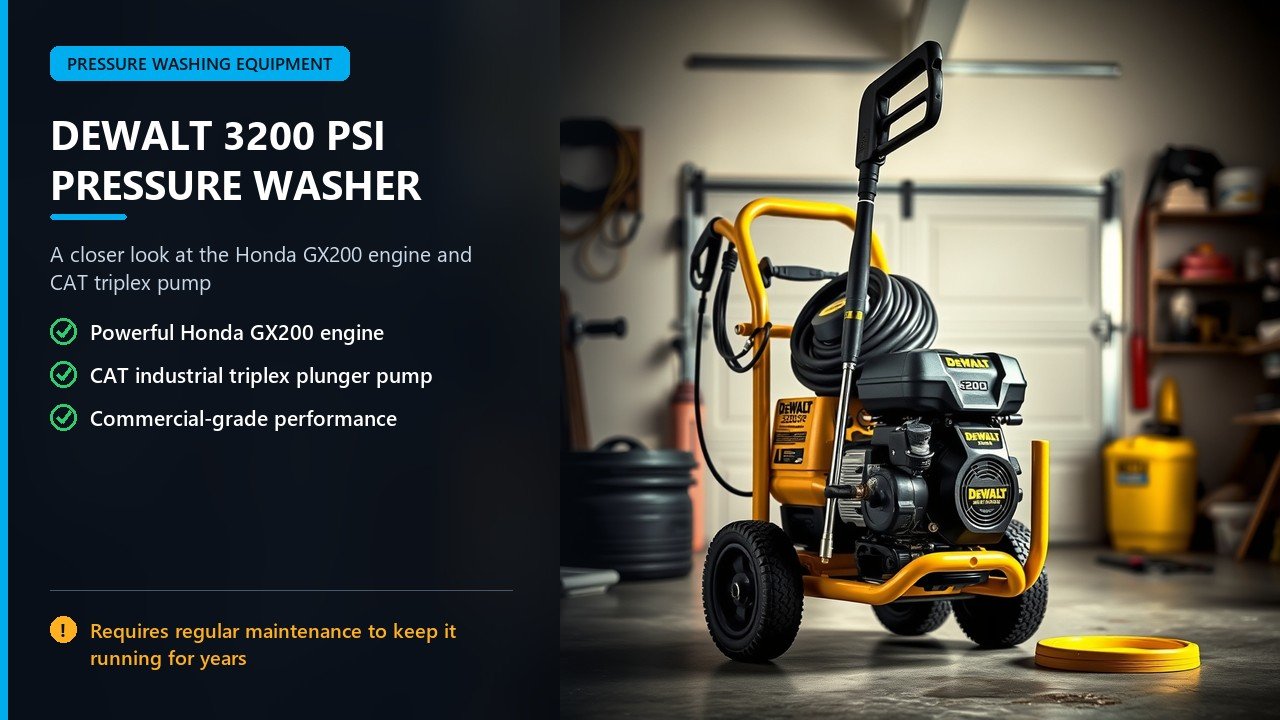
Meet the Machine: Honda GX200 Plus CAT Triplex Pump
Let us start with what is actually in the box, because the components are the reason to consider this machine.
The engine is a Honda GX200, a 196cc commercial-grade overhead valve engine. If that name means nothing to you yet, our article on why a pressure washer GX200 engine lasts for years explains why it is one of the most respected small engines in the industry. It starts easily, runs smoothly, and includes a low oil shutdown that protects the engine from the single most common cause of small-engine death: running low on oil.
The pump is a CAT industrial triplex plunger pump with ceramic pistons and an adjustable unloader, and it includes a thermal relief valve. This is the heart of the machine. A triplex plunger pump is built for commercial duty and can run long hours, unlike the axial cam pumps found on most homeowner machines. It can also be rebuilt rather than thrown away, which is what makes a machine like this last.
Around those two core parts, the machine is built for work. A welded steel frame with a powder-coated finish resists corrosion. Ten-inch pneumatic tires roll over gravel and curbs. A 5/16-inch by 25-foot steel-braided hose is non-marring and abrasion resistant. Five quick-connect nozzles cover zero, 15, 25, and 40 degrees plus a soap tip, and there is a downstream detergent injection system for pulling cleaner into the stream.
| Specification | Detail |
|---|---|
| Model | DeWalt DXPW60603 |
| Pressure and flow | 3200 PSI at 2.8 GPM |
| Engine | Honda GX200, 196cc, low oil shutdown |
| Pump | CAT industrial triplex plunger, ceramic pistons, thermal relief valve |
| Drive | Direct drive |
| Hose | 5/16 inch by 25 feet, steel braided, non-marring |
| Nozzles | 0, 15, 25, 40 degrees plus soap, quick connect |
| Detergent | Downstream injection with siphon hose and filter |
| Frame and tires | Welded steel frame, 10-inch pneumatic tires |
| Fuel tank | Approximately 0.8 gallons |
| Weight | Roughly 90 pounds |
| Warranty | Engine 3 years, pump up to 5 years, frame up to 10 years, accessories 90 days |
The numbers are respectable. Two-point-eight GPM is a solid flow rate that pairs well with a surface cleaner, and 3200 PSI is enough for concrete, siding, decks, and paint prep. Neither figure is extreme, and that is fine. The reliability of the engine and pump is the selling point, not a headline pressure number.
Why the Pump Type Matters More Than the PSI
This is the part of the story most shoppers miss, and it is the difference between a machine that lasts and one that does not. A triplex plunger pump uses three pistons moving inside ceramic-lined cylinders. It is heavier, more expensive, and far more durable than an axial cam pump, which uses a wobbling plate to push water and is common on budget machines.
The practical consequence is service life. An axial cam pump is usually a sealed unit that fails and gets replaced. A triplex pump on a machine like this can be serviced and rebuilt, so a rebuild kit restores it instead of sending the whole machine to the landfill. Over years of use, that difference is enormous. It is also why professional buyers look at the pump before the PSI rating, and why a “maintenance-free” axial pump is a selling point for a casual user but a warning sign for a working one.
The Honda GX200 Engine and Why It Is a Big Deal
Honda’s GX series is the engine that lawn care and equipment rental yards trust, and for good reason. It is a commercial overhead valve design, meaning it runs cooler and more efficiently than a cheap flathead engine, and it is known for easy starting and long life. The GX200 specifically is a 196cc engine that has powered everything from pumps to go-karts, and its reputation for reliability is not hype.
Two features matter most here. First, easy starting. A gas pressure washer that will not start is useless, and Honda’s reputation on cold starts is well earned. Second, the low oil shutdown, often called Oil Alert, which shuts the engine down before low oil can destroy it. Since oil neglect is the leading cause of small-engine failure, that single feature has saved countless machines.
Like any engine, the GX200 still needs basic care. Change the oil on schedule, keep the air filter clean, use fresh fuel, and never let it sit all winter with ethanol fuel in the carburetor. Our guide on how to store a pressure washer for winter covers the fuel and storage routine that keeps a small engine healthy through the off season, and the walkthrough on how to winterize a gas pressure washer before the first freeze handles the water side.
What the DeWalt 3200 PSI Pressure Washer Does Best
Where does this machine shine? Here are the jobs it was built for.
Concrete flatwork. At 3200 PSI and 2.8 GPM, it has enough punch for driveways, sidewalks, and patios, and enough flow to drive a 16 to 20-inch surface cleaner efficiently. The flow rate is arguably more valuable than the pressure here, because surface cleaners need volume to spin and clean evenly.
Decks and wood, with care. It can clean decks and fences, but wood demands a wider nozzle and steady technique. Pair it with the right tip and you protect the grain, as our guide to the pressure washer tip for a deck explains.
Siding and exterior prep. With the 40-degree tip and the downstream injector, it handles vinyl and painted siding and prepares surfaces for painting.
Long sessions without overheating. The triplex pump and Honda engine are built to run for hours, which is the difference between a machine you use and a machine you fight.
Long-term ownership. Because the pump is serviceable and parts are widely available, this is a machine you can keep running for many years rather than replacing every few seasons.
Where It Falls Short
No machine is perfect, and an honest review has to say so.
It is not the lightest option at roughly 90 pounds, so it is a wheeled machine, not a carry-up-the-stairs tool. It is a gas engine, so it is loud, produces exhaust, and must never be run indoors. It is a cold water machine, so it does not dissolve grease like a hot water unit, which matters for restaurant and heavy equipment work. At 2.8 GPM it is strong but not a commercial volume machine, so very large commercial flatwork still favors a higher-flow unit. And it needs the usual gas-engine maintenance: oil, filter, fuel, and winter care.
None of these are dealbreakers for the right user. They simply define who the right user is. If you need portability, quiet operation, or indoor use, look at electric options instead. Our article on the 220v power washer covers the electric path for indoor and fixed-location work.
How It Compares to Other 3200 PSI Machines
The 3200 PSI bracket is crowded, and the internals vary wildly. Here is how the DeWalt with Honda and CAT stands up against common alternatives.
| Example Machine | Engine | Pump | Flow | Notable Difference |
|---|---|---|---|---|
| DeWalt DXPW60603 | Honda GX200 commercial | CAT triplex plunger | 2.8 GPM | Commercial engine plus rebuildable industrial pump |
| Typical big-box 3200 PSI | Branded residential engine | Axial cam | 2.5 GPM | Cheaper, sealed pump, shorter lifespan |
| DeWalt DXPW61372 style | Honda, maintenance-free | Maintenance-free pump | 2.5 GPM | Less upkeep, less serviceable |
| Higher-tier brands | Honda or better | Triplex | 3.5 to 4 GPM | More flow and washing power, much higher cost |
The pattern is consistent. When you pay for a machine with a commercial engine and an industrial triplex pump, you are buying years of service, not a spec sheet. When you pay less, you are renting a machine that will eventually fail and be replaced. There is nothing wrong with the cheaper choice for light use, but the DeWalt’s value proposition is durability, and it delivers on that.
What to Check Before You Buy
Use this checklist whether you are buying new or used.
Confirm the exact model. The 3200 PSI class includes both triplex and maintenance-free pump variants. Make sure you are getting the pump you actually want.
Confirm the engine is the GX200. Not every “Honda” is the commercial GX, and the GX is worth it. Verify the model on the engine plate.
Inspect the pump for leaks. Look at the seals, the sight glass for oil, and the area under the pump. Drip marks mean worn seals or a cracked body.
Check the oil in the pump, not just the engine. A triplex pump has its own crankcase oil, and running it low causes rapid failure. Our guide to the oil that goes in a pressure washer pump explains exactly what to use.
Inspect the hose and gun. Cuts, bulges, or a leaking gun are cheap to fix but a sign of how the machine was treated.
Run it under load. Start the engine, connect water, and pull the trigger. It should hold steady pressure with no surging. Surging often points to an unloader or air issue, not just wear.
Check the nozzle set. Missing or worn nozzles tell you the machine was used hard, and replacements are cheap. Our guide on the pressure washer nozzle replacement covers how to refresh them.
Maintenance That Keeps It Running for Years
A Honda GX200 and a CAT triplex pump are durable, but they are not maintenance-free, and treating them right is what makes the investment pay off.
Change the engine oil at the intervals Honda specifies, and never skip the first change on a new engine. Check the pump oil regularly and top it with the correct grade. Keep the air filter clean, because a dirty filter makes the engine run rich and lose power. Use fresh fuel and treat or drain it before storage so ethanol does not gum up the carburetor. After every use, run clean water through the detergent line and the pump to flush soap and grit. Check the unloader and the thermal relief valve for proper operation, since these protect the pump. Keep the hose off the ground when stored, ideally on a reel, which is the whole point of our guide on why a heavy duty pressure washer hose reel pays off.
Finally, matching your accessories to the machine matters. Quick connects that are worn or undersized can choke the flow, and our explainer on standard pressure washer quick connect size helps you keep the whole system flowing freely.
Who Should Buy This Machine
Buy the DeWalt 3200 PSI pressure washer with the Honda GX200 and CAT pump if you are a serious homeowner or a light-to-moderate professional who wants a machine that starts every time, holds pressure, and can be repaired instead of replaced. It is ideal for anyone who is tired of replacing cheap axial-pump units every couple of seasons and wants to buy once and maintain.
Do not buy it if you need to work indoors, if you need hot water, if you need extreme portability, or if you need very high flow for big commercial flatwork. Those needs point to other machines. For everyone else, this is one of the smarter buys in the mid-range gas category because of what hides under the hood, not because of any single number.
Setting It Up the First Time
A little patience at unboxing prevents most early problems. Follow this sequence and the machine will be ready to work the right way.
Add engine oil first. The Honda GX200 ships without oil, and running it dry for even a moment damages it. Fill it to the marks on the dipstick, then check again after the first few hours of use. Never tilt the machine far enough to spill oil into the combustion chamber.
Check the pump oil. The triplex pump has its own crankcase with a sight glass. Confirm the level is where the manual says it should be. A pump that ships low or loses oil will fail fast, so treat this check as non-negotiable.
Connect and flush the water supply. Attach a garden hose to the inlet, turn the water on, and let it run through the pump with the engine off and the trigger held open until the stream is steady with no sputtering. This purges air, and purging air is the single most important step for pump life.
Install the right nozzle. Start with the 40-degree tip and work down in pressure as needed. Pull back on the quick-connect collar, seat the nozzle, and tug gently to confirm it is locked. A nozzle that pops out under pressure is a safety hazard.
Prime the detergent line. Drop the siphon filter into your soap bucket and run the machine briefly on the soap setting so the line fills. This saves you from wondering later why no detergent is drawing.
Run a short break-in. Use the machine lightly for the first half hour, vary the load, and then recheck both oil levels. Then change the engine oil after the first few hours as Honda recommends, which removes the metal particles from a new engine.
Common Problems and How to Fix Them
Even a well-built machine develops quirks, and most of them trace back to a short list of causes. Here is what to check first when something feels off.
The engine will not start. Work through the basics in order. Check fuel, check that the fuel valve and choke are set correctly, check the oil level because the low oil shutdown will prevent starting, and check the spark plug. Old fuel is the most common culprit, so if the machine sat for months, drain and refill with fresh gas.
Pressure surges or pulses. This usually means air in the system, a partially clogged inlet screen, or an unloader issue. Reconnect the supply and purge air, clean the inlet filter, and check for a kinked hose. If it continues, have the unloader serviced, since an unloader stuck out of adjustment causes erratic pressure.
No pressure at all. Confirm water is actually flowing to the pump, that no nozzle is clogged, and that the unloader is not stuck open. A worn or failing pump also causes this, which is why pump oil level matters.
Detergent will not draw. Downstream injectors only pull soap at low pressure, so make sure you are using the black soap tip, not a high-pressure tip. Check the siphon hose and filter for clogs, and make sure the soap is not too thick to siphon. Flush the line after every use so dried soap does not block it.
Water leaking from under the pump. Seals are the usual cause, and a triplex pump with replaceable seals can be rebuilt. Stop using the machine, identify the source, and use a rebuild kit rather than running a leaking pump, which will only do more damage.
Engine runs rough or loses power. A dirty air filter, old fuel, or a fouled spark plug usually explains it. Clean or replace the filter, refresh the fuel, and inspect the plug.
Accessories Worth Adding
The machine works fine out of the box, but a few additions make it far more capable and easier to live with.
A surface cleaner. This is the highest-value upgrade for anyone with concrete to clean. A 16 to 20-inch surface cleaner uses the machine’s flow efficiently and eliminates the zebra striping that a wand leaves behind.
A hose reel. Keeping the 25-foot hose off the ground protects it from abrasion and sun damage and speeds every setup. A good reel also keeps the hose from becoming a tangled trip hazard on the job.
Better quick connects. Quality stainless quick connects reduce restriction and make nozzle and accessory swaps instant. Worn or cheap fittings choke flow, so replacing them is money well spent. Our explainer on quick connect for a pressure washer hose covers matching fittings to the whole system.
A spare nozzle set. Nozzles wear and clog, and having a fresh set on hand means a five-second swap instead of a lost afternoon.
An extension wand. For roofs, tall siding, and second-story trim, an extension wand keeps you off ladders and safely on the ground.
Proper storage cover. A simple cover keeps dust and debris out of the engine and pump between jobs and adds years of life, especially in dusty or damp environments.
Frequently Asked Questions
How many GPM is the DeWalt 3200 PSI pressure washer?
The DXPW60603 is rated 2.8 GPM at 3200 PSI. Some other DeWalt 3200 PSI models are rated 2.5 GPM with a maintenance-free pump, so confirm the exact model and flow rate before buying.
What kind of pump does it use?
The DXPW60603 uses a CAT industrial triplex plunger pump with ceramic pistons, an adjustable unloader, and a thermal relief valve. Triplex pumps are far more durable and serviceable than the axial cam pumps on most budget machines.
Is the Honda GX200 a commercial engine?
Yes. The GX series is Honda’s commercial line, known for easy starting, long life, and a low oil shutdown that protects the engine. It is a meaningful upgrade over the residential engines found on cheaper washers.
Can I use a surface cleaner with it?
Yes. At 2.8 GPM it drives a 16 to 20-inch surface cleaner effectively. Match the deck size to your flow for even, streak-free results.
Does it have a detergent system?
Yes, it has a downstream detergent injection system with a siphon hose and filter. Soap is applied at low pressure through the black soap nozzle, and you use a high-pressure tip to rinse.
How much does it cost?
New pricing for the DXPW60603 typically lands in the range of roughly 700 to 900 dollars depending on the seller. That reflects the commercial engine and industrial pump rather than a budget build.
Is it good for commercial use?
It is rated for serious use and carries commercial-style warranties on the engine and pump, so it can handle light commercial work well. For heavy daily commercial flatwork, a higher-flow machine is usually a better fit.
What oil should I use in the pump?
Use only the pump oil grade the pump manufacturer specifies. The wrong oil can destroy a triplex pump quickly, so check the manual and use the exact recommendation.
Final Thoughts
The DeWalt 3200 PSI pressure washer is a case study in why specs alone do not tell the whole story. Its headline numbers are average, but its Honda GX200 engine and CAT triplex pump are anything but. Those two components are why this machine starts reliably, holds pressure, and can be serviced for years instead of tossed after a few seasons.
If you want a gas pressure washer that rewards care with longevity, confirm the model, verify the pump type, keep the oil fresh in both the engine and the pump, and winterize it properly. Do that, and this machine will outlast the cheaper competitors by a wide margin. For anyone weighing it against alternatives, our overview of the gas pressure washer winter prep routine and the deep dive on the GX200 engine will help you get the most from it from day one.