4 GPM 4000 PSI Pressure Washer: The Machine Behind the Numbers
A 4 GPM 4000 PSI pressure washer sits at the top of the portable class, and the two numbers only tell part of the story. Flow and pressure describe what the machine can do, but what makes a 4 GPM 4000 PSI unit work, or fall apart, is the hardware behind those specs: the engine that drives it, the pump that builds the pressure, the unloader that controls it, and the water supply that feeds it. Miss any one of those and the machine never delivers what the label promises.
This guide looks at the 4 GPM 4000 PSI machine as a complete system. We will cover the cleaning power the combo represents, the engine and pump that make it possible, the water supply it demands, the price range, and how to run it productively. For the wider context, our complete buyer’s guide to power and flow covers the class in depth.
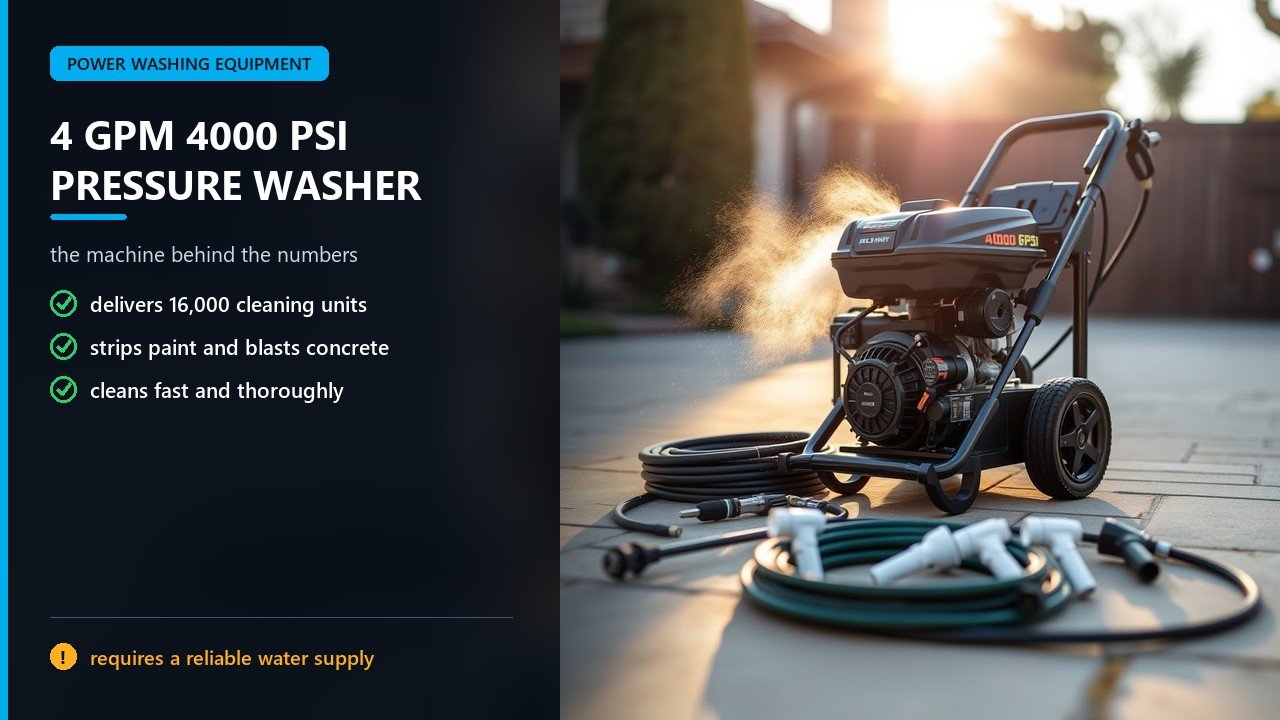
What 4 GPM and 4000 PSI Add Up To
Cleaning units are the product of pressure and flow, and 4,000 PSI times 4 GPM equals 16,000, which is a huge number for a portable machine. Pressure tells you how hard the water hits, and flow tells you how much water arrives to carry away the dirt. High pressure with low flow scours a narrow line; high flow with low pressure rinses a wide area gently. The combination of both, which the 4 GPM 4000 PSI class delivers, cleans fast and thoroughly at the same time.
That is why this class is the benchmark for professional exterior cleaning. It strips paint, blasts concrete, and rinses a driveway in a fraction of the time a residential unit needs. Our article on the 4000 psi 4 gpm combo explains why professionals treat it as the standard.
The Engine That Drives a 4 GPM Machine
Four gallons a minute at 4,000 PSI takes real horsepower, and the math behind it is absolutely unforgiving. A pump of this class typically needs about 11 brake horsepower at the shaft, which is why nearly every 4 GPM 4000 PSI machine is built around a 13 horsepower gas engine. The Honda GX390, a 389cc commercial engine, is the near-universal choice, and it is the same engine you see across pressure washers, generators, and small equipment because it is durable and easy to service.
The Generac XC 4200 PSI 4.0 GPM machine pairs its pump with an OHV engine, and the Karcher HD 4.0/40 Ge runs a Honda GX390 E/S. Engine quality matters more than peak numbers here, because a 4 GPM pump under load puts a constant strain on the engine. A commercial-grade engine with a cast-iron sleeve and a large oil sump tolerates that load for years, while a cheap engine wears out fast. Our guide to 4 GPM washers with a Honda engine covers why that pairing works.
The Pump: Where the Pressure Comes From
The pump is the heart of a 4 GPM 4000 PSI machine, and it must be a triplex plunger pump, not an axial cam. A triplex pump uses three ceramic plungers driven by a crankshaft, which spreads the load, runs cooler, and lasts far longer than the wobble-plate design of an axial pump. Pumps in this class, like the AR North America RKA4G40HN or the General Pump EZ4040G, use nickel-plated brass heads, solid ceramic plungers, and bronze connecting rods for long life.
Look at the AR RKA4G40HN as a reference point: 4 GPM, 4,000 PSI, 11 brake horsepower required, a 24mm shaft, a half-inch inlet, a three-eighths inch outlet, and a 140°F maximum water temperature. That spec sheet tells you what the pump needs to survive. Belt drive isolates the pump from engine vibration and heat, while direct drive is more compact. Both work, but belt drive generally outlasts direct drive on a heavy 4 GPM machine. Our guide to triplex versus axial pumps explains the difference.
Direct Drive Versus Belt Drive
How the engine connects to the pump affects both price and longevity. Direct drive bolts the pump straight to the engine shaft through a flange, which makes the machine compact, light, and inexpensive. It also runs the pump at full engine speed, so the pump works harder and hotter. Belt drive uses pulleys and belts to turn the pump, which lets the pump run slower, isolates vibration, and moves the pump away from engine heat. The trade-off is more maintenance, since belts need tensioning and periodic replacement.
For a machine that runs all day, belt drive is usually the smarter long-term choice, which is why premium 4 GPM 4000 PSI units like the Pressure Pro EB4040HGE use a belt-driven General Pump. For occasional use, direct drive keeps the price down and the machine light. Choose based on how hard you will work the unit, not just the sticker price. Our piece on shopping for a 4000 psi 4 gpm washer weighs the options.
The Water Supply Problem
Here is the catch almost no one plans for: a 4 GPM machine needs a supply that actually delivers 4 GPM at the pump inlet. A typical garden hose and spigot often supply only 3 to 5 GPM at the pressure the pump needs, and once you add hose friction and elevation, the real flow drops well below the rating. If the supply cannot keep up, the pump cavitates, the pressure falls, and the seals and valves wear out fast.
The fix is to feed the machine from a buffer tank or float tank and let the pump draw from a short, large-diameter suction hose rather than the garden tap. A 4 GPM machine is greedy, and a dedicated, properly sized supply protects both the pump and the seal, valve, and plunger components that wear fastest when the pump starves for water. Our guide to what a 4 GPM washer cleans and drinks covers supply in detail.
Unloader and Pressure Control
The unloader is the valve that diverts water back to the pump inlet when you release the trigger, and on a 4 GPM 4000 PSI machine it has to be especially robust. A good unloader holds pressure steady as you work, protects the pump from deadhead spikes, and is adjustable so you can dial the pressure down for delicate surfaces. Machines in this class often use an external unloader, like the BE PE-4013HWPAGEN, which cools better and is easier to service than an internal one.
Some units add a thermo-sensor that protects the pump from overheating when it sits in bypass too long, a common failure point on high-flow machines. When you compare models, look past the headline numbers and check the unloader and thermal protection. Those parts decide whether the machine survives a hard week. Our pump part guide shows what fails and why.
Typical Specs and Price
| Spec | Typical Value |
|---|---|
| Pressure | 4,000 PSI |
| Flow | 4.0 GPM |
| Cleaning units | 16,000 (PSI × GPM) |
| Engine | 13 HP Honda GX390 (389cc) or equivalent |
| Pump | Triplex plunger, direct or belt drive |
| Hose | 3/8 in x 50 ft, quick connect |
| Weight | About 150–210 lb |
| Price (cold water gas) | About $1,400–$2,500 |
Prices vary with the pump, the frame, the starter, and the brand. The Generac XC 4200 PSI 4.0 GPM lists around $1,469, while belt-driven General Pump machines from Pressure Pro run near $2,400. The Generac XC 4000 PSI 3.5 GPM shows the step below this class, still commercial-grade but with less flow. Hot water versions cost more still. Our commercial pressure washer guide breaks down what drives the price.
What a 4 GPM 4000 PSI Machine Can Clean
This class handles nearly every exterior cleaning job. It strips a full driveway of oil stains and tire marks, removes paint and graffiti, cleans heavy equipment and fleet vehicles, restores decks and fences, and preps surfaces for stain or paint. The high flow also means it rinses soap and debris away quickly, and the high pressure means it cuts through buildup that lighter machines only smear around.
It is also the entry point for surface cleaners and rotary tools that need substantial flow to work well. A surface cleaner on a 4 GPM machine cleans a driveway in even, streak-free passes, which is nearly impossible with a small residential unit. Our complete 4 GPM guide covers the full range of jobs.
Electric Start and Convenience Features
At this power level, electric start becomes a real convenience. Pull-starting a 13 HP engine gets old fast, so many 4 GPM 4000 PSI machines offer a battery and push-button start. The Pressure Pro EB4040HGE and the Karcher HD 4.0/40 Ge both include electric start as standard. It adds cost and a battery to maintain, but for anyone starting the machine many times a day, it is worth it.
Other features worth checking include flat-free tires for moving a heavy unit over rough ground, an integrated wand holder and hose hanger, a detergent injector, and a folding handle for storage. Our electric start guide covers that convenience in detail.
Running It Productively
A 4 GPM 4000 PSI machine rewards good habits. Use the right nozzle for the surface, keep the nozzle moving to avoid streaks and surface damage, and respect the 0-degree tip as a tool for tough spots rather than general use. Pre-treat with detergent, let it dwell, then rinse with the flow your machine provides. Because the machine is heavy, keep it positioned so the hose reaches without dragging over the work.
Do not deadhead the pump, and let it cool down properly after a long session. On a high-flow unit, the small disciplines that protect any pump matter more, because the stakes and the replacement cost are higher. Our guide comparing gas, electric, and hot water 4000 PSI units helps you match the machine to the job.
Cold Water, Hot Water, or Electric
The 4 GPM 4000 PSI class is dominated by gas cold water machines, but it extends to hot water and, less commonly, electric. A hot water 4 GPM machine adds a diesel or gas burner and cleans grease and oil far better than cold water, which is why it dominates fleet and food-plant work. Electric 4 GPM machines exist but need heavy 230-volt power and are usually stationary.
Choose cold water for general exterior cleaning, hot water for grease and industrial work, and electric only where you have the power and a fixed location. The flow and pressure stay the same; the source of heat and power changes. Our BE 4000 PSI guide covers the hot water end of the range.
Maintenance That Protects the Investment
A 4 GPM 4000 PSI machine costs real money, so maintenance is not optional. Change the pump oil on schedule, check and top the engine oil before every use, inspect the unloader and fittings for leaks, and keep the inlet strainer clean. Store the machine with the pump protected from freezing, and run a pump saver through it before winter. Because the pump works hard, oil quality and change intervals matter more than on a light residential unit.
Track the engine hours if you use the machine commercially, since oil and filter changes follow time, not just mileage. Replace worn nozzles and O-rings promptly, and re-tension drive belts on belt-driven units. Outlets like Grainger carry the replacement nozzles, unloaders, and pump parts these machines need. Our guide to caring for a 4000 PSI Honda-powered washer covers the routine.
Understanding Cleaning Units
Cleaning units give you a single number to compare machines, and 4 GPM 4000 PSI machines lead the portable field with 16,000. Pressure alone is misleading; a 4,000 PSI machine with 2.5 GPM has only 10,000 cleaning units and cleans a broad area far more slowly than a true 4 GPM unit. Flow is what turns pressure into productivity, because water is what lifts and carries away the dirt you loosened with the jet.
That is why professionals chase flow, not just pressure. If you must choose between more pressure and more flow, flow usually wins on large, dirty surfaces. A 4 GPM machine at 3,500 PSI can outperform a 2.5 GPM machine at 4,000 PSI on a driveway every time. Our guide to flow, power, and productivity walks through the math.
Belt Drive Versus Direct Drive Longevity
Direct drive machines are the common choice at lower price points, because bolting the pump to the engine shaft is cheap and compact. But direct drive runs the pump at engine speed, often 3,400 RPM, which builds heat and wear. Belt drive turns the pump slower, typically around 1,450 RPM, which reduces wear, dampens vibration, and moves the pump away from the engine’s heat. That is why heavy commercial 4 GPM units usually go belt drive.
The trade-off is maintenance: belts stretch, slip, and eventually need replacing, and sheaves must stay aligned. For a machine that runs a few weekends a season, direct drive is fine and cheaper. For a machine that runs daily, belt drive pays for itself in pump life. Weigh your usage honestly before deciding. Our shopping guide helps you choose.
Nozzles and Surface Cleaners for High Flow
A high-flow machine needs accessories rated for the flow. Standard 1/4-inch quick-connect nozzles work, but you should size the orifice to the machine’s GPM; too small an orifice chokes flow and raises pressure, while too large drops pressure. A machine with 4 GPM at 4,000 PSI uses larger nozzle orifices than a 2.5 GPM unit, and getting them right keeps the machine on its performance curve.
Surface cleaners are where the flow really shines. A rotary surface cleaner needs volume to spin and rinse, and a 4 GPM machine drives one effortlessly, cleaning a driveway in even passes without streaks. Water brooms, undercarriage cleaners, and turbo nozzles all benefit from the extra flow. Our complete 4 GPM guide covers the accessory side.
Fuel, Oil, and Operating Cost
A 13 HP gas engine burns roughly a gallon of fuel per hour under sustained load, so a full day of commercial work adds real fuel cost to the machine’s price. Pump oil changes, engine oil and filter changes, spark plugs, air filters, and occasional belt replacement add up too. Compared to a residential electric unit, a 4 GPM 4000 PSI gas machine has a higher ongoing cost, but it also cleans far more work per hour.
Treat the operating cost as part of the productivity equation. If the machine cleans twice the area per hour, the fuel and maintenance are cheap relative to the labor it saves. Keep a maintenance log, track engine hours, and buy quality oil and filters. Our 4000 PSI power washer guide covers running and care.
Safety at the Top of the Portable Class
At 4,000 PSI, safety is never a footnote. The stream from a 0-degree tip can cut skin, inject water under pressure, and destroy surfaces in an instant, so treat it with real respect. Never point the wand at people, animals, or yourself, and never try to clear a nozzle with your hand while the machine is running. Treat the pressure as you would a blade: powerful, useful, and unforgiving.
Wear eye and hearing protection, keep a firm grip, and use the trigger lock when you set the wand down. Match the nozzle to the surface, and keep the tip at a safe distance from soft materials. A 4 GPM 4000 PSI machine amplifies every mistake, so the habits that matter on any washer matter more here. Our guide to owning a 4000 PSI gas washer covers safe operation.
Matching the Machine to the Job
Before you buy, match the machine to the actual work you do. A 4 GPM 4000 PSI washer is overkill for washing a car or a small patio, where a 2.5 GPM unit is easier to handle and cheaper to run. It makes sense when you clean large concrete areas, strip coatings, or wash fleets and equipment regularly. Buy the class your jobs actually demand, not simply the biggest number you can afford.
Consider access and storage too. A 150 to 210 pound machine with a 13 HP engine needs room, a ramp or a helper to load, and a dry place to live out of the weather between jobs and over the winter. If you clean in tight residential spaces, a smaller machine may serve you better. Our guide to the professional high-power class helps you decide.
Storing a Heavy Machine Between Jobs
A 4 GPM 4000 PSI unit is an investment, so store it properly. Drain the pump and hose, run a pump saver through the pump before freezing weather, and keep the machine under cover. Fuel left in the tank for months can go stale, so use a stabilizer or run the engine dry for long storage. Check the battery on electric-start models and charge it periodically.
A little storage discipline prevents the cracked pumps and corroded carburetors that sideline heavy machines every spring. Cover the unit, keep the wand and nozzles clean and dry, and store the hose coiled loosely without tight kinks. Our Honda-powered washer care guide covers seasonal storage.
Hose, Gun, and Fittings at This Flow
A 4 GPM machine moves a lot of water, and the hose and gun must keep up. Use a three-eighths inch high-pressure hose rated above 4,000 PSI; a quarter-inch hose chokes flow and wastes the machine’s output. Keep the working hose reasonably short, because pressure and flow drop over long runs, and add a short jumper only to reach a reel. Brass quick connects rated for the pressure should replace any cheap couplers that come with a budget machine.
The gun and wand also need to handle the flow. A gun rated for 4,000 PSI at 4 GPM is standard on commercial machines, and the wand bore should match the flow so the spray stays strong. If the machine feels weak, check the hose diameter, nozzle orifice, and inlet supply before blaming the pump. Our guide to 4000 PSI gas washers covers the accessories that keep flow strong.
When to Step Up or Step Down
Not every professional needs 4 GPM 4000 PSI. If your work is mostly residential driveways and patios, a 3 GPM or 3.5 GPM machine at 4,000 PSI cleans nearly as well, weighs less, needs less water, and costs less. Step up to a full 4 GPM 4000 PSI unit when you clean large commercial surfaces, strip coatings, or wash fleets where every hour of labor counts against the machine’s cost.
The decision is really about productivity per dollar and per hour. A heavy machine that pays for itself in saved time is the right buy; a heavy machine used twice a year is money wasted on fuel, storage, and upkeep. Match the class to your workload and your access, and the machine will earn its keep. Our complete 4 GPM guide helps you place this class in the wider lineup.
Frequently Asked Questions
What is 4 GPM 4000 PSI good for? It is a professional-grade combo for driveways, concrete, paint removal, heavy equipment, and fleet cleaning. The high flow and pressure clean large areas fast and thoroughly.
What engine does a 4 GPM 4000 PSI washer need? About 11 brake horsepower at the pump shaft, which is why nearly all use a 13 HP engine such as the Honda GX390.
Do I need a water tank for a 4 GPM machine? Often yes. A 4 GPM unit needs a supply that truly delivers 4 GPM, which many garden taps cannot. A buffer tank with a short suction hose is the reliable solution.
Is a triplex pump required? Yes for this class. Axial cam pumps are not built for the load of 4 GPM at 4,000 PSI. Triplex plunger pumps are standard and far more durable.
How much does a 4 GPM 4000 PSI washer cost? Cold water gas models run roughly $1,400 to $2,500 depending on pump, drive, and features. Hot water and premium belt-drive units cost more.
Direct drive or belt drive? Direct drive is lighter and cheaper; belt drive runs cooler, lasts longer, and is better for heavy daily use. Choose based on how hard you work the machine.
The Bottom Line
A 4 GPM 4000 PSI pressure washer is more than a spec sheet. It is a system in which the engine, pump, unloader, water supply, drive type, and accessories all have to work together. Get those parts right and the machine delivers 16,000 cleaning units of fast, thorough power for years. Get any of them wrong, and the headline numbers never materialize in the real world.
Match the machine to your work, respect its appetite for water, and maintain the pump like the precision component it is. Keep the hose, nozzles, and fittings sized to the flow so nothing chokes the output you paid for. Do that, and a 4 GPM 4000 PSI unit becomes the dependable workhorse that pays for itself many times over, job after job and season after season of serious cleaning.