A rig builder named Marta had a customer who insisted he needed a 5000 PSI pressure washer. He had seen the number on a listing and assumed more was always better. Greg asked him a few questions: what was he cleaning, how big were the areas, and what flow did he want. The answer revealed he mainly cleaned concrete driveways and equipment, work that a well-matched machine at lower pressure and higher flow often handles better than a raw 5000 PSI number. But some jobs genuinely need the top of the pressure range, and a Honda engine is the natural heart of such a machine. Understanding what a Honda 5000 PSI pressure washer actually is, and what specifications matter, prevents both overspending and disappointment.
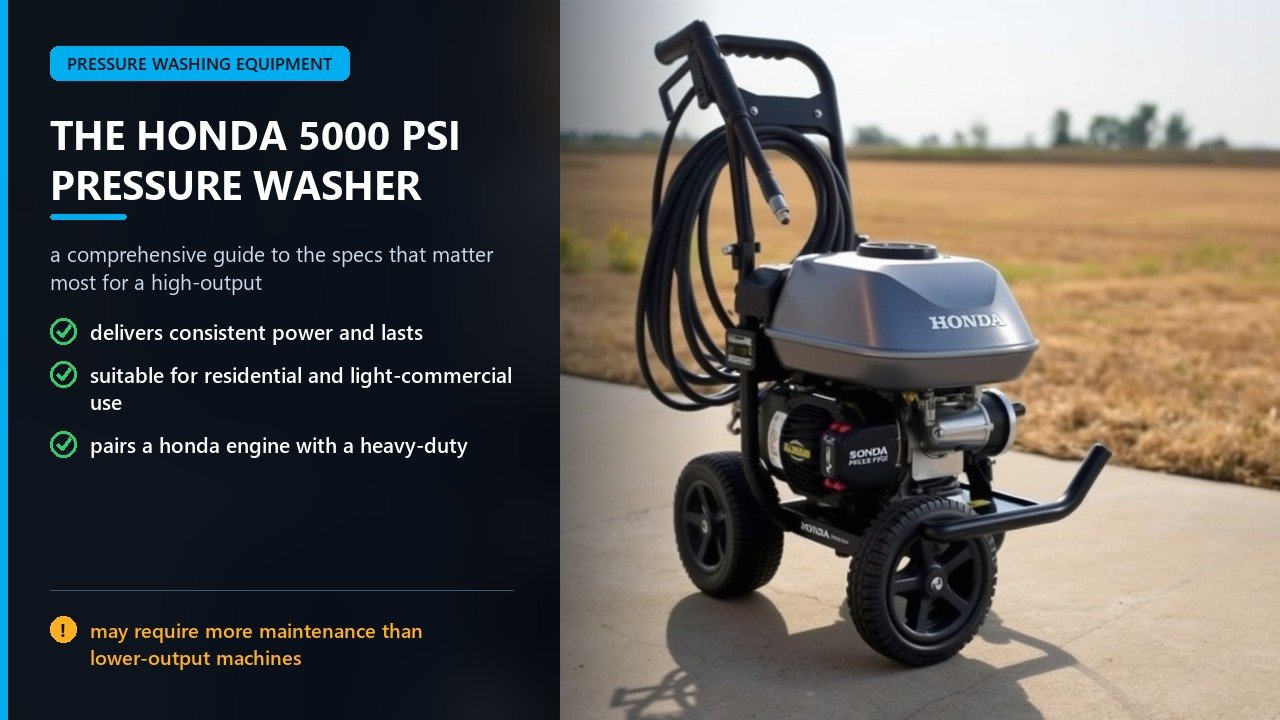
A Honda 5000 PSI pressure washer is a high-output gas machine pairing a Honda engine with a heavy-duty pump to reach the top of the residential and light-commercial pressure range. At that level, engineering, not just marketing, decides whether the machine delivers consistent power and lasts. This guide explains what 5000 PSI means on a Honda machine, the engines and pumps that deliver it, the balance between pressure and flow, what such a machine cleans, how to buy one, maintenance, safety, and the specifications that actually matter. If you are considering a 5000 PSI Honda, this is the information to weigh before you buy.
What 5000 PSI Means on a Honda Machine
Pressure is only one part of a machine’s output.
5000 PSI is the top of the mainstream range. Most residential gas washers run 2,500 to 3,500 PSI, and light-commercial machines reach 4,000 PSI. A 5,000 PSI machine sits at the top of that spectrum, built for demanding work. Our guide to what 4,000 PSI cleans shows the class below.
Pressure must come with flow. A 5,000 PSI machine with low flow cleans slowly; pressure and flow together decide cleaning speed. A Honda 5000 PSI washer is typically specified with a matching flow rate. Our guide to pressure versus flow explains the balance.
It requires a serious engine and pump. Reaching 5,000 PSI reliably demands a large engine and a heavy-duty triplex pump, not the axial pumps common on budget machines. This is where a Honda pairing matters. Our guide to triplex versus axial pumps covers the difference.
It is a commercial-grade proposition. Machines at this pressure are built for professional use, with the price and heft to match. They are not the right first machine for casual homeowners. Our guide to commercial Honda washers covers the class.
The Engines Behind a 5000 PSI Honda Washer
The engine determines whether a machine can sustain 5,000 PSI under load.
The Honda GX390 and its class. The 13-horsepower GX390 is the benchmark for serious gas washers and powers many 4,000 PSI machines; at the top of its range it supports high-output configurations. Our guide to the GX390 workhorse explains.
Bigger Honda V-twins for 5,000 PSI. Reaching 5,000 PSI typically calls for a larger Honda V-twin engine with more displacement and torque, which sustains the load a heavy pump demands. Our guide to Honda engines for professional cleaning covers the range.
Why Honda engines are chosen. Honda engines earn their place through reliable starting, durability, and easy service, which matters on a machine expected to run hard. Our guide to why the Honda engine is the benchmark explains.
Engine spec versus machine spec. A machine is more than its engine; the pump, unloader, frame, and fittings determine its real capability and life. Our guide to choosing a Honda machine covers the whole picture.
The Pumps That Survive 5000 PSI
At 5,000 PSI, the pump is the part most likely to fail if the machine is cheaply built.
Triplex pumps are the standard. A triplex pump with three pistons handles high pressure and continuous use far better than an axial cam pump, which is why 5,000 PSI machines use them. Our guide to triplex pumps explains.
Recognized pump brands add confidence. Pumps from established makers such as Cat, General, and Comet are associated with long service life and rebuildability. Our guide to the Honda and Cat pump pairing covers the combination.
Direct drive versus belt drive. Direct-drive pumps are simpler and cheaper, while belt drive isolates the pump from engine heat and vibration, common on high-output machines. Our guide to commercial machine design covers the options.
The unloader and fittings matter. The unloader valve, hoses, and fittings must be rated for 5,000 PSI, or they become the weak link. Our guide to gas washer components covers the system.
| Component | What 5000 PSI Demands |
|---|---|
| Engine | Large Honda engine, often V-twin |
| Pump | Heavy-duty triplex, ideally a name brand |
| Drive | Belt drive common for durability |
| Hose/fittings | Rated for 5000 PSI or higher |
| Unloader | High-pressure rated, adjustable |
Pressure Versus Flow at 5000 PSI
The relationship between pressure and flow is the most misunderstood part of high-output washers.
Flow decides cleaning speed. Gallons per minute determine how fast you cover a surface, while pressure determines how forcefully. On big flatwork, flow often matters as much as pressure. Our guide to why flow matters explains.
A balanced 5000 PSI machine. The best machines at this pressure pair it with high flow, so the machine cleans both forcefully and quickly rather than trading one for the other. Our guide to the fastest machines covers the logic.
Flow at the top end. A machine at this level may deliver several gallons per minute, which dictates nozzle sizing and cleaning speed. Our guide to high-flow Honda machines covers the upper range.
Matching the nozzle to the output. A 5,000 PSI machine needs correctly sized nozzles, or the pressure and flow are wasted or the machine is overloaded. Our guide to nozzle selection covers sizing.
What a 5000 PSI Honda Washer Cleans
This class of machine earns its keep on demanding work.
Heavy concrete and flatwork. Driveways, parking areas, and equipment pads clean quickly with the combination of high pressure and flow. Our guide to surface cleaners covers the best attachment.
Commercial and fleet cleaning. Trucks, trailers, and heavy equipment need the force of a high-output machine, which is where this class fits. Our guide to commercial cleaning covers the use.
Paint and coating prep. Stripping loose paint and preparing surfaces for coating benefits from high pressure and flow. Our guide to high-pressure Honda work covers the class.
Farm and industrial jobs. Agricultural and industrial cleaning often demands this level of output, where a reliable Honda engine and heavy pump shine. Our guide to industrial washers explains.
When it is overkill. For home siding, cars, patio furniture, and light tasks, 5,000 PSI is unnecessary force that risks damage. A gentler machine or a lower-pressure tip is safer. Our guide to a lower Honda class explains the alternative.
Buying a 5000 PSI Honda Washer
A checklist helps you compare machines rather than pressures.
Confirm the true output. Verify the machine’s real PSI and GPM under load, not just the headline number, and confirm the engine model. Our guide to choosing a Honda machine covers the specs.
Inspect the pump. Identify the pump brand and whether it is rebuildable, since the pump is the machine’s pressure heart. Our guide to triplex pumps explains.
Check the drive and frame. Belt drive and a sturdy frame indicate a machine built to last under commercial use. Our guide to Honda machine selection covers build quality.
Verify hoses and fittings. Ensure the hose, gun, and fittings are rated for 5,000 PSI, since a weak accessory becomes the failure point. Our guide to pressure hose selection covers ratings.
Weight service and parts availability. A machine at this level should have accessible service parts, given the service it will see. Our guide to preventative maintenance covers care.
| Check | Why It Matters |
|---|---|
| Real PSI and GPM | Actual cleaning capability |
| Pump brand/servicability | First component to fail |
| Belt vs direct drive | Durability under load |
| Accessory pressure rating | Prevents weak links |
| Parts availability | Long-term service |
Maintenance for a High-Output Machine
A machine at this output rewards routine care with long life.
Change pump oil on schedule. Triplex pumps use oil that must be changed at intervals; neglecting it is a leading cause of pump failure. Our guide to pump oil changes explains.
Change engine oil and filters. The Honda engine needs regular oil and filter service to run reliably under load. Our guide to engine oil for washers covers the type.
Maintain fuel properly. Fresh, treated fuel prevents the starting problems that plague gas machines left idle. Our guide to fuel care explains.
Protect the pump from freezing. Water left in a pump can freeze and crack it; winterizing is essential in cold climates. Our guide to hose and pump care covers storage.
Check the unloader and seals. A failing unloader causes pressure spikes and surges; checking it protects the pump. Our guide to maintenance and safety covers the system.
Safety at 5000 PSI
The higher the pressure, the higher the stakes.
Never aim at people or skin. A 5,000 PSI stream can cause severe injection injuries; treat the machine as dangerous equipment. Our guide to pressure washing injuries explains.
Use the right tip for the surface. High pressure damages wood, paint, and soft materials quickly; match the tip to the job. Our guide to nozzle colors covers selection.
Wear protective gear. Eye and ear protection, gloves, and sturdy footwear are prudent at this output. The Occupational Safety and Health Administration treats high-pressure water as a serious hazard.
Manage exhaust and fuel safely. Run the gas engine outdoors, away from windows, and refuel only when it is cool. The Honda Power Equipment guidance reinforces these practices.
Contain runoff. High-output cleaning produces large volumes of dirty water that must be managed, not dumped into storm drains, where federal rules on discharge can apply.
The Specs That Matter Most
Beyond the headline pressure figure, a handful of specifications separate a genuinely capable 5,000 PSI Honda machine from one that only looks impressive on the box.
True working pressure and flow. Look for the machine’s real PSI and GPM at rated load, since some listings quote optimistic figures. Real output is what cleans. Our guide to reading a machine’s flow explains.
Engine displacement and model. The Honda engine’s displacement and model tell you how much load it can sustain; a larger V-twin holds 5,000 PSI more easily than a smaller engine. Our guide to Honda engine classes explains.
Pump type and brand. A triplex pump from a recognized brand is the single best indicator of durability at this pressure. Our guide to quality pumps covers the brands.
Drive configuration. Belt drive isolates the pump from engine heat and shock, extending pump life, which is why it is common on high-output machines. Our guide to commercial design explains.
Water inlet and supply requirements. A 5,000 PSI machine moves a lot of water and needs an adequate, reliable supply or it cavitates and damages the pump. Our guide to high-flow requirements covers the supply.
| Spec | Why It Matters |
|---|---|
| True PSI and GPM | Determines real cleaning power and speed |
| Engine model/displacement | Sustains load at 5000 PSI |
| Pump type and brand | The pressure heart and life of the machine |
| Drive type | Affects pump durability and service life |
| Water supply need | Prevents cavitation and pump damage |
Direct Drive Versus Belt Drive
How the pump connects to the engine affects durability and service.
Direct drive. In a direct-drive machine, the pump mounts to the engine shaft, making the unit compact, lighter, and cheaper. The trade-off is more heat and vibration reaching the pump. Our guide to gas machine design explains.
Belt drive. A belt-drive machine uses pulleys and a belt to transfer power, isolating the pump from engine heat and shock and often allowing higher output. It is the common choice on commercial 5,000 PSI machines. Our guide to commercial machines covers the benefit.
Service implications. Belt drives need belt tension and replacement service, but they are easier on the pump and often easier to service overall. Our guide to maintenance covers the routine.
Which to choose. For heavy commercial use, belt drive generally lasts longer; for lighter, occasional use, a good direct-drive machine may suffice at lower cost. Our guide to choosing a Honda machine covers the decision.
Water Supply and Inlet Requirements
A high-pressure machine is only as good as the water feeding it.
Adequate flow from the tap. A 5,000 PSI machine can demand more water per minute than a typical garden tap delivers freely, so the supply must keep up. Our guide to high-flow supply explains.
Never run a machine dry. Running without adequate supply causes cavitation, which pits and destroys the pump, one of the most expensive failures. Our guide to pump protection covers the risk.
Use a suction or holding tank if needed. For large jobs or limited supply, a holding tank with proper plumbing ensures the pump always has water. Our guide to commercial setups covers the practice.
Screen and filter the inlet. A clean inlet screen prevents debris from reaching the pump and causing damage or inconsistent pressure. Our guide to machine care covers the details.
Common Buying Mistakes
Avoiding a few pitfalls prevents a costly disappointment.
Buying the number, not the machine. Focusing on a 5,000 PSI headline while ignoring the pump and flow leads to a machine that underperforms its claim. Our guide to the pressure and flow balance explains.
Overbuying for the job. If your work is light, a 5,000 PSI machine is expensive, heavy, and unnecessarily aggressive. Our guide to a more suitable class covers the alternative.
Ignoring accessory ratings. A 5,000 PSI machine with a 3,000 PSI hose or fitting is a failure waiting to happen. Our guide to hose ratings explains.
Buying without parts support. A high-output machine needs serviceable parts; a brand with no support leaves you stranded. Our guide to maintenance planning covers service.
Owning a High-Output Honda Washer
Ownership of a machine at this level has its own practical considerations beyond the purchase.
Setup and storage. A 5,000 PSI machine is heavy and, with a full tank and hoses, not something to lug casually; plan a stable storage place with room for the machine, hose, and accessories. Our guide to machine care covers storage.
Nozzle management. Keep a full set of correctly sized nozzles, a turbo nozzle, and a surface cleaner with the machine so you always have the right tool. Our guide to nozzle colors covers the set.
Consumables budget. Pump oil, engine oil, filters, and the occasional seal or o-ring are part of owning a high-output machine; budgeting for them keeps it running. Our guide to pump oil covers one key item.
Seasonal preparation. Before winter, drain and protect the pump from freezing, and treat the fuel so the engine starts cleanly next season. Our guide to fuel treatment explains.
Knowing when to service. Loss of pressure, surging, leaking, or a pump that will not build pressure signals a service need; addressing it early prevents major damage. Our guide to maintenance and safety covers the signs.
Frequently Asked Questions
Does Honda make a 5000 PSI pressure washer? Honda supplies the engine, not the complete machine. Brands pair Honda engines with heavy-duty pumps to build 5,000 PSI washers, so judge the pump and overall build as much as the engine.
What engine is used for a 5000 PSI pressure washer? Machines at this pressure typically use a large Honda engine, often a V-twin, that can sustain the load a heavy-duty triplex pump demands.
Do I need 5000 PSI? Only if your work demands it, such as heavy concrete, commercial fleet cleaning, or paint prep. For home tasks, a lower-pressure machine is safer and more than sufficient.
What is better, 5000 PSI or higher GPM? Both matter. Flow decides cleaning speed while pressure decides force; a balanced machine with high flow at 5,000 PSI cleans both forcefully and fast.
What pump is best for a 5000 PSI washer? A heavy-duty triplex pump, ideally from a recognized brand and rebuildable, is the right choice at this pressure.
How often should I service a 5000 PSI Honda washer? Follow the engine schedule for oil and filters, change pump oil at the recommended intervals, treat fuel, and winterize the pump to protect it from freezing.
Final Thoughts on the Honda 5000 PSI Pressure Washer
A Honda 5000 PSI pressure washer is a commercial-grade machine at the top of the mainstream pressure range, and its value lies in the whole package, not the badge or the headline number. Honda supplies the engine, but the pump, drive, frame, and accessories determine whether the machine truly delivers 5,000 PSI cleaning reliably and for years.
If your work demands this output, choose a machine with a large Honda engine, a heavy-duty triplex pump from a known brand, a durable drive and frame, and accessories rated for the pressure. Match the nozzle to the output, maintain the pump and engine on schedule, and treat the machine with the respect a 5,000 PSI stream demands. If your work does not demand it, a lower-pressure machine will serve you better and safer.
The point Greg made to the buyer is simple: a Honda 5000 PSI pressure washer is a serious tool for serious work. Match it to the job, inspect the whole machine, and maintain it well, and it will deliver the power and reliability its specification promises.