A restaurant owner named Priya had a problem no cold-water washer could solve: years of baked-on grease on her kitchen’s exhaust hood, floor tiles, and dumpster pad. Cold water and detergent loosened the surface grime but barely touched the hardened grease underneath. A cleaning contractor arrived with what he called a steam pressure washer, and the difference was immediate. The heat melted the grease into a liquid that the spray simply washed away, and surfaces that had resisted cold water for years came clean. Priya learned that a pressure washer with steam is not just a stronger washer; it is a different tool for a different kind of dirt.
A pressure washer with steam adds heat, and in some machines it produces actual steam, to the cleaning power of pressurized water. Steam and hot water clean where cold water struggles most: grease, oil, and baked-on grime. This guide explains what a pressure washer with steam really is, the difference between hot water and true steam, how these machines heat water and make steam, what steam cleans best, how steam compares to hot and cold water, the fuel and heating options, what to look for in a machine, the limitations and costs, safety considerations, and how to choose whether steam is right for your work. If cold water has stopped being enough, this is the next step up.
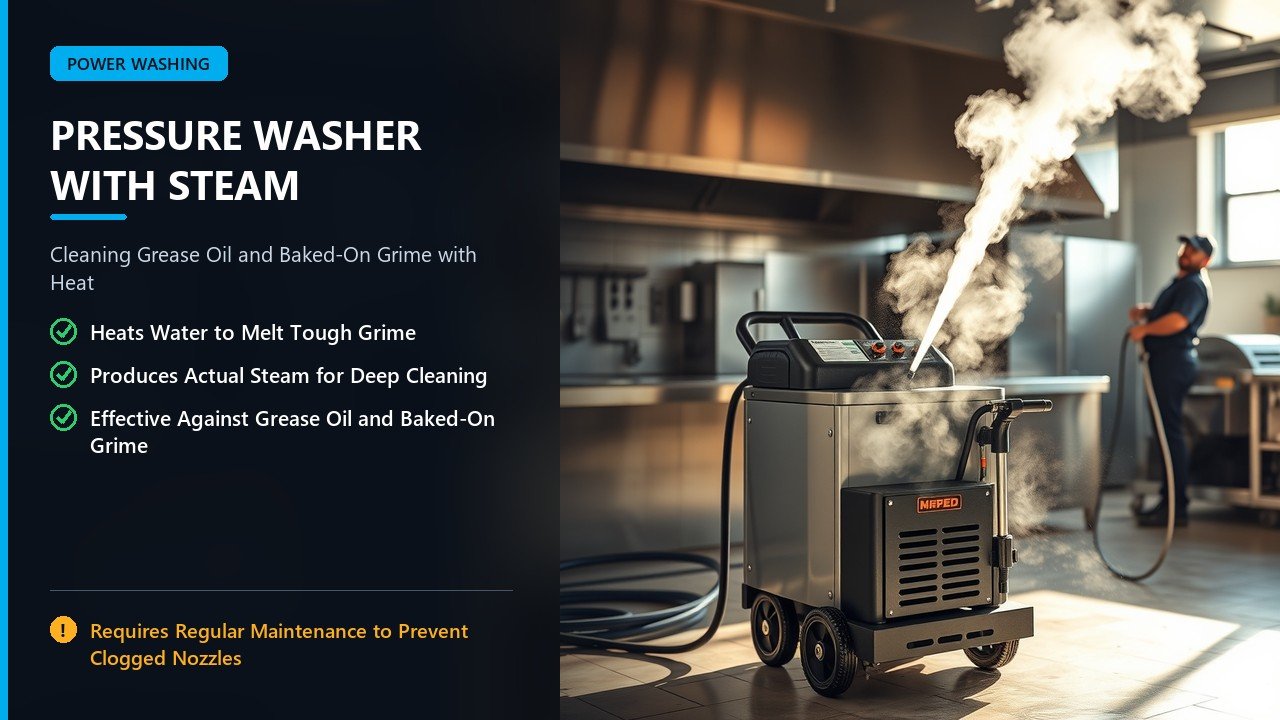
What a Pressure Washer With Steam Really Is
The term covers more than one kind of machine, so start by separating the ideas.
Hot water pressure washers. Most machines sold as steam-capable pressure washers are hot water washers that heat water to high temperatures, often up to around 200 degrees Fahrenheit. They clean grease far better than cold machines. Our guide to why heat wins on grease explains the advantage.
Steam-capable machines. Some washers can be run in a steam mode, heating water past the boiling point under pressure so it flashes to steam at the nozzle. These machines clean with high heat and lower water volume, useful for specific tasks.
True steam cleaners. A dedicated steam cleaner produces dry steam at high temperature but low pressure and low water volume. It sanitizes and dissolves grime with minimal water, but it is not a high-pressure blasting tool. Our guide to steam versus pressure washing explains the distinction.
Why the confusion matters. Buying a “steam pressure washer” expecting dry-steam cleaning, or a steam cleaner expecting high-pressure blasting, leads to disappointment. Match the machine to the job. Our guide to a pressure washer steamer shows what the hybrid can do.
Hot Water Versus True Steam
Understanding the two options helps you choose the right tool for your cleaning.
Temperature. Hot water machines typically deliver water around 180 to 200 degrees Fahrenheit, hot enough to melt most grease. Steam exceeds that, up to around 300 degrees Fahrenheit or more at the nozzle, which dissolves tough deposits faster.
Water volume. Hot water uses the full flow of the machine, delivering lots of hot water for rinsing away grime. True steam uses little water, which is an advantage where runoff is limited or surfaces must dry quickly.
Pressure. Hot water machines keep the machine’s rated pressure, so they blast as well as heat. True steam cleaners deliver much lower pressure, relying on heat and chemical action rather than force. Our guide to how heat works and what it costs explains the trade-offs.
Best use. Hot water is best for grease and grime on large surfaces that need rinsing. True steam is best for sanitizing, detail work, and cleaning where water must be minimized. Our guide to when to use heat helps you decide.
| Feature | Cold Water | Hot Water | True Steam |
|---|---|---|---|
| Temperature | Ambient | ~180-200 F | ~300+ F |
| Water volume | Full flow | Full flow | Very low |
| Pressure | Rated | Rated | Low |
| Best for | Light grime | Grease, grime | Sanitizing, detail |
How These Machines Heat Water and Make Steam
The heating method determines cost, fuel use, and capability.
The burner and coil. Most hot water and steam-capable washers pass water through a heavy coil heated by a burner. The burner fires fuel to heat the coil, and the water picks up heat as it flows through. This is the heart of the heating system. Our guide to oil burner heating explains one fuel option.
Fuel options. Burners run on diesel, kerosene, heating oil, or propane. Each has trade-offs in cost, availability, and cleanliness. Our guide to diesel engine versus burner and our guide to propane hot water cover the choices.
Electric heating. Some machines heat with electric elements instead of a flame, which is cleaner and quieter but slower to reach temperature and power-hungry. Our guide to heated electric washers covers the option.
Steam mode. To make steam, the machine heats water beyond boiling under pressure, so it flashes to vapor at the nozzle. This requires a heating system capable of higher temperatures and a machine designed for steam operation, not just hot water. Our guide to heat and grease shows the payoff.
What a Pressure Washer With Steam Cleans Best
Heat and steam excel on certain jobs and are overkill for others.
Grease and oil. This is the headline benefit. Heat melts grease and oil so the spray carries it away, which cold water cannot do effectively. Kitchen hoods, engine parts, and shop floors are prime examples. Our guide to why heat wins on grease explains the chemistry.
Commercial kitchen grime. Baked-on kitchen grease, exhaust hoods, dumpster pads, and tile respond dramatically to hot water and steam. This is where these machines earn their cost. Our guide to a diesel hot pressure washer on grease shows the commercial case.
Sanitizing. Steam can sanitize surfaces with heat rather than chemicals, useful in food handling and some medical or institutional settings where chemical residue is a concern. Our guide to what a high-pressure cleaner offers covers related uses.
Heavy industrial grime. Industrial machines that produce steam or very hot water clean the heaviest deposits, from machinery to fleet equipment. Our guide to industrial cleaning covers this class.
Where heat is unnecessary. For driveway dust, light siding grime, and routine washing, cold water is enough, and the fuel and cost of heat are wasted. Use heat where it changes the outcome. Our guide to when cold is enough helps.
The heat decision in one line. For driveway dust and light siding grime, cold water is enough and heat is wasted. For kitchen grease, engine oil, and sanitizing, heat and steam make the difference. Use heat where it changes the outcome, and save the fuel cost where it does not.
Comparing Steam to Ordinary Pressure Washing
It helps to place steam cleaning alongside the pressure washers most people own.
Cold pressure washers. The common home and light commercial machine, effective for most surface dirt but limited on grease and oil. Cheaper and simpler than heated machines. Our guide to hot versus cold covers the comparison.
Hot water pressure washers. Add heat for grease and grime while keeping full pressure and flow. The practical choice for most commercial cooking and industrial cleaning. Our guide to why hot water cleans better explains the benefit.
Steam cleaners. Use high heat and low water for sanitizing and detail work, not high-pressure blasting. Ideal where water must be minimized or surfaces need sanitizing. Our guide to steam versus pressure washers covers the fit.
Hybrid machines. Some pressure washers offer both hot water and steam modes, giving flexibility across jobs. These are versatile but cost more and require understanding both modes. Our guide to a pressure washer steamer shows the hybrid.
What to Look For and What It Costs
Heated and steam machines cost more to buy and run, so choosing carefully matters.
Pressure and flow. Keep the pressure and flow that your jobs need, and add heat on top. A hot machine with weak flow still cleans slowly. Our guide to what heat machines cost explains the balance.
Heat capability. Confirm the temperature the machine reaches and whether it offers a steam mode if you need one. A machine that only warms water will disappoint on heavy grease. Our guide to heat on grease shows why temperature matters.
Fuel and running cost. Diesel, kerosene, and propane burners consume fuel, adding ongoing cost. Factor in fuel price and availability for your area. Our guide to burners versus engines covers fuel choices.
Build and durability. Heated machines face more heat and stress, so build quality matters more, not less. Commercial components and serviceable parts are worth paying for. Our guide to the best heated washers covers the class.
Power source. Electric heated machines suit indoor use, while gas and diesel machines suit outdoor, remote work. Our guide to electric hot water and our guide to gas hot water cover the options.
Maintaining a Heated or Steam Machine
Heat and burners add components that need attention beyond a cold machine.
Descale the coil. Heating hard water leaves mineral scale inside the coil, which reduces efficiency and eventually blocks it. Flush or descale the coil on schedule to keep heat output strong.
Service the burner. Burner nozzles, filters, and fuel lines need regular service to burn cleanly and safely. A poorly maintained burner wastes fuel and produces dangerous exhaust.
Protect the pump. The pump still needs the same care as any pressure washer pump, including never running dry and protecting it from freezing. Our guide to pump protector fluid covers conditioning.
Use the right fluids. Some machines require specific fuel and preheat procedures. Follow the manual to avoid damage and unsafe operation. Our guide to oil burner heat covers one common system.
Manage wastewater. Hot water and the chemicals it carries create runoff that can pollute. Follow environmental rules, since the Environmental Protection Agency regulates discharge. Capture or contain runoff where required.
Winterize carefully. Coils and pumps full of water freeze and crack. Drain and protect the entire machine before freezing weather. Our guide to winter storage covers the steps.
Where Steam and Heat Pay Off by Industry
Different industries face different grime, and heat helps some far more than others.
Food service. Restaurants and commercial kitchens battle grease on hoods, filters, floors, and dumpster pads. Heat turns hardened grease liquid, making it removable. This is the classic application for hot water and steam. Our guide to a diesel hot pressure washer on grease covers the commercial case.
Automotive. Engines, transmissions, and undercarriages accumulate oil, grease, and road film. Hot water cuts through these far faster than cold, which is why detail shops and fleet yards favor heated machines. Our guide to electric hot water cleaning and our guide to gas hot water cleaning cover the tools.
Industrial and manufacturing. Machinery, parts, and production floors collect oils and residues that heat dissolves. Heavy industrial machines deliver the heat and pressure these jobs demand. Our guide to industrial cleaning covers this class.
Sanitation and institutional. Where surfaces must be sanitized without chemical residue, steam offers a heat-based solution. Food handling, some healthcare, and institutional settings use steam for this reason. Our guide to high-pressure cleaning applications covers related needs.
Property and municipal. Gum, graffiti, and stubborn stains on hard surfaces sometimes yield to heat more readily than cold water alone. Steam can also clean where water volume must be limited. Our guide to hot water machines covers the trade-offs.
| Industry | Main Grime | Heat Benefit |
|---|---|---|
| Food service | Grease, oils | Very high |
| Automotive | Oil, road film | High |
| Industrial | Oils, residues | High |
| Sanitation | Contaminants | High (steam) |
| Property/municipal | Stains, gum | Moderate |
Steam Mode in Practice
If you choose a machine with a steam function, knowing what to expect prevents surprises.
Lower water, higher heat. In steam mode, the machine uses far less water but delivers intense heat. This suits sanitizing and detail work where runoff must be minimized and surfaces should dry quickly. Our guide to steam versus pressure washing explains the balance.
Less blasting force. Because steam mode reduces water volume, the percussive blasting force drops. Steam cleans by dissolving and loosening, not by force, so it is not the tool for stripping or heavy impact. Our guide to a pressure washer steamer shows where it shines.
Slower coverage. Steam covers less area per minute than a full-flow spray, so it is best for targeted work rather than large surfaces. For big areas, hot water mode with full flow is faster. Our guide to when to use heat helps you choose modes.
Preheat time. Machines need time to bring the coil and water to temperature, so plan for a warm-up period before working. Rushing a cold machine wastes fuel and delivers weak heat.
Best technique. Let the heat do the work: apply steam, give the grime a moment to dissolve, then wipe or rinse. Fighting hardened grime with force wastes time when heat is the real tool. Our guide to choosing a degreaser explains how heat and chemistry combine.
A Buying Checklist for Heated and Steam Machines
Before you commit to a heated or steam machine, work through these points.
What is your toughest grime? If it is grease and oil, heat is the answer. If it is dust and light dirt, you may not need it. Our guide to heat on grease helps you judge.
Do you need true steam or hot water? Most jobs need hot water at full pressure. Choose steam only for sanitizing and low-water work. Our guide to steam versus pressure washing helps.
What pressure and flow do you need? Decide the pressure and flow first, then add heat. A hot machine with weak flow still cleans slowly. Our guide to heat machine costs explains the balance.
What fuel is practical? Confirm whether diesel, kerosene, propane, or electric heating fits your site, fuel availability, and budget. Our guide to burners versus engines covers the choice.
Can you maintain it? Heated machines need coil descaling and burner service. Commit to that maintenance or the machine will lose performance and safety. Our guide to the best heated washers covers what good maintenance looks like.
Is the build commercial-grade? Heat and stress punish weak machines. Choose serviceable parts and sturdy construction. Our guide to commercial hot water cleaning covers the class.
| Decision | Question to Ask | Guidance |
|---|---|---|
| Grime type | Grease or light dirt? | Heat only for grease |
| Hot vs steam | Rinse or sanitize? | Hot water for most jobs |
| Pressure/flow | Enough for the job? | Add heat on top |
| Fuel | Practical and available? | Match site and budget |
| Maintenance | Can you keep it up? | Descale, service burner |
| Build | Commercial grade? | Serviceable parts matter |
Frequently Asked Questions
What is a pressure washer with steam? Usually it is a hot water pressure washer that heats water to around 180 to 200 degrees Fahrenheit, and some models can produce actual steam. A true steam cleaner is a different machine that makes dry steam at low pressure.
Is steam better than hot water? It depends on the job. Steam excels at sanitizing and low-water detail work, while hot water pressure washing excels at grease and grime on large surfaces with full pressure and flow.
What does a steam pressure washer clean best? Grease, oil, baked-on kitchen grime, and surfaces needing sanitizing. It is overkill for light surface dirt where cold water is enough.
Can I use a steam cleaner instead of a pressure washer? Not for high-pressure blasting. A true steam cleaner produces low pressure and little water, so it cannot strip or blast like a pressure washer. They serve different purposes.
Do these machines cost more to run? Yes. Heated machines consume fuel to heat the water, adding ongoing cost, and they cost more up front. The heat pays off where it changes the cleaning outcome.
Can I use one indoors? Electric heated machines can be used indoors with care for the water and residue. Fuel-burning machines must never be run indoors, because their exhaust is lethal.
Final Thoughts on the Pressure Washer With Steam
A pressure washer with steam brings heat, and sometimes true steam, to cleaning, solving the jobs that cold water cannot: grease, oil, baked-on grime, and surfaces that need sanitizing. Most machines sold under this label are hot water pressure washers that heat water to around 180 to 200 degrees Fahrenheit, while a true steam cleaner makes dry steam at high temperature but low pressure and low water volume. Understanding which you need is the difference between a tool that transforms your work and one that disappoints.
For most grease and grime problems, a hot water machine at full pressure and flow is the practical choice, using heat on top of the pressure you already need. True steam is a specialized tool for sanitizing and low-water work. Whichever you choose, expect higher purchase and running costs, and commit to the maintenance that heat and burners demand: descaling the coil, servicing the burner, and protecting the pump. Run these machines safely, since they combine scalding water with combustion.
That is what Priya found. The steam her contractor used was not a gimmick but the right tool for her kitchen’s grease, and it did what years of cold water could not. If your cleaning has hit the wall of cold-water limits, a heated or steam machine may be exactly the upgrade you need. Choose it for the dirt that demands heat, keep it well maintained, and it will clean where nothing else will.