When Carla bought her first pressure washer, she assumed one tip would do everything. She used the sharpest one on her wooden deck, and by the time she noticed the gouges in the boards, the damage was done. A neighbor explained that the pressure washer spray tip is not a single tool but a set, each one designed for a different surface and a different level of force. Learning which tip belongs on which surface is the difference between cleaning a home and damaging it, and it takes only a few minutes to understand.
The pressure washer spray tip controls two things that decide every job: how wide the spray fans out and how much force it delivers. Match the tip to the surface, and cleaning is fast and safe; mismatch it, and you strip paint, etch concrete, or scar wood. This guide explains what a spray tip controls, the color code, which tip suits each surface around a home, how tip size matches your machine, how spray tips compare to other attachments, soap tips, safety, care, the mistakes to avoid, and answers to common questions. Choose the right tip for every surface, and your pressure washer becomes far more useful and far less risky.
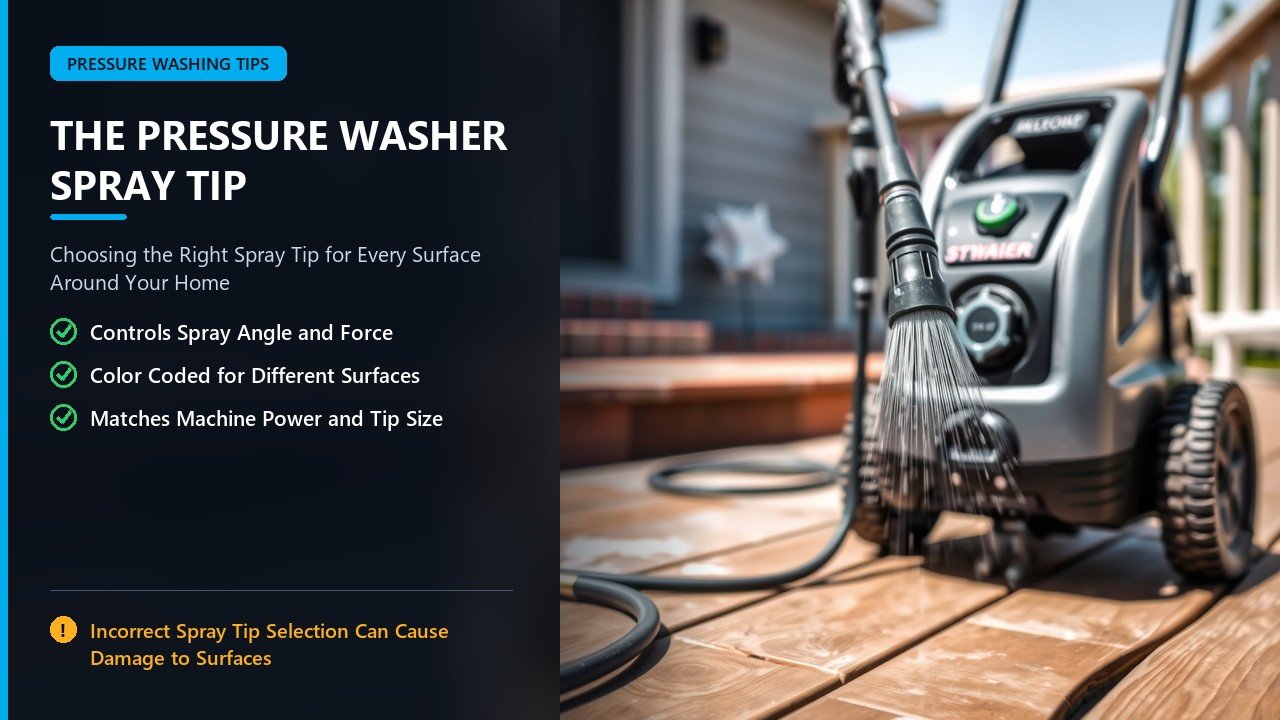
What a Pressure Washer Spray Tip Controls
A spray tip shapes and aims the water, and its design sets the force.
Spray angle. The tip’s angle determines how wide the spray fans out, from a pinpoint stream to a broad fan, and narrower angles concentrate more force. Our guide to how the angle tip decides cleaning power explains.
Nozzle size. Beyond the angle, the orifice size matches the tip to your machine’s pressure and flow, keeping the pump balanced. Our guide to nozzle sizing explains.
Connection. Tips attach through a quick-connect fitting or a thread, and the connection must match your wand or gun. Our guide to quick-connect tips explains.
Material and wear. Stainless and hardened tips hold their pattern longer than cheap brass, which matters when you use the same tips repeatedly. Our guide to tip materials explain.
The Spray Tip Color Code
Pressure washer tips follow a color code by angle that makes selection simple.
Red zero-degree. The sharpest tip, for the most stubborn stains on hard surfaces only, never on wood or paint. Our guide to what every tip does explains.
Yellow fifteen-degree. An aggressive stripping tip for tough cleaning on hard surfaces, used with care. Our guide to spray nozzle guide explains.
Green twenty-five-degree. The general-purpose tip for most cleaning, balancing force and coverage. Our guide to the green tip explains.
White forty-degree. The gentlest fan, best for delicate surfaces, rinsing, and applying detergent. Our guide to the white tip explains.
Black soap tip. A low-pressure tip designed for applying detergent, not for blasting. Our guide to soap tips explains.
| Color | Angle | Best For |
|---|---|---|
| Red | 0° | Stubborn stains on hard surfaces only |
| Yellow | 15° | Aggressive stripping on hard surfaces |
| Green | 25° | General-purpose cleaning |
| White | 40° | Delicate surfaces, rinsing, detergent |
| Black | Soap/low pressure | Applying detergent |
Which Spray Tip for Each Surface
Matching the tip to the surface is the safety decision that matters most.
Concrete and masonry. Hard flatwork tolerates the sharper green and even the yellow or turbo tip for tough stains, though the surface can still be etched if held too long. Our guide to concrete cleaning explains.
Wood decks and fences. Wood demands a gentle white or green tip at lower pressure and a steady distance, since too much force raises the grain and gouges the surface. Our guide to saving surfaces with gentle tips explains.
Siding and painted surfaces. Use a wide tip and reduced pressure to avoid stripping paint or driving water behind the siding. Our guide to protecting every surface explains.
Vehicles and equipment. Cars, boats, and machinery need a wide, gentle tip and often a soap tip for detergent, keeping the spray well back from paint and trim. Our guide to car washing explains.
Brick, stone, and roofs. These vary; test a hidden area first, use a moderate tip, and avoid forcing water into joints or under shingles. Our guide to the right pressure for every surface explains.
| Surface | Suggested Tip | Caution |
|---|---|---|
| Concrete/masonry | Green, yellow, or turbo | Can etch if held too long |
| Wood deck/fence | White or green, lower PSI | Raises grain, gouges |
| Painted siding | White, reduced PSI | Strips paint, forces water in |
| Vehicles | White plus soap tip | Keep back from paint/trim |
| Brick/roof | Moderate, test first | Joints and shingles at risk |
Spray Tip Size and Your Machine
The right angle is only half the choice; the size must match the machine.
Match the size to pressure and flow. A tip’s size corresponds to a range of machine output, and the correct size keeps the pump at its design point. Our guide to nozzle charts explain.
Size and angle are separate. You can have a gentle angle in a size matched to a big machine, so choose both the angle and the size deliberately. Our guide to colors and sizes explains.
A full matched set covers the home. A standard set of color-coded tips in the correct size lets you handle any surface without misusing a tip. Our guide to choosing nozzle attachments explains.
Wrong size ruins the machine’s balance. An oversized tip wastes flow and weakens the spray, while an undersized one overloads the pump, so sizing matters as much as angle. Our guide to nozzle sizing in a system explains.
Spray Tips Versus Other Attachments
Knowing when a tip is the right tool, and when it is not, prevents both damage and wasted effort.
Turbo nozzle. A turbo nozzle concentrates a rotating pinpoint jet for fast work on hard surfaces, faster than a fan tip but more aggressive. Our guide to turbo nozzles explains.
Surface cleaner. For large flat concrete, a surface cleaner is faster and more uniform than any hand-held tip. Our guide to surface cleaners explains.
Adjustable nozzle. An adjustable nozzle twists to change width, convenient for varied work but usually less precise than a dedicated tip. Our guide to adjustable nozzles explains.
Soap and specialty tips. Soap tips apply detergent at low pressure, while rinsing uses a regular tip; using the wrong one wastes soap or leaves residue. Our guide to swapping tips explains.
Spray Tip Safety
The choice of tip is also a safety decision.
Never aim at people or skin. Even a wide tip at high pressure can injure; the sharper tips can inject water into tissue, a medical emergency. Our guide to pressure washing injuries explains.
Match force to surface. The most common home damage comes from too sharp a tip on too soft a surface, so choose the gentle tip by default. Our guide to surface protection explains.
Wear protective gear. Eye and ear protection and sturdy footwear are prudent, especially with sharp tips and hard surfaces. The Occupational Safety and Health Administration treats high-pressure water as a significant hazard.
Manage runoff. Cleaning force produces dirty runoff quickly; contain it and keep it out of storm drains and waterways. The Environmental Protection Agency regulates discharge that reaches storm drains.
Care and Replacement
Spray tips are consumables and need routine attention.
Clean them after use. Flushing clears debris that clogs the orifice and distorts the spray. Our guide to tip care explains.
Replace worn tips. A tip whose pattern has weakened or widened has worn and should be replaced to restore performance. Our guide to replacing a nozzle explains.
Check o-rings. A worn o-ring leaks and drops pressure even with a good tip, so keep spares. Our guide to o-ring care explains.
Store the set together. A case keeps tips organized, protected, and easy to find. Our guide to nozzle storage explains.
Common Spray Tip Mistakes
Avoiding these protects surfaces and the machine.
Using the sharpest tip by default. Starting with red or yellow instead of a gentle tip is the leading cause of home damage. Our guide to starting gentle explains.
Ignoring the size. A tip that does not match the machine’s pressure and flow underperforms or overloads the pump. Our guide to sizing explains.
Using a blast tip for soap. Soap should be applied with a low-pressure soap tip, not a high-pressure fan that strips it away. Our guide to soap application explains.
Holding a sharp tip in one spot. Even on concrete, a sharp tip held still etches the surface; keep it moving. Our guide to avoiding etching explains.
Mixing up tips on one project. Switching to a sharp tip mid-job on a delicate surface causes damage; keep the correct tip in place. Our guide to matching tips to surfaces explains.
Building a Practical Tip Collection
A small, well-chosen set of tips handles almost everything a home needs.
The core four. A green, white, soap, and a turbo tip cover general cleaning, delicate surfaces, detergent, and tough hard-surface work, respectively. Our guide to choosing attachments explains.
Add a yellow for stubborn stains. A yellow fifteen-degree tip handles the tougher concrete stains the green tip cannot, used with care. Our guide to tip angles explain.
Consider a surface cleaner. For large driveways and patios, a surface cleaner outperforms any hand-held tip and belongs in a home collection. Our guide to surface cleaners explains.
Keep spares of the tips you use most. Green and white tips wear out fastest in normal use, so spares keep a job from stalling. Our guide to spare tips explain.
| Add This | For |
|---|---|
| Green 25-degree | General cleaning |
| White 40-degree | Delicate surfaces and rinsing |
| Black soap tip | Applying detergent |
| Turbo nozzle | Tough hard-surface work |
| Surface cleaner | Large flat concrete |
How Tip Angle Changes the Cleaning Job
Understanding the effect of angle helps you choose deliberately rather than by habit.
Narrower means more force. A narrow tip concentrates the water’s energy into a smaller area, so it cleans stubborn spots but damages soft surfaces. Our guide to how angle decides power explains.
Wider means more coverage. A wide tip spreads the same water over a larger area, cleaning gently and covering ground faster on delicate surfaces. Our guide to wide tips explain.
Angle and distance work together. Moving a tip closer also concentrates force, so distance and angle together set how hard the water hits. Our guide to pressure for every surface explains.
Angle and pressure compound. A sharp tip on a high-pressure machine is doubly aggressive, which is why the two must be considered together. Our guide to protecting surfaces explains.
Tips for Specific Common Jobs
A few frequent jobs are worth calling out.
Driveways and patios. A surface cleaner or a turbo tip on concrete is fastest, with a green tip for edges. Our guide to driveway and patio cleaning explains.
Decks and fences. A white or green tip at reduced pressure cleans wood without raising the grain, followed by a suitable finish. Our guide to protecting wood explains.
Siding and house exteriors. A wide tip at moderate pressure cleans siding safely, avoiding paint damage and water intrusion. Our guide to exterior cleaning explains.
Vehicles. A wide tip plus a soap tip cleans cars and equipment gently; the goal is to lift dirt, not etch paint. Our guide to vehicle cleaning explains.
How to Test an Unfamiliar Surface
When you are unsure whether a surface can take the pressure, test before you commit.
Start in a hidden spot. Test the tip and pressure on an inconspicuous area first, then inspect for damage before cleaning the whole surface. Our guide to safe testing explains.
Begin with the gentlest option. Start with a wide tip at a distance and increase force only as needed, watching the surface respond. Our guide to gentle cleaning explains.
Watch for warning signs. Fuzzing wood, flying paint, or a quickly exposed aggregate layer mean the tip is too sharp; stop and adjust. Our guide to reading surface damage explains.
Keep the tip moving. Even a correct tip can mark a surface if held in one place, so sweep steadily across the work. Our guide to avoiding marks explains.
Matching Tips to Your Machine’s Power
The same tip behaves differently on a small electric machine and a big gas washer.
Lower-power machines. A compact electric washer delivers less force, so a green tip often acts like a gentler tip would on a bigger machine, and aggressive tips may be needed for tough work. Our guide to electric machines explain.
High-power machines. A high-pressure gas washer turns a green tip aggressive, so gentle surfaces may need a white tip and reduced distance. Our guide to pressure for surfaces explains.
Size still matters. Whatever the power, the tip’s size must match the machine’s pressure and flow, or the machine is unbalanced. Our guide to nozzle sizing explains.
Adjust for the machine, not just the surface. Choose the tip based on both the surface and the machine’s capability, and test when unsure. Our guide to matching tips to power explains.
Understanding Tip Numbers and Markings
Beyond color, tips carry numbers that identify their angle and size.
Angle number. Tips are often stamped with their angle, such as 25 or 40, which tells you the fan width regardless of the color used by a particular brand. Our guide to tip markings explains.
Size number. A second number or letter indicates the orifice size, which corresponds to a range of pressure and flow for your machine. Our guide to size numbers explain.
Why markings matter. Colors can vary between brands and fade with use, but the stamped numbers remain the reliable way to identify a tip. Our guide to colors and sizes explains.
Reading them before use. Glance at the marking before choosing a tip for a delicate surface, since a miscolored or misremembered tip is easy to grab by mistake. Our guide to matching tips explains.
Frequently Asked Questions
What is the best pressure washer spray tip for general cleaning? The green twenty-five-degree tip is the general-purpose choice for most cleaning, balancing force and coverage. Start there and move sharper only for tough stains on hard surfaces.
Which tip is safest for wood and paint? The white forty-degree tip at reduced pressure and a steady distance is the safest for wood and painted surfaces, since it delivers a gentle, wide fan.
What does the red tip do? The red zero-degree tip delivers the sharpest, most concentrated stream for the toughest stains on hard surfaces only; it damages wood, paint, and many other materials.
What is the black tip for? The black soap tip applies detergent at low pressure. It is not a blasting tip and is used with a soap tank or siphon to apply cleaning solution.
Do spray tip colors mean the same on every machine? The color code is widely followed but not universal, so check the angle marked on the tip and your manual rather than relying on color alone.
How do I know what size tip I need? Match the tip’s orifice size to your machine’s PSI and GPM, using the manufacturer’s chart or the machine’s manual, in addition to choosing the right angle.
Can I use any tip for soap? No, soap should be applied with a dedicated low-pressure soap tip; a high-pressure tip strips the detergent away and wastes product.
Final Thoughts on the Pressure Washer Spray Tip
The pressure washer spray tip is the small part that decides whether you clean a home or damage it. The color code is a simple guide: red and yellow for tough work on hard surfaces, green for general cleaning, white for delicate surfaces and rinsing, and black for soap. Match the angle to the surface, match the size to your machine, and choose quality tips that hold their pattern.
Start with the gentlest tip that will do the job, keep it moving, and keep it at a safe distance from the surface. Compare tips with turbo nozzles and surface cleaners, knowing when each is the better tool. Care for your tips, replace them when worn, and keep the set together and clearly labeled.
Carla learned by damaging a deck, but the lesson is simple and cheap to apply: the right spray tip for each surface makes a pressure washer safe, fast, and far more capable. Learn the code once, and every job gets easier.